
Publications & Resources
Our faculty, students and researchers work together everyday to contribute to a better world by grappling with urgent problems we are facing in India. We conduct rigorous work to produce high quality learning resources and publications to contribute to public discourse and social change. Here, we feature a sample from our work for everyone to access. You can explore featured resources, policies, and the latest publications from the University.
To explore all the work of our University, please visit our publications repository.
List of Publications & Resources
Did Employment Rise or Fall in India between 2011 and 2017- Estimating Absolute Changes in the Workforce
in Azim Premji University

- Published
- Authors
Abstract
The recently released data from the 2017 – 2018 Periodic Labour Force Survey have created a controversy regarding the quantity of employment generated in the past few years in India. Estimates ranging from an absolute increase of 23 million to an absolute decline of 15.5 million have been published. In this paper we show that some of the variation in estimates can be explained by the way in which populations are projected based on Census 2011 data. We estimate the change in employment using the cohort-component method of population projection. We show that for men total employment rose but the increase fell far short of the increase in working age population. For women, employment fell. The decline is concentrated among women engaged in part-time or occasional work in agriculture and construction.
Authors:
- Paaritosh Nath
- Amit Basole
Links
Income Distribution and Effective Demand in the Indian Economy
in Azim Premji University
- Published
- Authors
Abstract
Does there exist a trade-off between labour’s income share and output growth rate? Or does a reduction in wage share in itself reduce the output growth rate? These questions have returned to the centre stage in the midst of India’s present crisis as the government sought the dilution and suspension of labour laws as a counter-cyclical policy instrument. In the absence of any other stimulus or countervailing factors, the impact of such a policy would hinge on the relationship between income distribution and effective demand. This paper attempts to lay bare this relationship for the Indian economy through an empirical analysis of India’s macro data and a theoretical model on the basis of regression results.
Author:
- Zico Dasgupta
Links

- Published
- Authors
Abstract
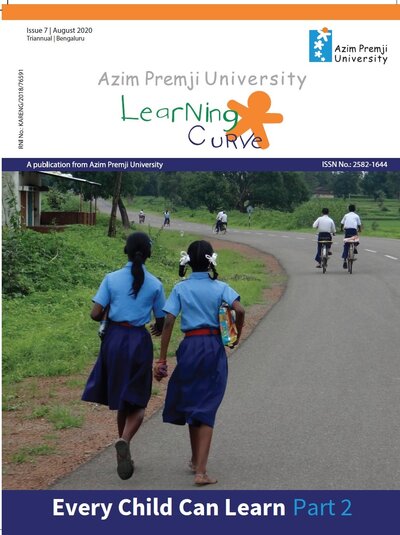
This issue proves that children can, and do, learn, provided they get the encouragement, support, respect and dignity that is due to them during the process and after. The response got for the topic was so overwhelming that it led to the creation of a second part.. It is all about children learning. and enjoying themselves in the process, rather than just getting a formal education.
Links
Article
- Published
- Authors
- School of Policy & Governance
Abstract
A recent writ petition on renaming India as Bharat, which got dismissed by the Supreme Court, is discussed. There are political motives behind naming or renaming a place, but Hindustan, Bharat, and Hind — are all part of the package that is India.
Building a Social Security Architecture for Informal Workers in India, Finally!
in Azim Premji University
- Published
- Authors
Abstract
Social protection and social security have very limited coverage in India. This reality has not changed since independence, one of greatest failures of the development strategy India adopted in the early fifties. The labour force is predominantly unorganized. As much as 91 per cent of the labour force are in informal employment, i.e. without any social insurance we estimated from the NSO’s Periodic Labour Force Survey (2017−18) (Mehrotra and Parida, 2019). This is barely down 2 percentage points from 93% in 2011-12 (NSO’s 68th Round). In fact, regardless of the growth rate of GDP, this high share of informality in the workforce had not changed until 2012, and when it fell recently, it did so by merely 2 points. The rest 9 per cent of the workforce has varying levels of social security in the form of provident fund, paid leave, medical insurance and other benefits.
Author:
- Santosh Mehrotra
Links

- Published
- Authors
Abstract
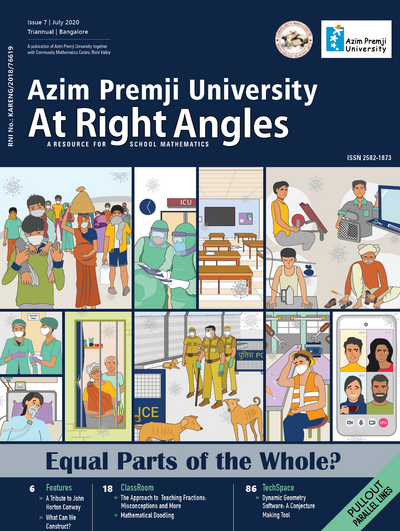
As the world goes through lock down and social distancing, it is easy to feel less and less a part of the whole and more and more a small, isolated part. But that does not make us or anybody else, any less a part of the whole and we need to realise that every part of the whole matters.
But are all the parts of the whole equal? If not, what can we do to redress the balance?
Think mathematically!
Links

- Published
- Authors
Abstract
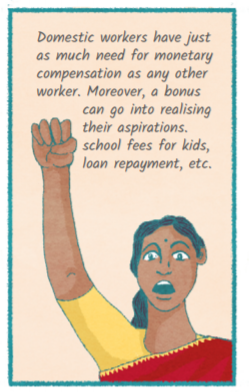
This booklet is based on a two-year study of domestic workers conducted by faculty at Azim Premji University.
Please share it with friends and family so that more people and employers are aware that domestic workers need to be accorded their due rights and be treated with dignity.
The focus of the research is the work and lives of ‘domestic workers’ (henceforth, DW) in Bangalore, especially their struggles to form collectives as part of their attempt to transform their subjectivities from ‘servant’ to ‘worker’, and improve their life and work situations. Domestic work is precarious work constituting a large part of India’s informal economy. It exists within a political economic context signaled by rising incomes of urban middle and upper classes and the existence of a steady supply of working-class women (from mostly stigmatised castes but across all religions) ready for domestic work. It is also enabled by a cultural-ideological context signaled by the preference to engage DWs as a normalised cultural marker for upward mobility. Our research demonstrates the struggles of DWs, the dilemmas and obstacles they negotiate for their empowerment. It focuses on the collective actions of DWs in their workplaces, their families and neighborhoods, and within unions and labour-NGOs engaged in organising DWs for “formalisation” of work, demands for a ‘decent’ wage and work conditions, and innovations in the form and content of their collective rights.
Pandemic, informality, and vulnerability- Impact of COVID-19 on livelihoods in India
in Azim Premji University
- Published
- Authors
Abstract
We analyze findings from a large-scale survey of around 5000 respondents across 12 states of India to study the impact of COVID-19 pandemic containment measures (lockdown) on employment, livelihoods, food security and access to relief measures. We find a massive increase in unemployment, an equally dramatic fall in earnings among informal workers, large increases in food insecurity, depletion of savings and patchy coverage of relief measures. Two-thirds of our respondents lost work. The few informal workers who were still employed during the lockdown experienced more than a fifty percent drop in their earnings. Even among regular wage workers, half received either no salary or reduced salary during the lockdown. Almost eighty percent of surveyed households experienced a reduction in their food intake and a similar percentage of urban households did not have enough money to pay next month’s rent. We also use a set of logistic regressions to identify how employment loss and food intake varies with individual and household level characteristics. We find that migrants and urban Muslims are significantly worse off with respect to employment and food security. Among employment categories, self-employed workers were more food secure. The Public Distribution System (PDS) system was seen to have the widest reach among social security measures. However, even under PDS, 16 percent of vulnerable urban households did not have access to government rations. Further, half of the respondents reported not receiving any cash transfers (state or central). We conclude that much more is needed in the way of direct fiscal support that has been announced thus far by state and central governments in India.
Authors:
- Surbhi Kesar
- Rosa Abraham
- Rahul Lahoti
- Paaritosh Nath
- Amit Basole
Links

- Published
- Authors
- School of Development
Abstract
Modern India has a history of a vibrant and active social sector. Many local development organisations, community organisations, social movements and non-governmental organisations populate the space of social action. Such organisations imagine a different future and plan and implement social interventions at different scales, many of which have lasting impact on the lives of people and society. However, their efforts and, more importantly, the learning from these initiatives remains largely unknown not only in the public sphere but also in the worlds of ‘development practice’ and ‘development education’. This shortfall impedes the process of learning and growth across interventions, organisations and time.
Anomalies in Manipur’s Census, 1991 – 2011
in Azim Premji University

- Published
- Authors
Abstract
This paper examines Manipur’s census statistics for the period between 1991 and 2011. It argues that conventional demographic factors cannot explain the abnormal population growth rates reported in parts of Manipur and that the abnormalities in the headcount might instead be explained by the manipulation of census data driven by political and economic considerations. Manipur’s experience is used to draw attention to systemic problems related to the inadequacy of metadata supplied by the Census of India, the lack of guidelines for the correction of census data, the impact of political interference on data quality and the cascading effect of errors in fundamental statistics such as headcount on other government statistics.
Links

- Published
- Authors
Abstract
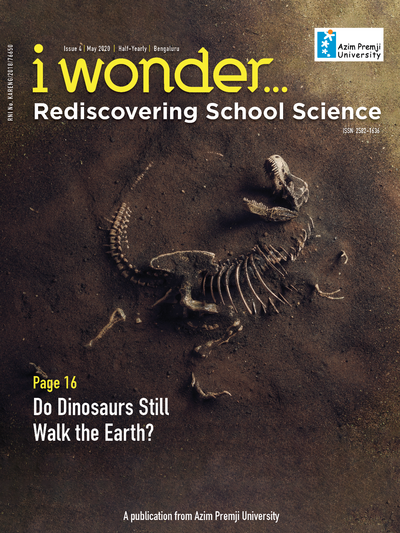
What does evolution by natural selection mean? How does ‘survival of the fittest’ explain the transformation of male clownfish into females? Or the many non-combative, non-competitive, and seemingly friendly interactions observed between ants and plants? Does it provide clues to the identity of the mysterious descendants of dinosaurs in today’s world? These are some of the questions we explore in our theme section ‘Evolution revisited’. In Annals of History, relive unsung surprises in the process of discovery of penicillin with interactive resources designed for the science classroom. How do we use pendulums to illustrate fundamental concepts in mechanics? How do we recognize and clarify incorrect student conceptions of the science of everyday phenomena? Find out with the detachable activity sheets & concept builders in ‘The Science Lab’.

- Published
- Authors
Abstract
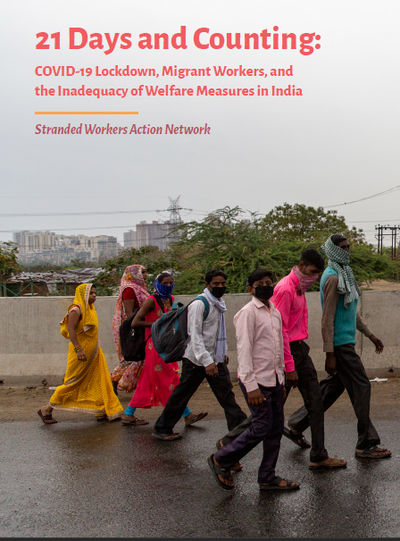
On the 25th of March 2020, the Prime Minister, Mr. Narendra Modi, announced a nationwide lockdown to stem the spread of the novel Coronavirus, COVID-19. The decision, while imminent, was unplanned and unilaterally made without any consultation with the state governments. This has consequently caught millions of migrant workers and the bureaucracy off-guard, leaving them no time to plan for such an emergency. While millions of migrants successfully reached their home states, only to be quarantined in camps, many remain stranded far from home, with no money or food. We are therefore confronting a lethal combination of crises: health, hunger, sanitation, and trauma, both physical and psychological.
The ordinary city and the extraordinary city : the challenges of planning for the everyday
in Azim Premji University

- Published
- Authors
Abstract
Recent work on informal urbanism argues that ‘informality’ is a strong force in determining and shaping how cities in the global south grow, and hence needs to be a part of emergent urban theory. This paper uses this argument as a starting point, drawing upon the work of scholars who suggest that urban informality may have an organizing logic, a system of norms that emerge from the economic conditions and the social needs of people. Specifically, this paper examines informality in the urban space as an outcome of spatial and economic changes in a market precinct in Bangalore. It finds that activities in the street are temporal in nature. In this paper, the ordinary city encapsulates how people use urban spaces on an everyday basis and the extraordinary city reflects how urban spaces are transformed during a periodic, religious and cultural festival. The paper makes two key contributions, one, to show through an in-depth spatial ethnographic study how the ‘ordinary – extraordinary’ might help us understand informal urbanism and two, to propose that it may be useful to have intermediate levels of planning that incorporate the conditions of the ‘ordinary’ city as well as the ‘extraordinary’ city, thereby contributing to both theory and practice.
Links

- Published
- Authors
Abstract
Children are, first and foremost, individuals and so it follows that their developmental patterns are influenced by environmental conditions. With even twins differing in their abilities and milestones, it is near impossible to predict at what rate a child will learn. Thus children enter school with a wide range of abilities — and therefore possibilities.
However, the assumption that all children can learn the basic curriculum at the same pace, in the same way and to the same extent and level- is unsupported either by research or by personal experience. If we agree that children have varied strengths (multiple intelligences) the it surely follows that teaching methods have also got to vary correspondingly and that there have got to be multiple teaching styles.
This issue addresses many of these concerns and to do that we have a wide range of articles from writers across the country which establish resoundingly that every child can indeed learn — only it requires empathy and compassion from the teacher to make it happen.
Links

- Published
- Authors
Abstract
Eighty-seven percent of agricultural households in India are small and marginal producers, cultivating small plots which generate low returns. Their average monthly income is Rs 6426, making farming on small plots economically unviable (NSSO 2014). Therefore, policy makers and practitioners are turning to producer collectives as a means for improving the economic situation of small producers.


- Published
- Authors
Abstract
Vision 2020 – As we move into the 9th year of AtRiA’s existence, we refocus for clarity. The March 2020 issue talks about Breaking Down Barriers: A Mathematical Approach. Launch right into the how and what with B. Sury’s article on Tiresome Paths, Water Gates and Euler’s Formula. But there’s more than networks and circuits here, starting with this issue, we will be focusing sharply on the challenges and difficulties of the average mathematics teacher and hoping to share and discuss strategies to help those who struggle with the nature and pedagogy of mathematics.
We have some wonderful material to draw you in- Conversations on the Greatest Common Divisor, Trials with Triangles, Impossible Triangles on Dot Sheets and some great Search Problems for the Middle School to mention a few. We start a new section called ViewPoint and continue with our photo series Captured Mathematics. TechSpace features the free dynamic geometry software Robocompass and our PullOut is on Angles. Our review this time is on the Mathematics of India.
Links

- Published
- Authors
- School of Education
Abstract
An immigrant, who worked in an American machine shop, acquired polite standard spoken English by reading romance novels in an 18-week adult extensive-reading English as a Spoken Language (ESL) class. Full time employment in the machine shop and once-a-week class discussions provided the only places where the student was routinely exposed to spoken English.

- Published
- Authors
Abstract
पाठशाला भीतर और बाहर के अंक 4 में एक लेख देश में महिला शिक्षा की पड़ताल करता है। एक अन्य लेख बचपन के अर्थ पर सवाल उठाता है और पूछता है कि क्या शिक्षा का एक मात्र उद्देश्य एक आदर्श बच्चे का विकास करना है; पत्रिका में शामिल एक और लेख शारीरिक दण्ड के सदियों पुराने सवाल की समाजशास्त्रीय पड़ताल करता है और एक दूसरे लेख का पहला भाग भारतीय शिक्षा पर मैकाले के प्रभाव की जाँच करता है। इस अंक के दो अनुभव आधारित लेख कविता कहानियों के माध्यम से भाषा शिक्षण के रुचिकर तरीक़े सुझाते हैं। संवाद में शिक्षकों व शिक्षक- प्रशिक्षकों के साथ मूल्यांकन और परीक्षा के विभिन्न पहलुओं पर बातचीत है। दो-एक लेख शिक्षा से जुड़ी नीतियों और इनके अमल में आने वाले मुद्दों की आलोचनात्मक पड़ताल करते हैं।
The fourth issue of “Pathshala ..” has an article that examines women’s education in the country; an article that interrogates the meaning of childhood and asks if the only purpose of education is to develop an ideal child; an article that examines the age old question of corporal punishment sociologically; the first part of an article that examines Macaulay’s relationship with/impact on Indian education; there are two experience based articles on interesting ways to teach language using stories and poems; and a discussion among teachers and other educators around assessments and examination. Some of these articles critically examine policies and the issues in their application.
Links
Fiscal Transfers and Inflation- Evidence from India
in Azim Premji University
- Published
- Authors
Abstract
Controlling for monetary policy, government transfers are potentially inflationary. This, however, may not be true when the economy is demandconstrained. Using a panel data of 17 Indian states over 30 years, we show that government transfers via welfare programs do not lead to inflation. For identification, we use a narrative shock series of transfer spending that is based on the introduction of new welfare programs. We then look at a specific program, NREGA, which has been shown to increase rural wages, and show that its implementation did not increase inflation.
Authors:
- Girish Bahal
- Anand Shrivastava
Links
The Size Structure of India’s Enterprises- Not Just the Middle is Missing
in Azim Premji University

- Published
- Authors
Abstract
Most international development economics and industrial organization literature emphasises the importance of SMEs (small and medium enterprises) as important to output, but especially to employment generation. Countries have different definitions for SMEs. In India the MSMEs (micro, small and medium enterprises) are defined in terms of investment in plant and machinery or equipment. The MSME Ministry (Annual Report, Government of India 2017 – 18) stated that the sector accounts for 45% of the manufacturing output and 40% of the total exports of the country; also that MSMEs accounted for 30.74% of GDP in 2014– 15. Not surprising, MSMEs are considered a driving force of the economy.
Authors:
- Santosh Mehrotra
- Tuhinsubhra Giri
Links
Learning Curve Issue 5 | Perspectives on Teaching Children with Disabilities
in Azim Premji University

- Published
- Authors
Abstract
In this issue, we have a wide range of articles from writers who have looked at children with disabilities in a variety of ways- but through the same lens: inclusion. There are articles tracing the history of different organizations which have worked for several years to create opportunities for the education of children with disabilities, language acquisition, travel, opportunities for independence and respectful acceptance, among others.
Links


- Published
- Authors
Abstract
AtRiA, November 2019 focuses on journeys ‑some are enjoyable, some tiresome, some endless. A mathematician’s journey is full of unexpected delight, simply because of unexpected detours, sudden discoveries and interesting alternatives. Have fun as you travel with us. Read all about the young Yatris and their journey of discovery in Features. This section also describes more abstract journeys from the Regular Pentagon to the Icosahedron and the Dodecahedron (Part 2) and from the familiar 2 and 3 dimensions to n dimensions in Extension of the Pythagorean Theorem. In ClassRoom, Simple Cryptography and Triangles with Integer Sides are articles sparked off by previous articles in AtRiA . An Unusual Proof of the Centroid Theorem, Modified Pascal Triangle and Orthocentre of a Triangle may motivate you to write similarly! You will find ideas in our regular columns – How to Prove It, Low Flow High Ceiling and TechSpace which features the simulation of a dice game this time. Our issue is short of 100% without the PullOut, enjoy the learning trajectory on Percentages, defined and illustrated with plenty of examples in this issue. How Craig Barton Wishes he’d Taught Maths is an excellent review by Sir Timothy William Gowers, reprinted from his Weblog.
Links
Political and programmatic decentralization in India’s health sector : insights from Karnataka
in Azim Premji University
- Published
- Authors
Abstract
While India has made progress in achieving important health sector goals, there is still a long way to go. The Government of India has adopted decentralization or devolution with the objective of promoting greater equity and supporting people-centred, responsive health systems. We report on a study that problematizes the idea of strengthening health sector governance through decentralization and that explores the intersection of the political goal of enhanced local-level autonomy and the programmatic goal of more responsive health service delivery. The study examines the extent to which both political and programmatic decentralization are functional at the village level; looks at the design and objectives of decentralization at the village level; and considers whether sustained and supportive capacity building can create the necessary conditions for more genuine de facto decentralization and empowerment of village-level functionaries. Our methodology included semi-structured interviews with village-level functionaries in two districts of Karnataka, based on which we designed an Action Research to strengthen coordination and synergy between the functionaries responsible for political and programmatic decentralization. We found that both political and programmatic decentralization at the village level are at risk due to a lack of convergence between the political and programmatic arms of the government. This is substantially due to problems inherent in the design of the decentralization mechanism at the district level and below. Sustained capacity building can contribute to the more effective application of decentralization mechanisms, but systemic issues regarding the decentralization mechanisms need to be addressed alongside. We were also able to identify some spaces where coordination between village-level functionaries is possible, and the steps that need to be taken to build on this potential.
Links
- Published
- Authors
Abstract
This article analyses relationships between the implementation of state-level industrial policies in India and manufacturing sector economic performance (employment and gross value added), utilising data from the Annual Survey of Industries conducted by the Government of India. I employ panel data fixed-effects regression models to evaluate the associations between the industrial policy and state-industry specific performance over the 2007-08 to 2014 – 15 period, incorporating potential effects of the state government’s political alignment, infrastructure provision and educational expenditure in the state. The results provide evidence of a positive correlation between industrial policy implementation and firm output and employment, by around 12.6 — 14 per cent. However, subsequent introductions of an industrial policy are negatively associated with employment and are uncorrelated with industrial GVA. This analysis has implications for economic policy in light of the Central Government’s plans to implement a revised industrial policy at the national scale.
Author:
- Raavi Aggarwal
Links
- Published
- Authors
Abstract
To contribute to the critical matter of India creating just and sustainable employment, the University has set up the Centre for Sustainable Employment (CSE), which conducts and supports research in areas of work, labour, and employment. The University is attempting to provide empirically grounded, analytical reflections on the state of work and workers in India, as well as to evaluate and propose policies that aim to create sustainable jobs. To this end the University also gives grants to create new knowledge in the above areas. It also hosts a working paper series to which contributions are invited from researchers, policy-makers, civil society actors, and journalists. The University’s CSE website is an important part of this agenda. In addition to research papers and policy briefs, it hosts government reports, as well as data and statistics on the Indian labour market. This also includes executive summary of the report.
State of Working India 2019 consists of labour market trends between 2016 and 2018, and four policy papers around the theme of employment generation.
Release event: Presentation and panel discussion
State of Working India 2019 Release Event Part One — YouTube
State of Working India 2019 Release Event Part Two — YouTube
Links
- Published
- Authors
Abstract
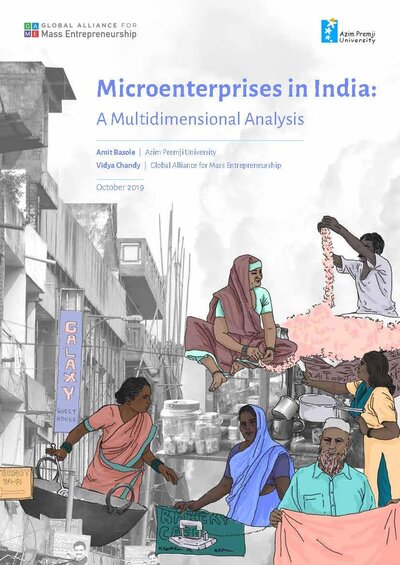
Microenterprises have been the engines of job growth in the majority of dynamic economies. India is home to thousands of microenterprise clusters as well as millions of distributed entrepreneurs who can become job creators. Fostering of such mass-entrepreneurship is key to addressing India’s employment challenge. Case studies of clusters in general, and of women entrepreneurs in particular, show that if key factors such as collective action, infrastructure, credit, and market linkages are in place, returns to entrepreneurship are vastly improved. Inspirational stories are also emerging in the use of fourth industrial revolution technologies to improve access to markets and enter global value chains in a way that awards greater agency to women entrepreneurs.
Links
India’s Employment Crisis- Rising Education Levels and Falling Non-agricultural Job Growth
in Azim Premji University
- Published
- Authors
Abstract
Falling total employment is an unprecedented trend seen from 2011-12 to 2017 – 18. Due to a decline of employment in agriculture and manufacturing and slow growth of construction jobs, the process of structural transformation, which had gained momentum post-2004 – 5, has stalled since 2012. Mounting educated youth unemployment, and lack of quality non-farm jobs have resulted in an increase of the disheartened labour force. Though the share of regular and formal employment increased marginally due to growth of formal jobs in the private sectors, the share of informal jobs within government/public sector increased. A dominant share of jobs is still generated by micro and small units of the unorganized sectors without any formal or written job contract. In both government and private sectors the number of contract jobs (with less than a year’s contract) is on the rise post 2011-12. Not surprisingly, real wages have not increased in either rural or urban areas.
Authors:
- Santosh Mehrotra
- Jajati K. Parida
Links

- Published
- Authors
Abstract
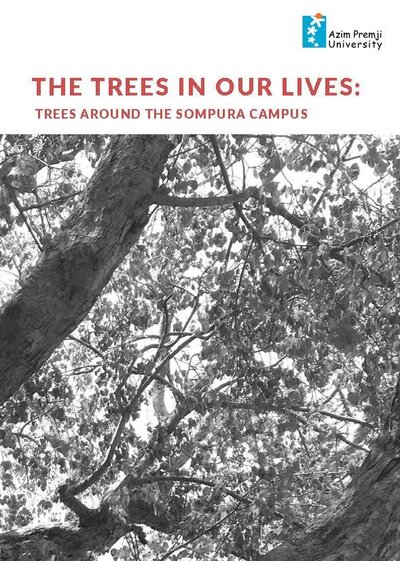
An exercise done consecutively in two years may not constitute a tradition. But for the students of the elective “Urban sustainability in India: A social-ecological perspective”, mapping and knowing about the trees in the immediate vicinity of their campus is a ritual (read assignment). Working in groups of two, each group selected three trees of different species. They were required to identify the species, giving the scientific, common and Kannada names. Using their phones, they collected the GPS points of the trees, marking the location where each of the trees stood. They calculated the height of the tree using a clinometer, measured the girth in the field, and this data was used to calculate the above ground and below ground biomass, as well as the carbon stored by these trees. They also collected information on the economic, social, and cultural uses of the different species, documenting the multiple everyday benefits that we all derive from the trees around us. This booklet is the collective output of the class, based on their observations, the data collected by them in the field and secondary information sourced mainly from the internet. 30 trees of 16 species around the campus were mapped.
Links
The Limitations of India’s Census Legislation
in Azim Premji University
- Published
- Authors
Abstract
Most discussions on the quality of government data overlook the legal framework within which data are collected. This paper examines India’s Census Act, 1948, which provides the legal-administrative framework for conducting human population census. The Act stipulates punishment for interfering with the process of enumeration, but the punitive provisions are rarely used and have not been invoked to deal with cases of mass manipulation of the census. Major instances of manipulation were, in fact, reported in 1951 and 2001 after the government introduced additional punitive measures in 1948 and 1994, respectively. This paper compares the Census Act, 1948 with other Indian laws related to the collection of statistics as well as census laws of other common law countries and identifies the structural flaws of the Indian law vis-à-vis manipulation. It uses simple games to explain why the punitive provisions of the Census Act, 1948 are redundant in the event of mass manipulation and suggests that the problem can be addressed without recourse to law. The insights drawn from the games are examined in light of the experience of Nagaland, a state of India where census statistics were manipulated on a large scale in 2001.
Links

- Published
- Authors
Abstract
पाठशाला भीतर और बाहर का तीसरा अंक स्कूली शिक्षा के दो महत्त्वपूर्ण सरोकारों पर चर्चा व विश्लेषण करता हैं- रटन्त पढ़ाई का मसला और सही मायने में सीखने का सवाल। शारीरिक दण्ड के ऐतिहासिक और दार्शनिक आयामों पर भी इसमें एक लेख शामिल है। इस अंक में कुछ अनुभव आधारित लेख भी हैं जिनमें एक ग्रामीण परिस्थितियों में शिक्षक की निर्मिति पर, एक स्कूल हेडमास्टर की यादों पर और एक इस बात से सम्बन्धित है कि हम बच्चों को कितना समझते हैं। भारत में शिक्षा के विकास पर लेख की ऋंखला इस अंक में भी जारी है क्योंकि इसमें यात्रा के एक महत्त्वपूर्ण कालखंड के अध्ययन को प्रस्तुत किया गया है। हर अंक की तरह इस अंक में भी शिक्षकों से साक्षात्कार और पुस्तक चर्चा जैसे स्थाई स्तम्भ शामिल हैं।
The third issue has articles that discuss and analyse two important concerns of school education – the question of rote memorization and actual learning. There is also an article on the historical and philosophical dimensions of corporal punishment. There are interesting experience-based articles – one on the process of making of a teacher, one on the reminiscences of a school headmaster and another related to how much we understand children. The series on the development of education in India continues as it covers an important period in that journey. Then there are regular columns like interview with a teacher and book reviews.
Links