
Publications & Resources
Our faculty, students and researchers work together everyday to contribute to a better world by grappling with urgent problems we are facing in India. We conduct rigorous work to produce high quality learning resources and publications to contribute to public discourse and social change. Here, we feature a sample from our work for everyone to access. You can explore featured resources, policies, and the latest publications from the University.
To explore all the work of our University, please visit our publications repository.

- Published
- Authors
Abstract
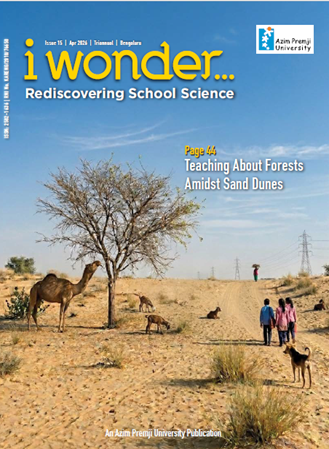
How can we use textbooks to teach our students about forests from direct observation of local ecosystems? In ‘Teaching about forests: Interpreting curricular aims’ a government school teacher explores national curricular aims within a state’s cultural history. ‘Teaching about forests amidst sand dunes’ shows how a teacher educator extends dense, wet forest examples to community-managed scrub forests in arid landscapes. ‘Teaching about forests in the laboratory of the real world’ uses a journalist’s lens to reveal the uneven impacts of conservation models on forest-dependent communities. Together, these stories show how we can use the textbook to turn our surrounding environments into living, breathing science classrooms.
Links

- Published
- Authors
Abstract
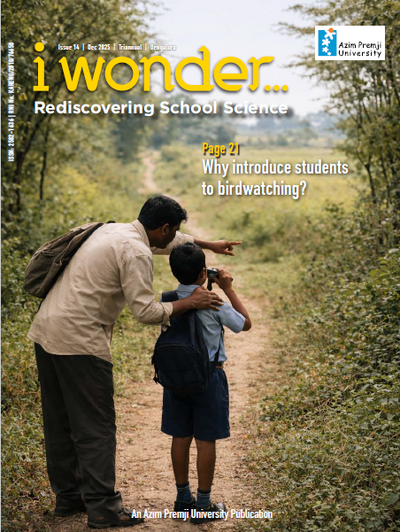
Science teachers often struggle to make space for themes that feel personal or are not directly linked to examinations. This issue focuses on two such themes: adolescence and birdwatching. ‘Using science to support students in navigating adolescence’ illustrates how science can help students understand physical, emotional, and social changes, while creating a supportive space for discussion. ‘Why introduce students to birdwatching?’ shows how a simple, low-cost activity can build core scientific practices such as observation, recording, comparison, and inference. Together, the articles offer practical ways to connect science teaching with students’ everyday lives and local environments.

- Published
- Authors
Abstract
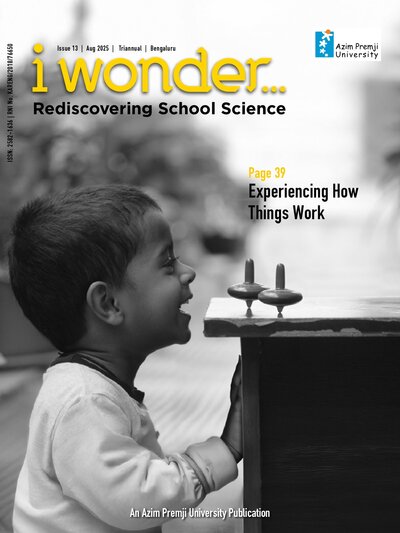
Students learn about the properties of matter in Grade VI and its particulate nature in Grade VIII. But can they connect these concepts with observations and experiences of ‘air’ from their everyday world? Can we use an empty tumbler and an inflated balloon to offer visual evidence of these properties? Explore these questions through the articles and classroom resources in our theme section ‘Materials Around Us’.

- Published
- Authors
Abstract
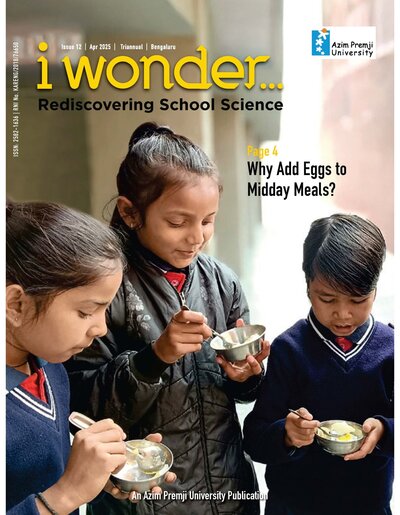
Can textbook concepts on health and nutrition equip students with the ability to critically analyse common beliefs around the addition of eggs in midday meals?
What can students learn about infectious diseases and the nature of science from the real-world example of the GBS outbreak in Pune?
Explore these and related questions in our theme section ‘Science in Action’. Find articles and classroom resources that support you in creating opportunities for your students to appreciate the relevance of textbook concepts and principles in preparatory-stage EVS and middle-stage science in their real world.

- Published
- Authors
Abstract
How can the experience of making a simple pinhole camera with inexpensive materials help our students think more creatively and critically about light?
How can conversations around an athlete’s record-breaking sprint actively engage our students in learning concepts around linear motion?
What do our students learn about the practice of science when we encourage them to write the biographies of scientists who appear in their textbook?
How do we provide spaces for our students to make and manipulate new materials from old discarded or inexpensive material?
Read this issue to explore these and many other such teaching-learning experiences in middle-stage science and preparatory stage EVS.

- Published
- Authors
Abstract
How do we introduce students to astronomy without the expensive instruments modern astronomers use and when regular school hours are nearly always during the day?
How can engaging with justice issues empower science learning, especially for learners who come from communities that have been traditionally excluded from science learning and careers?
Who are the pollinators in our neighbourhood and can we identify them by traits that plants may evolved to attract them?
Can simple practical demonstrations, like pushing a chair or dropping objects from a height, help students understand the relationship between force and motion more accurately?
Join us in exploring these and many other such questions in our commemorative issue.

- Published
- Authors
Abstract
How was oxygen discovered? When was it first recognised as a chemical element?
How do we transform the science lab into a space that encourages students to learn about germination by designing and conducting their own experiments?
How do metaphors, explanations, and illustrations in textbooks and our classroom instruction shape common misconceptions about the atomic theory?
What role do empathy and care for local places have in addressing the ecological crisis?
Join us in exploring these and many other questions.
Links

- Published
- Authors
Abstract
What role do ‘chemical experiences’ play in helping children grasp the particulate nature of matter and use this idea to explain observed phenomena?
How do we use the art and aesthetics of lithography to introduce children to chemical reactions? What skills would children learn from this multisensorial and fun approach to science?
Why is it important for teachers to trace the history of evolving definitions of elements and atoms, and communicate the conditional nature of their validity?
Can we use poetry to teach chemistry? How would it change the ways in which students engage with science?
Join us in exploring these questions in three sections of our latest issue – Our Chemical World, I am a Scientist, and Snippets.
Links

- Published
- Authors
Abstract
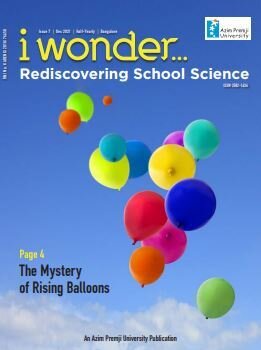
Why do party balloons rise in air? How high can they go? When do they drift to the ground?
How much water do plants lose? Do they lose it only as water vapour? Can they regulate water-loss?
Which chemical bonds are stronger — covalent or ionic? How can we tell?
Can we grow a dense forest of native species in congested urban spaces or degraded land? How long would this take?
Who were the first people to measure the size of the earth? How did they do it?
Join us in exploring these questions in our new section — Ask a Question.
Links

- Published
- Authors
Abstract
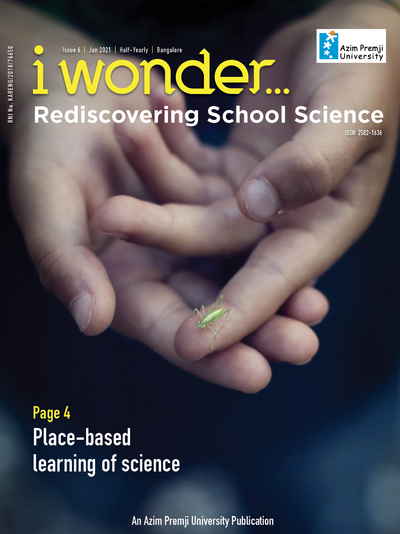
Does the teaching and learning of science change when we give importance to relationships with people, other beings, and the places they inhabit?
How do we use an exploration of water to help children connect basic science concepts with personal experiences and pressing environmental issues?
Can observing, exploring, and working in their natural environment offer children and teachers the opportunity to cultivate an intuitive understanding of the nature and process of science?
What personal choices and simple actions in our everyday lives can help us begin engaging with climate change?
Join us in exploring these questions in the theme section of this issue — Teaching as if the Earth Matters.
Links

- Published
- Authors
Abstract
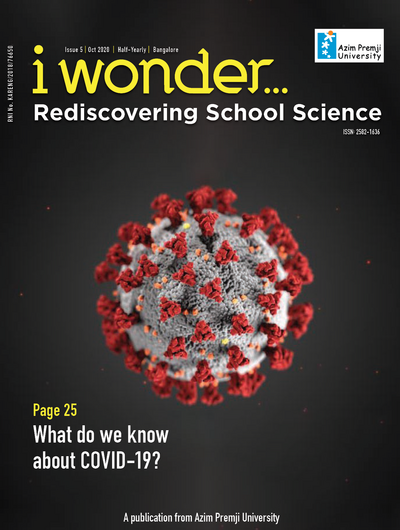
This issue is focused on the Pandemic. Read ‘The Basics’ section to explore: what strategies do epidemiologists use to control the spread of infection? Are viruses the most complex or the simplest forms of life? What has caused the spike in frequency of new zoonoses since the 20th century? In ‘The Infection’ section, engage with questions like: why do we believe that SARS-CoV‑2 is a product of natural evolution? How exact are measurements of death rates for an ongoing pandemic? Or, how does the nature and context of social interaction affect the spread of COVID-19? Delve into ‘Our Response’ section to read: why ‘designing’ and ‘making’ vaccines against SARS-CoV‑2 is uncertain and time-consuming? What can we learn from deliberately exposing healthy consenting individuals to a weakened form of the SARS-CoV‑2 virus? Which tests would be most effective for contact tracing & which for population-wide screening? How do we identify antivirals against SARS-CoV‑2? Can community health workers clinically diagnose COVID-19 syndrome in the absence of testing kits? Why is training and provision of personal protective equipment for ASHA workers essential for effective healthcare? How can a reverse quarantine approach help us use herd immunity to our advantage? That’s not all. Are you looking for resources on understanding concerns & approaches towards the mental health of the elderly, children, and those under quarantine? Or mythbusters around SARS-CoV‑2? Check out our Snippets.
Links
- Published
- Authors
Abstract
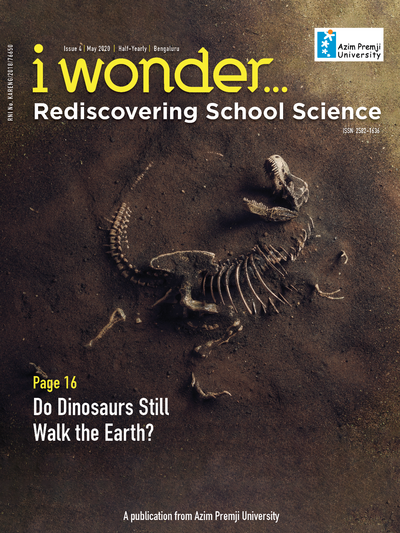
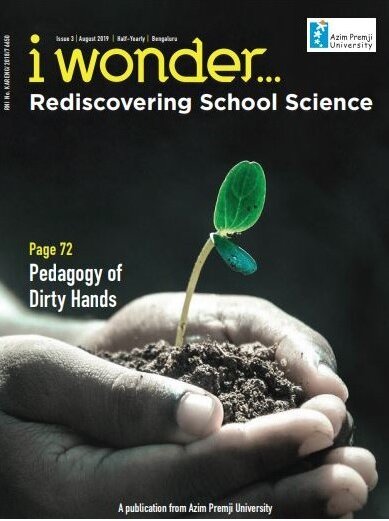
What does evolution by natural selection mean? How does ‘survival of the fittest’ explain the transformation of male clownfish into females? Or the many non-combative, non-competitive, and seemingly friendly interactions observed between ants and plants? Does it provide clues to the identity of the mysterious descendants of dinosaurs in today’s world? These are some of the questions we explore in our theme section ‘Evolution revisited’. In Annals of History, relive unsung surprises in the process of discovery of penicillin with interactive resources designed for the science classroom. How do we use pendulums to illustrate fundamental concepts in mechanics? How do we recognize and clarify incorrect student conceptions of the science of everyday phenomena? Find out with the detachable activity sheets & concept builders in ‘The Science Lab’.

- Published
- Authors
Abstract
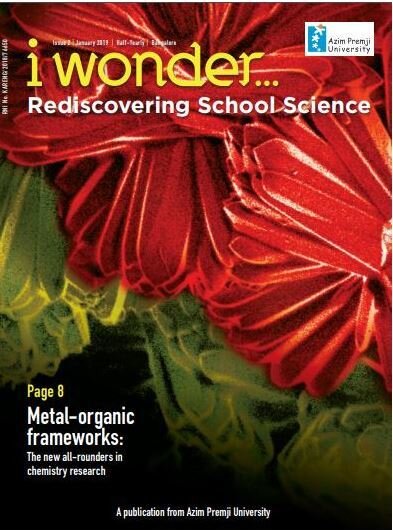
Explore big questions around 4 themes: black holes, the wound healing capacity of the skin, Higgs bosons, and the matrix of life.
Use the activity sheets in ‘A milky way to learn biology’, ‘What do we really see’, and ‘Trees and seasons in a changing world’ to introduce students to thinking like a scientist, the human vision, and neighborhood trees.
Discover how astronomers measure distances in space in our new section ‘How do we know?’ Explore how engaging students in raising an urban terrace farm can strengthen their understanding and involvement with the local environment in ‘Pedagogy of dirty hands’.
Try out the concept builder from ‘Physics for closeted Aristotelians’ to find out how well your students understand motion under gravity.
Read our ‘Research to practice’ section to discover how to create embodied learning experiences for students in the science classroom. Or learn more about the first image of a black hole in our section ‘Hot off the press’.
Looking for more? Enjoy our pull-out poster on human skin and booklet on identifying 10 common trees.
Links

- Published
- Authors
Abstract
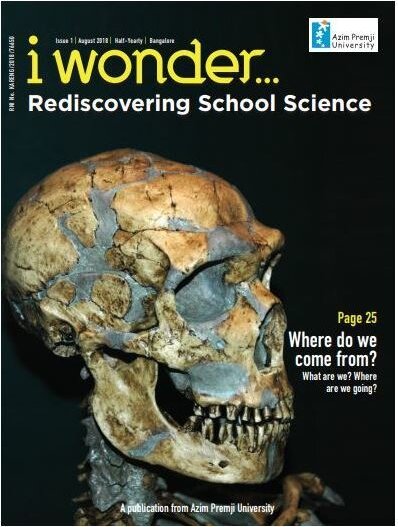
Explore three ‘Emerging Trends in Chemistry’ – new elements, metal-organic frameworks, and fluorescent tags. Read ‘Serendipity’ & ‘Annals of History’ to re-live the exciting jigsaw-puzzle-like process of scientific discovery – whether of a novel protein or the structure of DNA.
Engage with the process of encouraging peer instruction in the science classroom through ‘Students as Teachers’, or use our activity sheet ‘Early Bird Nature Detectives Bingo’ to get students to observe (non-human) life in their backyards.
Use our ‘Science Lab’ section to get your students to calculate their molar masses (!) or understand pressure and volume through simple experiments with easily available low-cost materials.
Discover the chemicals in everyday phenomenon through ‘The Scent Orchestra of Flowers’ & ‘The Chemistry of Life’.
Explore the concept of energy from three very different perspectives with ‘The Mystery of Dark Energy’, ‘Powering (human) Life on Earth’ & ‘Clean Energy’. Plus, enjoy our two pull-out posters on ‘Doppler Effect’ and ‘Some interesting scents of flowers’.
Links

- Published
- Authors
Abstract
Explore the ‘Evolution’ of stars, the Earth, life, and humans through three articles for our adult readers and one short story written for young adults.
In ‘Annals of History’ relive the contentious process of arriving at the unexpected mathematical pattern that has become key to our understanding of the diversity of life on Earth.
Read ‘Research to Practice’, ‘The Science Educator at Work’ and ‘Teaching as if the Earth Matters’ to see how complex concepts related to energy, evolution and soil can be taught through metaphors, art and real-world experiences.
Learn more about Lynn Margulis’s ‘controversial’ ideas and life in science in ‘Biography of a Scientist’. If you’d like more, try some simple classroom experiments from ‘The Science Lab’ to understand foundational principles in Physics.
Use the seven activity sheets from ‘Life in your Backyard’ to introduce your students to the fascinating world of spiders. Plus, enjoy our nine pull-out posters on themes as diverse as ‘Benthic Fauna’, ‘The Hard Problem of Consciousness’, and ‘Ocean Acidification’.
Links

- Published
- Authors
Abstract
Engage with 2 themes — ‘Emerging Trends in Physics’ and ‘Indian Science Facilities’ — by exploring methods & processes defining future research in areas as fascinating as the discovery of black holes, understanding dark matter, using radio-astronomy to probe the universe, enabling space travel, the search for exoplanets, & establishing human settlements on Mars. In ‘Origins’ & ‘Annals of History’, piece together current understanding of our shared history through the beginnings of space-time & planetary worlds, the notion of elements, or that of life. Discover simple classroom activities to reveal & challenge mental models of force in ‘The Science Lab’, encourage the use of art to study ecology in ‘The Science Teacher at Work’, or integrate social justice in the science curriculum in ‘Research to Practice’. Also discover little-known aspects of ‘The Origins of Composting’ & ‘Ocean Microbes’ in our pull-out posters!
Links

- Published
- Authors
Abstract
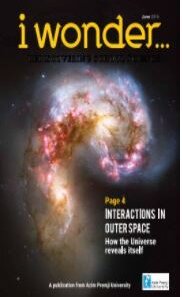
In ‘Interactions’ & ‘Emerging Trends in Biology’, explore articles on chemical ecology, the common cold, fundamental forces, gut microbes in health & disease, & memory. In ‘The Science Lab’, discover simple classroom activities to teach photosynthesis & daytime astronomy. In ‘Annals of History’, trace the journey of microscopy from the simple magnifying glass to the powerful electron microscopes & easy-to-assemble foldscopes available today. Discover the writer & physician Oliver Sacks through his fascination for the human brain, bikes and stories in ‘Biography of a Scientist’. Enjoy our pull-out poster on ‘Ten things you didn’t know about – Bones’ & nature-based activity sheets – ‘Chirp Chirp’, ‘Hibiscus Tales’, ‘Bark Bites’ & ‘All about Ants’! Or browse through our pocket-size pictorial guide to common butterflies!
Links

- Published
- Authors
Abstract
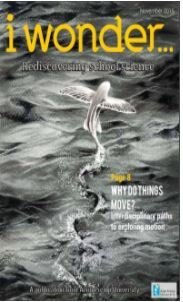
Explore ‘Inter-disciplinary Science’ with 5 articles that connect knowledge, methods, & perspectives from across the natural sciences. Trace the exciting history of familiar science concepts in ‘Serendipity’ & ‘Annals of History’. Enjoy reading about the quirky & brilliant J.B.S Haldane in ‘Biography of a Scientist’. Re-discover the wonders of the world within us (Macrophages) & in outer space (Mars Orbiter Mission) in our section ‘In here/Out there’. Prepare to be surprised by the colourful life of the humble fly in the section on ‘Nature in your Backyard’. Check out our ‘Science Online’ section for a step-by-step introduction to an open access software tool for understanding Time. Also enjoy our pull-out posters on ‘Experiments with Water’ & ‘Ten things you didn’t know about – Blood’!
Links