
Publications & Resources
Our faculty, students and researchers work together everyday to contribute to a better world by grappling with urgent problems we are facing in India. We conduct rigorous work to produce high quality learning resources and publications to contribute to public discourse and social change. Here, we feature a sample from our work for everyone to access. You can explore featured resources, policies, and the latest publications from the University.
To explore all the work of our University, please visit our publications repository.
List of Publications & Resources

- Published
- Authors
Abstract
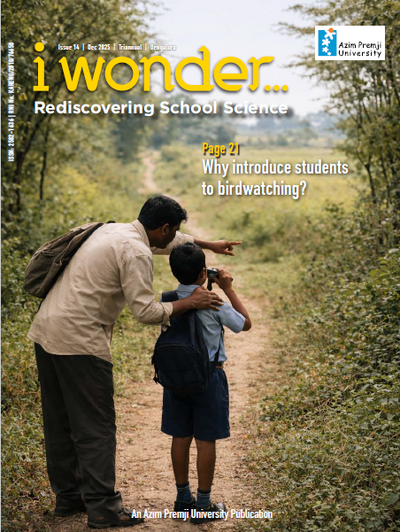
Science teachers often struggle to make space for themes that feel personal or are not directly linked to examinations. This issue focuses on two such themes: adolescence and birdwatching. ‘Using science to support students in navigating adolescence’ illustrates how science can help students understand physical, emotional, and social changes, while creating a supportive space for discussion. ‘Why introduce students to birdwatching?’ shows how a simple, low-cost activity can build core scientific practices such as observation, recording, comparison, and inference. Together, the articles offer practical ways to connect science teaching with students’ everyday lives and local environments.
Rural Transformation in India: What can we learn from village studies?
in Azim Premji University

- Published
- Authors
Abstract
This article examines rural transformation in India through a review of longitudinal village studies conducted over the past three decades. It argues that rural India is not undergoing structural transformation in the classical sense. While labour is steadily moving out of agriculture, this shift has not led to higher productivity in agriculture or the development of a robust rural nonfarm economy. Instead, what unfolds is a process of deagrarianisation, driven by out-migration of male workers to cities where they engage in informal nonfarm employment. This transition is uneven and remains deeply embedded in existing hierarchies of caste, class, and gender, which shape both access to opportunities and outcomes. By identifying common patterns across diverse regional contexts, the article shows how village studies provides a grounded perspective on the nature of rural change.
Author:
C.R. YaduLinks

- Published
- Authors
Abstract
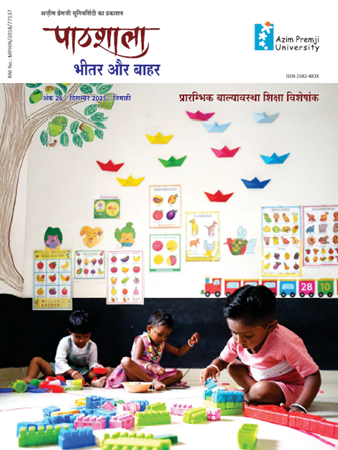
पाठशाला भीतर और बाहर का दिसम्बर अंक केन्द्रित है ‘प्रारम्भिक बाल्यावस्था और शिक्षा’ पर। इस अंक में प्रारम्भिक बाल्यावस्था और शिक्षा पर केन्द्रित विविध अनुभव-आधारित आलेख, एक सैद्धान्तिक लेख, शिक्षकों की डायरी में दर्ज उनके अनुभव उन्हीं की कलम से, कुछ रोचक तथा आसानी से की जा सकने वाली गतिविधियाँ और ऐसी किताबें, जिनका उपयोग प्रारम्भिक बाल्यावस्था के लिए किया जा सके, शामिल हैं। साथ ही ‘उम्मीद जगाते शिक्षक’ के अन्तर्गत एक आँगनवाड़ी कार्यकर्त्री, जिन्होंने अपने केन्द्र को बदलाव के नए स्तर दिए, की यात्रा के अनुभव, उनकी कहानी भी है।
Widespread practices and sustainability benefits of foraging in urban blue spaces of India
in Nature Cities
Article
- Published
- Authors
Abstract
Urban blue spaces, such as lakes and rivers, are increasingly recognised for their ecological and social roles, yet their contributions to sustainable food systems remain understudied. Here, the researchers examine the extent and benefits of foraging in urban blue spaces across four major Indian cities through a survey of 1,200 users. We identify three forager groups, that is, ‘rare’, ‘occasional’ and ‘frequent’ foragers, whose behaviours differ in frequency and practice. Women, the elderly and marginalised communities most frequently collect, share, cook and sell edibles. Access to home or community gardens strongly motivates occasional foragers. Frequent foragers emphasise benefits relating to nutrition and income, as well as culture and social capital, whereas occasional foragers appreciate nature- and culture-related benefits. The findings challenge conventional perspectives on urban food provisioning, highlighting urban blue spaces as vital yet overlooked spaces for food access and resilience. Integrating foraging into urban planning can enhance equitable food systems, fostering transformative change toward sustainable urban landscapes.
Authors: Sukanya Basu, Brenda Maria Zoderer, Harini Nagendra, Peter H Verburg, Tobias Plieninger
Links
Inclusive Education in India: Examining Emerging Epistemologies
in Reframing Developmental Psychology: Perspectives from the Global South, Emerald Publishing Limited

- Published
- Authors
Abstract
This chapter critically examines the different conceptions and emerging paradigms in the discourse on inclusion in the context of education in India. The researcher interrogates the nature of inclusive education and argues for an epistemology that emerges from the paradoxes, diversity and disparities that characterise schools and classrooms in the Indian context. In doing so, the researcher scrutinises the emerging trends in education research and the ‘new’ epistemology from the global North which attributes agency to the practitioner, the parent and the child to participate in the education discourse, shifting the equation of power in the construction of knowledge. In this chapter, she examines the connotations of these new, emerging trends for research, practice, and policy on inclusion for India. The chapter presents the tensions in arriving at conceptions of inclusive education and how that has impacted policy and its realisation in practice. The central thesis of the paper is constructed through a close examination of the different forms of marginalisation that characterise Indian classrooms, the situation of the disadvantaged child, the parent and the teacher in the context of education.
Links
Social norms and women’s employment in India: A district level analysis
in Azim Premji University

- Published
- Authors
Abstract
Reducing gender disparities in workforce participation is an important policy goal in several developing countries. India, in particular, has historically had low levels of women’s workforce participation as compared to men and as compared to peer economies. Prior research has identified both supply and demand-side explanations for low levels of women’s participation in paid work. On the supply side, social norms constraining women’s mobility and autonomy are commonly invoked as one explanation. We test the relevance of such norms in explaining heterogeneity in women’s employment using district-level data from the National Family Health Survey (NFHS) 2015 – 16 and the Sixth Economic Census (2013). Norms indices are constructed using Principal Components Analysis for 640 districts of India. The findings indicate that less restrictive norms related to decision-making, mobility, and asset ownership are positively correlated with higher levels of women’s employment.
Authors:
Subhapriya Chakraborty and Amit Basole
Links

- Published
- Authors
Abstract
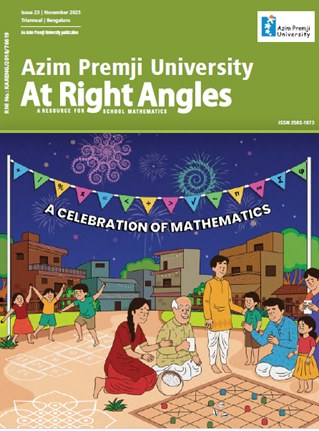
The November 2025 issue of At Right Angles takes a look at the annual celebration of the National Day of Mathematics on December 22. Celebrating mathematics makes perfect sense to some, far less to others- with the articles in this issue, we hope to make persuasive arguments that cause shift towards those who love patterns, who enjoy discovery, who believe in celebrating reason, elegant arguments – in short, Mathematics!
Towards Strengthening Primary Health Care: Lessons from a Government-Civil Society Collaborative Intervention in India
in Journal of Community Systems for Health (JCSH)

- Published
- Authors
- School of Development
Abstract
The need to strengthen comprehensive primary health care towards ensuring “Health for All” is well established yet operationalising this has remained a challenge globally as well as in India. Based on a qualitative study of a collaborative initiative between the government and a civil society organisation, this article discusses what factors and processes explain successful implementation of primary health care in a remote rural area in central India.
Authors: Arima Mishra, Raman Kataria, Roseline Sagar, Pawan Singh, Pankaj Tiwari, Shivkant Tripathi, Vinay Vishwakarma, Sapna Mishra
Links
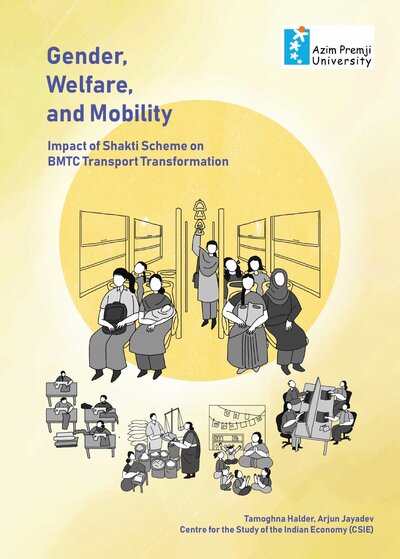
Gender, Welfare, and Mobility: Impact of Shakti Scheme on BMTC Transport Transformation
in Azim Premji University

- Published
- Authors
Abstract
The Shakti scheme, launched by the Government of Karnataka in June 2023, represents one of the most ambitious efforts in India to reimagine welfare by providing free public transport for women. Unlike welfare programmes based on targeted cash transfers, this scheme redefines inclusion through the provision of a universal, non-cash public service mobility. This report is an assessment of the evolution of the scheme with specific regard to the BMTC’s experience. In the period studied– January 2023 to March 2025, covering both pre- and post-implementation phases – the scheme generated a significant surge in bus usage across the state. With more than 2.89 crore trips recorded, a striking transformation in mobility patterns was observed. Importantly, women riders quickly outnumbered men on many of the busiest routes– especially in the Central Business District, reflecting a major shift in access to and usage of public transport. The ridership gains were particularly sharp in the first six months following the scheme’s launch and have since stabilised, indicating a sustained and regular usage pattern among women. The report is divided into three sections. In the first, the researchers discuss state-level free travel schemes. They address certain questions about Karnataka’s experience within wider debates about universalism versus targeting in social policy. In the second, they discuss the report, its methods and findings. In the final section, they discuss some potential paths forward.

- Published
- Authors
Abstract
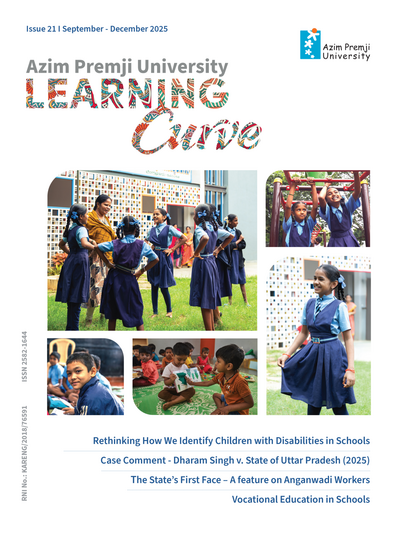
This issue of our magazine brings together articles that point to a simple truth: meaningful reform rests on inclusion and enablement, which calls for an education system that expands possibilities for all learners, strengthens the capacities of teachers and Anganwadi workers, and finally draws on the voices of all stakeholders of the system in shaping the way forward.
Links
- Published
- Authors
Abstract
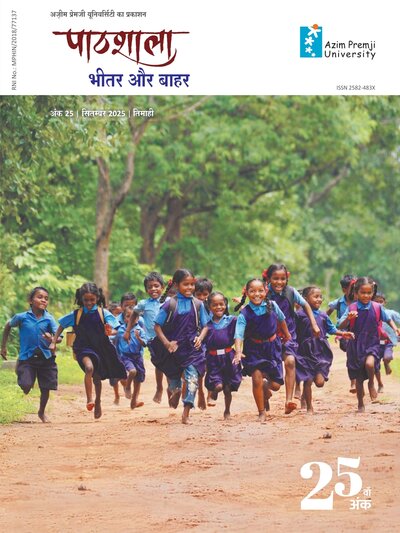
पाठशाला भीतर और बाहर का यह विशेष अंक है। इस अंक के साथ पाठशाला पत्रिका ने 25 अंकों का सफ़र तय किया है। इस विशेष 25वें अंक में शामिल हैं 13 राज्यों से आई 25 शिक्षकों की डायरियाँ जिनमें दर्ज हैं उनके कक्षा अनुभव। साथ ही, 5 आलेख ‘बन्धुता की शिक्षा’, ‘शिक्षकों के विकास में सहयोग ही उनका सम्मान है’, ‘शिक्षा और शिक्षक : ज़मीनी चुनौतियों को समझने की जरूरत’, ‘विद्यार्थियों के जीवन को आकार देते हैं शिक्षक’, ‘पाठशाला भीतर और बाहर के 25 अंकों का सफ़र’ शामिल हैं। ये आलेख शिक्षकों के काम को भरोसे के तौर पर देखते हैं, और आने वाले समय में शिक्षा में सकारात्मक बदलाव के प्रति आश्वस्ति जगाते हैं।
- Published
- Authors
Abstract
Unemployment is one of the key macroeconomic variables used to assess the performance of an economy. However, there is a bias towards conceptualizing unemployment solely through its predominant measure of rates. Considering that rates alone do not reflect labor market conditions, especially in developing countries, it is crucial to include unemployment duration in analyzing labor market efficacy and the larger economy. This paper utilizes longitudinal data from CMIE to understand the determinants of unemployment duration through an OLS linear regression and survival analysis. It finds that the groups that experience longer spells of unemployment are young and old individuals, the highly educated, and upper caste individuals. Nonparametric survival analysis is also employed to account for censoring through the hazard and survival function. This model also finds that duration dependence is non-monotonic with individuals experiencing high initial re-employment probabilities before experiencing a decline in their hazard rates. However, analysis of re-employmentwages and occupation indicates a positive association with unemployment duration which indicates potential benefits to extended job search.
Author:
Roshan Kannan
Links
- Published
- Authors
Abstract
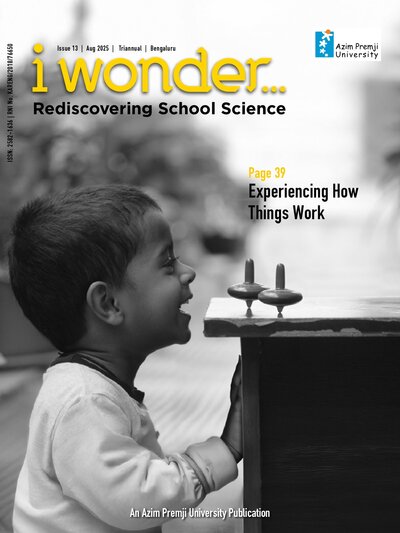
Students learn about the properties of matter in Grade VI and its particulate nature in Grade VIII. But can they connect these concepts with observations and experiences of ‘air’ from their everyday world? Can we use an empty tumbler and an inflated balloon to offer visual evidence of these properties? Explore these questions through the articles and classroom resources in our theme section ‘Materials Around Us’.

- Published
- Authors
Abstract
More than just an academic space, the Azim Premji University campus in Bengaluru is fast becoming a thriving ecosystem of its own. Located in Sarjapura, the campus is more than classrooms and labs — it is a habitat shared with birds, reptiles, insects, small mammals, and a growing canopy of trees and plants. This report is a first step in documenting the biodiversity of our campus. From trees and shrubs to spiders and snakes, students of the BSc in Environmental Science and Sustainability, teachers, and other members have come together to observe and record the life that surrounds us. Thus, this is a collective effort that reflects both scientific curiosity and deep care for our environment. As the campus grows, we aim not only to track carbon sequestration and environmental change — but also to nurture a sense of stewardship and belonging in everyone who calls this campus home.
Links
Economic concentration in India: The role of financial conditions
in Azim Premji University
- Published
- Authors
Abstract
This paper examines recent trends in corporate concentration in India’s non-financial sector, with a focus on developments since 2015. Using firm-level data from the CMIE Prowess database we document changes in asset and income distribution across firms. We find that while the overall decline in the public sector’s share of assets and income contributed to a reduction in measured concentration in earlier years, this was accompanied by a steady increase in the share held by large private business groups. By 2023 – 24, the top five business groups — Reliance, Tata, Adani, Aditya Birla, and Bharti — accounted for approximately 24(%) of total assets and 16(%) of total income in the non-financial corporate sector.
Authors:
Links
Cross state comparison of excess deaths during the covid pandemic in India: Some measurement and methodological considerations
in Azim Premji University

- Published
- Authors
Abstract
This paper assesses excess mortality in India during the COVID-19 pandemic, focusing on the year 2021 when the country experienced a substantial surge in deaths. Drawing on newly released official data from the Civil Registration System (CRS) and the Sample Registration System (SRS), and supplemented with estimates based on the National Family Health Survey (NFHS‑5), we construct a range of mortality estimates using multiple baseline comparisons. Excess deaths are calculated in absolute terms, per 1,000 population, and using age-standardised death rates to facilitate cross-state and international comparisons. Particular attention is paid to persistent challenges in India’s mortality data landscape, including regional disparities in death registration completeness, limitations in cause-of-death certification, and inconsistencies between administrative and survey-based sources. The analysis includes alternative projections that adjust for estimated registration completeness, underscoring the sensitivity of mortality estimates to underlying data assumptions. By applying standard demographic techniques such as age standardisation, we attempt to mitigate the effects of India’s heterogeneous age structure and registration coverage. The findings suggest a substantial mortality impact from the pandemic, exceeding officially reported figures, and raise broader questions about the capacity of statistical systems to support real-time health surveillance. We identify correlates in terms of state capacity.These results have implications for public health preparedness, intergovernmental coordination, and the long-term strengthening of civil registration and vital statistics systems in India.
Authors:
B S Bhargav, Dipa Sinha and Arjun Jayadev
Links
And the search goes on: Job search and job-finding rates in urban India
in Azim Premji University
- Published
- Authors
Abstract
The cross-sectional nature of Indian employment surveys limits a true understanding of labour market dynamics. Using innovations in official national-level labour surveys that track urban individuals across four quarters, we study transitions from unemployment to employment — defined as the job-finding rate — to understand whether those seeking employment are able to find suitable work in urban India. Our analysis reveals significant weaknesses in the urban Indian economy over the period 2017 to 2023. On an average, only 17 per cent of unemployed individuals in any quarter find a job in the next quarter. Job-finding rates are the lowest for women, the young and the highly educated. Hazard-rate analyses reveals that the same cohorts take the longest time to find jobs, with a majority remaining unemployed even after four quarters of job search. We demonstrate the impact of the pandemic on urban labour markets in two ways. Not only are job-finding rates significantly lower in the post-lockdown period relative to pre-lockdown, there has also been a shift in the nature of jobs created, with casual work rising and regular wage and self-employment falling post-lockdown. Our analysis has important policy implications for understanding labour market dynamics and for the design of urban employment schemes.
Authors:
Rahul Menon & Paaritosh Nath
Links


- Published
- Authors
Abstract
The book explores the nature of human creativity and its importance in education with reference to past and ongoing work on creativity theory. It aims to direct the attention of teachers to the need for creativity in education by dispelling the mystique surrounding it, and the feelings of inadequacy or apprehension it may evoke in educators, particularly in the Asia region.
The book offers an introduction to creativity in writing: the rationale for including it in language programmes, the benefits it can bestow and the results it can produce – as well as dealing with common objections to it. It divides creative writing into two major sections – poetry and stories, followed by a copious set of varied classroom activities. For each activity, a standard format is adopted to offer teachers maximum support in implementing the procedures, including supplementary comments on each activity. It is distinct for its accessibility and clarity, its abundance of practical and ready-touse classroom activities and its unique combination of theoretical underpinnings and practical implementation.
This book will be useful to students, pre-service teachers and researchers who are new to the teaching of English Language, both in the Asian context and in the wider world. It will also be an essential companion to practicing in-service teachers and Teacher Trainers to further sharpen their concepts and skills.
Links
Diversity in Approaches in Community-Based Mental Health Interventions in India: A Narrative Review and Synthesis
in Cambridge University Press


- Published
- Authors
- Mukta Gundi
- Rhea Kaikobad
- Seema Sharma
Abstract
Mental health is a global priority, fundamental to the health and development of all nations. The contribution of mental disorders to the global burden of disease is widely recognised; however, a significant care gap exists, particularly in the context of low-and middle-income countries. In India, for instance, there are 0.3 psychiatrists per 1,00,000 population. To address this severe shortage of mental health professionals and resources globally, the World Health Organisation has suggested the adoption of a community-based mental health care approach, where the locus of services shifts from institutional care to local communities. Over the last five decades in India, diverse approaches to mental health care have emerged because of the interaction of dominant discourses on community-based mental health care with various socio-cultural contexts. In addition to the government-run mental health programme and programmes run by medical colleges, civil society organisations have increasingly contributed to this space. Although studies have assessed individual interventions, there exists a need to map these interventions and synthesise the approaches for service delivery to inform public health practice in India and in low-and middle-income countries at large. This narrative review attempts to map and synthesise insights from community-based mental health interventions in India implemented across diverse contexts. The researchers searched peer-reviewed journal articles and book chapters published in the English language between 2010 and 2023. They present the synthesis of approaches used in 41 community-based mental health interventions, where they unpack key intervention components and processes adopted for primary prevention and promotion; identification and case detection; treatment and care, and rehabilitation in the community. This review presents key recommendations for practitioners about the role of community, the diversity and commonalities in various approaches across contexts, the roles of various actors in service delivery, and the shared values guiding the conceptualisation and implementation of community-based mental health interventions in India.
Links
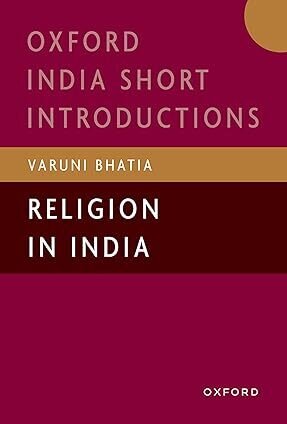

- Published
- Authors
Abstract
Religion in India is a constantly evolving and transformative entity that cannot be engaged with in isolation from other dimensions of life. This short introduction moves beyond traditional text- and scripture-based academic approaches to provide an overview of the dynamic role of religion in contemporary Indian society. Examining religion through the perspectives of religious actors, interlocutors, and practices, it highlights how religion intersects with the state, secularism, identity, and civic and economic life. An indispensable resource for general readers, students, and researchers, this book will foster grounds for dialogue towards a flourishing of pluralism in present-day India.
Links
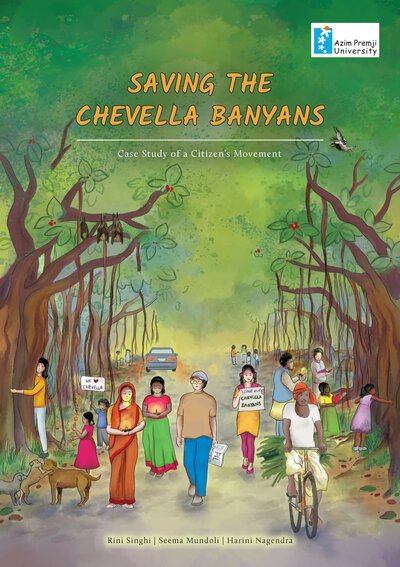

- Published
- Authors
Abstract
This case study, documents the trials, tribulations and victories of a citizen’s movement to protect the environment — in this case the Chevella banyans. These banyans that are of ecological, historical and cultural importance were under threat of being axed for a road widening project. This case study can be used as a teaching resource in undergraduate and postgraduate programmes, and by civil society organisations and citizens as a guiding document to understand how they can contribute to protecting the environment, the strategies they can apply and the challenges they might face.
Authors:
Rini Singhi, Seema Mundoli, Harini Nagendra
Links
Neoliberalism and Women’s Work: A Study of the Informal Economy in India
in Taylor & Francis
- Published
- Authors
Abstract
In this chapter, the researchers critically examine the emancipatory role of neoliberalism with a focus on women’s work in India. They argue that the multi-pronged crisis afflicting the labour market is a fallout of the implementation of the neoliberal project in India that had severely impacted women workers, who typically are one of the oppressed sections in society. They argue that neoliberalism leads to the proliferation of social orthodoxies that promote patriarchal gender contracts whereby men are the primary breadwinners while women are mainly responsible for social reproduction in the ‘domestic’ space.
They highlight that the neoliberal regime in India is associated with declining participation in paid work for women workers, notwithstanding the rapid growth rate of the Gross Domestic Product (GDP) that the economy has been witnessing. This is in the backdrop of India having one of the lowest rates of participation in paid employment of women workers. They claim that women’s work participation in India is affected by the production conditions in Indian agriculture and the burden of unpaid care work. However, increased participation in paid work — the quantitative dimension — does not necessarily lead to women’s empowerment under neoliberalism. This is largely due to the proliferation of the informal sector, which has been the major source of paid work for women workers. The researchers contend that women workers encounter two layers of subordination and control in the labour market that become acute in the informal sector, which is associated with a lack of worker’s rights. They are subordinated, first, by the dominance of capital and, second, by the patriarchal social order. These, in turn, adversely impact the quality and economic value of women’s work. They argue that the degradation of the economic value of women’s work has led to the accentuation of the gender bias that endangers the chances of survival of the girl child in a society characterised by deep-rooted patriarchy.
The contemporary precarity of women’s work — in terms of quantity and quality of work — also reflects the existing social orthodoxies that loom large in the private and public domains in India. Lastly, based on the latest Periodic Labour Force Survey database, they argue that the COVID-19 pandemic has widened the structural inequalities in the economy and added a layer to the existing vulnerabilities of women workers.
Authors: Mampi Bose, Shantanu De Roy
Links
Scholarly Insights into Sustainability, Climate Change, & Blue Food: A Perspective Aligned with Adoption of Sustainable Development Goals
in Springer Nature


- Published
- Authors
Abstract
The increasing global demand for food, coupled with the impacts of climate change and environmental degradation, has shifted attention towards blue food systems. While these systems offer a potential solution to food security challenges, their sustainability is threatened by various factors, including overfishing, habitat destruction, and climate change. Recognising these challenges, the Food and Agriculture Organisation of the United Nations (FAO, UN) advocates for ensuring the sustainable contribution of aquatic food systems to global food security and nutrition, aligning with the United Nation’s Sustainable Development Goals (UN-SDGs). It was hypothesised that adoption of UN-SDGs would increase the interest of researchers in sustainability of fisheries and aquaculture. Therefore, a bibliometric analysis of the relevant literature published between 2000 and 2023 was conducted to test this hypothesis. The analysis revealed a significant rise in publications addressing climate change and sustainability after the adoption of the UN-SDGs. The countries exhibiting high vulnerability to climate change contributed disproportionately fewer publications to the database. The United States emerged as the leading contributor in terms of publication volume, while Canada’s University of British Columbia was identified as the institution with the highest number of contributing authors. The findings underscore pronounced geographical disparities in research output, with a predominance of countries from the Global North. The underlying factors contributing to these disparities are discussed. Furthermore, the study discusses the policy implications of these findings and emphasises the imperative to prioritise equitable research initiatives. Such efforts are essential to effectively support the realisation of the SDGs within the domain of blue food systems and sustainability.
Rural Multidimensional Deprivation in Jharkhand: A Data-Driven Analysis 2025
in Azim Premji University
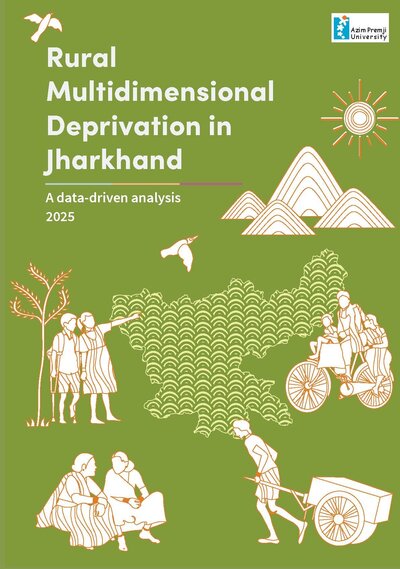

- Published
- Authors
- School of Development
Abstract
This report constructs a Rural Multidimensional Deprivation Index (RDI) for measuring deprivation in Jharkhand. An important feature of the index is that it is constructed using indicators on provisioning of basic infrastructural amenities at the village level. This is different from the usual poverty indices that are composed of financial indicators such as income or consumption; or indicators measuring development outcomes such as educational or nutritional levels. Observing the provisioning of basic infrastructural amenities, this report makes focused policy suggestions that can be easily implemented by functionaries working on the ground. The data for the index is sourced from the Mission Antyodaya Survey, which was carried out in 2019 at the village level across the country. The survey collects data related to provisioning and outcome of basic amenities in villages, along with demographic and socioeconomic variables. Because this is a periodic survey, it enables us to track the developmental progress of each village, district, state and the country over time. In total, there are about 182 variables that were captured in the 2019 round. The survey covers 31,175 out of 32,620 villages in Jharkhand, which is 95.6 percent of the total number of villages in the state; and 6,48,358 out of 6,67,933 villages in India, or 97.1 percent of the villages in the country.
Editors
Prasanna S, Sandhya Krishnan, Sanket Gharat, Puja Guha, Amalendu Jyotishi, Neeraj Hatekar
Links


- Published
- Authors
Abstract
In this book, Prema, a young girl living in Mumbai, learns about heatwaves and their devastating effects when her father falls seriously ill during an intense summer. Through her eyes, readers explore the human impact of rising temperatures and the urgent need for climate awareness.
Authors: Shrunoti Ritesh Tatiya, Santonu Goswami, Seema Mundoli, Harini Nagendra
Illustrations: Shrunoti Ritesh Tatiya
Links

- Published
- Authors
Abstract
Craft new understanding in primary school mathematics with the July 2025 issue of At Right Angles. And do send in your feedback to AtRightAngles.editor@apu.edu.in
Trajectories of Labour Market Transitions in the Indian Economy
in World Development, Elsevier

- Published
- Authors
Abstract
The Indian economy, despite registering high growth, is characterised by a persistent and vast informal economy. Using it as an illustration, the researchers draw lessons for characterising labour markets in contexts of high informality. They employ a group-based statistical modelling method to identify whether there exist systematic patterns in the high volume of worker transitions across different employment arrangements. Using panel data for eight points between 2017 and 2019, they identify seven dominant labour market trajectories. The trajectory capturing stable formal salaried employment, with highest average earnings, accounts for only 6.7% of the sample. None of the dominant trajectories denote a job ladder from informal to formal work, and the sorting of individuals into informal trajectories is far from voluntary, indicating an existence of formal and informal segmentation. The most populous trajectory, comprising 38.4% of the sample, with second highest average income (although half of that of the formal salaried trajectory), is stable self-employment, followed by the trajectory representing transition within different forms of informal wage work at 27.2%. Most trajectory groups associated with informal wage arrangements have high flux, indicating lack of stability. Furthermore, trajectories associated with informal wage employment have even lower earnings than those with informal self-employment. Far from suggesting a desirability of informal self-employment, this is indicative of a breaking down of the expected voluntary transition from self to wage employment in the transformation process. Additionally, access to trajectories is stratified along various correlates, especially caste. Caste hierarchy operates most starkly at the node of accessing the trajectories, while in terms of penalties or gains in earnings, traditional caste-hierarchy may not always operate uniformly. The findings disrupt the standard expectation in structural transformation models and labour market theories, while highlighting the need to foreground evolving nature of informality in labour market models for developing economies.
Authors: Rosa Abraham, Surbhi Kesar
Links

- Published
- Authors
Abstract
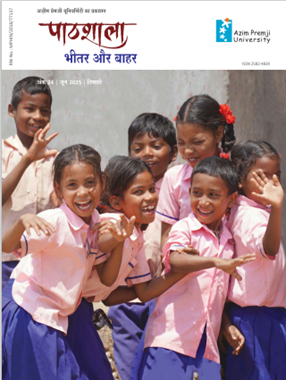
पाठशाला भीतर और बाहर के जून अंक (24वाँ) में एफ़एलएन की अवधारणा, कक्षा अनुभव, चुनौतियाँ, आदि को केन्द्र में रखकर लिखे गए कुछ लेख हैं। बातचीत के ज़रिए विद्यार्थियों से जुड़ना और उस बातचीत का शिक्षण प्रक्रिया में उपयोग कैसे हो, बच्चों को रचनात्मक लेखन से कैसे जोड़ें, पाठ योजना बनाकर पढ़ाना कैसे उपयोगी होता है, जैसे लेख भी शामिल हैं। एक ऐसे विद्यालय की कहानी को पढ़ना दिलचस्प होगा जिसका नामांकन एकदम कम हो गया था, लेकिन कुछ ख़ास प्रक्रियाएँ अपनाने से उस विद्यालय में न सिर्फ़ नामांकन बढ़ा, बल्कि विद्यार्थियों के सीखने का स्तर भी बेहतर हुआ।
हमेशा की तरह ईसीसीई पर आलेख है जिसमें आँगनवाड़ी केन्द्र के माहौल और गतिविधियों से जुड़े अनुभव शामिल हैं। नियमित स्तम्भ के अन्तर्गत इस बार ‘इनसे मिलिए’ में मध्य प्रदेश की शिक्षिका से जानेंगे उनके अनुभव, कि कैसे और कौन‑सी प्रक्रियाओं के चलते सीखना बेहतर हुआ। इसके अलावा, इस अंक में ‘शिक्षकों की डायरी से’, ‘किताबों से दोस्ती’, और ‘आइए, करके देखें’ स्तम्भ भी शामिल हैं।

- Published
- Authors
Abstract
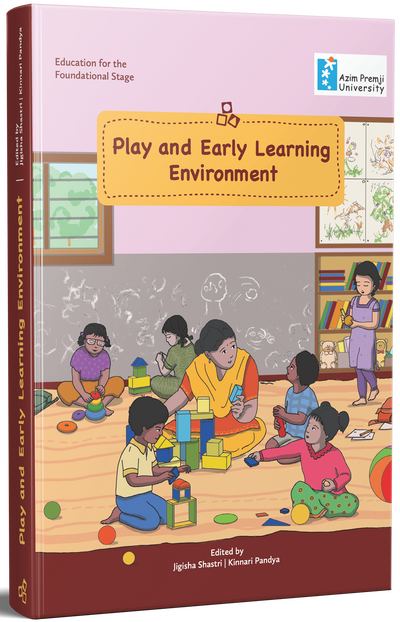
Play and Early Learning Environment is the first in the series on Education for the Foundational Stage. This thematic volume is a collection of articles on concepts, practices and programmes on play and early learning environment. The papers in the volume provide rich insights on what playful learning looks like in the foundational years in diverse Early Childhood settings and illustrates the ways in which we can develop playful and inclusive learning environments for children.
Editors:
Links

- Published
- Authors
Abstract
This article presents a historical account of emergence and development of the territorial power of Jats in Punjab through analysing three elements. First, their historical appropriation of the village as their agrarian territory, which was often perpetuated under the discourse of ‘village community’/clans and the monopolisation of the peasant identity. Second, the often-benevolent administration in Punjab during the colonial rule. Third, the development of a discourse of caste-progressiveness of Jats. The Punjab experience in this regard is significant to understand similar processes in other states and to make appropriate strategies for social movements and policy advocacy regarding agrarian/social reforms.
Résumé
Cet article présente un compte rendu historique de l’émergence et du développement du pouvoir territorial des Jats au Pendjab en analysant trois éléments. Premièrement, leur appropriation historique du village en tant que territoire agraire, qui s’est souvent perpétuée sous le discours de la « communauté villageoise »/clans et de la monopolisation de l’identité paysanne. Deuxièmement, l’administration souvent bénévole du Pendjab pendant la période coloniale. Troisièmement, le développement d’un discours sur la progressivité de la caste des Jats. L’expérience du Pendjab à cet égard est importante pour comprendre des processus similaires dans les autres États et pour élaborer des stratégies appropriées pour les mouvements sociaux et le plaidoyer politique concernant les réformes agraires/sociales.