
Publications & Resources
Our faculty, students and researchers work together everyday to contribute to a better world by grappling with urgent problems we are facing in India. We conduct rigorous work to produce high quality learning resources and publications to contribute to public discourse and social change. Here, we feature a sample from our work for everyone to access. You can explore featured resources, policies, and the latest publications from the University.
To explore all the work of our University, please visit our publications repository.
List of Publications & Resources

- Published
- Authors
- School of Development
Abstract
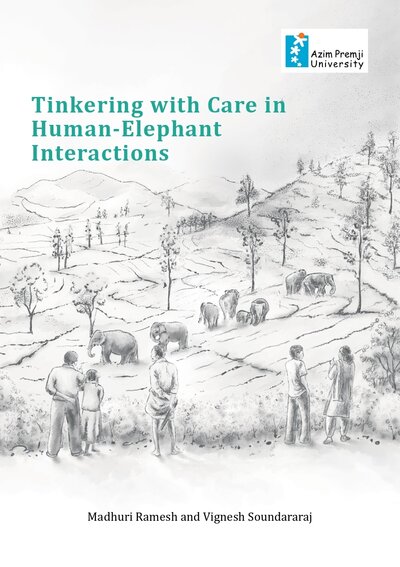
In the Valparai plateau in southern India, encounters between people and Asian elephants (Elephas maximus) are common and sometimes they result in conflict. Building on almost a year of fieldwork, this book presents a polyvocal account of how the Nature Conservation Foundation along with other actors such as the forest department, workers and management of tea plantation companies and ordinary residents engage in a range of care-ful and caring practices that enable people and elephants to share space and cultivate a sense of interspecies sociality. This book speaks to the anthropology of biodiversity conservation, human-wildlife coexistence and multispecies studies.
Authors: Madhuri Ramesh, Vignesh Soundararaj
Links
Realising Rights: A Handbook of Welfare in India
in Centre for the Study of the Indian Economy, Azim Premji University

- Published
- Authors
Abstract
This handbook maps the major interventions of the Union government that together constitute India’s welfare regime. India’s welfare architecture affects the lives and livelihoods of hundreds of millions of people. Understanding how these programmes were created, how they have functioned, and the extent to which they achieve their stated objectives is a matter of considerable economic, social, and political importance. This volume seeks to provide a systematic assessment of these interventions and their place within India’s broader development trajectory. The handbook brings together 18 chapters across the major welfare domains and a set of cross-cutting themes. In addition to the macroeconomics of welfare, the domains covered are: maternity entitlements, the Integrated Child Development Services (ICDS), mid-day meals, the Public Distribution System (PDS), rural employment guarantee, social security pensions, school education, health, PM-JAY, the Right to Education Act, PM-KISAN, and state-level unconditional cash transfers. Chapters on social justice, social accountability, decentralisation and digitisation address the cross-cutting dimensions that shape delivery across the entire architecture.
Editors: Bhargav B S, Dipa Sinha, Rajendran Narayanan, Revati Mathai, Vijay Ram S
Support Files:
Links


- Published
- Authors
Abstract
Gender and Inclusive Development offers a timely and comprehensive exploration of gender mainstreaming across diverse sectors, domains, and regions. Drawing on global experiences and grounded in the framework of Agenda 2030 and the Sustainable Development Goals — particularly SDG 5 — this volume critically examines the evolution of gender equality strategies from Women in Development (WID) to Gender and Development (GAD). It highlights the transformative potential of gender-sensitive policy design and implementation, emphasising the need to dismantle discriminatory institutions and foster inclusive participation in political, economic, and social spheres. Through interdisciplinary contributions, the book engages with pressing questions around gender roles, decision-making, and inequality in development contexts. It presents empirical and theoretical insights that unpack the complexities of gender mainstreaming, offering a nuanced analytical lens to understand its challenges and opportunities. With a focus on real-world impact, the volume aims to inform policy, practice, and academic discourse, providing a blueprint for inclusive and transformative gender mainstreaming that can accelerate progress toward global gender parity.
Editors:
Links

- Published
- Authors
Abstract
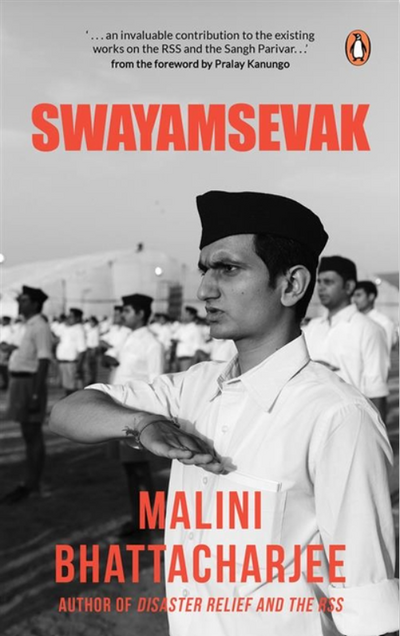
In September 2025, the Rashtriya Swayamsevak Sangh (RSS) completed a hundred years. Founded in 1925 by Dr Keshav Baliram Hedgewar with a small group of handpicked young men, the Sangh sought to reinvigorate Hindu society through sangathan (organization) and seva (service). What sustains the RSS a hundred years on? Who are the individuals who animate this vast and enduring organization? Are they conservative or modern, privileged or marginal, urban or rural? Swayamsevak explores these questions in depth. At its heart are ten compelling life stories of nine swayamsevaks and one sevika. Through these intimate portraits, the book foregrounds the everyday experiences, moral worlds, and motivations that shape their journeys, revealing the discipline, commitment to service, and quiet conviction that sustain the Sangh’s remarkable continuity and expansion. By restoring the swayamsevak to the centre of the narrative, this book opens up a rich and largely unexplored terrain and offers a nuanced and deeply human window into the RSS.
Links

- Published
- Authors
Abstract
The book explores the nature of human creativity and its importance in education with reference to past and ongoing work on creativity theory. It aims to direct the attention of teachers to the need for creativity in education by dispelling the mystique surrounding it, and the feelings of inadequacy or apprehension it may evoke in educators, particularly in the Asia region.
The book offers an introduction to creativity in writing: the rationale for including it in language programmes, the benefits it can bestow and the results it can produce – as well as dealing with common objections to it. It divides creative writing into two major sections – poetry and stories, followed by a copious set of varied classroom activities. For each activity, a standard format is adopted to offer teachers maximum support in implementing the procedures, including supplementary comments on each activity. It is distinct for its accessibility and clarity, its abundance of practical and ready-touse classroom activities and its unique combination of theoretical underpinnings and practical implementation.
This book will be useful to students, pre-service teachers and researchers who are new to the teaching of English Language, both in the Asian context and in the wider world. It will also be an essential companion to practicing in-service teachers and Teacher Trainers to further sharpen their concepts and skills.
Links

- Published
- Authors
Abstract
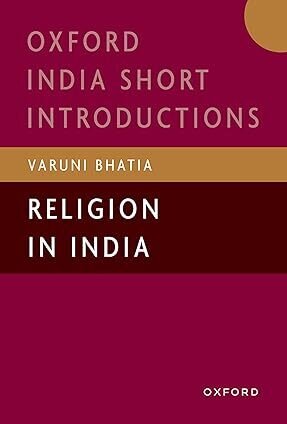
Religion in India is a constantly evolving and transformative entity that cannot be engaged with in isolation from other dimensions of life. This short introduction moves beyond traditional text- and scripture-based academic approaches to provide an overview of the dynamic role of religion in contemporary Indian society. Examining religion through the perspectives of religious actors, interlocutors, and practices, it highlights how religion intersects with the state, secularism, identity, and civic and economic life. An indispensable resource for general readers, students, and researchers, this book will foster grounds for dialogue towards a flourishing of pluralism in present-day India.
Links


- Published
- Authors
Abstract
In this book, Prema, a young girl living in Mumbai, learns about heatwaves and their devastating effects when her father falls seriously ill during an intense summer. Through her eyes, readers explore the human impact of rising temperatures and the urgent need for climate awareness.
Authors: Shrunoti Ritesh Tatiya, Santonu Goswami, Seema Mundoli, Harini Nagendra
Illustrations: Shrunoti Ritesh Tatiya
Links

- Published
- Authors
Abstract
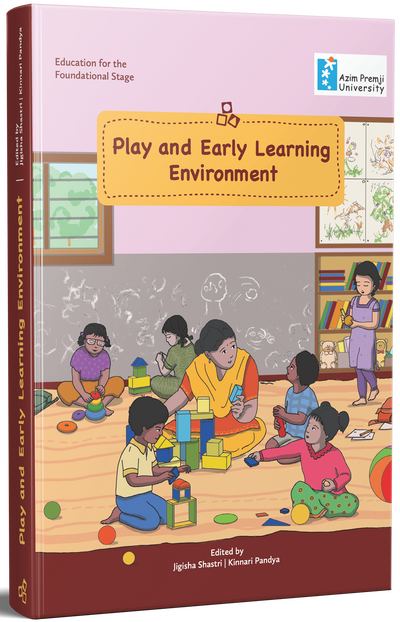
Play and Early Learning Environment is the first in the series on Education for the Foundational Stage. This thematic volume is a collection of articles on concepts, practices and programmes on play and early learning environment. The papers in the volume provide rich insights on what playful learning looks like in the foundational years in diverse Early Childhood settings and illustrates the ways in which we can develop playful and inclusive learning environments for children.
Editors:
Links

- Published
- Authors
Abstract
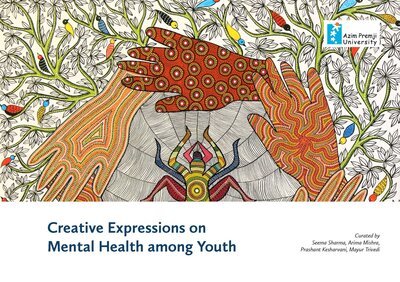
What does mental health mean to the youth? How is it expressed beyond just diagnostic labels? The book on ‘Creative expressions on mental health among youth’ features over 40 powerful contributions through a range of forms that include poetry, prose, Gond and Bhil art, sketches, doodle art as well as excerpts from diaries. The writings are presented in Hindi, English and Pardhi languages thus creating a safe and inclusive space for many. Each word and each image encapsulate a story that is hidden yet spoken. This book is an effort to break silences around the conversations on mental health.
Curators:
Seema Sharma, Arima Mishra, Prashant Kesharvani, Mayur Trivedi
Links
വനാവകാശ നിയമപ്രകാരമുള്ള സാമൂഹികഅവകാശങ്ങൾ: ഗോത്ര വിഭാഗങ്ങളിലെ യുവജനങ്ങൾക്കായുള്ള പരിശീലനം
in Azim Premji University

- Published
- Authors
- School of Development
Abstract
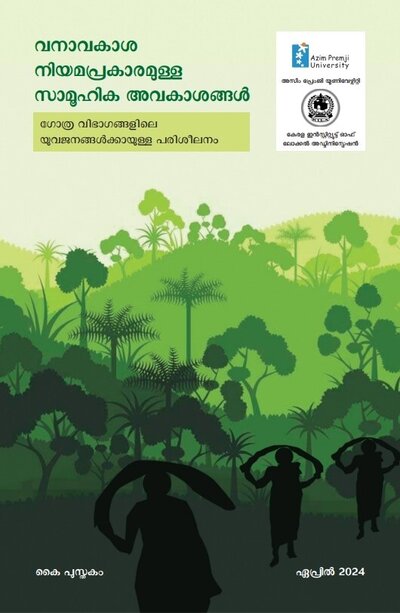
Hand book for a course on Community Forest Rights for the tribal youth in Kerala Azim Premji University’s FRA initiative, in collaboration with the Kerala Institute of Local Administration (KILA), launched a two-months long course on Forest Rights Act (2006), focusing on the Community Forest Rights (CFR). The course was tailor made for the tribal youth in the state of Kerala, following case studies[1][2][3] and orientation workshops conducted between 2020 and 2022. This handbook is the basic resource for this training. Students are expected to be informed and equipped for initiating the vesting of CFR working with their gram sabhas. Course Content and Delivery: The pedagogical approach is a blend of class room and hands-on learning, including field visits and computer lab sessions. There are three weeks of classroom interactions and five weeks of hands-on learning. The course has four units: the first unit, ‘Tribals and forests – a historical perspective,’ examines the historical context of tribal issues both globally and within the regional landscape. Second unit, ‘Understanding FRA,’ covers the history of FRA and comprehensively unpacks the Act, Rules, and the implementation challenges. Unit 3,‘Skills & competencies for Community Forest Resource Management (CFRM)’ imparts specific skills including accountancy, communication and mobilization skills as well as biodiversity management, necessary for effective implementation of CFR. The fourth unit ‘Individual field project’ is to be carried out by each student in two phases: (a)identification of the challenges and opportunities for implementation of FRA — for 2 weeks (b) finding responses to address the specific challenges identified during the first phase of 2 weeks. [1]https://practiceconnect.azimpremjiuniversity.edu.in/implementation-of-forest-rights-act-observations-from-keralas-attappadi-block/ [2]https://practiceconnect.azimpremjiuniversity.edu.in/implementation-of-forest-rights-act-lessons-from-vazhachal-division-of-kerala/ [3]https://practiceconnect.azimpremjiuniversity.edu.in/implementation-of-forest-rights-act-observations-from-wayanad-district-of-kerala/
Links

- Published
- Authors
Abstract
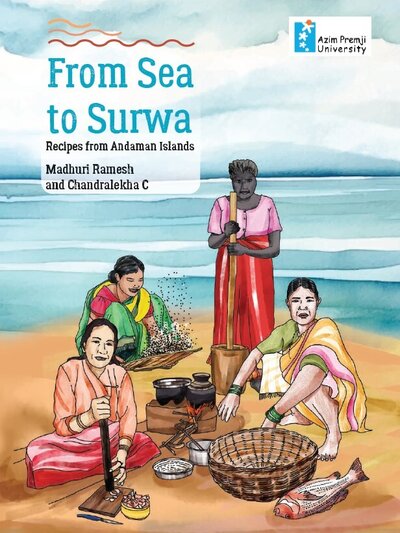
Food is the product of a community’s culture and environment. Hence a study of ‘foodways’ can tell us about what food resources are available as well as how customs, beliefs and practices shape the use of these resources. In this report, we share some of the stories and recipes we collected from women in different settler communities between June to November 2023. Our report showcases how these women use marine resources in creative and careful ways to improve the nutritional security of their families. In the process, the report offers a glimpse of the cultural, historical and ecological connections of settler communities of the Andaman Islands.
Authors:
Madhuri Ramesh
Chandralekha C
- Published
- Authors
Abstract
The Azim Premji University has been encouraging the expression of diverse and disparate views on a variety of subjects in the past too. Over the last two decades of its existence, the Azim Premji Foundation under which the University operates has been consistently focusing on its vision of contributing towards a more just, equitable, humane, and sustainable society through extensive on-the-groundwork across the country as well as through its partners. In this context we may venture to say that the present collection of essays is an expression of that focus, while encouraging views and counterviews on various perspectives on the national endeavour, with the goal of working towards the Foundation’s vision.
Amidst the Corona crisis of 2020 to 2022, another compendium of essays entitled Understanding Post-Covid-19 Challenges in India had been published in March 2022. The essays in that collection too had looked at certain key domains such as Health, School Education, Impact of Covid on vulnerable groups, urban development, the systems of recording deaths etc. While that collection tried to document how the nation navigated through a short period of the toughest challenge, this collection tries to offer a snapshot of more than 75 years of history
since Independence.It is hoped that this collection of essays will encourage its readers to think about the myriad activities that India as a nation has undertaken in its unending search for building a better society, the complexities that it has to encounter and the challenges that it has had to overcome, in trying to achieve that objective. The essays here are collected over a year’s time following the 75th year of Independence, and as such some of the essays might not have captured the latest developments in the themes that they focus on. The readers’ responses are welcome.
Editors:
Links
- Published
- Authors
Abstract
This book analyses the key intellectual debates and sociopolitical and cultural events that shaped writings in the late 18th and early 19th centuries in England. It approaches ‘Romantic Literature’ as a literary-historical term and adds a broad range of texts to those traditionally studied — bio-notes, letters, pamphlets, advertisements in periodicals, political cartoons and satirical prints, to name a few — to allow a sense of this period to emerge. This book will serve as a useful aid while preparing a syllabus and lesson plan for teaching English Romantic literature.
A History of Economic Policy in India : Crisis, Coalitions, and Contingency
in Cambridge University Press

- Published
- Authors
Abstract
Economic Policy in Independent India provides an immersive, accessible yet rigorous understanding of the Indian economy through a political economy analysis of economic policies. It provides a birds-eye view of the politics, context, and ideas that shaped major economic policies in independent India and argues that they are the product of crisis, coalitions, and contingency — not necessarily choice. Each chapter focuses on specific political regimes: Colonial Rule, Jawahar Lal Nehru, Indira Gandhi, liberalisation under coalition governments, the UPA Government, and the NDA Government. The book evaluates how well a government executed its policies based on the economic and political constraints it faced, rather than economic outcomes. Using theories to make sense of the economy, political ideology, historical conditions, and international context, the book’s framework provides multiple perspectives and analyses economic policies as an outcome of interactions between dynamics in the economy.

- Published
- Authors
Abstract
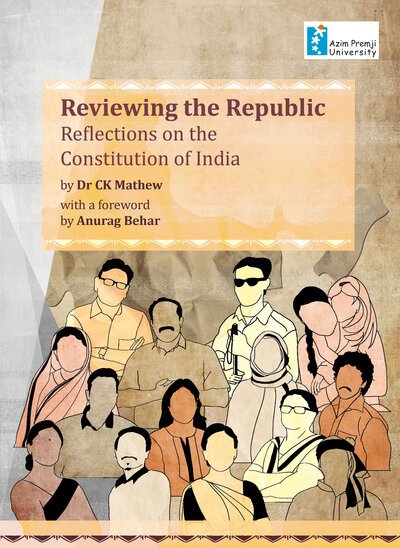
The Constitution of India has been amended over a hundred times in the last seven decades. Yet, its basic principles remain supreme. For young students of India’s growth and progress, a deeper understanding of its Articles is essential. The maturing of our democracy and the deeper social consciousness pervading our people, owes much to the manner in which we have been guided by its timeless precepts. A reading of ‘Reviewing the Republic’ will help any reader appreciate how our Constitution came into being and its powerful impact on the daily life of our citizens.
Links
- Published
- Authors
- Dhruthi Somesh
- Harini Nagendra
- Ranjini Murali
- Rohit Rao
- Seema Mundoli
Abstract
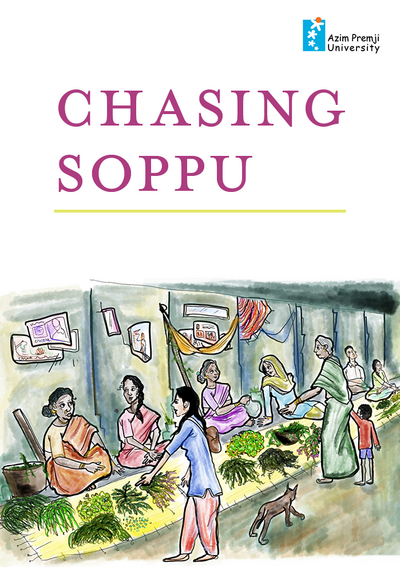
Bas saaru, Uppina saaru and massoppu are curries made of mixed greens, and are staples in the homes of Bengaluru residents. But these greens are not always bought in the market. They are also gathered from sidewalks, little strips of soil beside the road, drains, and around lakes. The act of gathering such edible plant species from private or public spaces in the city is called urban foraging, and it is a common practice across the globe.
In Bengaluru, it is mainly middle-aged or older women from low-income backgrounds who forage. These women are vital knowledge holders and experts on the local wild plants around them. They know what parts of the plants are used for food, medicine, or cultural uses, and which is the best season to forage. They also have delicious recipes, of curries, chutneys, and pickles that have been passed down through the generations.
Sadly, as the city has developed and urbanised, these foragers are losing access to the spaces where these greens were found.
Yet, so many people still forage for wild plants across the city. It is a dying art, one which needs to be repopularised.
Chasing Soppu is a guide to wild edible plants of Bengaluru. In this book, we provide an introduction to 53 forageable species in the city. For each, we provide a guide for identification. We also share a collection of local recipes, shared by women foragers we spoke to, which can be used to cook these plants. In addition, we share some home remedies as well.
Links

- Published
- Authors
Abstract
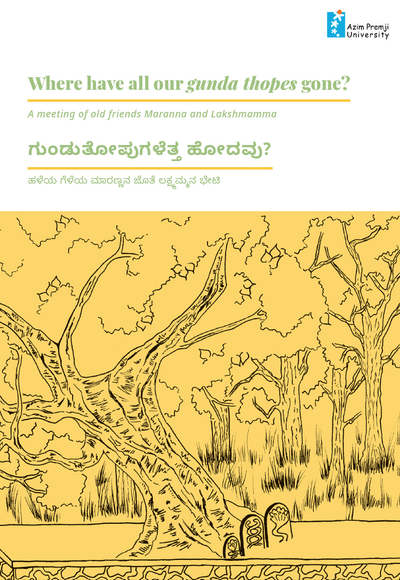
India is rapidly urbanising, but our cities are facing an environmental crisis. Whenever there is any development, for building a road, a flyover or a metro, the first casualties are trees. This story is our attempt to communicate the work we have done on gunda thopes to a wider public, hoping to partner with them to protect the city’s environment.
Trees are our city’s lungs, cleaning the air of dust and toxic fumes from vehicles and industries. Trees are a source of food, fuelwood and medicines, especially for the urban poor, and a source of shade in the hottest days to all. The very presence of trees helps us deal with the stress of city life. For many of us, trees are also of cultural and sacred significance. When trees in cities are cut to make way for urban projects, we also lose the many services that trees provide. But more importantly, what we and our future generations lose forever is a connect to nature, and a way of living that encompasses trees as living beings — neighbours, friends and spiritual guides. This is a fictitious story. But the village, which remains unnamed, exists just as it is described in the outskirts of Bengaluru. The thope exists too. All the elements of the story are drawn from our conversations with the village residents. Finally, this may be a story of loss — the loss of nature as a city expands. We also hope that the story will fuel an urge for us to get to know more about nature in our neighbourhood. We hope that each of you who read this book will be enriched by the understanding of trees and thopes—sentinels and companions in the cities we live in.The Historical Evolution of the District Officer: From Early Days to 1947
in Azim Premji University

- Published
- Authors
Abstract
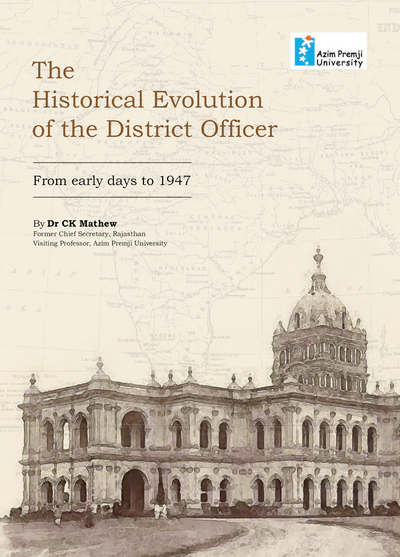
The Historical Evolution of the District Officer: From Early Days to 1947, is the first of five volumes written by Dr CK Mathew (Fmr. Former Chief Secretary, Rajasthan). Popularly known as district collector/deputy commissioner/district magistrate, the district officer is a critical element in the hierarchy of India’s governance structure. Originally, it was created for revenue collection by the British East India Company and extended in its scope over time. In post-independence India, it mutated to become the administrative head of every district, addressing grievances and implementing public welfare programmes.
Links

- Published
- Authors
Abstract
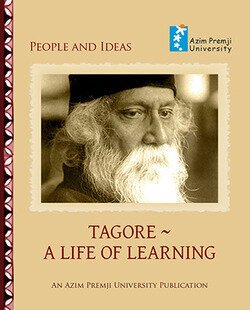
Azim Premji University attempts to explore ideas, lives and work of many social reformers, writers, thinkers and philosophers who have influenced us deeply, and fundamentally shaped our vision and philosophy. This graphic novel is on Rabindranath Tagore’s ideas and philosophy of education. Tagore is an educator for all times and his ideas are as relevant today, as they were when he lived. Tagore expresses in all his writings, that he experienced no joy while being taught by a series of teachers, or shifting from one conventional school to another. His approach to teaching grew from his life experiences. The school he set up in Santiniketan was ‘conceived to free the students’ minds and lead them to a state of creative unity where they would respect human beings, irrespective of caste or creed’. Tagore tried to inculcate the joy of learning among his students by integrating the classroom with nature. The myriad celebrations at Visva Bharati were envisaged to educate his students about the natural and human world around them, about collective action and community involvement. The dream was to foster complete human development where the unique potential of each child could flower in a happy and secure environment.
Note: Best viewed as two pages with the cover separate