
Azim Premji Foundation
Contributing to a just, equitable, humane and sustainable society.
Details
The Foundation’s vision is to contribute towards a more just, equitable, humane and sustainable society. Its work is focussed on India.
Azim Premji set up the Foundation in 2001. Over the past years, he has irrevocably donated most of his wealth to fund the philanthropic work of the Foundation. As a part of the endowment created by these donations, along with other assets, 66 percent of the economic ownership of Wipro Ltd is with the Foundation.
Azim Premji Foundation Report- June 2026
Foundation ‘on-the-ground’
The Foundation does extensive and deep ‘on-the-ground’ work across the country – both directly through its own operations and through partners. The work spans education to other important areas of equity and human wellbeing.
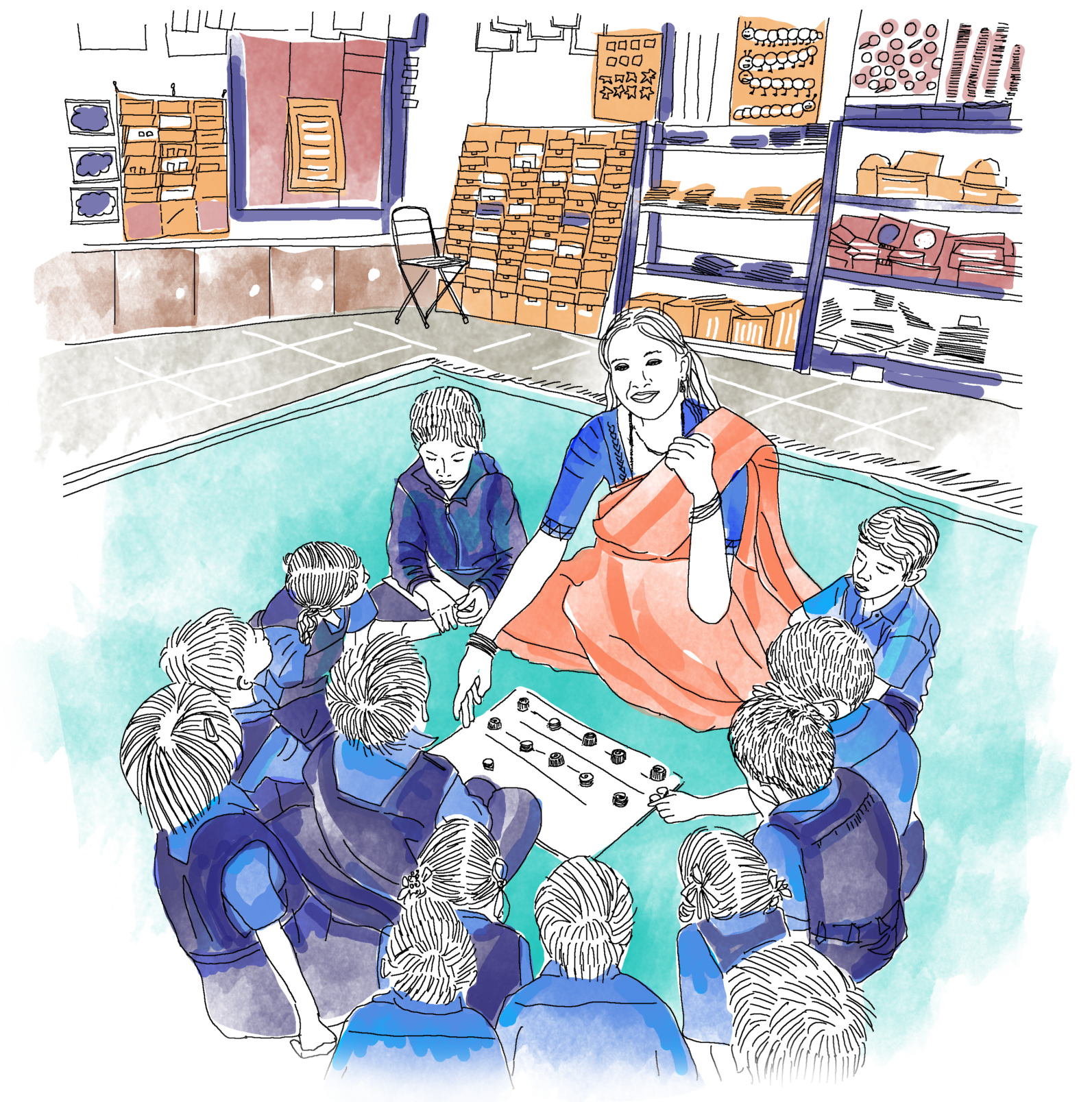
Foundation’s Field Institutions
- The Foundation works on improving the equity and quality of the school education system in India, with a focus on the more disadvantaged areas of the country. The work ranges from teacher capacity development and leadership development to matters of policy and curriculum, including a significant contribution to the National Education Policy (NEP) 2020 and National Curriculum Framework (NCF) 2023.
- The Foundation’s Field Institutions are spread across 6 states. In addition, the Foundation also works deeply with 7 states in the northeast of the country and selectively in many other (currently 5) states. There are 59 institutions in the field working with these school systems. The Foundation also runs 12 schools for ‘demonstration and training’.
- The Foundation’s own team of over 2,000 people in the Field is spread across 300 locations.
- The Field Institutions are in some of the most disadvantaged districts of India, each staffed with 10 – 60 members. The Foundation also runs 296 “Teacher Learning Centres”, in these districts.
- This deep institutional presence is now being leveraged by the Foundation to work on Health, Livelihoods, and a few other key initiatives (mentioned below), starting with some of the regions and then expanding.
Partners
The Foundation supports over 1,640 other not-for-profit organisations (NPOs) across the country with multi-year grants and selectively with corpus grants. These NPOs do deep ‘on-the-ground’ work across a range of issues — supporting people who are severely disadvantaged and marginalised with immediate care, access to essential services, and the possibility of a dignified future. Such support to partners is also growing rapidly.
- Some of these vulnerable groups are urban poor, persons with disability, women facing violence, adolescent girls at risk, children at risk, homeless, elderly poor, manual scavengers, migrant workers, farmers with marginal landholding, particularly vulnerable tribal groups and water-deficient communities.
- This work also involves collaboration with state governments and groups of NPOs to address issues systemically — beyond immediate care and support. Some such collaborations are: In Odisha, an effort to improve nutrition and hygiene; in Andhra Pradesh, improving the livelihood of small and marginal farmers; a multi-state programme to strengthen local governance and Panchayati Raj institutions; in Tamil Nadu, setting up centres in district hospitals to rescue, treat and rehabilitate mentally ill homeless individuals; supporting access to the judicial system for the vulnerable.
Universities
The Foundation is building a network of its own universities to contribute to capacity development and research for the social sector.
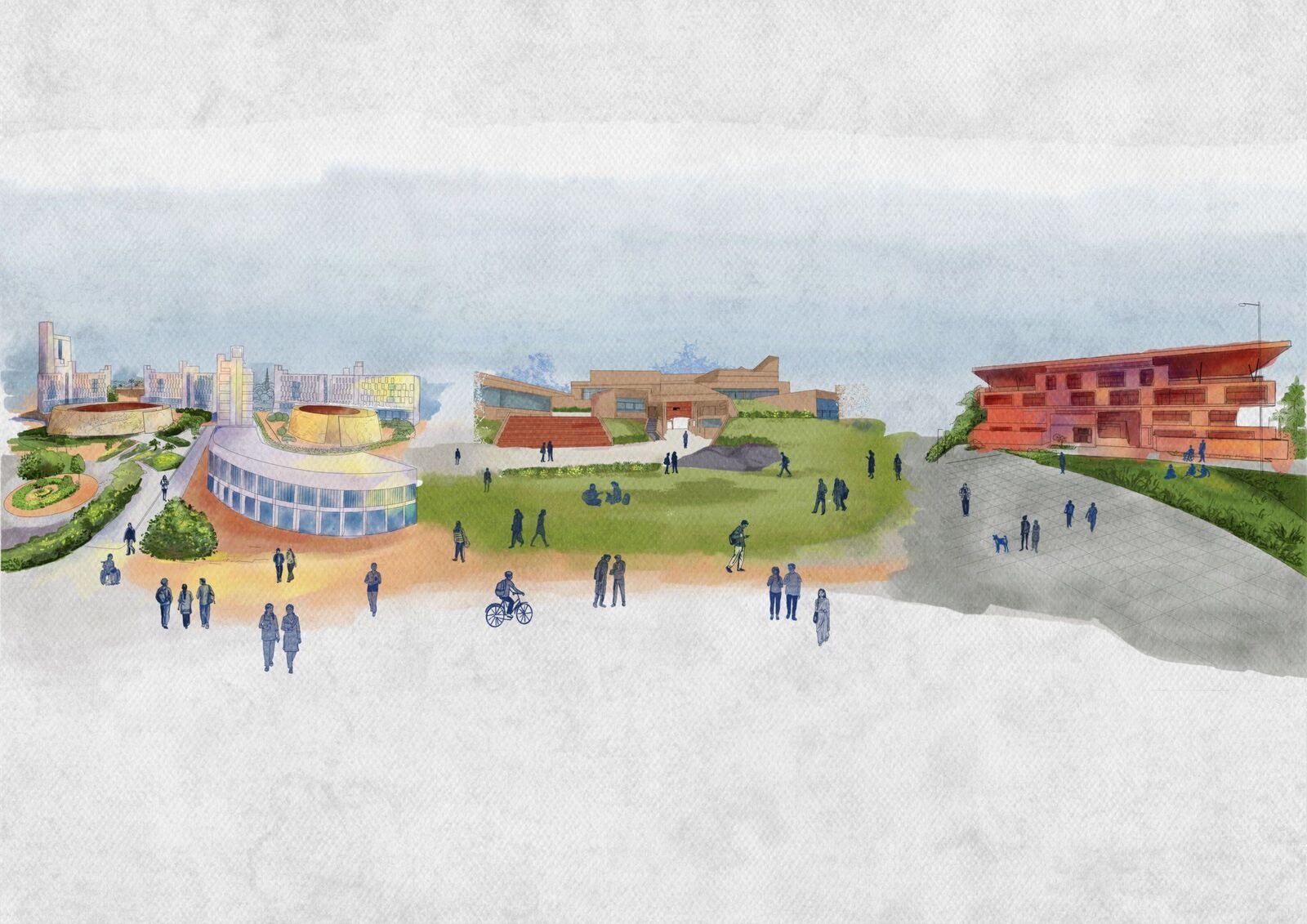
- The first Azim Premji University was set up in Bengaluru in 2010 and today operates from a 100-acre campus. The second one, i.e., Azim Premji University, Bhopal, started in 2023 in a 50-acre campus. The third campus, Azim Premji University, Ranchi started in July 2026 (planned on a 150-acre campus). Subsequently, a fourth campus in the northeast part of India is planned.
- Azim Premji University has been offering degree programmes since 2011. Its mandate is to run teaching programmes and conduct research to contribute to the social sector in India, and to be an exemplar higher education institution – with inclusion and quality.
- The masters, diploma, and short duration programmes are focused on domains of human development; for example, Education, Livelihoods, Development, Governance and Policy, Public Health, and Sustainability. The undergraduate programmes offer a broad-based liberal education – integrating the fields of human development that are the focus of the University.
- The research programmes are designed for direct contribution to matters of policy and practice, in these very fields of human development, for example, through dedicated research centres on Employment, Climate Change and Local Democracy (Panchayats).
- Capacity development of civil society and public system professionals is a key priority for the University. We offer a range of programmes in critical areas like early childhood education, inclusive education, disability, assessment, educational leadership, social sector leadership, and local democracy, reaching over 1 lakh practitioners annually.
- The University produces a large collection of teaching-learning material for free public use. These include magazines in school subjects, development case studies, online textbooks, translations of higher education material, etc.
- The Foundation’s on-the-ground operations and the University integrate real grassroots and systemic knowledge to contribute to policy, research and continuing education.
- Thirteen cohorts of over 5,300 students from the programmes have graduated from the University and almost 100 percent of master’s programmes have received job offers on campus. Nearly 90 percent of these students have chosen to work in the social sector — many in grassroots field locations across the country.
- The Universities are entirely philanthropic; currently 89 percent of the expenditure is borne by the Foundation. Currently, about 60 percent of students are on scholarships offered by the University. The student body is very diverse, from across 29 states and varied socio-economic backgrounds.
Health
While the Foundation contributes to a large range of domains and issues of human well-being as mentioned, over 20 years of direct work in School Education has built deep expertise in that domain and is now building Health as a similar domain of expertise and contribution.
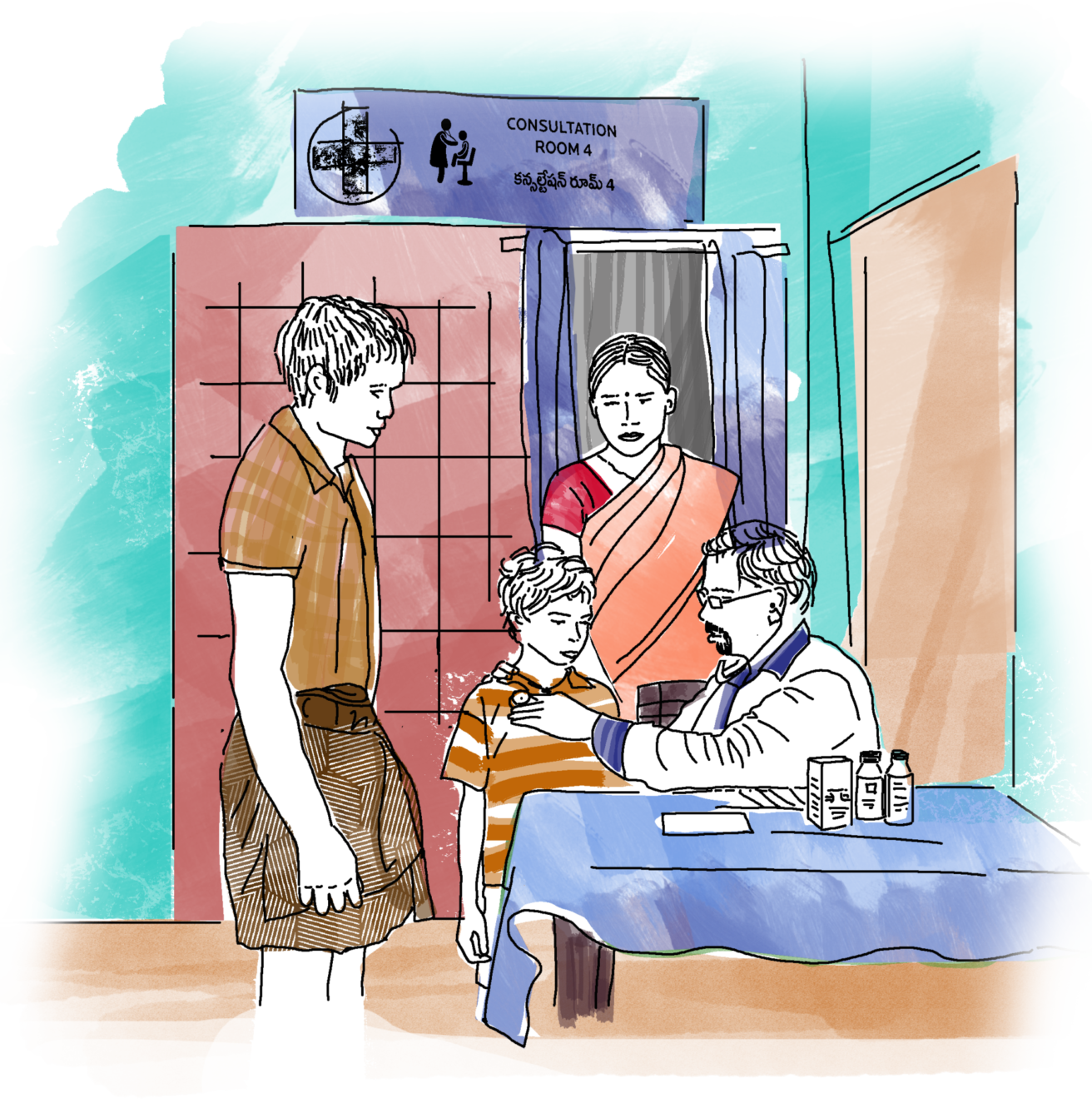
- The work in Health has started in Bengaluru and in the states of Chhattisgarh and Jharkhand. We have now expanded to 12 districts in 6 states. This work will strengthen the public health system — where required complementing and supplementing it— including running primary health clinics, secondary and tertiary hospitals. Our work in health currently supports 1.1 lakh people in the communities we work with.
- In Bengaluru, we offer community health and primary care services to 1 lakh people living in informal settlements. This includes household-level screening and counselling; community-level centres; a network of primary centres with outpatient services, laboratories, and pharmacies; and referral support at select hospitals.
- The Foundation is establishing a network of 30 hospitals across the country. These will be state-of-the-art hospitals offering high-quality services – and will be fully free for those from poor households. Ranging from small 100-bed facilities in rural towns to 1,000-bed superspecialities in cities, these hospitals will also be centres for research and medical education. Our first hospital, to be commissioned in 2027, is phase one of what will eventually be a large medical college with a1,300-bed hospital and a school of health sciences, offering Undergraduate, Postgraduate and Doctoral programmes in medicine, nursing, allied health, and public health.
- The Master of Public Health programme at the Bhopal campus is an initial step in contributing towards development of capacity in the Heath sector.
- In addition to our own work in Health, the Foundation is collaborating with 94 partners — including hospitals and NGOs — to make healthcare accessible to vulnerable communities and to improve community health across a much larger geography.
Other initiatives
The Foundation is also in the initial phases of a few other significant initiatives, associated or adjacent to our work in Education and Health, which could contribute deeply to human well-being. Some of the key initiatives are:
- Strengthening the nutritional content of mid-day meals for children in government schools and Anganwadis by providing an egg (or its substitute) every day for every child. This project, first implemented in Karnataka, benefitting over 55 lakh children, will be rolled out across multiple states over the next 2 years. Our commitment to this programme is about INR 1,500 crore over 3 years.
- Setting up and running creches in rural areas for infants and children under the age of 3 in some of the remotest geographies. The first 1,784 creches are operational in Bihar, Chhattisgarh, Jharkhand, Karnataka and Odisha. The need for the creches is across the country — we estimate that we will set up and run 20−30,0000 creches in 7 years in a few selected geographies.
- Scholarships for support of higher education of girls across India—starting with 25,000 scholarships in 2024. So far, the Scholarship has supported 1.61 lakh girls, and this number is expected to grow significantly in the coming years.
- A national Youth Programme to support development of young people to do constructive social work, manifesting the values of our Constitution. Currently the programme has about 4.5 lakh young people. Our effort would be to expand this program to across the country.
- In a few geographies, intense work has been started to improve significantly the livelihoods of those in poverty. The challenge is to help foster local economic development in these ‘livelihood regions’, such that there is a substantial increase in overall value in the local economy, thus enabling significant increase in household level income increases— equitably, with ecological sensitivity, and responding to the aspirations of local youth populations. Our own operations have been initiated on this in a few blocks in Chhattisgarh and Jharkhand, which will expand, and the initiative will expand to other regions in collaboration with our partners.