
Publications & Resources
Our faculty, students and researchers work together everyday to contribute to a better world by grappling with urgent problems we are facing in India. We conduct rigorous work to produce high quality learning resources and publications to contribute to public discourse and social change. Here, we feature a sample from our work for everyone to access. You can explore featured resources, policies, and the latest publications from the University.
To explore all the work of our University, please visit our publications repository.
List of Publications & Resources

- Published
- Authors
Abstract
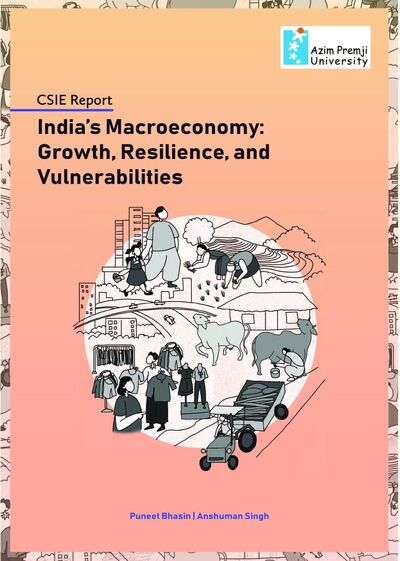
The Indian economy has been growing at a robust rate by most conventional metrics and appears resilient as of now in the face of several geo-economic headwinds. Real GDP growth continues to hover around 7 – 8 percent according to official estimates, inflationary pressures are subdued, corporate balance sheets appear healthy, and the banking system is largely clear of non-performing assets. The rise of digital payments as well as Systematic Investment Plans (SIPs) has brought millions of households into formal channels of modern finance. The services trade surplus is growing, and strong remittance flows continue to anchor the external account. Overall, having weathered demonetisation, the twin balance sheet crisis, a global pandemic, and waves of geopolitical disruptions, the Indian economy is certainly not stagnant and appears reasonably stable.
Stability, to be sure, is not the same as invulnerability. Aggregate growth can hide vulnerabilities that become clear when we look more closely at the economy. This report does exactly that. Drawing on financial data on trade, capital flows, banking and credit, public finance, sectoral flow of funds, and capital markets, it ‘follows the money’ to develop nine financial insights. Each highlights a pressure point that headline growth numbers can miss. Taken together, they point to three broad structural vulnerabilities that need attention, despite an otherwise reasonably healthy macroeconomic picture.
First, there is a structural demand shortfall, such that no single engine of aggregate demand is firing strongly enough. This weakness in demand is increasingly a constraint on private investment and thus calls for an active policy response. Second, financialisation is likely advancing faster than the productive base of the economy, bringing millions of households and institutions into financial markets but also making household wealth and macroeconomic stability more exposed to financial market conditions. Effective regulation of “high finance” is therefore critical. Third, external vulnerabilities are becoming more important in a changing global order. India’s trade remains highly concentrated in its relationships with the US and China, while its persistent goods trade deficit reflects, in part, the weakness of its manufacturing base. A geopolitically astute trade policy, combined with a robust industrial policy to make Indian goods — not just services — globally competitive, is increasingly important for both economic and national security.
Importantly, none of these vulnerabilities implies an impending crisis or “moment of doom.” But together they suggest that resilience should not be taken for granted, and that prompt policy action is needed to strengthen the foundations of India’s growth before vulnerabilities become crises.
Authors: Puneet Bhasin, Anshuman Singh
Links

- Published
- Authors
Abstract
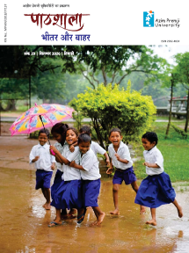
शिक्षकों और विद्यार्थियों के बीच आत्मीयता, समझ और मिलकर नया सीखने की कोशिश के बीच से शिक्षकों के लिए नई राहें खुलती हैं; नई और प्रभावी शिक्षण प्रक्रियाएँ बनाने की स्पष्टता आती है; तथा विद्यार्थियों में भी सीखने के प्रति उत्साह बढ़ता है।पाठशाला भीतर और बाहर में प्रकाशित होने वाले तमाम लेखों में प्रभावी शिक्षणशास्त्र से जुड़े ऐसे अनुभव और प्रक्रियाएँ अलग-अलग तरह से आती रहती हैं। इस सितम्बर अंक में भी आपको प्रभावी शिक्षणशास्त्र से जुड़े तमाम लेख मिलेंगे।
Links

- Published
- Authors
Abstract
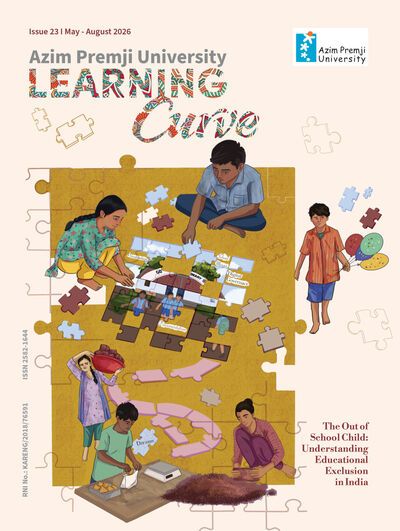
The education system has to ensure children can remain in school, even when life around them is difficult. A child’s opportunities are determined long before they are old enough to make choices.
What happens to them at two years of age determines what is open to them at twelve years; what happens to them in a classroom dictates whether they will have choices later in life. If any one of these things is neglected, then there is a child somewhere who will suffer the consequences.
The articles in this issue of Learning Curve examine these challenges and more.
Links

- Published
- Authors
Abstract
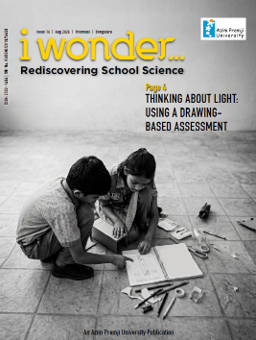
How can we help students make sense of everyday observations to build a deeper scientific understanding of light? In ‘Thinking about light: Using a drawing-based assessment’, the author shows how inviting students to draw light paths can reveal hidden assumptions and strengthen scientific thinking. In ‘Thinking about light: Using a sequence of connected investigations’, the author shows how prompting students to connect ideas across investigations helps them bridge gaps between observation and explanation to build a coherent conceptual framework. Together, these articles show how classroom instruction can encourage students to use their own observations to construct, compare, and refine explanations of how light behaves.
Links
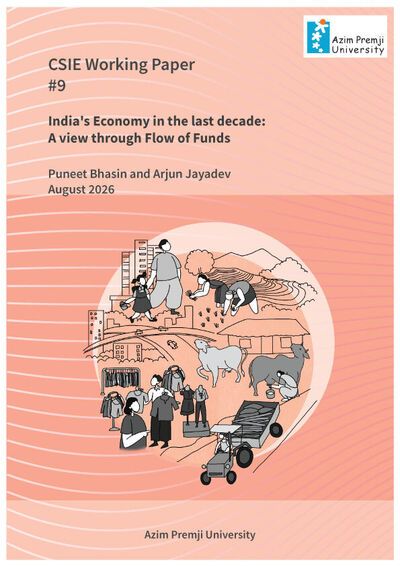
India’s Economy in the last decade: a view through the Flow of Funds
in Azim Premji University

- Published
- Authors
Abstract
Using the RBI’s Flow of Funds data, this paper examines changes in India’s sectoral balance sheets between FY2011-12 and FY2023-24. It confirms two longstanding features: households remain the dominant creditor and government the dominant borrower. It identifies a break in the historical stability of household asset portfolios, with savings increasingly moving into mutual funds, insurance, and pension products, though deposits remain the largest asset class. It further finds that deleveraging has left corporate balance sheets healthier, and that non-banking financial institutions have displaced banks as the dominant holders of government debt. The paper then draws out four macroeconomic insights: personal consumption appears increasingly supported by credit; private investment remains tepid on weak demand, despite repaired balance sheets; non-banking intermediation has deepened capital markets while raising exposure to market and regulatory dynamics; and persistent current account deficits leave India’s growth dependent on mobile foreign capital.
Authors:
Links


- Published
- Authors
Abstract
The July 2026 issue talks of the joys of Living in a Mat(h)erial World – there is mathematics and material to teach it all around us. But the process of learning has to be facilitated skilfully, a delicate dance of exploration choreographed by the teacher who understands both the strengths and the needs of the student.

- Published
- Authors
- Climate Change and Sustainability
- School of Climate Change and Sustainability
Abstract
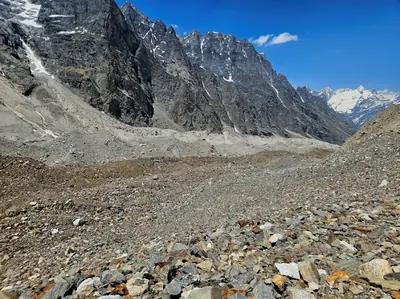
In May 2026, a team of glaciologists went on an expedition to the trekker’s paradise of Satopanth glacier in the upper Alaknanda basin of the Himalaya. The trek offered a harsh reality check. They encountered frequent rockfalls from the steep slopes of the Neelkanth mountain in the Garhwal Himalaya. They also witnessed retreating ice, expanding infrastructure near the pilgrimage centre of Badrinath and plastic waste-littered mountain glacial lakes. All of this pointed to a Himalayan landscape altered by pressures beyond rapid glacial melts.
Authors: Remya S N, Sunil Singh Shah
Links

- Published
- Authors
- School of Development
Abstract
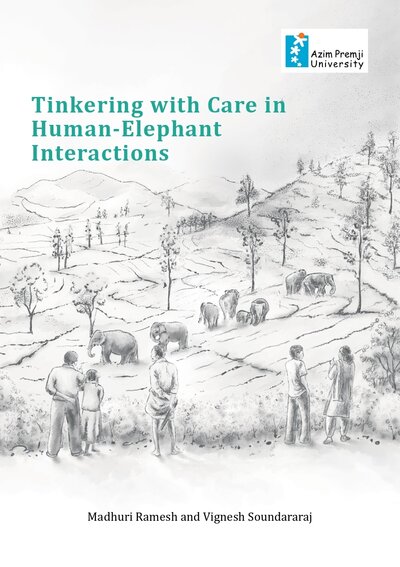
In the Valparai plateau in southern India, encounters between people and Asian elephants (Elephas maximus) are common and sometimes they result in conflict. Building on almost a year of fieldwork, this book presents a polyvocal account of how the Nature Conservation Foundation along with other actors such as the forest department, workers and management of tea plantation companies and ordinary residents engage in a range of care-ful and caring practices that enable people and elephants to share space and cultivate a sense of interspecies sociality. This book speaks to the anthropology of biodiversity conservation, human-wildlife coexistence and multispecies studies.
Authors: Madhuri Ramesh, Vignesh Soundararaj
Links
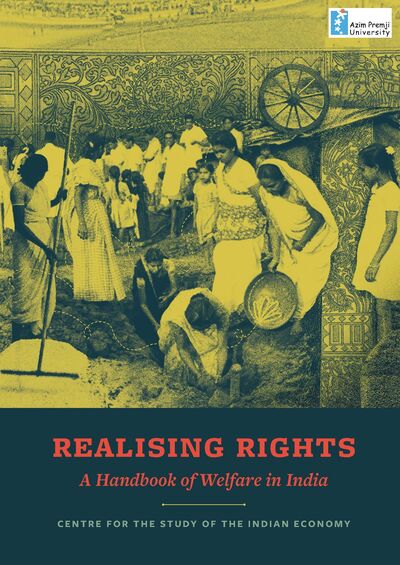
Realising Rights: A Handbook of Welfare in India
in Centre for the Study of the Indian Economy, Azim Premji University

- Published
- Authors
Abstract
This handbook maps the major interventions of the Union government that together constitute India’s welfare regime. India’s welfare architecture affects the lives and livelihoods of hundreds of millions of people. Understanding how these programmes were created, how they have functioned, and the extent to which they achieve their stated objectives is a matter of considerable economic, social, and political importance. This volume seeks to provide a systematic assessment of these interventions and their place within India’s broader development trajectory. The handbook brings together 18 chapters across the major welfare domains and a set of cross-cutting themes. In addition to the macroeconomics of welfare, the domains covered are: maternity entitlements, the Integrated Child Development Services (ICDS), mid-day meals, the Public Distribution System (PDS), rural employment guarantee, social security pensions, school education, health, PM-JAY, the Right to Education Act, PM-KISAN, and state-level unconditional cash transfers. Chapters on social justice, social accountability, decentralisation and digitisation address the cross-cutting dimensions that shape delivery across the entire architecture.
Editors: Bhargav B S, Dipa Sinha, Rajendran Narayanan, Revati Mathai, Vijay Ram S
Support Files:
Links
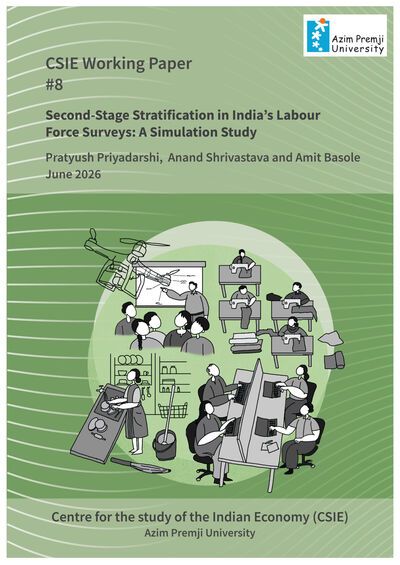
Second-Stage Stratification in India’s Labour Force Surveys: A Simulation Study∗
in Azim Premji University
- Published
- Authors
Abstract
In this paper, we examine the utility of second-stage stratification within the first-stage units (FSUs) of large-scale sample surveys, focusing on India’s official labour force surveys, namely the NSSO Employment-Unemployment Survey 2011-12, the Labour Bureau Employment-Unemployment Survey 2013 – 14, and the Periodic Labour Force Survey 2022 – 23. These three surveys stratify households within the FSU in different ways, and we examine the implications of these choices for the statistical precision of the resulting estimates. Using Monte Carlo simulations on FSUs constructed from PLFS 2022 – 23 unitlevel data, we estimate the variance of each design across three labour market outcomes: labour force participation rate (LFPR), unemployment rate (UR), and labour income. Our primary finding is that the household-level stratification designs employed in these surveys do not necessarily improve precision. For labour force participation and unemployment, simple random sampling outperforms stratification in most FSUs. In general, gains depend critically on the correlation between the stratification variable and the outcome of interest. We propose an alternative education-based scheme that combines lower secondary (10th pass) and graduate attainment. This design raises the median efficiency gain over the PLFS by about 14% for unemployment and 17% for income. We conclude with some reflections on the factors that are relevant to the choice of stratification design.
*We thank Anmol Somanchi and Prof G.C. Manna for helpful discussions. Views are authors’ and do not necessarily represent those of their institutions
Authors:
Pratyush Priyadarshi, Anand Shrivastava, & Amit Basole
Links

- Published
- Authors
Abstract
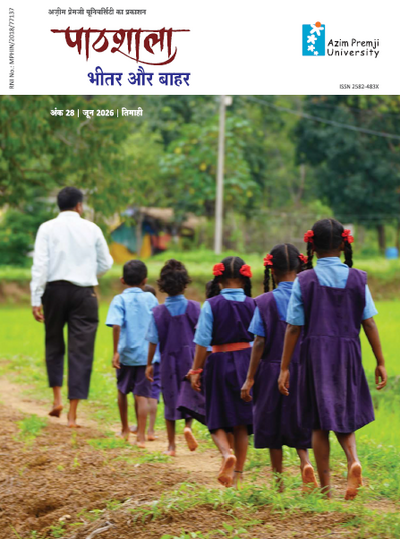
पाठशाला भीतर और बाहर का जून अंक विद्यालय संस्कृति, डर किस तरह सीखना बाधित करता है और साथ मिलकर सीखना कैसे सीखने के आनंद को बढ़ा देता है जैसे मुद्दों पर केन्द्रित है। इसके अलावा बाल साहित्य या पढ़ने की घण्टी को भाषा की गतिविधि तक सीमित न रखकर उसका जुड़ाव तमाम विषयों को समझने और विद्यार्थियों के व्यक्तित्व निर्माण में कैसे देखा जा सकता है, पहली और दूसरी भाषा सीखने से जुड़ी मुश्किलों और उनसे निकलने के लिए कौन सी प्रक्रिया अपनाई गई इस बारे में भी लेख इस अंक में शामिल है। इसके अतिरिक्त हमेशा की तरह सभी स्थाई स्तम्भ भी अंक का हिस्सा हैं, जिनमें विभिन्न राज्यों से आई शिक्षक डायरी, ‘किताबों से दोस्ती’ में कुछ ज़रूरी किताबों की बात, ‘उम्मीद जगाते शिक्षक’ के अन्तर्गत पढ़ेंगे ऐसे शिक्षक की कहानी जिन्होंने पढ़ने-लिखने की गतिविधियों को कुछ इस तरह विद्यालय में किया कि विद्यार्थियों का पढ़ना-लिखना बेहतर हुआ। साथ ही हैं कुछ रोचक और उपयोगी गतिविधियाँ।


- Published
- Authors
Abstract
Gender and Inclusive Development offers a timely and comprehensive exploration of gender mainstreaming across diverse sectors, domains, and regions. Drawing on global experiences and grounded in the framework of Agenda 2030 and the Sustainable Development Goals — particularly SDG 5 — this volume critically examines the evolution of gender equality strategies from Women in Development (WID) to Gender and Development (GAD). It highlights the transformative potential of gender-sensitive policy design and implementation, emphasising the need to dismantle discriminatory institutions and foster inclusive participation in political, economic, and social spheres. Through interdisciplinary contributions, the book engages with pressing questions around gender roles, decision-making, and inequality in development contexts. It presents empirical and theoretical insights that unpack the complexities of gender mainstreaming, offering a nuanced analytical lens to understand its challenges and opportunities. With a focus on real-world impact, the volume aims to inform policy, practice, and academic discourse, providing a blueprint for inclusive and transformative gender mainstreaming that can accelerate progress toward global gender parity.
Editors:
Links

- Published
- Authors
Abstract
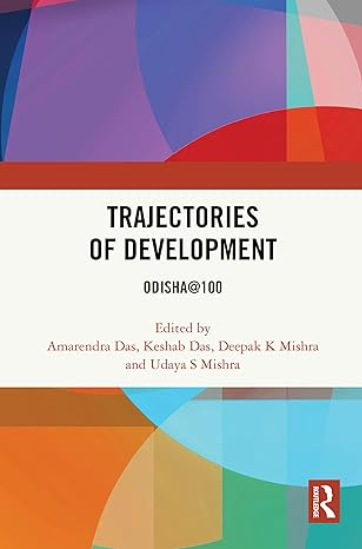
Natural resources, which are considered free goods in mainstream economics, are subject to appropriation and exploitation for larger economic gains and have been a problematic area. It has been contested historically. Some of the policies of appropriations, while showing the ‘power’ of certain actors, are also subject to numerous conflicts and contestation. Odisha, endowed with numerous natural resources in abundance and diverse social groups dependent on these resources, has historically posed challenges that corroborate the ‘resource curse theory’. Odisha has 37% of its geographical area covered with forests. It has a coastline of 450 km, spanning more than 150,000 sq. km of area. Several rivers, lakes, and ponds define its freshwater resources. In addition, Odisha is endowed with numerous mineral resources, including iron ore, coal, and bauxite, among others. On the other hand, several communities and social groups inhabit Odisha. These include 62 Scheduled Tribes that have their own distinct dialects, customs, practices, and resource dependencies. These diversities in resources and communities make it challenging for planners and policymakers to devise sustainable frameworks for natural resource management.
Authors:
Madhusmita Dash, Saswat Kishore Mishra, Amalendu Jyotishi
Links

- Published
- Authors
Abstract
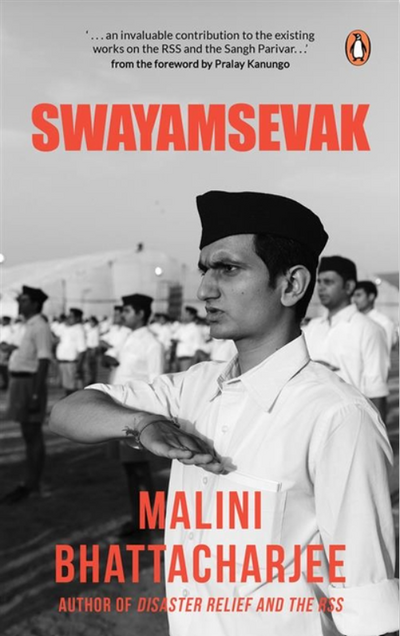
In September 2025, the Rashtriya Swayamsevak Sangh (RSS) completed a hundred years. Founded in 1925 by Dr Keshav Baliram Hedgewar with a small group of handpicked young men, the Sangh sought to reinvigorate Hindu society through sangathan (organization) and seva (service). What sustains the RSS a hundred years on? Who are the individuals who animate this vast and enduring organization? Are they conservative or modern, privileged or marginal, urban or rural? Swayamsevak explores these questions in depth. At its heart are ten compelling life stories of nine swayamsevaks and one sevika. Through these intimate portraits, the book foregrounds the everyday experiences, moral worlds, and motivations that shape their journeys, revealing the discipline, commitment to service, and quiet conviction that sustain the Sangh’s remarkable continuity and expansion. By restoring the swayamsevak to the centre of the narrative, this book opens up a rich and largely unexplored terrain and offers a nuanced and deeply human window into the RSS.
Links

- Published
- Authors
Abstract
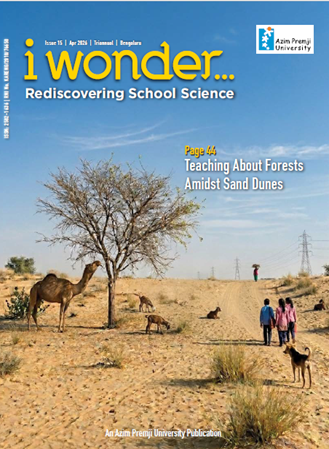
How can we use textbooks to teach our students about forests from direct observation of local ecosystems? In ‘Teaching about forests: Interpreting curricular aims’ a government school teacher explores national curricular aims within a state’s cultural history. ‘Teaching about forests amidst sand dunes’ shows how a teacher educator extends dense, wet forest examples to community-managed scrub forests in arid landscapes. ‘Teaching about forests in the laboratory of the real world’ uses a journalist’s lens to reveal the uneven impacts of conservation models on forest-dependent communities. Together, these stories show how we can use the textbook to turn our surrounding environments into living, breathing science classrooms.
- Published
- Authors
Abstract
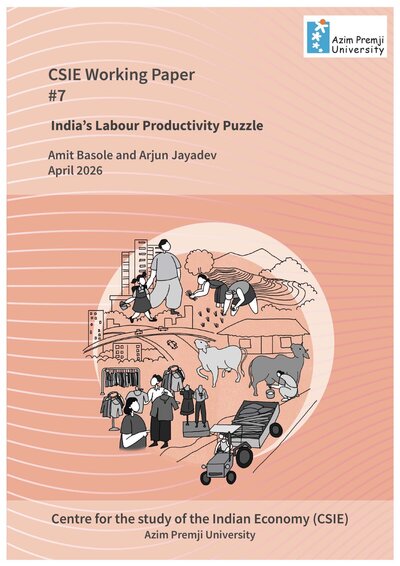
This paper documents that despite relatively robust output growth, India has experienced a marked and puzzling slowdown in labour productivity over the last decade. This we argue, is partly because of a intensification in dualism. While employment rates have risen, across most kinds of occupations, there is a proportionately greater shift toward self-employment and informal activities (especially among women), which are lower productivity sectors. Overall we document a sustained reversal in labour reallocation toward lower-productivity sectors, especially towards agriculture. We show that this pattern is unusual in international perspective. Sectoral, household, and gender-based evidence indicates that rising per capita incomes have been sustained through labour intensification despite stagnant or declining earnings per worker. An additional and puzzling fact is that there has been a decline in labour productivity growth even in larger firms. Taken together, the findings point to an intensification of dualism-with some growth in formal higher value added activity being offset by much larger growth in activity in lower value added sectors.
Authors:
Links

- Published
- Authors
Abstract
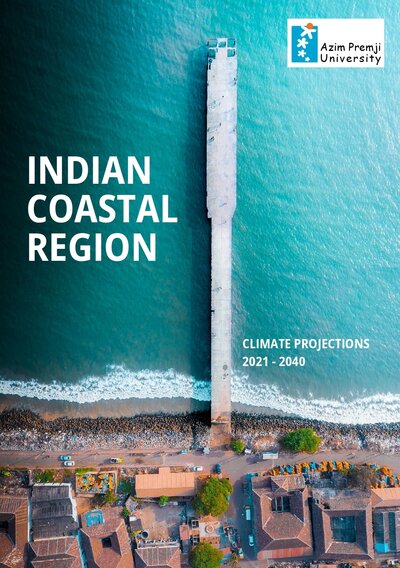
The Indian Coastline is a dynamic mosaic of diverse landscapes, stretching from the salt marshes of Kachchh to the fertile deltas of the East. Characterised by golden beaches, dense mangrove forests like the Sundarbans, and rugged rocky cliffs, it hosts a vibrant marine ecosystem rich in biodiversity. These coastal waters support millions of livelihoods through fishing and trade, while acting as a crucial buffer against monsoonal shifts and rising sea levels. This booklet offers a glimpse of how the climate of the Indian coastal region is expected to change in the coming decades. By using high-resolution data at a granular 25 x 25 km scale, this booklet provides precise climate projections that are essential for developing strategies to build climate resilience and adaptation. Derived from CMIP6 models corrected for regional bias, the booklet aims to help various stakeholders make informed decisions in the face of climate change. By providing precise climate projections, it helps various stakeholders — including policymakers, local authorities, and communities — prepare for specific risks in their regions. These insights will guide decisions on how to adapt to climate changes and mitigate risks, ensuring that strategies are practical and effective in safeguarding lives, livelihoods, and ecosystems across India. The insights presented here are based on the SSP2‑4.5 scenario which assumes that society will take moderate steps to reduce emissions and adapt to climate change, leading to a future with moderate effects.
Links
Researching with Children Diagnosed with Neurodevelopmental Disorders in India: A Reflective Account
in Springer Nature

- Published
- Authors
Abstract
Children’s participation in research has evolved significantly in recent times, reflecting a shift from their historical exclusion. Ethical and scientific advancements have encouraged researchers to engage with children as active contributors to knowledge. In psychology, children’s involvement in research has improved the understanding of their mental health outcomes and has led to the development of more relevant, age-specific interventions. However, researchers continue to experience logistical and ethical challenges when working with children. These challenges range from obtaining informed consent from parents to mitigating power imbalances during the procedure of the study. This chapter is based on my doctoral research that explores the effects of visual brainwave entrainment (BWE) on children’s cognitive performance. In my research, I worked with children diagnosed with neurodevelopmental disorders, namely, attention-deficit hyperactivity disorder (ADHD) and autism. The chapter outlines five key lessons that I learned from engaging with the children during my fieldwork. The chapter highlights practices such as conceptualizing age-appropriate research protocols, facilitating child-friendly and inclusive environments, and offering appropriate ‘ethical gifts’ that help in gaining trust, mitigating stress, and promoting mutual engagement. The chapter also contextualizes these lessons within India’s cultural and institutional landscape, emphasizing how stigma, inconsistent research infrastructure, and child – adult hierarchy impact ethical research practices. It offers practical guidance for researchers in low-and-middle-income countries aspiring to work with children by bridging theoretical knowledge with on-ground realities. This reflective narrative underscores the importance of relational ethics, humility, and child-centred approaches in conducting meaningful research with vulnerable populations, such as children with neurodevelopmental disorders.
Author:
Links


- Published
- Authors
Abstract
The March 2026 issue takes you on a journey – learning mathematics does have challenges and is all the more valuable because of these, but the role of the teacher is to scaffold this climb and to help students enjoy the view at each peak that they surmount. We discuss the need for, as well as the challenges of, conducting summative assessment at the primary level. But we also give you delightful wayside stops to stare at clocks, at posters of ten-frames, at activities with polyominoes, at interesting websites. Read on and enjoy!
Hybrid Disciplinary Spaces: Navigating Writing in a Science Education Classroom
in Contemporary Education Dialogue
Article
- Published
- Authors
Abstract
Science education is an interdisciplinary field of enquiry with conceptual frameworks drawing from the foundational disciplines of education, besides the multiple sub-disciplines of science. An interdisciplinary understanding has been critical to postgraduate courses in science education. However, students continue to have a conventional understanding of the nature and practices of science, based on predominant experiences at school and undergraduate education. This article analyses two assignments which draw upon philosophical and sociological perspectives in science. It discusses the development of hybrid spaces for students in understanding and navigating the disciplines and their interests. Conceptual and rhetorical elements, particularly emphasising students’ extension of inferences and projection of personae, are illustrated as elements of the forward and backward search strategies. Such assignments are essential to develop a richer understanding of the nature of science and its complex interpretation compared to typical deifications in textbooks and pedagogic approaches. They also support students with diverse interests and backgrounds to navigate different disciplines and unique interests through the development of ‘hybrid spaces’. Such spaces, at the boundaries of disciplines, writing conventions and students’ interests develop and reshape conventional understanding.
Links
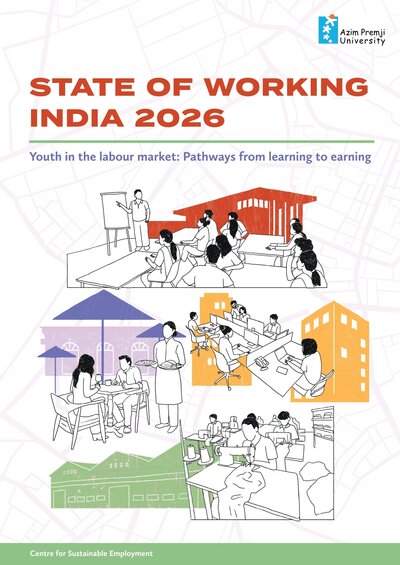
State of Working India 2026 : Youth in the Labour Market | Pathways from Learning to Earning
in Azim Premji University
- Published
- Authors
Abstract
India is nearing the peak of its demographic dividend, with the share of the working-age population expected to begin declining after 2030. On the one hand, higher education in the country has become increasingly democratised with a rapid increase in the number of institutions. Graduate salaried earnings exceed non-graduates both at the time of entry into employment and over their lifetime. On the other hand, financial barriers continue to restrict access, particularly in professional fields such as engineering and medicine. The transition from education to employment remains a major challenge. The rise in the number of graduates has not been matched by commensurate growth in graduate employment. This year’s State of Working India report traces the arc of a young worker’s transition from school or college into employment, and how this has changed in the last forty years.
Report Files
Full Report — download PDF file
Executive Summary (PDF)
Tables (spreadsheet)
Results Appendix (PDF)
All Figures (Figures 1.1−4.7, Figures 4.8−7.10 )
Figures Data(spreadsheet)
Press Release (English | Hindi | Kannada)
Media Coverage (spreadsheet)
Links
- Published
- Authors
Abstract
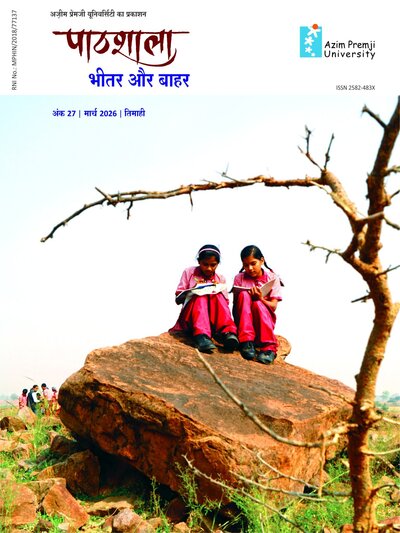
पाठशाला भीतर और बाहर का मार्च अंक शिक्षण के लिए उपयोगी अनुभवजन्य सामग्री को समेटे है। इस अंक में आप पढ़ेंगे कि विद्यार्थी उच्च कक्षाओं में तो पहुँच जाते हैं, लेकिन बहुत सारे विद्यार्थियों की दक्षता का स्तर पिछली कक्षाओं के अनुरूप नहीं बन पाता है। ऐसे में शिक्षकों के सम्मुख जो चुनौती होती है, उसका समाधान कैसे करें? शिक्षण योजना बनाकर शिक्षण करने के अनुभव और इससे बच्चों के सीखने में आए अन्तर को समझना हो या इबारती सवालों की इबारत में उलझे बच्चों की उलझन को सुलझाना, या ऐसे ही अन्य विविध विषयों पर बात करते लेख, सब इस अंक का हिस्सा हैं। हमेशा की तरह शिक्षकों की डायरी, इनसे मिलिए सहित, किताबों से दोस्ती और आइए, करके देखें जैसे सभी स्थाई स्तम्भ भी अंक में शामिल हैं।
Taking Geography Seriously: Exploring Spatial Heterogeneity in Determining Childhood Malnutrition in Rural Maharashtra
in Economics of Development: Looking through Environmental and Behavioural Lens, Routledge

- Published
- Authors
Abstract
Childhood malnutrition is a significant challenge for India. Literature exploring the determinants of malnutrition has emphasised the importance of the local context. Malnutrition is an outcome of the various socio-economic forces that are entwined in local specificities. This makes it very important to keep the context in mind for designing policy and avoid “one-size-fits-all” solutions. In this context, this chapter takes a different route by exploring the spatial heterogeneity in the associations between variables known to impact childhood malnutrition. The variations in associations can be learnt from the data instead of being specified in an ad hoc a priori manner. This can give better insights into the spatiality of the context within which socio-economic processes interact to produce malnutrition. This analysis is performed in the context of rural Maharashtra using Mission Antyodaya and several other databases.
Authors:
Neeraj Hatekar, Amalendu Jyotishi and Puja Guha
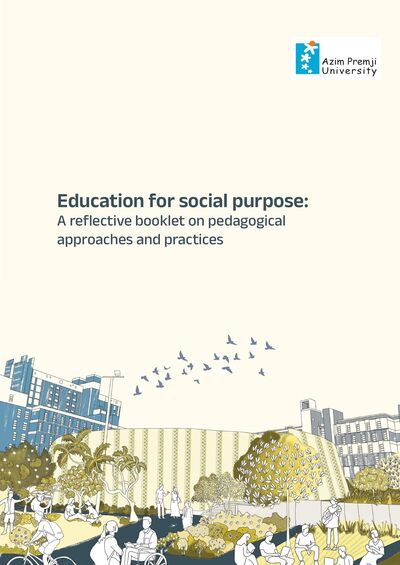
Education for Social Purpose: A Reflective Booklet on Pedagogical Approaches and Practices
in Azim Premji University
- Published
- Authors
- School of Development
Abstract
This booklet attempts to capture our collective deliberations, reflections, and learnings over a decade on facilitating teaching-learning at Azim Premji University. The School of Development has faculty members drawn from different disciplinary training such as Sociology, Anthropology, Political Science, Ecology, Economics, Development Studies, Community Health as well as those from the world of development practice. We view ‘Development’ as a transformative agenda of social change through creating conditions for individual and collective wellbeing in an equitable and sustainable manner. Values of equity, social justice, democracy, pluralism are central to this pursuit and our shared commitment to contribute to this pursuit is through teaching, research and practice. We share our pedagogical journeys (with faculty members, students, field partner organisations), learnings, dilemmas, and insights that make our roles as teacher-facilitators challenging, joyous and more importantly, make us reflective beings.
Links
Creche Attendance and Child Anthropometric Outcomes: Evidence from a Multi-State Early Childhood Programme
in Azim Premji University

- Published
- Authors
Abstract
This paper examines whether attendance in full-day community creches is associated with improved nutritional outcomes among young children in rural India. Drawing on Monitoring and Information System data from creches supported by the Azim Premji Foundation in Bihar, Jharkhand, Odisha and Chhattisgarh, we analyse longitudinal weight and height records for ~11,000 children aged six months to three years. We exploit variation in age at entry and duration of exposure to trace weight-for-age and weight for-height trajectories for children enrolled in these creches. At admission, children are substantially lighter and thinner than both WHO growth standards and children of the same age in the National Family Health Survey, 2019 – 21 (NFHS‑5) from the same districts of APF creches. Fixed-effects regressions show that longer exposure is systematically associated with higher final weight with stronger associations for children who enter at younger ages. We find evidence of catch-up growth as well, with the median child gaining more than 300 grams in weight for each month spent in the creche.
Authors:
Ashutosh Kumar, Dipa Sinha, and Arjun Jayadev
Links

- Published
- Authors
Abstract
The COVID-19 pandemic and the subsequent nationwide lockdown in India had a profound impact on migrant workers, who were forced to return home due to job losses and lack of livelihood opportunities. This mass movement of people led to a humanitarian crisis, with thousands of migrants stranded without proper food or shelter on their long journeys home. This chapter presents narratives of migrant workers, their movement from one place to another during the pandemic, and the challenges they faced along the way. While migrants undertook gruelling journeys and lived through uncertain living conditions during the pandemic, many people in cities led a relatively sedentary lifestyle. This is not to argue that urban dwellers were unaffected by the pandemic. As they coped with increased anxiety and social isolation, the migrants had to confront substantial and unforeseen difficulties related to mobility and access to necessities. The chapter presents narratives of affected migrant labourers compiled by a citizens’ collective, Project Rebuilding Livelihoods (PRL). PRL worked to provide rations and financial and medical aid to distressed migrant labourers hailing from different parts of India.
The composition and affordability of Indian diets: Analysis of household consumption expenditure data
in Azim Premji University
- Published
- Authors
Abstract
India exhibits high and persistent rates of undernutrition and a growing prevalence of micronutrient deficiencies — particularly anemia — as well as overweight and obesity. Addressing this triple burden requires diverse, nutritious diets, yet Indian diets remain limited in diversity and nutritional quality, characterized by heavy reliance on cereals and cereal-based foods. Previous studies have shown that diets consistent with India’s food-based dietary guidelines are unaffordable for a large proportion of the population. Using data from the 2023 – 24 Household Consumption Expenditure Survey, we characterize dietary composition and food expenditure in India. We then use derived commodity-level prices to provide updated and representative estimates of the cost and affordability of vegetarian and nonvegetarian diets that meet India’s food-based dietary guidelines. We find that Indian diets are high in visible fat consumption and that most protein is derived from low-quality sources, such as cereals, while consumption of nutrient-dense or high-protein foods remains limited even for the richest deciles. We estimate the daily cost of a healthy vegetarian diet at INR 63.6 per consumer unit and a non-vegetarian diet at INR 73.1 at the all-India level. An estimated 31.2% of urban and 56.6% of the rural population would need to increase their current food expenditure to meet the cost of a healthy diet. If instead we compare our costs against the threshold defined by the State of Food Security and Nutrition in the World (SOFI) 2025 report, we find that 8.3% of urban and 32.6% of rural populations cannot afford a nutritionally adequate diet. While social safety nets subsidize cereals, thereby increasing affordability for the poorest, additional items such as spices and cooking fuel raise total costs. We assess these extensions and discuss policy implications.
Authors:
Kalyani Raghunathan, Anshuman Singh, Dipa Sinha
Links
Policy Evaluation in the Absence of Survey Data: Customised Border Designs With Satellite Data
in Journal of Agricultural Economics
Article
- Published
- Authors
Abstract
Developing country governments often launch new agricultural programmes without collecting pre-implementation survey data, making it difficult to evaluate the effects of such programmes. Leveraging the flexibility of granular pixel-level satellite panel data and a well-developed quasi-experimental policy evaluation design, we study a programme where pre-implementation data is unavailable. We estimate the effect of cash transfers on agricultural productivity in Telangana, India. Treatment and control regions are within 10 km on either side of the state border. They are identical in all respects except for the difference in exposure to policy treatment. Agricultural productivity increased in the major monsoon cropping season due to the cash transfer programme. The findings also reveal that cash transfers helped reduce productivity gaps between irrigated and rainfed agricultural areas. Our results are robust to two different sources of satellite data, three alternative indicators of productivity, two rounds of full-scale resampling, 100 rounds of small-scale resampling and three alternative border designs. Placebo regressions of two previous years also confirm our results. This approach to policy evaluation is applicable anywhere satellite data are available in the world.
Authors: Muddasir Ahmad Akhoon, Abhishek Shaw, Vidya Vemireddy
Links
The Political Economy of Reform: A Comparison of Institutional Mechanisms Introduced by the UPA and NDA Governments
in Springer Nature
- Published
- Authors
Abstract
The author is interested in examining the process of introduction of reforms to explain why the same set of reforms failed to translate into growth in the 1990s in India but have had successful impacts on the economy in later political regimes. In particular, he wants to frame the process of introducing reforms within the socio-political context in India which brings unique challenges and political constraints. This book chapter intends to assess how political capacity and institutional mechanisms are key to understanding why reforms have failed in certain contexts.
Agrarian Change and Accumulation in Central India: Revisiting the Agrarian Question of Capital
in Journal of Agrarian Change
Article
- Published
- Authors
Abstract
In this paper, the researchers revisit the relevance of the agrarian question of capital and provide evidence of the dynamism in agriculture based on an empirical enquiry. They study the possibilities, channels and patterns of agrarian accumulation and its spillover on the nonagrarian accumulation dynamics in an agriculturally advanced region lying in central India. Based on this empirical study, they posit that the agrarian question of capital remains important at a regional scale in India. By bringing the focus back on the question of capital, the paper maps the contemporary agrarian change processes as being linked to the process of generation of agrarian surplus and contributes to the debate on the relevance of the agrarian question of capital in the Global South.
Authors: Sunit Arora, Deepak K Mishra
Links