
Publications & Resources
Our faculty, students and researchers work together everyday to contribute to a better world by grappling with urgent problems we are facing in India. We conduct rigorous work to produce high quality learning resources and publications to contribute to public discourse and social change. Here, we feature a sample from our work for everyone to access. You can explore featured resources, policies, and the latest publications from the University.
To explore all the work of our University, please visit our publications repository.
List of Publications & Resources
Education for Social Purpose: A Reflective Booklet on Pedagogical Approaches and Practices
in Azim Premji University

- Published
- Authors
- School of Development
Abstract
This booklet attempts to capture our collective deliberations, reflections, and learnings over a decade on facilitating teaching-learning at Azim Premji University. The School of Development has faculty members drawn from different disciplinary training such as Sociology, Anthropology, Political Science, Ecology, Economics, Development Studies, Community Health as well as those from the world of development practice. We view ‘Development’ as a transformative agenda of social change through creating conditions for individual and collective wellbeing in an equitable and sustainable manner. Values of equity, social justice, democracy, pluralism are central to this pursuit and our shared commitment to contribute to this pursuit is through teaching, research and practice. We share our pedagogical journeys (with faculty members, students, field partner organisations), learnings, dilemmas, and insights that make our roles as teacher-facilitators challenging, joyous and more importantly, make us reflective beings.
Links
Creche Attendance and Child Anthropometric Outcomes: Evidence from a Multi-State Early Childhood Programme
in Azim Premji University

- Published
- Authors
Abstract
This paper examines whether attendance in full-day community creches is associated with improved nutritional outcomes among young children in rural India. Drawing on Monitoring and Information System data from creches supported by the Azim Premji Foundation in Bihar, Jharkhand, Odisha and Chhattisgarh, we analyse longitudinal weight and height records for ~11,000 children aged six months to three years. We exploit variation in age at entry and duration of exposure to trace weight-for-age and weight for-height trajectories for children enrolled in these creches. At admission, children are substantially lighter and thinner than both WHO growth standards and children of the same age in the National Family Health Survey, 2019 – 21 (NFHS‑5) from the same districts of APF creches. Fixed-effects regressions show that longer exposure is systematically associated with higher final weight with stronger associations for children who enter at younger ages. We find evidence of catch-up growth as well, with the median child gaining more than 300 grams in weight for each month spent in the creche.
Authors:
Ashutosh Kumar, Dipa Sinha, and Arjun Jayadev
Links

- Published
- Authors
Abstract
The COVID-19 pandemic and the subsequent nationwide lockdown in India had a profound impact on migrant workers, who were forced to return home due to job losses and lack of livelihood opportunities. This mass movement of people led to a humanitarian crisis, with thousands of migrants stranded without proper food or shelter on their long journeys home. This chapter presents narratives of migrant workers, their movement from one place to another during the pandemic, and the challenges they faced along the way. While migrants undertook gruelling journeys and lived through uncertain living conditions during the pandemic, many people in cities led a relatively sedentary lifestyle. This is not to argue that urban dwellers were unaffected by the pandemic. As they coped with increased anxiety and social isolation, the migrants had to confront substantial and unforeseen difficulties related to mobility and access to necessities. The chapter presents narratives of affected migrant labourers compiled by a citizens’ collective, Project Rebuilding Livelihoods (PRL). PRL worked to provide rations and financial and medical aid to distressed migrant labourers hailing from different parts of India.
The composition and affordability of Indian diets: Analysis of household consumption expenditure data
in Azim Premji University
- Published
- Authors
Abstract
India exhibits high and persistent rates of undernutrition and a growing prevalence of micronutrient deficiencies — particularly anemia — as well as overweight and obesity. Addressing this triple burden requires diverse, nutritious diets, yet Indian diets remain limited in diversity and nutritional quality, characterized by heavy reliance on cereals and cereal-based foods. Previous studies have shown that diets consistent with India’s food-based dietary guidelines are unaffordable for a large proportion of the population. Using data from the 2023 – 24 Household Consumption Expenditure Survey, we characterize dietary composition and food expenditure in India. We then use derived commodity-level prices to provide updated and representative estimates of the cost and affordability of vegetarian and nonvegetarian diets that meet India’s food-based dietary guidelines. We find that Indian diets are high in visible fat consumption and that most protein is derived from low-quality sources, such as cereals, while consumption of nutrient-dense or high-protein foods remains limited even for the richest deciles. We estimate the daily cost of a healthy vegetarian diet at INR 63.6 per consumer unit and a non-vegetarian diet at INR 73.1 at the all-India level. An estimated 31.2% of urban and 56.6% of the rural population would need to increase their current food expenditure to meet the cost of a healthy diet. If instead we compare our costs against the threshold defined by the State of Food Security and Nutrition in the World (SOFI) 2025 report, we find that 8.3% of urban and 32.6% of rural populations cannot afford a nutritionally adequate diet. While social safety nets subsidize cereals, thereby increasing affordability for the poorest, additional items such as spices and cooking fuel raise total costs. We assess these extensions and discuss policy implications.
Authors:
Kalyani Raghunathan, Anshuman Singh, Dipa Sinha
Links
Policy Evaluation in the Absence of Survey Data: Customised Border Designs With Satellite Data
in Journal of Agricultural Economics
Article
- Published
- Authors
Abstract
Developing country governments often launch new agricultural programmes without collecting pre-implementation survey data, making it difficult to evaluate the effects of such programmes. Leveraging the flexibility of granular pixel-level satellite panel data and a well-developed quasi-experimental policy evaluation design, we study a programme where pre-implementation data is unavailable. We estimate the effect of cash transfers on agricultural productivity in Telangana, India. Treatment and control regions are within 10 km on either side of the state border. They are identical in all respects except for the difference in exposure to policy treatment. Agricultural productivity increased in the major monsoon cropping season due to the cash transfer programme. The findings also reveal that cash transfers helped reduce productivity gaps between irrigated and rainfed agricultural areas. Our results are robust to two different sources of satellite data, three alternative indicators of productivity, two rounds of full-scale resampling, 100 rounds of small-scale resampling and three alternative border designs. Placebo regressions of two previous years also confirm our results. This approach to policy evaluation is applicable anywhere satellite data are available in the world.
Authors: Muddasir Ahmad Akhoon, Abhishek Shaw, Vidya Vemireddy
Links
Capitalism, Competition and Class Conflicts: A Pedagogical Introduction to Marxist Political Economy
in Sage Journal
Article
- Published
- Authors
Abstract
This article offers an introduction to Marxian economics for the uninitiated student or instructor. It first places Marxian economics within the surplus approach and ties Marx’s economic analysis with his theory of history, that is, historical materialism. The concepts of class, mode of production and antagonism are introduced. The article then discusses Marx’s analysis of capitalism. This is performed by first introducing the reader to the labour theory of value and then to the circuit of capital. The conflict between capital and labour and the conflict between capital and capital are explored around the question of technological change and innovation. This is followed by a brief discussion of the capitalist crises in the Marxian framework, after which the article concludes by presenting two strands of debate within Marxian economics.
Links
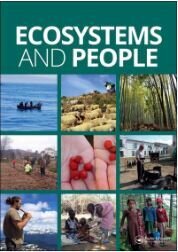
Ecosystem services in the Alps: visitors’ perceptions of two alpine protected areas
in Taylor & Francis

- Published
- Authors
Abstract
Understanding users’ perception of natural areas and their ecosystem services is crucial for managers and policy makers as it directly informs decisions that balance conservation efforts with public acceptance. The alpine areas are particularly vulnerable to climate change, making it critical to understand how visitors perceive these areas to develop management strategies that minimize conflicts, helping to ensure long-term support for environmental protection. This study explores the perceptions of 21 ecosystem services – including cultural, regulating and provisioning services – among visitors of two protected alpine areas in Italy. We distributed 3,399 questionnaires to evaluate visitors’ perceptions of the importance of key ecosystem services, their awareness of the ecosystem services concept and any shifts in perception due to COVID-19, as the study took place during an ease of restrictions caused by the pandemic. Additionally, we explored the relationship between perceptions and demographic factors. Results showed that visitor strongly perceived the importance of the aesthetic value of the landscape and biodiversity conservation. Perception of the overall importance of ES was strongly correlated with demographic factors, such as gender, age and a connection to outdoor and naturalistic activities. Visitors who were already aware of the ES concepts exhibited higher perceptions compared to those who did not acknowledge them, suggesting the need for targeted communication strategies to extend the awareness of the ES concept. This data provides critical insights for managers and policymakers to tailor communication efforts, fostering greater public awareness and support for the benefits provided by protected natural areas.
Authors:
Noemi Rota, Claudia Canedoli, Oscar Luigi Azzimonti, Harini Nagendra & Emilio Padoa-Schioppa
Links
‘Songs of the lake’: Understanding cultural expressions of nature through dwindling folk-songs and mythologies in Bengaluru
in South Asia: Journal of South Asian Studies
Article
- Published
- Authors
Abstract
Culture-specific knowledge plays an important role in shaping environmental conservation. Yet we lack a holistic and contemporary understanding of how such local cultural systems interface(d) with ecologies, especially in the fast-growing cities of the Global South which face profound environmental challenges. In this paper, we explore nature-based cultural systems embedded in folk-songs to understand situated social-ecological histories of human-inhabited peri-urban landscapes in the city of Bengaluru in South India. Drawing on empirical observations from the city, we trace local imageries of erstwhile lake-based social systems through folk-songs, mythologies and oral narratives. We demonstrate how many of these cultural narratives, largely embedded within symbolic linkages to the lake ecology, continue to manifest themselves as folk expressions in the city, despite the fact that most of the lakes have been polluted or are managed via restrictions that prohibit village residents from accessing them as they once did for agriculture, livelihoods and domestic use. The songs are also rich reminders of socialities, which, despite being divisive and hierarchical to a large extent, were symbolically and materially embedded in nature.
Links
- Published
- Authors
- Harini Nagendra
- Seema Mundoli
- Vijay Nishanth
Abstract
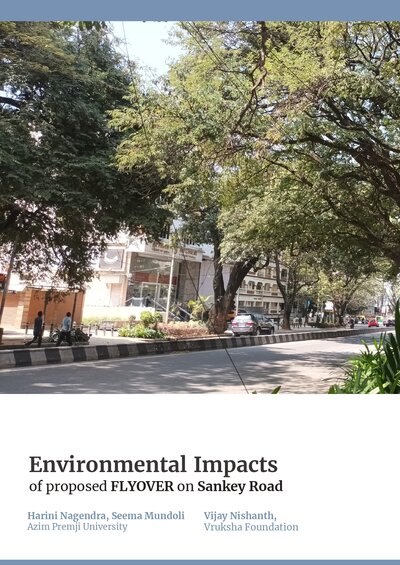
This report presents findings of a rapid environmental impact assessment conducted to determine the number of trees that will be cut or impacted, and other ecosystems affected, as a result of the Proposed Flyover on Sankey Road.
Labour incomes in India- A comparison of PLFS and CMIE-CPHS data
in Azim Premji University
- Published
- Authors
Abstract
The Covid-19 pandemic has created a need for high frequency employment and income data to gauge the nature and extent of shock and recovery from month to month. Lack of such high frequency household-level data from official sources has forced researchers to rely almost entirely on the Consumer Pyramids Household Survey (CPHS) conducted by the Centre for Monitoring the Indian Economy (CMIE). Recently, the CPHS has been criticised for missing poor and vulnerable households in its sample. In this context, it becomes important to develop a detailed understanding of how comparable CPHS estimates are to other more familiar sources. We examine the comparability of monthly labour income estimates for the pre-pandemic year (2018−19) for CPHS and the Periodic Labour Force Survey (PLFS). Across different methods and assumptions, as well as rural/urban locations, CPHS mean monthly labour earnings are anywhere between 5 percent to 50 percent higher than corresponding PLFS estimates. In addition to the sampling concerns raised in the literature, we point to differences in the way employment and income are captured in the two surveys as possible causes of these differences. While CPHS estimates are always higher, it should also be emphasized that the two surveys agree on some stylized facts regarding the Indian workforce. An individual earning INR 50,000 per month lies in the top 5 percent of the income distribution in India as per both surveys. Second, both PLFS and CPHS show that half the Indian workforce earns below the recommended National Minimum Wage.
Authors:
- Mrinalini Jha
- Amit Basole
Links

- Published
- Authors
Abstract
This report essentially takes stock of the employment conditions prevailing in the Indian economy prior to the pandemic and then goes on to delineate the impact of COVID-19 on lives and livelihoods. It also charts a possible policy path forward to address both short-term and long-term challenges of livelihood and employment. The focus is primarily on the non-farm economy while analysis and policy recommendations are at the national level.
Links

- Published
- Authors
Abstract
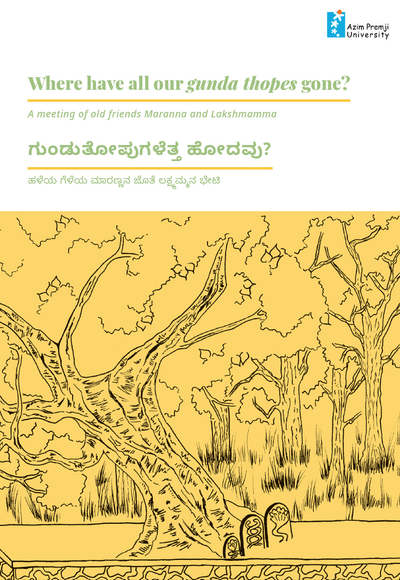
India is rapidly urbanising, but our cities are facing an environmental crisis. Whenever there is any development, for building a road, a flyover or a metro, the first casualties are trees. This story is our attempt to communicate the work we have done on gunda thopes to a wider public, hoping to partner with them to protect the city’s environment.
Trees are our city’s lungs, cleaning the air of dust and toxic fumes from vehicles and industries. Trees are a source of food, fuelwood and medicines, especially for the urban poor, and a source of shade in the hottest days to all. The very presence of trees helps us deal with the stress of city life. For many of us, trees are also of cultural and sacred significance. When trees in cities are cut to make way for urban projects, we also lose the many services that trees provide. But more importantly, what we and our future generations lose forever is a connect to nature, and a way of living that encompasses trees as living beings — neighbours, friends and spiritual guides. This is a fictitious story. But the village, which remains unnamed, exists just as it is described in the outskirts of Bengaluru. The thope exists too. All the elements of the story are drawn from our conversations with the village residents. Finally, this may be a story of loss — the loss of nature as a city expands. We also hope that the story will fuel an urge for us to get to know more about nature in our neighbourhood. We hope that each of you who read this book will be enriched by the understanding of trees and thopes—sentinels and companions in the cities we live in.Technical & Vocational Education and Training in India- Lacking Vision, Strategy and Coherence
in Azim Premji University
- Published
- Authors
Links

- Published
- Authors
Abstract
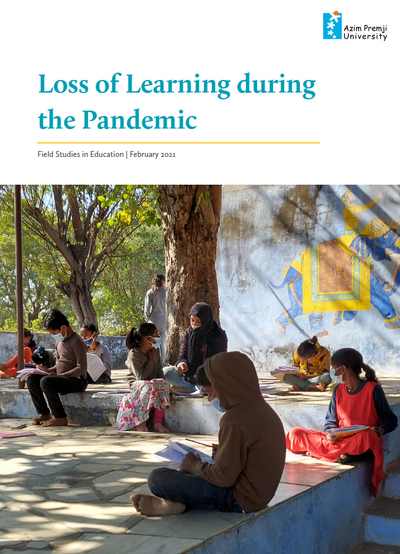
School closure due to the COVID-19 pandemic has led to complete disconnect from education for the vast majority of children or inadequate alternatives like community based classes or poor alternatives in the form of online education, including mobile phone-based learning.
Covid-19 Crisis- An Indictment of India’s Informal Economy
in Azim Premji University

- Published
- Authors
Abstract
This paper attempts to look at the ways informality is conceptualized in India and argues that the problems with the laws pertaining to informal labour are not simply an implementation issue, but the design of the labour laws itself exclude informal labour. While reviewing the history of labour laws in India and the social history of labour participation, the paper also examines the current change in the political approach to labour by changing the labour laws in the pretext of the pandemic. Focussing on the changes made in labour laws in Madhya Pradesh the paper argues that these changes would further informalise the workers intensifying the crisis.
Authors:
- Jenny Sulfath
- Balu Sunilraj
Links
Down and Out- The Gendered Impact of the Covid-19 Pandemic on India’s Labour Market
in Azim Premji University
- Published
- Authors
Abstract
The Covid-19 pandemic has created unprecedented disruptions in labour markets across the world including loss of employment and decline in incomes. Using panel data from India, we investigate the differential impact of the shock on labour market outcomes for male and female workers. We find that, conditional on being in the workforce prior to the pandemic, women were seven times more likely to lose work during the nationwide lockdown, and conditional on losing work, eleven times more likely to not return to work subsequently, compared to men. Using logit regressions on a sample stratified by gender, we find that daily wage and young workers, whether men or women, were more likely to face job loss. Education shielded male workers from job loss, whereas highly educated female workers were more vulnerable to job loss. Marriage had contrasting effects for men and women, with married women less likely to return to work and married men more likely to return to work. Religion and gender intersect to exacerbate the disproportionate impact, with Muslim women more likely to not return to work, unlike Muslim men where we find religion having no significant impact. Finally, for those workers who did return to work, we find that a large share of men in the workforce moved to self-employment or daily wage work, in agriculture, trade or construction. For women, on the other hand, there is limited movement into alternate employment arrangements or industries. This suggests that typical ‘fallback’ options for employment do not exist for women. During such a shock, women are forced to exit the workforce whereas men negotiate across industries and employment arrangements.
Authors:
- Rosa Abraham
- Amit Basole
- Surbhi Kesar
Links
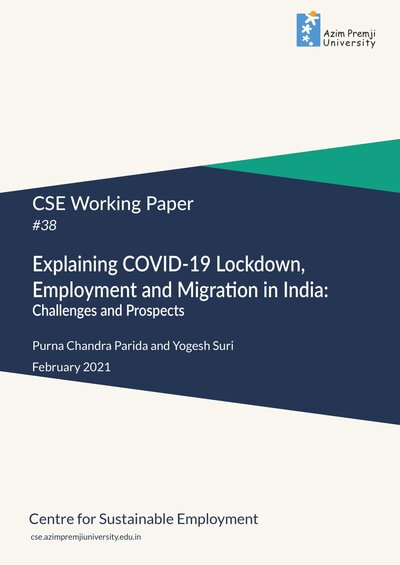
Explaining COVID-19 Lockdown, Employment and Migration in India- Challenges and Prospects
in Azim Premji University
- Published
- Authors
Abstract
This paper makes an attempt to do an assessment of the impact of COVID-19 on employment and migration in India. The analysis is based on up-to-date facts and figures available in the public domain on economic growth, employment and migration. Using the employment elasticity approach, the study estimates employment loss during 2020 – 21 owing to the negative impact of COVID-19 on economic activities. The results of the study suggest that the country may witness job loss with the tune of 18.5 18.8 million in the current fiscal year. This in turn would shoot up the unemployment rate from 5.8% in 2018 – 19 to 8.9% in 2020 – 21, warranting a coordinated and focused approach from both the Central and State governments to uplift the confidence of the people and bring back the lost jobs, particularly the migrant workers. The study also emphasises on Central government’s urgent attention and action plan for uplifting the rural economy in order to revive India’s economy in the short run.
Authors:
- Purna Chandra Parida
- Yogesh Suri
Links

- Published
- Authors
- School of Education
Abstract
An immigrant, who worked in an American machine shop, acquired polite standard spoken English by reading romance novels in an 18-week adult extensive-reading English as a Spoken Language (ESL) class. Full time employment in the machine shop and once-a-week class discussions provided the only places where the student was routinely exposed to spoken English.

- Published
- Authors
Abstract
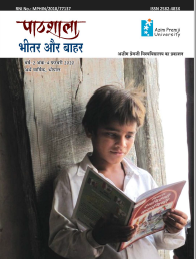
पाठशाला भीतर और बाहर के अंक 4 में एक लेख देश में महिला शिक्षा की पड़ताल करता है। एक अन्य लेख बचपन के अर्थ पर सवाल उठाता है और पूछता है कि क्या शिक्षा का एक मात्र उद्देश्य एक आदर्श बच्चे का विकास करना है; पत्रिका में शामिल एक और लेख शारीरिक दण्ड के सदियों पुराने सवाल की समाजशास्त्रीय पड़ताल करता है और एक दूसरे लेख का पहला भाग भारतीय शिक्षा पर मैकाले के प्रभाव की जाँच करता है। इस अंक के दो अनुभव आधारित लेख कविता कहानियों के माध्यम से भाषा शिक्षण के रुचिकर तरीक़े सुझाते हैं। संवाद में शिक्षकों व शिक्षक- प्रशिक्षकों के साथ मूल्यांकन और परीक्षा के विभिन्न पहलुओं पर बातचीत है। दो-एक लेख शिक्षा से जुड़ी नीतियों और इनके अमल में आने वाले मुद्दों की आलोचनात्मक पड़ताल करते हैं।
The fourth issue of “Pathshala ..” has an article that examines women’s education in the country; an article that interrogates the meaning of childhood and asks if the only purpose of education is to develop an ideal child; an article that examines the age old question of corporal punishment sociologically; the first part of an article that examines Macaulay’s relationship with/impact on Indian education; there are two experience based articles on interesting ways to teach language using stories and poems; and a discussion among teachers and other educators around assessments and examination. Some of these articles critically examine policies and the issues in their application.
Links

- Published
- Authors
Abstract
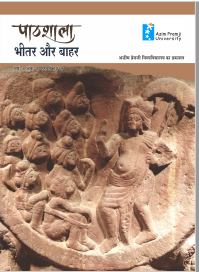
पाठशाला भीतर और बाहर के अंक 2 में भारतीय शिल्प व चित्रकला में, शिक्षण सम्बन्धी चित्रों के बारे में लेखों की दिलचस्प ऋंखला शृंखला का पहला भाग शामिल है। यह लेख शिक्षा के रोचक इतिहास के एक पहलू को खोलता है। इस अंक में विज्ञान शिक्षण पर दो अन्य लेख हैं, जो इस विषय में कुछ काम करने प्रयासों और विज्ञान सीखने में मिलने वाले आनन्द व जुड़ाव की बात करते हैं। एक लेख फ़ेल न करने की नीति और इसकी ग़लत व्याख्याओं के बारे में है। एक लेख में शिक्षक की पहचान व स्थिति की पुनर्कल्पना करने की आवश्यकता, इसमें स्कूल नेतृत्व की भूमिका और चुनौतियों की चर्चा है। इस अंक में भाषा शिक्षण और सीखने के पहलुओं पर अध्यापकों से बातचीत भी शामिल है। महत्त्वपूर्ण भाषाओँ पर अंग्रेज़ी की पकड़ कैसे बनी, इसके विश्लेषण पर आधारित एक लेख भी इस अंक में शामिल है।
The second issue of “Pathshala..” carries the first part of a very interesting series on schools as they were. The article brings out in an interesting manner how we come to know about what happened in earlier times. Two other articles on science teaching talk about the effort of making something work and the joy and engagement it brings to learning science. There are articles that discuss the policy of non-detention and the way it is mis-interpreted, the need to re-imagine the identity and status of the teacher, what role does school leadership play in it and the challenges the leadership faces. The conversation with teachers is on dimensions of language teaching and learning. There is also an article that analyzes the way English has captured the place of the most important language.
Links

- Published
- Authors
Abstract
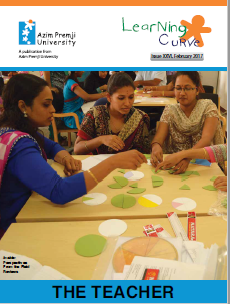
The teacher is central to the teaching — learning process, whatever a school’s policies, whether private or public, whatever board it has chosen to adopt. The teacher is an essential component of the success of the process. This being the case it is essential to consider what ‘creates’ a good, effective teacher and what sustains her and , through her, the framework of the school. This Issue is aimed at not only teachers and teacher-educators, but also policy makers and observers, in short, anyone with an interest in education. The focus articles deal with the policy and practice of teacher development and suggests alternatives while two more examine gender sensitisation and pre-service teacher preparation discussing in considerable detail the curriculum and its realities. This is followed by articles from practitioners across the field, from both private and public institutions. Teachers have recounted their experiences on the ground. There are critiques of the present system holding up practices against the light of theory, while some teachers have described their positive encounters, testifying to the dedication of colleagues working with enthusiasm and vigour in remote areas, without the help of sophisticated teaching aids.
Links


- Published
- Authors
Abstract
Engage with 2 themes — ‘Emerging Trends in Physics’ and ‘Indian Science Facilities’ — by exploring methods & processes defining future research in areas as fascinating as the discovery of black holes, understanding dark matter, using radio-astronomy to probe the universe, enabling space travel, the search for exoplanets, & establishing human settlements on Mars. In ‘Origins’ & ‘Annals of History’, piece together current understanding of our shared history through the beginnings of space-time & planetary worlds, the notion of elements, or that of life. Discover simple classroom activities to reveal & challenge mental models of force in ‘The Science Lab’, encourage the use of art to study ecology in ‘The Science Teacher at Work’, or integrate social justice in the science curriculum in ‘Research to Practice’. Also discover little-known aspects of ‘The Origins of Composting’ & ‘Ocean Microbes’ in our pull-out posters!
Links

- Published
- Authors
Abstract
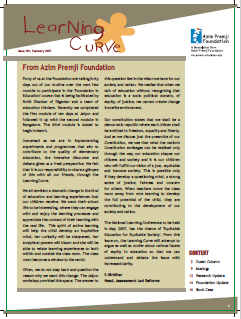
In this issue of the Learning Curve, we explore the various obstacles standing in the way of equity in the Indian Education system. Factors responsible for low access to schooling of disadvantaged groups like the Scheduled castes and the minorities are discussed.
Links