
Publications & Resources
Our faculty, students and researchers work together everyday to contribute to a better world by grappling with urgent problems we are facing in India. We conduct rigorous work to produce high quality learning resources and publications to contribute to public discourse and social change. Here, we feature a sample from our work for everyone to access. You can explore featured resources, policies, and the latest publications from the University.
To explore all the work of our University, please visit our publications repository.
List of Publications & Resources
The Rich Have Peers, the Poor Have Patrons: Engaging the State in a South Indian City
in American Journal of Sociology (AJS)

- Published
- Authors
Abstract
Research on democracy has shed much light on two kinds of democratic politics: patterns of voting and patterns of associational or movement politics. But there is growing recognition that in order to better understand the quality or depth of democracy, we need to move beyond this dualistic focus to better understand the everyday practices through which citizens can effectively wield their rights; these practices often diverge from the formal equality enshrined in laws and constitutions. The researchers study this question through a large, unique sample survey carried out in a South Indian city. We find that effective citizenship is refracted through the institutional specificities of urban India and that, as a result, the poor access the state through political participation and the rich through particularistic connections to persons of influence. But unlike the conventional celebration of participation as a citizenship-deepening activity, we also find that a substantial part of participation is associated with forms of brokerage that compromise democratic citizenship.
Article
- Published
- Authors
- School of Development
Abstract
If one asks a teacher in preschool learning spaces in India, about the most usual story that is narrated to children, what is the most common answer? Will there be unanimity in the fact that the story of Thirsty Crow works just as well in many Indian languages, as it does in Indian Sign Language? Those who engage with early childhood care and learning would often stress upon the need to have a visually rich environment in these learning spaces, full of picture books and enthusiastic teachers who never give up a chance to bring out yet another story. Bringing Indian Sign Language to early childhood learning spaces, creating an immersive experience for children before they enter school years by making available in these spaces Indian Sign Language resources (and then taking such initiatives to schools, colleges, and community spaces) would allow us to slowly move toward the dream cherished by deaf adults.

- Published
- Authors
Abstract
This chapter provides the emergence and practice of Dalit Studies within academia through a critical engagement with curriculum structures that exist within pedagogic discourses. It explores different kinds of academic writings that have prevailed within Dalit discourse by looking into their composition, engagement with the curriculum, and pedagogic practices. The Dalit community has created spaces for the emergence of public debates and conferences, study groups, and seminars that enable discursive engagement with Dalit Studies. One of the major milestones in Dalit discourse was taken up by Sukhadeo Thorat, who, under his chairmanship of University Grants Commission, granted the institutional setup of the Center for the Study of Social Discrimination and Exclusion for a systematic engagement with Dalit discourse. Dalit feminist scholars have highlighted “contradictions in schooling in that curricula and school cultures reproduce Brahmanical values”.
Fifteen Years of Fragmentation and Land Cover Change in India’s Ten Largest Cities – A Google Earth Engine Analysis
in Cities and the Environment (CATE)
Article
- Published
- Authors
- Harini Nagendra
- Preeti Rao
- Shivani Agarwal
Abstract
Urbanisation is one of the most transformative drivers of global environmental change today, with India representing one of the fastest urbanising countries. The researchers map the urban expansion of India’s ten largest cities from 2001 to 2016, through a regression tree classification of Landsat data in Google Earth Engine. Indian cities are growing through sprawl, and simultaneously densifying through in-filling. In Delhi, Mumbai and Pune, urban growth is multinucleated, aggregating to form a larger urban region. However, the dominant pattern in most cities is mono-nucleated growth via edge-expansion. The colonial signature is visible in many cities such as Bengaluru, where due to the British colonial practice of planting trees in the cantonment, the city interior has lower urban density at the core as compared to the periphery. Much of the urban growth between 2001 – 2016 is at the expense of agriculture and fallow areas. Across all cities, urban patches have expanded and coalesced into larger units. At the same time, there is an overall loss of surface water cover within cities. Urban growth has led to fragmentation of tree cover, agriculture/fallow and water bodies. This paper demonstrates that India’s urbanisation is leading to severe impacts on water security (because of the loss of surface water), biodiversity (because of the fragmentation of tree cover and the conversion of agriculture and fallow lands to built-up urban cover), factors which if left unaddressed will severely impact the sustainability of Indian urbanisation.

- Published
- Authors
- Climate Change and Sustainability
- Research Centre
Abstract
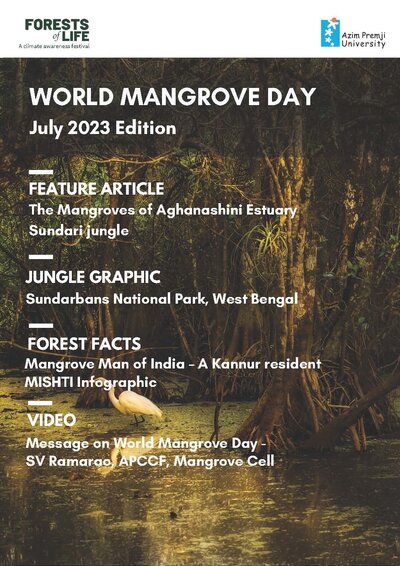
This is a monthly newsletter published by Azim Premji University, as a part of Forests of Life, a climate awareness festival celebrating forests — a quest and yatra of young people from across different parts to engage with the youth of this country. In this edition, we celebrate International Day for the Conservation of the Mangrove Ecosystem, aiming to raise awareness of the importance of mangrove ecosystems.
Links

- Published
- Authors
Links
Monolingual Ideologies in Multilingual Classrooms: Exploring Tacit Aspects of the Indian Education System
in Language and Language Teaching

- Published
- Authors
- School of Education
Abstract
Globalisation has resulted in ever increasing linguistic diversities and a worldwide recognition of the need to support linguistic pluralism through education (UNESCO, 2003). Keeping abreast with the global trend, India’s education policy has provided for the cultivation of multilingualism by including at least three languages in the curriculum. However, in reality, India’s education system is guided by monolingual ideologies that disregard multilingual realities and promote a form of “monolingual multilingualism” (Neumann, 2015). This translates into separatist pedagogy and practices that keep languages strictly compartmentalised at schools. Different time slots are allotted to teaching learning of disparate languages. Proficiency in a language is interpreted as the ability to use it without “resorting” to any other language. In effect, monolingual ideologies function to reject translanguaging (Garcia, 2009), or natural language practices of multilinguals, that enter into classrooms. Strategies such as code-switching and translating are invalidated when they occur in spoken or written conversations in classrooms. This article aims to study the monolingual ideologies that permeate the education system to understand their implications for the process of teaching and learning in Indian classrooms.
Estimating the productivity gap between organised and unorganised small-scale units in India’s manufacturing sector
in Azim Premji University

- Published
- Authors
- Amit Basole
- Dimple Chopde
- Paaritosh Nath
Abstract
Small manufacturing firms are considered to be engines of growth and job creation. While most research on small firms focuses on formal sector units, in India informal sector units far outnumber the formal. This is true even for manufacturing units employing 5 to 49 workers, which constitute only 5% of all unorganised units, but in absolute numbers are nine times more numerous than organised units in the same size class. Such firms have the potential to contribute to structural transformation but their capacities vis-a-vis formal firms are not well understood. To address this, the researchers create a unit-level dataset combining Annual Survey of Industries data for organised (formal) units with the National Sample Survey data on unorganised (informal) units. They also discuss problems involved in this exercise and some ways to deal with them. They find that matching organised and unorganised units on observable characteristics reduces the labour productivity differences between them to around 25 percent. The researchers discuss some policy implications of their results.
Authors:
- Amit Basole
- Dimple Chopde
- Paaritosh Nath
Links

- Published
- Authors
Abstract
पाठशाला भीतर और बाहर के सोलहवें अंक में शिक्षा के कुछ बुनियादी मसलों यथा शिक्षा में समावेशन, शुरुआती भाषा शिक्षण के पहलुओं, सामाजिक विज्ञान शिक्षण व नैतिक समझ के विकास आदि पर कक्षा के अनुभवों से उभरे व उन अनुभवों के विश्लेषण को समेटे हुए लेख हैं। चूँकि यह लेख कक्षा से अनुभवों से उभरे हैं, अतः यह उनके यथार्थ, संभावनाओं व चुनौतियों को सामने रखते हैं।
Links


- Published
- Authors
- Climate Change and Sustainability
- Research Centre
Abstract
This is a monthly newsletter published by Azim Premji University, as a part of Forests of Life, a climate awareness festival celebrating forests — a quest and yatra of young people from across different parts to engage with the youth of this country. The editions of this newsletter cover diverse aspects of forests — ecology, biodiversity, and climate change impacts; informative and unique titbits about forests, their resources, communities, and conservationists; national parks, wildlife sanctuaries; puzzles, quizzes, activity corners for children, and much more!
Links

- Published
- Authors
Abstract
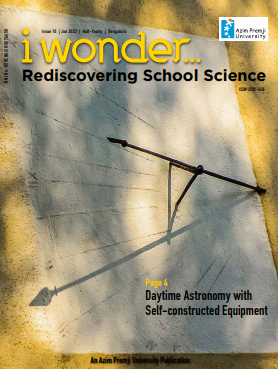
How do we introduce students to astronomy without the expensive instruments modern astronomers use and when regular school hours are nearly always during the day?
How can engaging with justice issues empower science learning, especially for learners who come from communities that have been traditionally excluded from science learning and careers?
Who are the pollinators in our neighbourhood and can we identify them by traits that plants may evolved to attract them?
Can simple practical demonstrations, like pushing a chair or dropping objects from a height, help students understand the relationship between force and motion more accurately?
Join us in exploring these and many other such questions in our commemorative issue.
Pluralisation challenges to religion as a social imaginary: Anti-caste contestations of the Muslim quota in India
in Religions, Multidisciplinary Digital Publishing Institute (MDPI)
- Published
- Authors
Abstract
Postcolonial democratic deepening brings new challenges to religion as a social imaginary in India. Increasing cultural differentiation and pluralisation are countered by fundamentalisation, but also challenge existing minority/multicultural imaginations. Religion, as the overarching identity category, has come under scrutiny given the politicization of caste among Muslims, who form the country’s most significant religious minority. Through social-justice and anti-caste politics in the 1990s, lowered-caste Muslims started to enact a new identity named Pasmanda, which means “those who have been left behind”. The Pasmanda discourse emphasises internal heterogeneities and hegemonies and pluralises the “Muslim”. It thus ruptures the imaginary of Muslims as a homogeneous minority in a culturally diverse country and problematises the majority – minority framework. An important site of contestation is the reservation (quota) policy in public employment, education, and the legislature. While privileged-caste Muslims generally prefer a quota based on religion, the lowered-caste Pasmanda Muslims increasingly mobilise for a caste-based quota, thus challenging systems of recognition and redistribution.
Authors:
Article
- Published
- Authors
Abstract
The canvas of science education needs to be viewed in its totality to prevent the confounding of some basic issues and to enable us to evaluate the fads and fashions in educational practice. Policies and processes in education are tacitly shaped by theories in the humanities and social sciences. Inadequate understanding of these theories, or the lack of attention to uncalled-for implications of their practical import, takes education in undesirable directions. To be a good science teacher has never been easy. The teacher is a master of knowledge in science. But that is not all. She is equally committed to the principles governing the practice and communication of science.
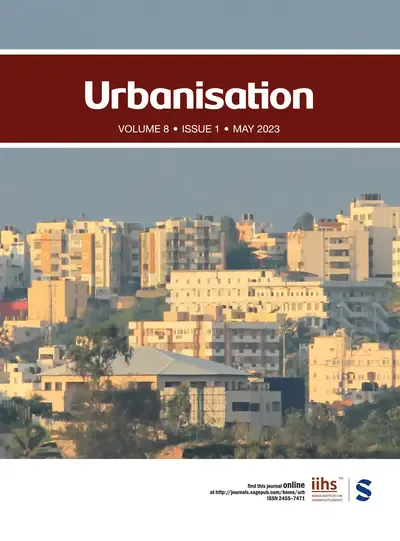
Good Luck or Bad Omen: Attitudes Towards the Slender Loris in the City of Bengaluru, India
in Urbanisation

- Published
- Authors
- Harini Nagendra
- Kaberi Kar Gupta
- Varsha Bhaskaran
Abstract
Cities are characterised by social and cultural diversity. The management of urban wildlife requires developing a better understanding of cultural beliefs associated with wildlife in diverse urban settings. We document a range of cultural beliefs associated with the slender loris (Loris lydekkerianus), an endemic, nocturnal primate, in the Indian megacity of Bengaluru. Many residents associate the loris with practices such as black magic, and they believe that the animal’s call is a bad omen that brings death and misfortune. Others consider it a harbinger of good luck that offers protection to young children. These superstitious beliefs may motivate illegal wildlife trafficking of the loris. Urbanisation has led to changes in these perceptions, and many respondents now report that they consider these beliefs to be old-fashioned superstitions that hold no place in a modern city. This study contributes to knowledge on changing urban attitudes to wildlife, which is vital to developing conservation strategies that involve local residents.
Labour market flows and gender differentials in urban unemployment over the pandemic
in Azim Premji University
- Published
- Authors
- Paaritosh Nath
- Rahul Menon
Abstract
Utilising data from the Periodic Labour Force Survey, the researchers estimate quarterly changes in urban labour market flow over the period 2018 to 2022 and the impact on unemployment rates for men and women. Their analysis provides non-intuitive explanations for established findings as well as points out important questions for further study. Both men’s and women’s unemployment rates have reduced in 2022 compared to 2018, showing rapid reductions following the high levels reached during the lockdown. Women’s unemployment rates have consistently been higher than men’s throughout this period. The gap between men’s and women’s unemployment rates reduced during the lockdown, but has shown signs of increasing since 2021, even as unemployment rates have fallen. For women, flows from the labour force to non-participation play a larger role in explaining changes in unemployment rates as compared to men. Flows from the labour force to non-participation, however, have reduced since the pandemic, providing an explanation as to why labour force participation rates have increased, namely, women staying for longer in the labour force rather than more women entering it. Despite rising labour force participation rates, the gender gap in unemployment rates has risen, in contrast to developed economies.
Authors:
- Paaritosh Nath
- Rahul Menon
Links


- Published
- Authors
- Sudhansu S Biswal
- Sushree S Mishra
- Sridhar K
Abstract
Due to the heavy-quark symmetry of Non-Relativistic Quantum Chromodynamics (NRQCD), the cross-section for the production of ηc can be predicted. This NRQCD prediction when confronted with data from the LHCb is seen to fail miserably. We address this LHCb ηc anomaly in this paper using a new approach called modified NRQCD, an approach that has been shown to work extremely well for studying J/ψ, ψ′ and χc production at the LHC. We show, in the present paper, that the predictions for ηc production agrees very well with LHCb measurements at the three different values of energy that the experiment has presented data for. Modified NRQCD also explains the intriguing agreement of the LHCb ηc data with the colour-singlet prediction. The remarkable agreement of the theoretical predictions with the LHCb data suggests that modified NRQCD is closer to apprehending the true dynamics of quarkonium production.
Critiquing ‘Component C’: The Health Parameter of the Comprehensive Environmental Pollution Index
in Economic and Political Weekly
Article
- Published
- Authors
Abstract
The comprehensive environmental pollution index has been applied to identify and monitor industrially polluted clusters in India. In the calculation of the CEPI, there is a health parameter (Component C), which uses local health-related data. The article draws attention to the gaps in the design and guidelines to calculate Component C.


- Published
- Authors
Abstract
The article argues that industry is coming alive to its social purpose, with considerations like equity, environmental impact and ethics. It starts with the history of industrial revolutions from 0.0 to 4.0, detailing their impact on society. It goes on to introduce the concept of Industry 5.0, which is built on the principles of human centricity, sustainability and resilience. The author explains the implications of Industry 5.0 to society, leadership, and HR. He argues that Industry 5.0 is not a revolution but an evolution of the manufacturing process, which is characterised by the integration of various technologies such as artificial intelligence, the Internet of Things, and robotics. He concludes by discussing how individuals can adapt to the requirements of Industry 5.0. The article points to Industry 5.0 becoming more humane with greater responsibility for equity, justice, and sustainability.
Adivasi migrant labour and agrarian capitalism in southern India
in Journal of Agrarian Change
Article
- Published
- Authors
- School of Development
Abstract
This paper looks at a case of rural-to-rural movement of agrarian capital in southern India and the ways in which capital-labour relations are reworked to maintain oppressive forms of exploitation. Faced with an agrarian crisis, capitalist farmers from affluent communities of Wayanad, Kerala, take large tracts of land for lease in the neighbouring state of Karnataka and grow ginger based on price speculation. Landless Adivasis from Wayanad have served as labourers on these ginger farmlands for the past three decades. Recently, farmers have shifted to employing labourers from a Scheduled Caste (SC) from Karnataka. The change happened not just because of the lower wages the SC labourers were willing to work for, but also because of the farmers’ inclination to move away from Adivasis who have been resisting the poor working conditions on the farm. The story resonates with broader dynamics of agrarian-labour relations amidst capitalist expansion and highlights the centrality of socio-political factors at play.

- Published
- Authors
Abstract
In this entry, the researcher will analyse neoliberal policies and how they have been popularised through the mass media – with a particular focus on market triumphalism. This is an important issue in contemporary times as neoliberal policies have led to an increase in economic inequality. However, public discourse has argued that these policies are beneficial to the economy and workers. The first section will describe the historical trajectory that shaped neoliberal policies. In the second section, the researcher will trace the introduction of neoliberal policies in India in the 1990s and how English newspapers popularised them. In section “Sandel’s Critique of Market Triumphalism in America”, the researcher will discuss the popularity of market triumphalism through neoliberal policies in the USA and Michael Sandel’s (What money can’t buy: the moral limits of markets. Penguin, London, 2012) influential critique of it.
Links

- Published
- Authors
Abstract
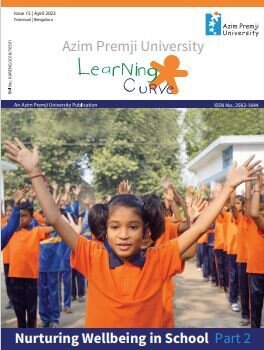
Wellbeing is a complex concept and while a wellness-focused school culture is key, it also requires a very individualised focus. Children function at the level of emotions. Their wellbeing depends on how the school, teachers, other students, and the entire ecosystem make them feel. In this issue, there are several articles that should make us think about how a child who is excluded feels. How does a child whose family life is full of strife feel in school? Why does another feel that no one would visit their home because they are poor or belong to a lower caste?
Links
Article
- Published
- Authors
Abstract
At the time when Saussure or Pierce were propounding and formulating their ideas about the relationship between a concept and the multiple ways they can be referred to, the world was still going through the extended effects of the industrial revolution. The world was still connecting and finding out that there could be multiple ways of referring to most concepts around us. But fast forward a hundred years and the world has changed a lot. Concepts have changed and we now live on an earth that is more connected than ever and new ‘languages’ keep cropping up once in a while. The concept of sign propounded has had a big role to play in the structure of language, at least from a theoretical point of view. The idea of sign has evolved over time and this paper presents a discussion of the relationships between signifiers and signifieds.

- Published
- Authors
Abstract
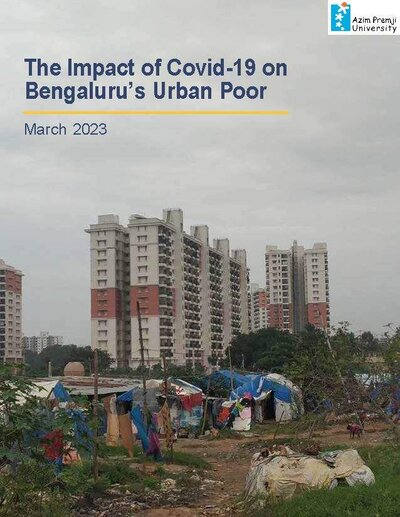
Azim Premji University, in collaboration with 9 Civil Society Organisations (CSOs), conducted a survey of 3,000 households in 92 low-income settlements across 39 wards of Bengaluru. The survey was done to estimate the continuing impact of COVID-19 induced lockdowns and economic disruptions on employment and livelihoods. The survey also captured information on access to government support as well as coping mechanisms to deal with such a crisis. Workers in a wide range of occupations such as drivers (cab, auto, and others), daily wage workers (construction and others), domestic workers, and factory workers (garment and others) were surveyed. The survey was conducted in the month of November 2021 with the help of Action Aid, Association for Promoting Social Action (APSA), The Center for Advocacy and Research (CFAR), Hasiru Dala, Gubbachi, Reaching Hand, Sangama, Swabhimaan Trust, and Thamate.
Download the full report here
Press release: English | Kannada
Key Findings: Short | Detailed
YouTube video of the virtual event held on 4 April, 2022.
Recording of the in-person event held on 29 March, 2022 in Bengaluru is available here.
Media coverage
– Print
Bangalore Mirror: Inheritance of Covid losses (30 Mar 22 | Page 1, 8)
Rajasthan Patrika: तीन फीसदी परिवारों को ही मिला नकद हस्तांतरण योजनाओं का कुछ लाभ : अध्ययन (30 Mar 22 | Page 1)
The Hindu: Survey finds that Covid-19 impact on livelihoods continues (30 Mar 22 | Page 4)
The New Indian Express: Urban poor still coping with job, income loss- Report (30 Mar 22 | Page 2)
Udayavani: Kannada (30 Mar 22 | Page 8)
– Online
ETV Bharat: ರಾಜಧಾನಿಯಲ್ಲಿ ಕೋವಿಡ್ನಿಂದಾದ ದುಷ್ಪರಿಣಾಮ : ಸಮೀಕ್ಷೆಯ ವರದಿ ಬಿಚ್ಚಿಟ್ಟ ಅಜೀಂ ಪ್ರೇಮ್ಜಿ ವಿವಿ
Hindustan Times: 3% benefitted from Karnataka govt’s cash scheme
News9: Bengaluru COVID impact survey- Job, income losses hamper ability of households to recover
Rajasthan Patrika: कोरोना महामारी : 40 फीसदी ने कम भोजन से किया गुजारा
The Indian Express: Job and income losses persisted among low-income settlements well past 2020 lockdown- Study
The News Minute: Job, income losses due to lockdowns continue to impact Bengaluru urban poor
Links


- Published
- Authors
Abstract
The globally invasive Argentine ant (Linepithema humile) possesses a venom lethal to some amphibian species in the invaded range. To test the novel weapons hypothesis (NWH), the effects of the toxin on the cohabiting amphibian species in the ant’s native range need to be investigated. The invader should benefit from the novel chemical in the invaded range, because the species are not adapted, but the venom should not be effective in the native range. The researchers explore the venom effects on juveniles of three amphibian species with different degrees of myrmecophagy inhabiting the ant’s native range: Rhinella arenarum, Odontophrynus americanus, and Boana pulchella. They exposed the amphibians to the ant venom, determined the toxic dose, and evaluated the short-(10 min to 24 h) and medium-term (14 days) effects. All amphibian species were affected by the venom independently of myrmecophagy. In addition to amphibian sensitivity, the researchers discuss how the differential Argentine ant abundance and density in the two ranges could be the key to the susceptibility of amphibians to the venom, resulting in the possibility of NWH. Their results confirm the potential magnitude of the impact of the Argentine ant in successfully invaded areas for the conservation of already threatened amphibians.
Author: Alok Bang


- Published
- Authors
Abstract
Mathematical Loops: The March 2023 issue of AtRiA takes on a (S)trip with a Twist! Enjoy the journey!
Links
The Indian labour market through the lens of public sector recruitment
in Azim Premji University
- Published
- Authors
Abstract
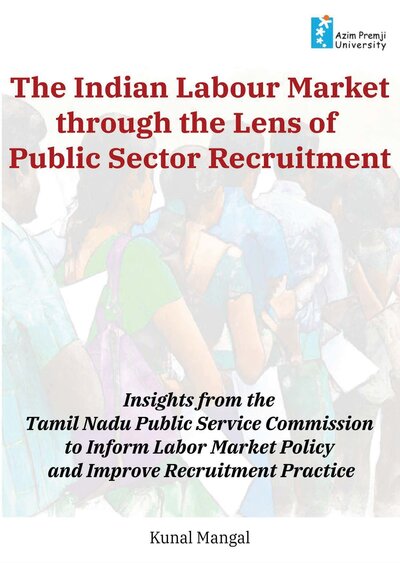
In India, as in many countries around the world, most government jobs are allocated through a system of merit-based exams. Over the past few decades, these exams have become incredibly competitive, at times receiving over 1,000 applications for each vacancy.
Against a backdrop of rising educational attainment, high aspirations, disappointment with private sector opportunities, and a deep unmet need for income security, it is understandable why the demand for public sector employment opportunities is so high.
Yet despite the large footprint that public sector recruitments have in our social, economic and political life, many basic questions about them remain shrouded in mystery. Who applies? Why do they apply? Are these intense levels of competition socially productive, or do they make people worse off? Why are people willing to invest so much in exam preparation? Why are people willing to gamble on such low odds of getting selected?
Our lack of understanding limits our ability to formulate sound labour market policy. As we will see, a large share of college graduates participate in public sector recruitment exams, and candidates for these exams make up a disproportionate share of the overall unemployed population. How can we improve employment outcomes if we do not understand who the unemployed are and how they invest their time?
The main reason for the holes in our understanding is a lack of data. To date, neither private nor public household surveys include questions on whether individuals are preparing for competitive exams; and recruitment agencies have historically been cloistered institutions, understandably concerned about protecting the integrity of the recruitment process. As a result, the crores of candidates preparing for competitive exams around the country remain largely invisible in data, and by extension in policy.
This report attempts to shine a light on this dark corner of the labour market. To do so, the researcher uses several new sources of data. First, he draws on administrative data from a recruitment agency. This data allows us to observe the whole recruitment process for the entire universe of applicants — the first time such data has been made available in the Indian context.
Second, the researcher uses data from a large-scale survey of over 3,000 candidates, which provides information about their investments in exam preparation, their access to resources, their constraints, and their beliefs.
Third, the research collaborators and the researcher conducted interviews and focus groups with candidates to better understand them in their own words. These rich data sources provide new insights into the economic and social life of candidates preparing for competitive exams.
The goal of this report is to demonstrate how both labour market and recruitment policy can be informed by a better understanding of candidate application behaviour. This understanding can, in turn, help us tackle some of the key challenges in the modern Indian labour market — high levels of educated unemployment, a lack of skill development, low levels of female labour force participation, and more.
Summary Articles:
VoxDev: The costs of extreme competition for government jobs: Evidence from India
Ideas for India: The costs of extreme competition for government jobs
Further Reading:
Mangal, Kunal (2022a), “How much are government jobs in developing countries worth?.” Download here.
Mangal, Kunal (2022b), “The long-run costs of highly competitive exams for government jobs.” Download here.FAQs:
Are the statistics in the report official?
Although the report uses official data, the statistics in the report were not computed by TNPSC. Therefore, none of these statistics are official, and any errors in processing the data are entirely my own.
Is the report written in affiliation with any coaching center?
No. We are academic researchers. No one who was involved in either collecting and analyzing the data had any affiliation with a coaching center.
Will the report be available in Tamil?
We hope to be able to provide a Tamil summary of the report in the near future.
Links

- Published
- Authors
Abstract
पाठशाला का पन्द्रहवाँ अंक दो विषय क्षेत्रों- सामाजिक विज्ञान व इसका शिक्षण और स्कूल में भाषा सीखने की प्रक्रियाओं पर केन्द्रित है। अंक में कुछ लेख इस बारे में जागरूकता पैदा करने के लिए हैं कि सामाजिक संरचना हमें और हमारे काम को कैसे प्रभावित करती है। कक्षा अनुभवों पर आधारित लेख हमें यह समझने में मदद करते हैं कि बच्चे जटिल सामाजिक विचारों से कैसे जुड़ सकते हैं। बच्चों के साथ गहन अनुभवों पर आधारित लेख प्रारम्भिक भाषा शिक्षण और पढ़ना सीखने-सिखाने में मदद करते हैं।
This Fifteenth issue Pathshala is focused on two areas; Social Sciences and its teaching and processes towards learning language in schools. Some articles included are to build awareness of how social structure affects us and our work. The articles focus on classroom experiences and help us understand how children can engage with complex social ideas. The articles based on rigorous experience of children also help them engage with early language teaching and reading.
Links
- Published
- Authors
- Harini Nagendra
- Seema Mundoli
- Vijay Nishanth
Abstract
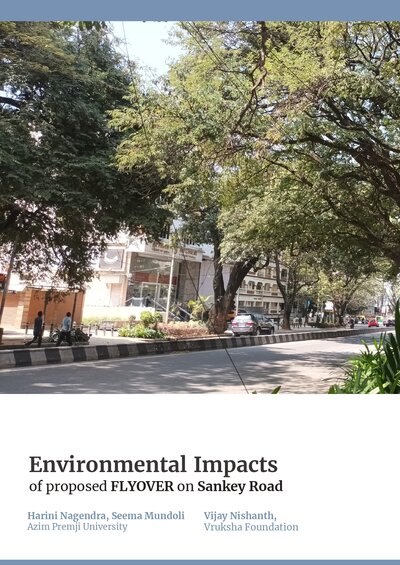
This report presents findings of a rapid environmental impact assessment conducted to determine the number of trees that will be cut or impacted, and other ecosystems affected, as a result of the Proposed Flyover on Sankey Road.
‘Songs of the lake’: Understanding cultural expressions of nature through dwindling folk-songs and mythologies in Bengaluru
in South Asia: Journal of South Asian Studies
Article
- Published
- Authors
Abstract
Culture-specific knowledge plays an important role in shaping environmental conservation. Yet we lack a holistic and contemporary understanding of how such local cultural systems interface(d) with ecologies, especially in the fast-growing cities of the Global South which face profound environmental challenges. In this paper, we explore nature-based cultural systems embedded in folk-songs to understand situated social-ecological histories of human-inhabited peri-urban landscapes in the city of Bengaluru in South India. Drawing on empirical observations from the city, we trace local imageries of erstwhile lake-based social systems through folk-songs, mythologies and oral narratives. We demonstrate how many of these cultural narratives, largely embedded within symbolic linkages to the lake ecology, continue to manifest themselves as folk expressions in the city, despite the fact that most of the lakes have been polluted or are managed via restrictions that prohibit village residents from accessing them as they once did for agriculture, livelihoods and domestic use. The songs are also rich reminders of socialities, which, despite being divisive and hierarchical to a large extent, were symbolically and materially embedded in nature.
Links
Revisiting the minority imagination: An inquiry into the anticaste Pasmanda-muslim discourse in India
in Critical Philosophy of Race

- Published
- Authors
Abstract
The article explores the emergent tension between the minority imagination and anticaste politics among India’s most significant religious minority, the Muslims. Since the late 1990s, the mobilisation of lowered-caste Muslims in the form of the Pasmanda movement has increasingly challenged the hegemony of the so-called high-caste Ashraf Muslims. The nascent Pasmanda counterdiscourse has contested the critical elements of the entrenched Muslim-minority discourse: identity and the religio-cultural, security and interreligious (communal) violence, and equity and affirmative action. The monolithic image of the Muslim community has been dispelled, and the Muslim-minority discourse has been characterized as a machination for preserving and reproducing the Muslim elite interests. The article maps the Pasmanda discourse and locates it as an instance within the evolving literature on the analytical limitations of the concept of minority to address the justice claims of emergent political subjectivities. The Pasmanda contestations present a sharp anomaly to the existing Muslim-minority discourse and indicate a paradigmatic shift.
Author:
Links


