
Publications & Resources
Our faculty, students and researchers work together everyday to contribute to a better world by grappling with urgent problems we are facing in India. We conduct rigorous work to produce high quality learning resources and publications to contribute to public discourse and social change. Here, we feature a sample from our work for everyone to access. You can explore featured resources, policies, and the latest publications from the University.
To explore all the work of our University, please visit our publications repository.
List of Publications & Resources

- Published
- Authors
- School of Arts and Sciences
Abstract
Reflecting a longstanding intellectual heritage in Marxist political economy, contributions to agrarian studies have variously referred to the production, distribution and extraction of value. Despite this central role within the heritage of agrarian studies, the concept of value is often used inconsistently between authors and sometimes deployed without clear elucidation of the underlying theoretical tenets. As such, value often tends to be used more as a metaphor suggestive of conditions of exploitation rather than a detailed conceptual framework. In response, we must ask if there is still a robust case for value analysis forming a foundational pillar of agrarian studies? To address this challenging question, we invited three authors to give their perspective on the value of value for agrarian studies. First and foremost, we asked them to consider what value analysis does that is otherwise missed in critical agrarian studies and how we can mobilise its potential to sharpen analyses. Two further pivotal questions arise, spurred on by recent trends in the literature. First, to what extent do the categories of value enrich or hinder our evolving understanding of the dynamics of social reproduction within agrarian households and communities, including the gendered relations through which agriculture and livelihoods are performed? Similarly, are the largely anthropogenic concepts of value fit for the purpose of explaining environmental change and the more-than-human dynamics through which agricultural landscapes are produced and change over time?
Authors: A Haroon Akram-Lodhi, Srishti Yadav, Alessandra Mezzadri, Marcus Taylor
Methodological Holism in Marx’s Capital Volume 1: The Conceptualisation and Measurement of Individual Units
in Sage Journal

- Published
- Authors
Abstract
This article aims to understand the methodological position that Marx takes in Capital Volume 1 and the implications of that on the individual units in his analysis. With the understanding that Marx adopts a fundamentally holist methodological standpoint, the article outlines how the individuals within classes and the system of capitalist production are measured and contextualised. This question is answered by examining Marx’s Capital Volume 1 as the primary text. Where relevant, the author engages with Marx’s intellectual background and tradition. The individual units discussed in this study are the commodity, the worker and the capitalist.
This article examines how the concept of the representative individual emerges through averaging and how this process unfolds in Marx’s Capital, shaped by his methodological approach. The article illustrates the method of averaging in Marx, through his intellectual engagement with Quetelet as it also focusses on Hegel’s influence on Marx’s method and elaborates on the parallels and divergences between them. With the given engagement with Capital and Marx’s intellectual interactions, we arrive at a specific understanding of holism that can be attributed to Marx in Capital Volume 1.
Author: Sushmita Rama Subrahmanyam
Methodological Holism in Marx’s Capital Volume 1: The Conceptualisation and Measurement of Individual Units
in Review of Development and Change, Sage

- Published
- Authors
Abstract
This article aims to understand the methodological position that Marx takes in Capital Volume 1 and the implications of that on the individual units in his analysis. With the understanding that Marx adopts a fundamentally holist methodological standpoint, the article outlines how the individuals within classes and the system of capitalist production are measured and contextualised. This question is answered by examining Marx’s Capital Volume 1 as the primary text. Where relevant, the researcher engages with Marx’s intellectual background and tradition. The individual units discussed in this study are the commodity, the worker and the capitalist.
This article examines how the concept of the representative individual emerges through averaging and how this process unfolds in Marx’s Capital, shaped by his methodological approach. The article illustrates the method of averaging in Marx, through his intellectual engagement with Quetelet as it also focuses on Hegel’s influence on Marx’s method and elaborates on the parallels and divergences between them. With the given engagement with Capital and Marx’s intellectual interactions, the researcher arrives at a specific understanding of holism that can be attributed to Marx in Capital Volume 1.
Author: Sushmita Rama Subrahmanyam, Student, MA in Economics (2024−2026)
Links
The “Global Learning Crisis”: The Classroom View from Kanchipuram, India
in Comparative Education Review
Article
- Published
- Authors
Abstract
“Global learning crisis” narratives, in focusing on the “proximate determinants” of the crisis, represent a welcome “classroom turn” in international education and development. Extant learning crisis literatures are problematic, however, as their homogenizing gaze distorts how teachers and students co-constitute classrooms as locally meaningful learning spaces. Drawing on anthropological approaches in comparative education, this article addresses the “learning crisis” in a middle-school classroom in a weavers’ neighborhood in Kanchipuram. Constituted in an elaborate “notebook economy,” this classroom was an inventive response that not only accommodated students’ material cultures and social-educational disadvantages but also affected their belonging in a resource-scarce public education system. If the learning it afforded was disdained in “learning crisis” narratives, it was nevertheless relevant for students, readily translated into educationally unintensive assembly-line jobs. In producing contempt for such classrooms, “learning crisis” narratives merely distract from — and thus entrench — the deeply unequal economic and educational development that necessitated the notebook economy in the first place.

- Published
- Authors
Abstract
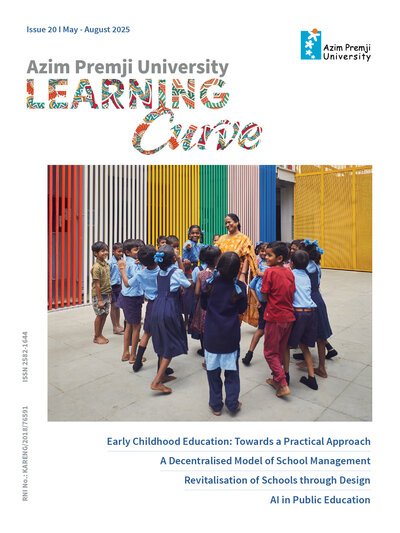
Articles featured in this issue highlight the importance of thoughtful, localised approaches to transforming India’s education system. Some examples being — Early Childhood Education: Towards a Practical Approach. The article argues for a play-based, holistic approach that supports young children as learners and individuals. A Decentralised Model of School Management explores how Rajasthan’s Panchayat Elementary Education Officer (PEEO) system strengthens local decision-making and drives school improvements. Revitalisation of Schools through Design — how smart, cost-effective design can turn classrooms into spaces that spark curiosity and support meaningful learning. AI in Public Education stresses the importance of integrating it thoughtfully, i.e., supporting educators and administrators in their work
Links
Recent allopolyploidization and transcriptomic asymmetry in the mangrove shrub Acanthus tetraploideus
in Springer Nature
Article
- Published
- Authors
Abstract
Background
Mangrove species are vital to the ecosystems of tropical and subtropical coastlines worldwide. Despite the underexplored role of polyploidization in these species, deciphering its impact on gene expression is essential for understanding the connection between polyploidization and species diversification. Our initial investigation, integrating multiple nuclear loci with morphological and cytological data, indicates that the tetraploid Acanthus tetraploideus likely originated from allopolyploidization events involving the diploid species A. ilicifolius and A. ebracteatus. Expanding on these insights, this study utilises genome-wide evidence to confirm the divergence patterns among extant Acanthus mangrove diploids and to investigate the origin and transcriptome asymmetry of the tetraploid A. tetraploideus.
Results
Phylogenetic analysis and molecular dating revealed a closer evolutionary relationship between A. ebracteatus and A. volubilis than between A. ebracteatus and A. ilicifolius, diverged approximately 6.92 Mya and 9.59 Mya, respectively. Analysis of individual whole transcriptomes revealed that homeologous sequences in A. tetraploideus were preferentially clustered with A. ilicifolius and A. ebracteatus, rather than A. volubilis, in a roughly 1:1 ratio. The high similarity in nucleotide sequences and homologous polymorphisms between the tetraploid A. tetraploideus and its two parental diploids, A. ebracteatus and A. ilicifolius, supports the hypothesis of a recent allopolyploid origin for A. tetraploideus. Estimation of homeolog expression revealed a general attenuation of homeolog expression divergence in A. tetraploideus compared to the in silico parental mix, with 22.87% and 67.66% of genes exhibiting biased homeolog expression, respectively. Further investigation identified remarkable retention of parental expression dominance in the tetraploid, suggesting that parental genetic legacy substantially influences the reconfiguration of homeolog expression in the derived tetraploid. Meanwhile, the observation of numerous novel expression patterns between the two homeolog sets suggests that the transcriptome shock (i.e., the transcriptomic changes induced by interspecific hybridisation) associated with allopolyploidization and subsequent post-polyploid evolutionary processes also significantly impact transcriptome asymmetry in A. tetraploideus. While no strong evidence directly links transcriptomic changes to specific adaptive traits, the patterns in unbiased and novelly biased genes in A. tetraploideus suggest adaptations to stable polyploidy. Unbiased genes involved in fundamental cellular processes and novelly biased genes related to chromosome dynamics and cell cycle regulation may stabilise polyploid genomes, supporting the species’ establishment and long-term success. These findings underscore the role of transcriptomic stability in polyploid adaptation.
Conclusions
Our study sheds light on the evolutionary origins and the intricate transcriptional reconfiguration of the tetraploid A. tetraploideus. These insights significantly enhance our comprehension of the pivotal role that polyploidization plays in speciation and adaptative evolution of mangrove species.
Authors: Wuxia Guo, Achyut Kumar Banerjee, Hui Feng, Wei Lun Ng, Haidan Wu, Weixi Li, Yang Yuan & Yelin Huang
Links

- Published
- Authors
Abstract
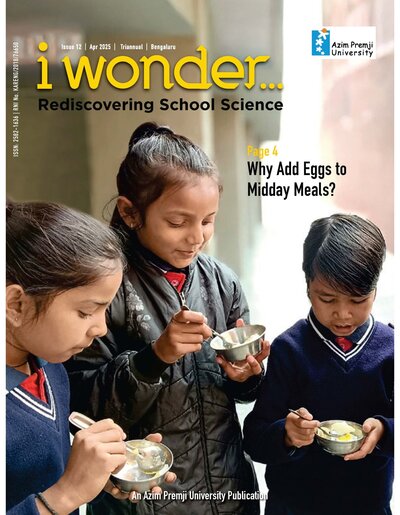
Can textbook concepts on health and nutrition equip students with the ability to critically analyse common beliefs around the addition of eggs in midday meals?
What can students learn about infectious diseases and the nature of science from the real-world example of the GBS outbreak in Pune?
Explore these and related questions in our theme section ‘Science in Action’. Find articles and classroom resources that support you in creating opportunities for your students to appreciate the relevance of textbook concepts and principles in preparatory-stage EVS and middle-stage science in their real world.


- Published
- Authors
Abstract
What can we learn from patterns? Read on to find out more and send us your feedback at AtRightAngles.editor@apu.edu.in
Gendered inclusions and exclusions: Intersectional media discourses during the pandemic in India and the USA
in Springer Nature

- Published
- Authors
Abstract
The COVID-19 crisis created a period when an otherwise globalised world witnessed the rapid closure of local, national and international borders. Migrants, whose everyday lives, with or without the pandemic, are disrupted and defined by borders and their liminalities, were the most certain victims of these closures. All media platforms around the world reported on migrant workers, either villainising them as carriers of the virus or sympathising with them as victims of continued racist assaults and ruthless state policies. But what discourses dominated these media representations of migrants? Analysing over one thousand news reports on migrant precarity in India and the USA during the first two years of COVID, we see some patterns of gendered inclusion and exclusion. We find that even the seemingly pro-immigrant media discourses continued to emphasise migrants’ vulnerability, turning them into feminised props for larger political debates. In the process, the economic contributions of migrants across skill categories and often as ‘essential workers’ remained invisible. The discourses also reproduced intersectional stereotypes, sometimes completely removing women, and often selectively magnifying or erasing their racial, ethnic and caste identities.
Authors:
Bandana Purkayastha, Rianka Roy, S. Anandhi, Deepa Ebenezer
Links

- Published
- Authors
- School of Education
Abstract
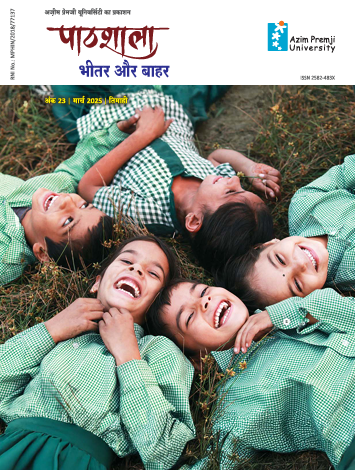
पाठशाला भीतर और बाहर का 23वाँ अंक मार्च, अप्रैल और मई के दौरान स्कूल की ज़रूरतों को ध्यान में रखकर सँजोने का प्रयास किया है। इस अंक में आप पढ़ेंगे कुछ लेख जिनसे आकलन को कैसे देखा जाए, इसकी स्पष्टता मिलेगी। आकलन का उपयोग किस तरह शिक्षण प्रक्रियाओं में किया जाए,समर कैम्प किस तरह आनन्ददायक तरीक़े से बच्चों के सीखने के रूप में आयोजित हों,बच्चे जो वार्षिक परीक्षाओं के दौरान तय किए गए सीखने के प्रतिफलों से थोड़ा दूर रह गए हैं किस तरह उनके साथ अप्रैल और मई के महीनों में काम हो, क्या योजना हो, आदि के बारे में कुछ अनुभवजन्य आलेख इस अंक में शामिल हैं। इसके अलावा गणित, हिन्दी, विज्ञान, ईसीई पर भी अनुभव-आधारित लेख इस अंक में हैं। साथ ही हैं सभी स्थाई स्तम्भ।
Capitalism, Competition and Class Conflicts: A Pedagogical Introduction to Marxist Political Economy
in Sage Journal
Article
- Published
- Authors
Abstract
This article offers an introduction to Marxian economics for the uninitiated student or instructor. It first places Marxian economics within the surplus approach and ties Marx’s economic analysis with his theory of history, that is, historical materialism. The concepts of class, mode of production and antagonism are introduced. The article then discusses Marx’s analysis of capitalism. This is performed by first introducing the reader to the labour theory of value and then to the circuit of capital. The conflict between capital and labour and the conflict between capital and capital are explored around the question of technological change and innovation. This is followed by a brief discussion of the capitalist crises in the Marxian framework, after which the article concludes by presenting two strands of debate within Marxian economics.
Links
Ecosystem services in the Alps: visitors’ perceptions of two alpine protected areas
in Taylor & Francis

- Published
- Authors
Abstract
Understanding users’ perception of natural areas and their ecosystem services is crucial for managers and policy makers as it directly informs decisions that balance conservation efforts with public acceptance. The alpine areas are particularly vulnerable to climate change, making it critical to understand how visitors perceive these areas to develop management strategies that minimize conflicts, helping to ensure long-term support for environmental protection. This study explores the perceptions of 21 ecosystem services – including cultural, regulating and provisioning services – among visitors of two protected alpine areas in Italy. We distributed 3,399 questionnaires to evaluate visitors’ perceptions of the importance of key ecosystem services, their awareness of the ecosystem services concept and any shifts in perception due to COVID-19, as the study took place during an ease of restrictions caused by the pandemic. Additionally, we explored the relationship between perceptions and demographic factors. Results showed that visitor strongly perceived the importance of the aesthetic value of the landscape and biodiversity conservation. Perception of the overall importance of ES was strongly correlated with demographic factors, such as gender, age and a connection to outdoor and naturalistic activities. Visitors who were already aware of the ES concepts exhibited higher perceptions compared to those who did not acknowledge them, suggesting the need for targeted communication strategies to extend the awareness of the ES concept. This data provides critical insights for managers and policymakers to tailor communication efforts, fostering greater public awareness and support for the benefits provided by protected natural areas.
Authors:
Noemi Rota, Claudia Canedoli, Oscar Luigi Azzimonti, Harini Nagendra & Emilio Padoa-Schioppa
Links
MGNREGA as a Technological Laboratory: Analysing Wage Payment Delays as a Result of Two Digital Interventions
in Springer Nature

- Published
- Authors
Abstract
The Mahatma Gandhi National Rural Employment Guarantee Act (MGNREGA) is India’s rural employment guarantee programme that provides 100 days of work to each household and mandates payment of wages within 15 days of completion of work. MGNREGA has been subject to many technological interventions purported to improve efficiency and transparency. Many of these interventions were introduced without any consultation or scientific piloting resulting in violation of workers’ rights. We focus on two digital interventions. Firstly, in the financial year 2021 – 22, wage payments of workers were segregated based on their caste. Notwithstanding delays in wage payments, we find there is a statistically significant difference in the time taken to process payments across caste. This provides an empirical corroboration of how this move created caste tensions at worksites. Just in our sample, the compensation as per law that is payable to workers due to delays by the union government alone is ₹399 million. This is neither acknowledged nor paid. Secondly, we demonstrate that there is no statistically significant difference either in timely payment of wages or in payment rejections between the Aadhaar-Based Payment System (ABPS) and the standard account-based methods. Our analysis is based on 31.36 million transactions across 10 states from financial year 2021 – 22 crawled from the programme’s Management Information System. This is the first large-scale data-based evidence debunking officially stated claims of timely payments due to ABPS. We also examine official government circulars, documents retrieved using Right to Information responses combined with our immersive fieldwork to underscore our findings. In summary, we argue that any digital technology introduced in MGNREGA or any other social policy must be done through a consultative process, independent audits, giving centrality to workers’ rights.
Authors:
Suguna Bheemarasetti, Anuradha De, Rajendran Narayanan, Parul Saboo & Laavanya Tamang
Links
Fond recollections, bittersweet memories, or markers of a forgotten past? uncultivated foods in rural Chintamani, Karnataka
in Azim Premji University

- Published
- Authors
Abstract
Some experts consider “food” as the most critical issue of the 21st century. Countries such as India are experiencing what has been described as a triple burden of malnutrition – characterised by high prevalence of undernutrition, obesity, and micro-nutrient deficiency. These are a result of inadequate access to healthy foods, increased use of highly processed foods, and low dietary diversity, besides factors related to sanitation. Changes in the practice of agriculture has resulted in a reduction in agrobiodiversity. The challenges to accessing food during shocks such as the COVID-19 pandemic and conflicts in various parts of the world demonstrated the importance of local food security and reminded people of the importance of local food sources, including uncultivated or wild foods.
Authors:
Adithya Pradyumna,
Sudha Nagavarapu,
Sorappalli M Chandrashekar,
Shashiraj Haratale,
Muskan Babajan and
Communities of ChintamaniLinks


- Published
- Authors
Abstract
Introducing foreign elements into a crystal lattice could trigger phase transformation, serving as an excellent means to fabricate highly electrocatalytic phases. NiCo2S4 is a notably electrocatalytic thiospinel phase, normally synthesized via two-step route and rarely explored for electrocatalytic hydrazine oxidation reaction (HzOR). This work reports one-step hydrothermal syntheses of NiCo2S4 and CuCo2S4 and their performance for HzOR and oxygen evolution reaction (OER). Time-dependent syntheses suggest formation of (M, Co)9S8; M=Ni/Cu phase, followed by conversion to the respective thiospinel phase. Computational study validates that the incorporation of Ni into Co9S8 disrupts its stability and induces the formation of a stable bi-metallic thiospinel phase. Even without the assistance of metal foam substrate, NiCo2S4 displayed remarkable activity for HzOR requiring potentials of 153 and 350 mV to afford current densities of 10 and 500 mA/cm2, respectively. Furthermore, NiCo2S4 showed good activity for OER, providing 10 mA/cm2 at 290 mV. For hydrazine-assisted H2 production, the two-electrode setup, NiCo2S4||Pt/C attained a current density of 10 mA/cm2 at 140 mV, which is 1.39 V less than that required for conventional water electrolyzer (1.53 V). Long-term durability of NiCo2S4 for both HzOR and OER at high current densities highlights the suitability of the catalyst for practical applications.
Author/s: Diya Raveendran, Viplove Mishra, Athma E. Praveen, Avishek Roy, Aditi Chandrasekar, Venkataramanan Mahalingam, Ananda Basak
Links
Accumulation by Dispossession: Evidence of Shrinking Space for Small-scale Fishers of Karnataka Coast
in Springer Nature

- Published
- Authors
Abstract
Small-scale fisheries play an important economic, social and cultural role in coastal Karnataka even today despite being subjected to several natural and anthropogenic stressors for a long time. They are neglected or even outright discouraged in the state’s fisheries policymaking, and their contributions to the state’s fish supply and their role in livelihood creation do not receive the due recognition. This paper is premised on the recognition of emerging stressors that pose a threat to the viability of small-scale fisheries. The impacts of these stressors have implications not only for the environment but also for nutrition, particularly among vulnerable populations, and the overall socio-economic stability of coastal communities that rely on fishing as a livelihood. The goals of this paper are to provide a thorough review of literature around these stressors, and to describe how these are being played out in coastal Karnataka. Among these stressors, we delve in depth on the new Blue Economy policy of India since it is likely to have severe antagonistic effects in combination with other anthropogenic stressors. Our opinion is, Karnataka has already started witnessing many of these ramifications of interventions/stressors and the coastal landscape of the state is set to be transformed over the next couple of decades or so. Small-scale fisheries of the state are likely to be some of the most impacted communities from these interventions.
Authors: Shruthi Suripeddi, Prasanna Surathkal, Amalendu Jyotishi, and Ramachandra Bhatta
Links