
Publications & Resources
Our faculty, students and researchers work together everyday to contribute to a better world by grappling with urgent problems we are facing in India. We conduct rigorous work to produce high quality learning resources and publications to contribute to public discourse and social change. Here, we feature a sample from our work for everyone to access. You can explore featured resources, policies, and the latest publications from the University.
To explore all the work of our University, please visit our publications repository.
Article
Ecosystem services in the Alps: visitors’ perceptions of two alpine protected areas
in Taylor & Francis

- Published
- Authors
Abstract
Understanding users’ perception of natural areas and their ecosystem services is crucial for managers and policy makers as it directly informs decisions that balance conservation efforts with public acceptance. The alpine areas are particularly vulnerable to climate change, making it critical to understand how visitors perceive these areas to develop management strategies that minimize conflicts, helping to ensure long-term support for environmental protection. This study explores the perceptions of 21 ecosystem services – including cultural, regulating and provisioning services – among visitors of two protected alpine areas in Italy. We distributed 3,399 questionnaires to evaluate visitors’ perceptions of the importance of key ecosystem services, their awareness of the ecosystem services concept and any shifts in perception due to COVID-19, as the study took place during an ease of restrictions caused by the pandemic. Additionally, we explored the relationship between perceptions and demographic factors. Results showed that visitor strongly perceived the importance of the aesthetic value of the landscape and biodiversity conservation. Perception of the overall importance of ES was strongly correlated with demographic factors, such as gender, age and a connection to outdoor and naturalistic activities. Visitors who were already aware of the ES concepts exhibited higher perceptions compared to those who did not acknowledge them, suggesting the need for targeted communication strategies to extend the awareness of the ES concept. This data provides critical insights for managers and policymakers to tailor communication efforts, fostering greater public awareness and support for the benefits provided by protected natural areas.
Authors:
Noemi Rota, Claudia Canedoli, Oscar Luigi Azzimonti, Harini Nagendra & Emilio Padoa-Schioppa
Links
Article
MGNREGA as a Technological Laboratory: Analysing Wage Payment Delays as a Result of Two Digital Interventions
in Springer Nature

- Published
- Authors
Abstract
The Mahatma Gandhi National Rural Employment Guarantee Act (MGNREGA) is India’s rural employment guarantee programme that provides 100 days of work to each household and mandates payment of wages within 15 days of completion of work. MGNREGA has been subject to many technological interventions purported to improve efficiency and transparency. Many of these interventions were introduced without any consultation or scientific piloting resulting in violation of workers’ rights. We focus on two digital interventions. Firstly, in the financial year 2021 – 22, wage payments of workers were segregated based on their caste. Notwithstanding delays in wage payments, we find there is a statistically significant difference in the time taken to process payments across caste. This provides an empirical corroboration of how this move created caste tensions at worksites. Just in our sample, the compensation as per law that is payable to workers due to delays by the union government alone is ₹399 million. This is neither acknowledged nor paid. Secondly, we demonstrate that there is no statistically significant difference either in timely payment of wages or in payment rejections between the Aadhaar-Based Payment System (ABPS) and the standard account-based methods. Our analysis is based on 31.36 million transactions across 10 states from financial year 2021 – 22 crawled from the programme’s Management Information System. This is the first large-scale data-based evidence debunking officially stated claims of timely payments due to ABPS. We also examine official government circulars, documents retrieved using Right to Information responses combined with our immersive fieldwork to underscore our findings. In summary, we argue that any digital technology introduced in MGNREGA or any other social policy must be done through a consultative process, independent audits, giving centrality to workers’ rights.
Authors:
Suguna Bheemarasetti, Anuradha De, Rajendran Narayanan, Parul Saboo & Laavanya Tamang
Links
University Working Paper Series
Fond recollections, bittersweet memories, or markers of a forgotten past? uncultivated foods in rural Chintamani, Karnataka
in Azim Premji University

- Published
- Authors
Abstract
Some experts consider “food” as the most critical issue of the 21st century. Countries such as India are experiencing what has been described as a triple burden of malnutrition – characterised by high prevalence of undernutrition, obesity, and micro-nutrient deficiency. These are a result of inadequate access to healthy foods, increased use of highly processed foods, and low dietary diversity, besides factors related to sanitation. Changes in the practice of agriculture has resulted in a reduction in agrobiodiversity. The challenges to accessing food during shocks such as the COVID-19 pandemic and conflicts in various parts of the world demonstrated the importance of local food security and reminded people of the importance of local food sources, including uncultivated or wild foods.
Authors:
Adithya Pradyumna,
Sudha Nagavarapu,
Sorappalli M Chandrashekar,
Shashiraj Haratale,
Muskan Babajan and
Communities of ChintamaniLinks
Article
Lattice Engineering Triggered Phase Formation of Bimetallic Thiospinels with Excellent HzOR and OER Activity for Energy-Efficient Hydrogen Production
in ChemCatChem


- Published
- Authors
Abstract
Introducing foreign elements into a crystal lattice could trigger phase transformation, serving as an excellent means to fabricate highly electrocatalytic phases. NiCo2S4 is a notably electrocatalytic thiospinel phase, normally synthesized via two-step route and rarely explored for electrocatalytic hydrazine oxidation reaction (HzOR). This work reports one-step hydrothermal syntheses of NiCo2S4 and CuCo2S4 and their performance for HzOR and oxygen evolution reaction (OER). Time-dependent syntheses suggest formation of (M, Co)9S8; M=Ni/Cu phase, followed by conversion to the respective thiospinel phase. Computational study validates that the incorporation of Ni into Co9S8 disrupts its stability and induces the formation of a stable bi-metallic thiospinel phase. Even without the assistance of metal foam substrate, NiCo2S4 displayed remarkable activity for HzOR requiring potentials of 153 and 350 mV to afford current densities of 10 and 500 mA/cm2, respectively. Furthermore, NiCo2S4 showed good activity for OER, providing 10 mA/cm2 at 290 mV. For hydrazine-assisted H2 production, the two-electrode setup, NiCo2S4||Pt/C attained a current density of 10 mA/cm2 at 140 mV, which is 1.39 V less than that required for conventional water electrolyzer (1.53 V). Long-term durability of NiCo2S4 for both HzOR and OER at high current densities highlights the suitability of the catalyst for practical applications.
Author/s: Diya Raveendran, Viplove Mishra, Athma E. Praveen, Avishek Roy, Aditi Chandrasekar, Venkataramanan Mahalingam, Ananda Basak
Links
Article
Accumulation by Dispossession: Evidence of Shrinking Space for Small-scale Fishers of Karnataka Coast
in Springer Nature

- Published
- Authors
Abstract
Small-scale fisheries play an important economic, social and cultural role in coastal Karnataka even today despite being subjected to several natural and anthropogenic stressors for a long time. They are neglected or even outright discouraged in the state’s fisheries policymaking, and their contributions to the state’s fish supply and their role in livelihood creation do not receive the due recognition. This paper is premised on the recognition of emerging stressors that pose a threat to the viability of small-scale fisheries. The impacts of these stressors have implications not only for the environment but also for nutrition, particularly among vulnerable populations, and the overall socio-economic stability of coastal communities that rely on fishing as a livelihood. The goals of this paper are to provide a thorough review of literature around these stressors, and to describe how these are being played out in coastal Karnataka. Among these stressors, we delve in depth on the new Blue Economy policy of India since it is likely to have severe antagonistic effects in combination with other anthropogenic stressors. Our opinion is, Karnataka has already started witnessing many of these ramifications of interventions/stressors and the coastal landscape of the state is set to be transformed over the next couple of decades or so. Small-scale fisheries of the state are likely to be some of the most impacted communities from these interventions.
Authors: Shruthi Suripeddi, Prasanna Surathkal, Amalendu Jyotishi, and Ramachandra Bhatta
Links
Article
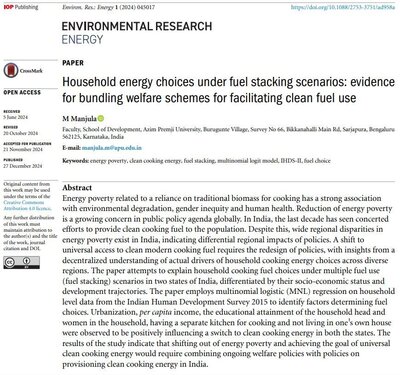
Household energy choices under fuel stacking scenarios: evidence for bundling welfare schemes for facilitating clean fuel use
in IOP Publishing Ltd

- Published
- Authors
Abstract
Energy poverty related to a reliance on traditional biomass for cooking has a strong association with environmental degradation, gender inequity and human health. Reduction of energy poverty is a growing concern in public policy agenda globally. In India, the last decade has seen concerted efforts to provide clean cooking fuel to the population. Despite this, wide regional disparities in energy poverty exist in India, indicating differential regional impacts of policies. A shift to universal access to clean modern cooking fuel requires the redesign of policies, with insights from a decentralized understanding of actual drivers of household cooking energy choices across diverse regions. The paper attempts to explain household cooking fuel choices under multiple fuel use (fuel stacking) scenarios in two states of India, differentiated by their socio-economic status and development trajectories. The paper employs multinomial logistic (MNL) regression on household level data from the Indian Human Development Survey 2015 to identify factors determining fuel choices. Urbanization, per capita income, the educational attainment of the household head and women in the household, having a separate kitchen for cooking and not living in one’s own house were observed to be positively influencing a switch to clean cooking energy in both the states. The results of the study indicate that shifting out of energy poverty and achieving the goal of universal clean cooking energy would require combining ongoing welfare policies with policies on provisioning clean cooking energy in India.
Authors: M Manjula
Links

- Published
- Authors
Abstract
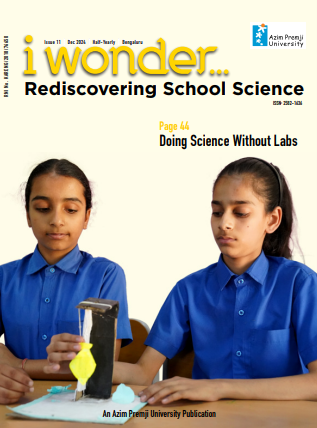
How can the experience of making a simple pinhole camera with inexpensive materials help our students think more creatively and critically about light?
How can conversations around an athlete’s record-breaking sprint actively engage our students in learning concepts around linear motion?
What do our students learn about the practice of science when we encourage them to write the biographies of scientists who appear in their textbook?
How do we provide spaces for our students to make and manipulate new materials from old discarded or inexpensive material?
Read this issue to explore these and many other such teaching-learning experiences in middle-stage science and preparatory stage EVS.

- Published
- Authors
Abstract
Science education literature states that fostering students’ and teachers’ knowledge of NOS has shifted from being a desirable goal to an essential one. This article focuses on the development of NOS conceptions among MA Education students. To develop those conceptions, the researcher designed various learning activities in the context of ‘research of history on DNA’. Seven students were observed and audiotaped while working in groups in this classroom qualitative study. Before the intervention, pre-test on ‘views on science’- Chen (2006) and group discussions held with participants indicated that their NOS conceptions were basic. After 7 sessions, a post-test was administered to students asking to justify NOS conceptions. These conceptions: scientifc knowledge is tentative, laws are generalisations or universal relationships, theories are inferred explanations of nature; and that science is empirically based, socio-culturally embedded, and creative. Classroom discourses and responses to a post-test indicated that participants justifed some NOS conceptions very well and some not so very well. It also argues that HOS ofers potential for improved learning of NOS.
- Published
- Authors
Abstract
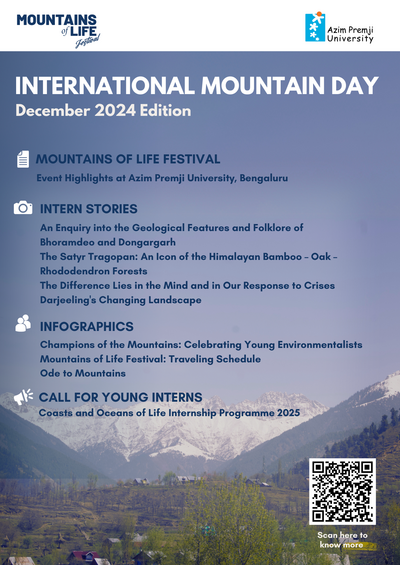
The fourth edition of the Mountains of Life newsletter celebrates International Mountain Day, focussing on sustainable mountain solutions through innovation, adaptation, and youth engagement. The newsletter includes the highlights of the Mountains of Life festival, held at our Bengaluru campus from 13 – 26 November 2024. We also feature inspiring stories from interns, and acknowledge the efforts of mountain enthusiasts, especially the youth, alongside select contributions from readers. Thank you for your continued support — happy reading!
Links
Article
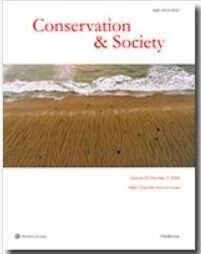
The Ontological Choreography of Conservation Practice at a Marine Turtle Rookery in India
in Conservation and Society

- Published
- Authors
Abstract
The Rushikulya beach in eastern India is considered to be an important rookery (nesting site) for a species of migratory marine turtle, the olive ridleys Lepidochelys olivacea, because it is one of a handful of sites around the world where an arribada or mass-nesting event occurs. During an arribada, thousands of ridleys nest simultaneously over a small section of the beach, and several weeks later, millions of hatchlings emerge from these nests and crawl into the sea. Given the uniqueness of this phenomenon, conservation programmes have emphasised the monitoring and protection of ridleys during an arribada. In Rushikulya, this involves an assemblage of multiple actors, including biologists, their local assistants, and staff of the Odisha Forest Department. In this article, I use the concept of ontological choreography, drawn from multispecies scholarship, to focus attention on how members of this assemblage bring together different ontological orders, mainly nature and the individual self, to protect the ridleys. Further, I use this concept to direct attention to the hybrid nature of conservation practice — that it can simultaneously be affective, embodied, performative, sensory and technical. Overall, this article demonstrates how multispecies approaches can enrich social studies of conservation.
Authors:
Links

- Published
- Authors
Abstract
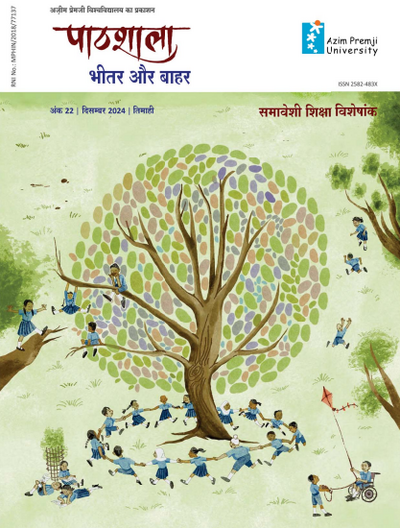
पाठशाला भीतर और बाहर का 22वाँ अंक ‘समावेशी शिक्षा विशेषांक’ है। समावेशन शब्द एकबारगी विशेष दक्षता वाले बच्चों के बारे में ध्वनित होता मालूम होता है। लेकिन इसकी परतों को खोलने पर समझ में आता है कि इसमें विशेष दक्षता वाले बच्चों की बात तो निश्चित तौर पर है ही, साथ ही बात है अलग-अलग सामाजिक‑आर्थिक और सांस्कृतिक परिवेश के विविध मनोभावों वाले वंचित समुदाय के बच्चों की शिक्षा और संसाधनों के बारे में भी। संवैधानिक मूल्यों में रचे बसे स्नेह और सम्मान जैसे मानवीय मूल्य हर बच्चे के लिए ज़रूरी हैं।
इस अंक में आप पढ़ेंगे कि शिक्षक शिक्षा में समावेशन को लेकर किस तरह की योजनाएँ हैं; किस तरह एक विशेष विद्यालय को समावेशी विद्यालय बनाया जा सका; और कलाओं, खेलों, संगीत, आदि के ज़रिए किस तरह समावेशन को दस्तावेज़ों से निकालकर हक़ीक़त में उतारा गया।
आप इस अंक में कुछ स्थाई स्तम्भ भी पढ़ेंगे जिनमें ‘उम्मीद जगाते शिक्षक’ की कहानी है, ‘किताबों से दोस्ती’ में जानेंगे 3 सुन्दर किताबों के बारे में, और ‘आइए, करके देखें’ में समावेशन पर आधारित ऐसी गतिविधियाँ जिन्हें आसानी से कराया जा सकता है। इनके साथ ‘शिक्षकों की डायरी’ स्तम्भ में आप पढ़ेंगे शिक्षकों के काम, उनकी बातें, उनके अनुभव।
CSE Working Paper Series
The Prospects of Employment Opportunities in India: A Medium — term Sectoral Analysis
in Azim Premji University

- Published
- Authors
Abstract
Employment projection, particularly at the micro or sectoral level, is considered as a useful tool for economic planners and policymakers to have a better understanding of future trends and growth, and accordingly, the policies and planning could be designed for the supply side of the labour market.
This study finds that there is a lack of literature in the recent past on the above issue in the context of India, hence in this paper, we have tried to estimate employment numbers for seven broad economic sectors for the period 2024 – 25 to 2030 – 31. The study uses the “Top-down” approach to estimate and project the employment numbers by using the employment-output elasticities and forecasted values of growth rates of gross value added (GVA) at the sectoral level.
Three broad conclusions have been drawn from the employment estimates. First, the agriculture and allied sector continued to be the dominant force in creating employment opportunities till 2030 – 31, however, a surge of employment in the sector in recent years may unlikely continue in the future. Second, the slowing down of economic activities in services sector is expected to dent high employment growth prospects in the sector. Third, a phenomenal rise of employment in industry particularly in manufacturing sector in recent years augurs well for the economy which is expected to remain buoyant in the medium term as well
Links
University Working Paper Series
Exploring Beneficiary Awareness and Access to Grievance Redressal Systems in Government-Sponsored Health Insurance Schemes in Gujarat, India
in Azim Premji University
- Published
- Authors
Abstract
The Government of India launched Pradhan Mantri Jan Arogya Yojana (PMJAY) in 2018 to mitigate catastrophic out-of-pocket health expenditure. This government-sponsored health insurance scheme is implemented through six digital portals, including a grievance redressal system, with the involvement of multiple stakeholders. The grievance redressal mechanisms in PMJAY are aimed at ensuring access to information, contribute to the responsiveness of the scheme and safeguard it against any fraudulent practices.
As a pioneering effort, this research explores the role and experiences of grievance redressal systems by exploring the following research questions: 1) What are the processes of collecting and responding to grievances in PMJAY? 2) How is the awareness about the Grievance Redressal System among the beneficiaries?, and 3) What is the experience of beneficiaries of interaction with the Grievance Redressal System of PMJAY?
A cross-sectional descriptive study was conducted from January 2022 to August 2023 in Gujarat, using a mixed-method approach to data collection from various primary and secondary sources. The findings from the study show that multiple formal and informal channels are active with varying accessibility among the beneficiaries. A significant proportion of beneficiaries were unaware of their entitlements and grievance redressal mechanisms. Awareness was low regarding internet-based formal channels and communication through letters or emails.
The findings underscore the necessity for enhanced outreach efforts, using detailed information dissemination via print and outdoor media. Building trust in the grievance redressal system is essential to increase its use and demand among the beneficiaries. Insights from this study will be useful to strengthen the grievance redressal system of the PMJAY scheme or similar government schemes.
Links
Article
Language Death Perspectivation of Planned or Unplanned Language Death
in Asian Research Association
- Published
- Authors
Abstract
The present paper is a conceptual paper which explores the innate nature of languages exploring how they are in constant flux. From their sociological birth to them being politically accepted, languages go through a plethora of changes. This paper explores concepts like high and low varieties of language e.g., Hindi in playgrounds and Hindi used to teach; the concept of prestige associated with a language, as well as concepts like elaborate and restricted code by Basil Bernstein. It explores the creole continuum and how they are connected to language death. Diglossic conditions may also lead to languages being used over another leading to language disuse. Certain linguistic groups, despite having a working language, assimilate themselves with a larger language due to many possible reasons (economic, political, geographical or anything else). This paper will take the discussion forward with how policy decisions can also lead to systematic extinction of certain languages due to the farsightedness of language planning. Paulo Friere (Friere, 1985) spoke about how local languages can be the backbones of language education. This paper explores the inability of state level language planning policies at incorporating local languages into the curriculum leading to eventual endangerment of the language over generations. This paper will also look at languages with shared script and how it might be the result of language imperialism over centuries. The content and opinions expressed are that of the authors and are not necessarily endorsed by/do not necessarily reflect the views of Azim Premji University.
Links
Article
Effect of fasting and re-feeding cycles on growth, glucose level, glycogen level, and digestive enzyme activity of Nile tilapia juveniles (Oreochromis niloticus) for cost-effective aquaculture
in Springer Nature

- Published
- Authors
Abstract
The objective of this study was to assess the impact of short-term fasting and subsequent re-feeding cycles on compensatory growth performance, blood glucose levels, and digestive enzyme activity in mono-sex juvenile Nile tilapia (Oreochromis niloticus) over a 60-day period. A total of 150 juvenile Nile tilapia (Avg. wt. 9.34 ± 0.97 g) were allocated into five treatment groups: a control group (continuously fed) and four fasting groups — T1 (1‑day fasting), T2 (3‑day fasting), T3 (5‑day fasting), and T4 (7‑day fasting). Re-feeding occurred for 7 days in each group immediately following the fasting period in a recurring cycle. The average weight gain, specific growth rate, and feed efficiency ratio significantly (p < 0.05) declined starting from the T3 group. Blood glucose levels during fasting significantly decreased starting from the T2 group, but after re-feeding, they returned to levels comparable to the control group. The liver glycogen levels significantly (p ≤ 0.05) decreased during fasting and completely recovered upon re-feeding, while muscle glycogen levels did not show any significant (p ≤ 0.05) changes throughout the experimental duration. The activities of the digestive enzymes amylase and lipase significantly (p ≤ 0.05) decreased during fasting starting from T1 and T2 groups, respectively, but after re-feeding, they returned to the levels seen in the control group. In contrast, the protease enzyme levels during the fasting period initially increased up to the T2 group and subsequently returned to control levels in the T4 group. The findings of this study indicate that only the groups that experienced very short fasting periods, specifically up to the T2 group, attained body weights like the control group upon re-feeding due to compensatory growth. Therefore, this study concluded that implementing up to 3 days of fasting followed by 7 days of re-feeding in multiple cycles can serve as a strategy for minimizing input costs in tilapia farming.
Links

- Published
- Authors
Abstract
There has been sustained debate for several decades, on the complex relationships between gender and science. Feminist scholars have critiqued the practices of science as being hegemonic. They trace the history of dominant practices to movements such as logical positivism. The justification for such a methodology drew from the premise that it led to the production of ‘objective’ knowledge — true and free from human bias. However, a methodology that could be alienating for girls considering the traditional ways through which women have been socialised, could hinder the development of a ‘science identity’. For girls who manage to continue with science in higher education, there are various other intangible barriers keeping them away from pursuing what seemed during their formative years as promising careers in science. This article presents an analysis of an assignment taken up by students in a Master’s in Education programme, as part of a course in Science Education. It required groups of students to interview a woman scientist in person and observe her working in the institution with which she is affiliated. The qualitative, thematic analysis presented multiple narratives reflecting on the role of support systems together with large challenges in overcoming perceived societal biases. However, the questions and possibilities raised by them present understanding and hope to young girls identifying with and hoping to pursue their interests in science.
Links


- Published
- Authors
Abstract
Come fall in love with Mathematics! and send in your feedback to AtRightAngles.editor@apu.edu.in in English, Hindi or Kannada.
Article
Ownership, Accumulation, and the Land Question: Insights from a Village Survey in Central India
in Economic and Political Weekly
Article
- Published
- Authors
Abstract
The consolidation of agricultural lands by dominant socio-economic groups is discussed in the context of contemporary debate on the land question by foregrounding market-led land transfers as a driver of accumulation in rural India. Empirically rooted in central India, the paper studies the commodification and increasing concentration of land as an outcome of the processes of agrarian change at work.
Links
Article
Delivering Affordable Nutrition Security through Fish: Evidence from a Rural Village in Telangana
in Indian Journal of Agricultural Economics
Article
- Published
- Authors
- School of Development
Abstract
The study explores the role of fish consumption in addressing nutrition security and malnutrition in a rural village in Telangana, India. It highlights that fish, particularly small indigenous species, provide affordable, high-quality protein and micronutrients. The study compares fish with other protein sources like poultry and livestock, finding that fish consumption significantly meets the nutritional needs of the rural population more effectively than other animal sources. India, despite being the third-largest fish producer globally, still faces challenges with malnutrition, especially among children and women. National Family Health Survey (NFHS) reports show alarming rates of stunting, wasting, and anemia, particularly in Telangana. The study demonstrates how increased fish consumption can play a crucial role in reducing these malnutrition rates by offering a cost-effective and nutrient-dense food source. The state government has encouraged fish production in Telangana through subsidies and initiatives like Pradhan Mantri Matsya Sampada Yojana. However, the research suggests that the fish distribution infrastructure needs significant improvement to increase access to fish for the broader population. The paper concludes that promoting fish consumption can be a viable strategy to combat malnutrition, improve food security, and provide economic opportunities for rural communities. Policy recommendations include enhancing market infrastructure, increasing fish production through scientific aquaculture, and raising awareness about the nutritional benefits of fish. These measures could ensure that fish contributes more significantly to achieving Sustainable Development Goals (SDG) related to hunger and malnutrition.
Authors: Gummadi Sridevi, Amalendu Jyotishi, Balaji Patturi, Matta Srinivas
Chapter in a Book
Capacity-Building Needs of Elected Women Representatives — Stories from Peri-Urban Panchayats of Bangalore
in Springer Nature

- Published
- Authors
Abstract
While the 73rd and 74th constitutional amendments contributed to the increase in women elected representatives in the Indian political ecosystem, the efficacy of this phenomenon has been questioned multiple times. The evidence points out that electoral participation is merely a symbolic gesture, which ultimately undercuts women’s empowerment by co-opting them into a patently corrupt, male-dominated political system. It is widely acknowledged that the political journey is not smooth for elected women representatives (EWR) in a patriarchal society, which is further divided on caste lines. Due to the existing structural challenges and insufficient support system, EWRs take a longer time to understand their responsibilities and perform their duties effectively. Training and awareness-building programmes of the state government and NGOs have had limited success in solving these challenges. Therefore, this research project was taken up by faculty and students of Azim Premji University to understand the challenges faced by EWRs, and thereby, design training modules, which will help them resolve these challenges. Data collection was done in seven panchayats around Azim Premji University. EWRs along with other respondents have given us substantial insights based on which an attempt to create a typology of challenges by EWRs is made.
Links

- Published
- Authors
Abstract
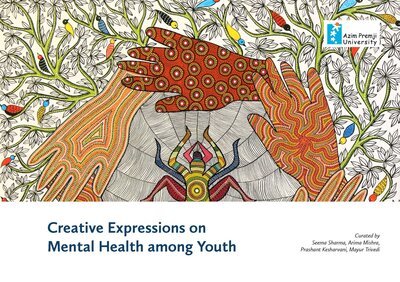
What does mental health mean to the youth? How is it expressed beyond just diagnostic labels? The book on ‘Creative expressions on mental health among youth’ features over 40 powerful contributions through a range of forms that include poetry, prose, Gond and Bhil art, sketches, doodle art as well as excerpts from diaries. The writings are presented in Hindi, English and Pardhi languages thus creating a safe and inclusive space for many. Each word and each image encapsulate a story that is hidden yet spoken. This book is an effort to break silences around the conversations on mental health.
Curators:
Seema Sharma, Arima Mishra, Prashant Kesharvani, Mayur Trivedi
Links

- Published
- Authors
Abstract
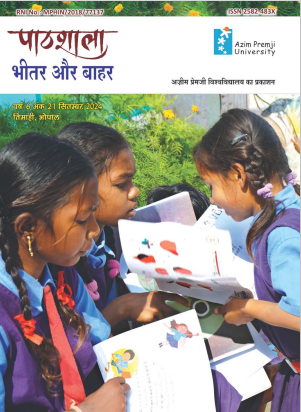
हमारे समाज में स्त्री-पुरुष, लड़के-लड़कियों के बीच ग़ैर‑बराबरी की सामाजिक‑सांस्कृतिक जड़ें आज भी बहुत गहरी हैं। इनपर कक्षा में बात करना बहुत ज़रूरी है। पाठशाला के इक्कीसवें अंक के एक लेख में इस विषय पर बच्चों से की गई चर्चा के अनुभव प्रस्तुत किए गए हैं। एक अन्य लेख इस बात की पैरवी करता है कि बच्चे डर के माहौल से नहीं, बल्कि भावनात्मक जुड़ाव से बेहतर सीखते हैं। इसके लिए शिक्षकों में बच्चों के प्रति सहानुभूति व समानुभूति का बोध होना चाहिए। सुबह की सभा, यानी मॉर्निंग असेंबली का शिक्षकों और बच्चों के लिए क्या महत्त्व है; और इसे ज़्यादा रचनात्मक, शैक्षिक और भागीदारीपूर्ण कैसे बनाया जा सकता है? एक लेख में इस बारे में चर्चा की गई है। इबारती सवालों पर काम के अनुभव पर आधारित एक लेख में बताया गया है कि जब तक गणित में भाषा का ज़्यादा-से-ज़्यादा इस्तेमाल न किया जाए, बच्चों को गणित समझने में दिक़्क़त आती है। गणित के दूसरे लेख में मापन की अवधारणा, उसकी इकाइयों एवं पैमाने से लम्बाई मापने के अनुभव साझा किए गए हैं।
Links
- Published
- Authors
Abstract
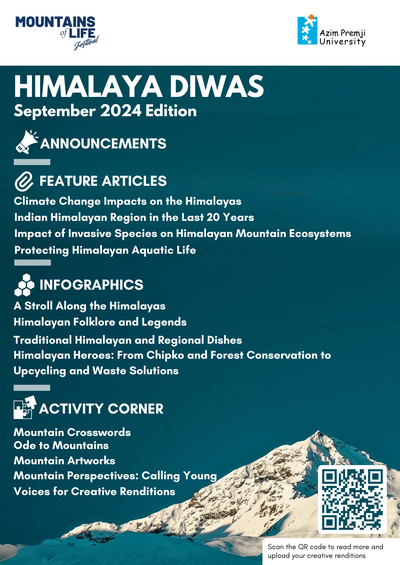
The third edition of the Mountains of Life newsletter celebrates Himalaya Diwas (9 September). This special edition highlights the critical role of the Himalayas in safeguarding nature and the impact of climate change on this unique ecosystem. Explore the rich biodiversity, conservation efforts, and folklore of the Himalayas, alongside recipes and stories from the region. Learn about melting glaciers, shifting weather patterns, and the growing threat of invasive species.
Links
Article
Contexts and Priorities: Reflections on Developing a Master of Public Health Programme in India
in Azim Premji University

- Published
- Authors
- School of Development
Abstract
While the recent COVID-19 pandemic has accentuated attention to the public health challenges of our times, many of these concerns are certainly not new. There are multiple public health concerns including the rising burden of non-communicable diseases, health risks due to environmental degradation and climate change, and re-emergence of several communicable diseases. Responses to these challenges, including educational responses, have often been reductionist and hence found to be inadequate. There has been an increasing global recognition of the need for transformative education to address the complex health challenges of the 21st century. In this article, we discuss one such effort in designing a public health education programme in India that echoes the sentiment of transformative learning that is contextual, competency-driven, trans disciplinary, reflective, and collaborative. We discuss how these aspects of learning were reflected and considered through a series of internal deliberations within the university and external consultations with different stakeholders. This process involved examining existing gaps in public health education, articulating the core competencies, developing the curriculum, and envisaging students’ contribution to public health practice in India.
Authors:
Arima Mishra, Adithya Pradyumna, Mukta Gundi, Edward Premdas Pinto and Prasanna Saligram
Links
CSE Working Paper Series
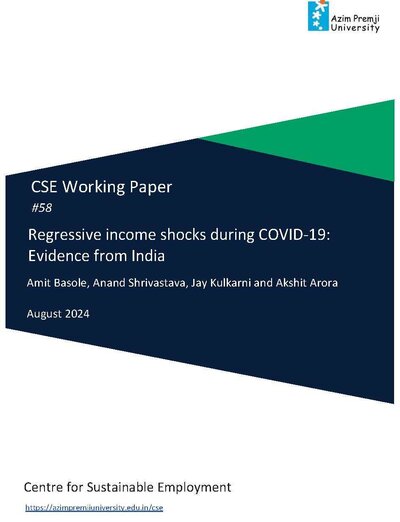
Regressive income shocks during COVID-19: Evidence from India
in Azim Premji University

- Published
- Authors
Abstract
Studies based on the Consumer Pyramids Household Survey (CPHS) in India have shown that the impact of the Covid-19 lockdown on household incomes was progressive in nature — richer households suffered more. But several media reports as well as purposive surveys carried out during the pandemic suggest that the poor suffered more than the rich. We use nationally representative panel data for urban India from the official Periodic Labour Force Survey (PLFS) to show that households that were relatively richer prior to the start of the pandemic suffered relatively less during the lockdown compared to households that were poorer. That is, the shock was regressive in nature. We also confirm that, as per CPHS, richer households did indeed experience higher drops in income than poorer ones. But we show that this progressivity is much less than what prevailed prior to the pandemic. Thus the pandemic either disrupted ongoing progressive income changes or was outright regressive in its impacts.
Authors:
Amit Basole, Anand Shrivastava, Jay Kulkarni and Akshit Arora
Links
Report
Rural Multidimensional Deprivation in Chhattisgarh | A Data-Driven Analysis
in Azim Premji University

- Published
- Authors
- School of Development
Abstract
Poverty in India has been defined and measured in several different ways over the years. This report presents a unique way to measure rural poverty in Chhattisgarh using data from the Mission Antyodaya Survey of 2019. We construct a rural multidimensional deprivation index (RDI), composed of indicators in the areas of infrastructure, health and education. The index can be decomposed into its different sub-components to understand which of the indicators contribute the most to deprivation and can be analysed at different levels, starting from the block to the taluka, district and state level. From a policy and public action perspective, the RDI is extremely useful because it is composed of public provisioning of amenities at the village level. A high RDI reflects lack of access to public amenities and deprivation in villages. Because India has a decentralised structure where the Panchayats are responsible for taking governance at the grassroot levels. Results from this report can be extremely useful to these institutions as they can identify which villages need provisioning of what amenities and act accordingly.
Editors: Sandhya Krishnan, Prasanna S, Sanket Gharat, Puja Guha, Amalendu Jyotishi, and Neeraj Hatekar.
Links
Magazine
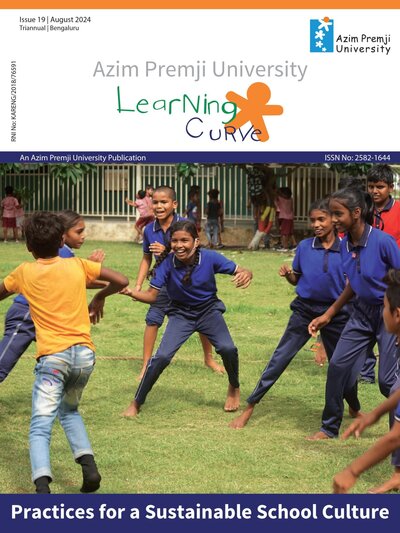
Learning Curve Issue 19 | Practices for a Sustainable School Culture
in Azim Premji University

- Published
- Authors
Abstract
This issue focuses on practices that build a school culture – practices that become so ingrained in the school’s ethos that they come naturally to everyone and do not change if those who helped develop these move out of the school. It includes several aspects of the school culture, such as creating an environment where all students feel safe, valued, and seen; where there is no fear of any subject, where there is a high level of collaboration among teachers and continuous engagement with parents.
Links
Article
- Published
- Authors
Abstract
When NASA provided free worldwide access to the Landsat data archive, scientists greatly expanded the analysis of new locations and novel topics. Of course, data democracy is not just for scientists. When citizens own the rights to generate and access data that speaks to their concerns, democracy is strengthened. Data democracy began to gain prominence in the early 2000s, with the growth of the open data movement. In today’s era of climate change, the term assumes increasing significance. Yet despite the large volume of opensource climate data, access remains largely limited to academia and business. Climate data democracy enables all sections of society to access climate data; understand how to use and interpret it; and be able to use data for climate action. Given the lack of data and severity of the crisis in the Global South, we argue that these regions must take the lead in driving conversations around climate data democracy.
Links

- Published
- Authors
Abstract
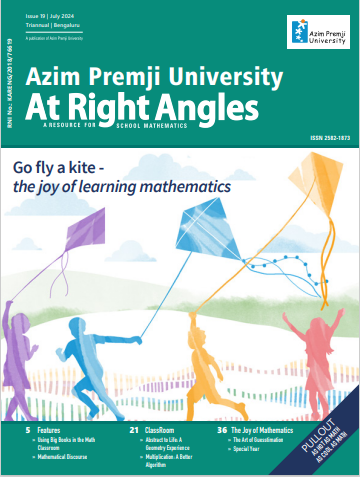
Explore the Joy of Mathematics and send in your feedback to AtRightAngles.editor@apu.edu.in in English, Hindi or Kannada.
Article
Reasonable Accommodation and Interdependence: Revisiting the Dynamics of Disability Inclusion in Higher Education in India
in Journal of Gender Studies

- Published
- Authors
- Meghana Rao
- Shilpaa Anand
Abstract
The principle of reasonable accommodation according to Article 2 of the United Nations Convention on the Rights of Persons with Disabilities (UNCRPD) is defined as ‘necessary and appropriate modification and adjustments not imposing a disproportionate or undue burden, where needed in a particular case, to ensure to persons with disabilities the enjoyment or exercise on an equal basis with others of all human rights and fundamental freedoms’. Exploring the relationship between inclusive policies enacted in institutions of higher education in India, and their impact on those who claim accommodation, we discuss the nature of care that informs and animates such interactions. Drawing on feminist disability studies scholarship on care, particularly, Akemi Nishida’s recommendation that care is inherently collective we analyse two sets of transactions selected for study as enabling care in patronising and charitable manners, while simultaneously ignoring the politics of responding to and providing accommodations. We find that institutional responses to accommodation claims are less reflective of the socio-political and affective aspects integral to the RA principle. Instead, the focus seems to be on providing either technocratic solutions or interpreting RA claims as causing undue burden. By reading the RA principle through the lens of scholarship on interdependence, we aim to broaden the scope of adopting and interpreting the RA principle.
Links