
Publications & Resources
Our faculty, students and researchers work together everyday to contribute to a better world by grappling with urgent problems we are facing in India. We conduct rigorous work to produce high quality learning resources and publications to contribute to public discourse and social change. Here, we feature a sample from our work for everyone to access. You can explore featured resources, policies, and the latest publications from the University.
To explore all the work of our University, please visit our publications repository.
List of Publications & Resources

- Published
- Authors
Abstract
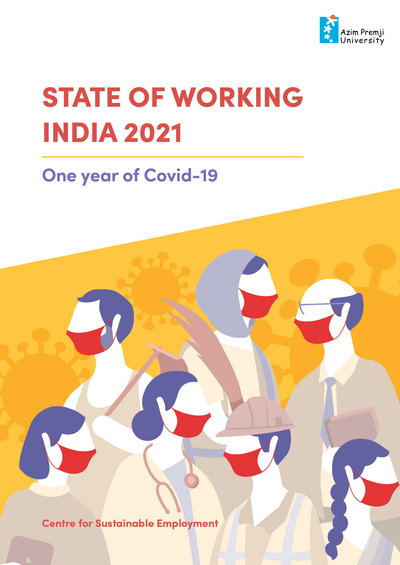
When the pandemic hit, the Indian economy was already in the most prolonged slowdown in recent decades. On top of this, there were legacy problems such as a slow rate of job creation and lack of political commitment to improving working conditions which trapped a large section of the workforce without access to any employment security or social protection.
The pandemic has further increased informality and led to a severe decline in earnings for the majority of workers resulting in a sudden increase in poverty. Women and younger workers have been disproportionately affected. Government relief has helped avoid the most severe forms of distress, but the reach of support measures is incomplete, leaving out some of the most vulnerable workers and households.
The report was released on 5 May 2021- you can watch the recording of the online event here.
Report Files
Executive Summary (pdf)
Figure data (spreadsheet)
Tables (spreadsheet)
Links


- Published
- Authors
Abstract
A lot of thought has been applied by individuals, teachers and organisations across the country to give the principles of responsible citizenship and shape in the minds of our children. All the articles in this issue show how dedicated have been the attempts to use the classroom to implant and nurture the ideas consecrated in the Preamble of the Indian Constitution.
Links

- Published
- Authors
Abstract
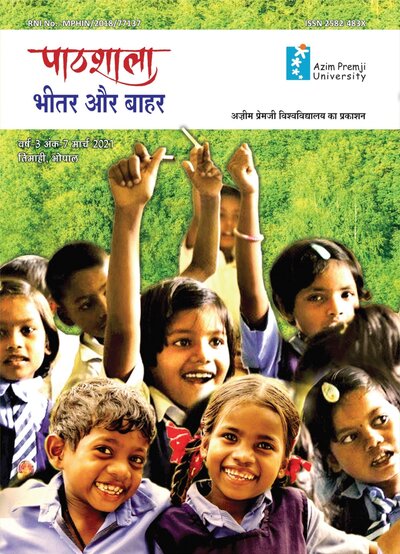
पाठशाला भीतर और बाहर के 7वें अंक में आप पढ़ेंगे ‘भाषा शिक्षण और भाषाई खेल’, ‘ऑनलाइन शिक्षण जब समुदाय बना सहभागी’, ‘शिक्षण अधिगम सामग्री की समझ एवं उपयोग’ जैसे कुछ महत्वपूर्ण मुद्दों पर अनुभव आधारित आलेख।
Links


- Published
- Authors
Abstract
Isn’t mathematics simply divine? Not an unexpected line from the At Right Angles team but one that we will back up with our Features article from the March 2021 issue: Geometric Constructions from the Sulvasutras. It’s an incisive dive from there to the Utilitarian Math World but your disillusionment will be healed with delightful articles on understanding some of the whys of procedures and rules in mathematics such as the divisibility rules, the square root algorithm, the formula for the median and the folk method to find the height of a tree.
We bring you a new first with this issue: for the first time, AtRiA goes beyond its covers with three additional articles available only in the online mode. A big shout out to the numerous submissions which enable us to take this leap.
Do revert with your feedback on AtRiA.editor@apu.edu.in
Links


- Published
- Authors
Abstract
This working paper develops an understanding of how learning outcomes are derived from aims of school education and their characteristics, and proposes an approach to designing an effective lesson plan.
Links

- Published
- Authors
Abstract
This report essentially takes stock of the employment conditions prevailing in the Indian economy prior to the pandemic and then goes on to delineate the impact of COVID-19 on lives and livelihoods. It also charts a possible policy path forward to address both short-term and long-term challenges of livelihood and employment. The focus is primarily on the non-farm economy while analysis and policy recommendations are at the national level.
Links

- Published
- Authors
Abstract
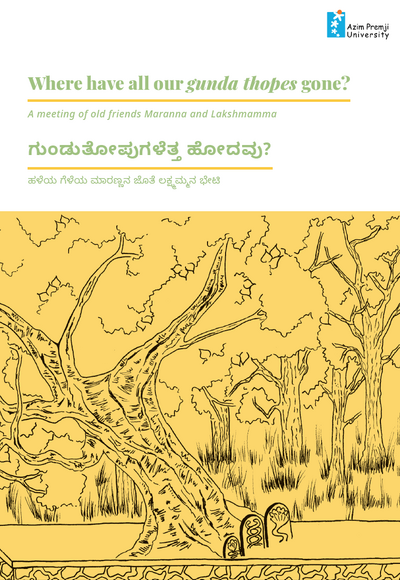
India is rapidly urbanising, but our cities are facing an environmental crisis. Whenever there is any development, for building a road, a flyover or a metro, the first casualties are trees. This story is our attempt to communicate the work we have done on gunda thopes to a wider public, hoping to partner with them to protect the city’s environment.
Trees are our city’s lungs, cleaning the air of dust and toxic fumes from vehicles and industries. Trees are a source of food, fuelwood and medicines, especially for the urban poor, and a source of shade in the hottest days to all. The very presence of trees helps us deal with the stress of city life. For many of us, trees are also of cultural and sacred significance. When trees in cities are cut to make way for urban projects, we also lose the many services that trees provide. But more importantly, what we and our future generations lose forever is a connect to nature, and a way of living that encompasses trees as living beings — neighbours, friends and spiritual guides. This is a fictitious story. But the village, which remains unnamed, exists just as it is described in the outskirts of Bengaluru. The thope exists too. All the elements of the story are drawn from our conversations with the village residents. Finally, this may be a story of loss — the loss of nature as a city expands. We also hope that the story will fuel an urge for us to get to know more about nature in our neighbourhood. We hope that each of you who read this book will be enriched by the understanding of trees and thopes—sentinels and companions in the cities we live in.Technical & Vocational Education and Training in India- Lacking Vision, Strategy and Coherence
in Azim Premji University
- Published
- Authors
Links
- Published
- Authors
Abstract
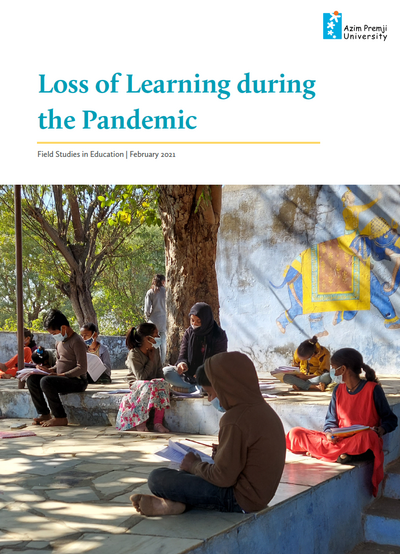
School closure due to the COVID-19 pandemic has led to complete disconnect from education for the vast majority of children or inadequate alternatives like community based classes or poor alternatives in the form of online education, including mobile phone-based learning.
Covid-19 Crisis- An Indictment of India’s Informal Economy
in Azim Premji University

- Published
- Authors
Abstract
This paper attempts to look at the ways informality is conceptualized in India and argues that the problems with the laws pertaining to informal labour are not simply an implementation issue, but the design of the labour laws itself exclude informal labour. While reviewing the history of labour laws in India and the social history of labour participation, the paper also examines the current change in the political approach to labour by changing the labour laws in the pretext of the pandemic. Focussing on the changes made in labour laws in Madhya Pradesh the paper argues that these changes would further informalise the workers intensifying the crisis.
Authors:
- Jenny Sulfath
- Balu Sunilraj
Links
Down and Out- The Gendered Impact of the Covid-19 Pandemic on India’s Labour Market
in Azim Premji University
- Published
- Authors
Abstract
The Covid-19 pandemic has created unprecedented disruptions in labour markets across the world including loss of employment and decline in incomes. Using panel data from India, we investigate the differential impact of the shock on labour market outcomes for male and female workers. We find that, conditional on being in the workforce prior to the pandemic, women were seven times more likely to lose work during the nationwide lockdown, and conditional on losing work, eleven times more likely to not return to work subsequently, compared to men. Using logit regressions on a sample stratified by gender, we find that daily wage and young workers, whether men or women, were more likely to face job loss. Education shielded male workers from job loss, whereas highly educated female workers were more vulnerable to job loss. Marriage had contrasting effects for men and women, with married women less likely to return to work and married men more likely to return to work. Religion and gender intersect to exacerbate the disproportionate impact, with Muslim women more likely to not return to work, unlike Muslim men where we find religion having no significant impact. Finally, for those workers who did return to work, we find that a large share of men in the workforce moved to self-employment or daily wage work, in agriculture, trade or construction. For women, on the other hand, there is limited movement into alternate employment arrangements or industries. This suggests that typical ‘fallback’ options for employment do not exist for women. During such a shock, women are forced to exit the workforce whereas men negotiate across industries and employment arrangements.
Authors:
- Rosa Abraham
- Amit Basole
- Surbhi Kesar
Links
Explaining COVID-19 Lockdown, Employment and Migration in India- Challenges and Prospects
in Azim Premji University
- Published
- Authors
Abstract
This paper makes an attempt to do an assessment of the impact of COVID-19 on employment and migration in India. The analysis is based on up-to-date facts and figures available in the public domain on economic growth, employment and migration. Using the employment elasticity approach, the study estimates employment loss during 2020 – 21 owing to the negative impact of COVID-19 on economic activities. The results of the study suggest that the country may witness job loss with the tune of 18.5 18.8 million in the current fiscal year. This in turn would shoot up the unemployment rate from 5.8% in 2018 – 19 to 8.9% in 2020 – 21, warranting a coordinated and focused approach from both the Central and State governments to uplift the confidence of the people and bring back the lost jobs, particularly the migrant workers. The study also emphasises on Central government’s urgent attention and action plan for uplifting the rural economy in order to revive India’s economy in the short run.
Authors:
- Purna Chandra Parida
- Yogesh Suri
Links

- Published
- Authors
Abstract
E‑governance has changed the functioning of public programmes in India. In most cases, one technological platform is expected to perform multiple roles such as improving administrative efficiency, as an information repository for the beneficiaries and as a system for accountability. However, techno-solutionism can be incongruous to democratic principles. In this article, we highlight this by looking at some technologies, such as the Management Information System (MIS) among others, used for the implementation of the Mahatma Gandhi National Rural Employment Guarantee Act (MGNREGA) in India. We illustrate how such technologies have been used to subvert legal rights of workers and critically examine whether these designs incorporate democratic values. We underscore that technological interventions, with compassionate design are potentially powerful tools for transparency, accountability, and grievance redressal. However, we argue that technology alone can neither enhance participatory democracy nor reduce socio-economic inequalities.
Authors:
- Rajendran Narayanan
- Chakradhar Buddha
- Sakina Dhorajiwala
Links
Reconceptualising rehabilitation of female survivors of violence: The case of Sampoornata Model of Dance Movement Therapy (DMT) in India
in Women & Therapy
Article
- Published
- Authors
- Rhea Kaikobad
Abstract
This article discusses an intervention for rehabilitation of female survivors of violence that reconceptualises rehabilitation through a feminist lens: the Sampoornata model of Dance Movement Therapy (DMT), which has been created and is being practiced by an NGO called Kolkata Sanved in Kolkata, India. Feminist rehabilitation is seen as a perspective which, in contrast to dominant rehabilitation praxis, recognises that individual experiences of violence are embedded in patriarchal social structures and aims for survivors to internalise a sense of agency by deconstructing internalised patriarchal norms that legitimise violence against women and girls and stigmatisation of survivors. The article highlights how Sampoornata enacts feminist rehabilitation through the medium of the body. Survivors reclaim the body from patriarchal control and reflect on the embodied experience in order to question patriarchal norms, remove self-blame, and negotiate a space for themselves within society.
Links
Labour Reforms in the Indian State of Rajasthan- a boon or a bane
in Azim Premji University
- Published
- Authors
Abstract
The authors examine the impact of labour law deregulations in the Indian state of Rajasthan on plant employment and performance. In 2014, after a long time, Rajasthan was the first Indian state that introduced labour reforms in the Industrial Disputes Act (1947), the Factories Act (1948), the Contract Labour (Regulation and Abolition) Act (1970), and the Apprentices Act (1961). Exploiting this unique quasi-natural experiment, the authors apply a difference-in-difference framework using the Annual Survey of Industries longitudinal data of India’s manufacturing establishments. Their results show that reforms had an unintended consequence of the decline in labour use. Also, worryingly, the flexibility resulted in a disproportionate decline in the directly employed worker. Evidence suggests that the reforms positively impact the value-added and productivity of the establishments. The strength of these effects varies depending on the underlying industry and reform structure. These findings prove robust to a set of specifications.
Authors:
- Diti Goswami
- Sourabh Paul
Links
- Published
- Authors
Abstract
One of the central concerns against increasing expenditures in the recent period has been the possibility of an adverse impact on debt-GDP ratio. Once stability of debt-ratio is regarded as a policy-objective, the aggregate expenditure that is consistent with the stability condition gets determined by the given level of output growth rate and revenue receipts. Instead of perceiving expenditures to be determined by the debt-stability condition, this short note attempts to lay bare the conditions under which the debt-stability condition is restored despite increasing the growth rate of non-capital primary expenditure to a targeted level. The targeted level can be perceived as one which fully compensates the income loss of labour during the pandemic. In contrast to conventional wisdom, the possibility of increasing non-capital expenditures is explored not by reducing capital expenditures, but rather by increasing the latter. Using the multiplier value of capital expenditures estimated by the RBI, it is argued that the debt-ratio would remain unchanged despite increasing the growth rate of non-capital primary expenditure if the capital expenditures growth rate is allowed to increase in a specific proportion.
Author:
- Zico Dasgupta
Links
Tracking Employment Trajectories during the Covid-19 Pandemic- Evidence from Indian Panel Data
in Azim Premji University
- Published
- Authors
Abstract
Using the CMIE’s Consumer Pyramids Household Survey, we track a panel of households prior to the lockdown (in December 2019), during the lockdown (in April 2020) and afterwards (in August 2020) to investigate the employment and income effects of the Covid-19 pandemic and its associated containment measures. We identify four distinct employment experiences during the pandemic for those who were in the workforce just prior to the lockdown: no loss of employment (“No effect”), loss of employment followed by recovery (“Recovery”), loss of employment with no recovery (“No recovery”), and a delayed loss of employment (“Delayed job loss”). Overall, 54% of individuals experienced no job loss, while 30% lost work in April but recovered by August. 12% had not recovered employment as of August 2020. We analyse how these trajectories vary across different social and economic characteristics to quantify contractions and recovery in the labour market and the extent to which the vulnerabilities vary across different social groups, employment arrangements, and industries. We find that women were substantially more likely to lose employment as well as less likely to recover employment. Job loss was also more severe for lower castes as compared to intermediate and upper castes and for daily wage workers as compared to regular wage workers. Younger workers were particularly vulnerable to job loss compared to older workers. Having lost employment in April, younger workers were also less likely to recover employment in August. Finally, for those who were employed in both December 2019 and August 2020, we examine the changes in employment arrangements. We find a much greater frequency of transitions from wage employment to self-employment, more than that in the seasonally comparable period last year (Dec 2018 to Aug 2019). Our results call for urgent additional fiscal measures to counteract these effects.
Authors:
- Rosa Abraham
- Amit Basole
- Surbhi Kesar
Links
Urban Wastewater for Agriculture: Farmers’ Perspectives from Peri-urban Bengaluru
in Azim Premji University

- Published
- Authors
Abstract
This working paper studied farmers’ perspectives on their future as beneficiaries of wastewater (domestic sewage with industrial effluents) generated in the Vrishabhavathy watershed of Bengaluru city.
Links

- Published
- Authors
Abstract
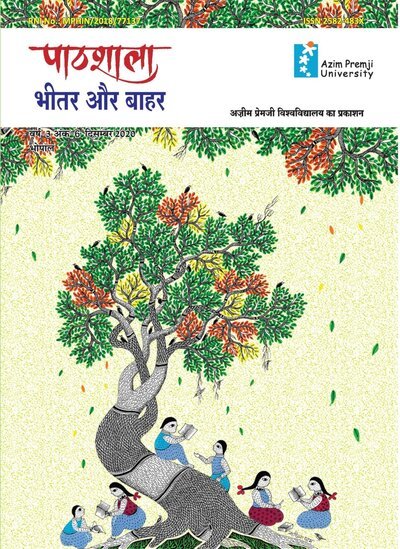
पाठशाला भीतर और बाहर के इस 6ठे अंक में शिक्षकों का संवाद ‘महामारी के दौर में शिक्षा, स्कूल और बच्चे’ शामिल है। साथ ही ‘तालाबन्दी के दौरान ऑफ़लाइन शिक्षा प्रक्रिया’ और ‘कक्षा अवलोकन के ज़रिए शिक्षण प्रक्रिया को समझना’, ‘भाषा शिक्षण में बातचीत क्यों ज़रूरी है’ जैसे आलेख इस अंक में हैं।
Links


- Published
- Authors
Abstract
COVID-19 made it clearer than ever that the school does not and cannot be looked at in isolation from society. In this issue, there are articles that show not only teachers supporting children’s learning during the closure, but also how parents overwhelmingly supported teachers to continue their work; how, when all other ways of distance learning failed, the unanimous decision of parents was that the education of their children should go on.
Links


- Published
- Authors
Abstract
Beyond Four Walls — Contain a mathematician in a room and you can be sure that some thinking on quadrilaterals will happen! Our second issue during the pandemic has much to keep you absorbed and happily engaged with problems- of the mathematical kind. From age digit reversals to an algorithm for evacuating a room — there is material for every age group. We begin with the all important question: Why Should You Study Mathematics? And we also carry a review of the Classes I‑III Sikkim Mathematics Textbooks, the development of which our URC-PDP played such a key role in. Do revert with your feedback on AtRiA.editor@apu.edu.in
Links
Economic Transition, Dualism, and Informality in India- Nature and Patterns of Household-level Transitions
in Azim Premji University
- Published
- Authors
Abstract
We examine the Indian economy during a peak period of high growth between 2005 – 2012 to analyze nature and patterns of household-level transitions across the different sectors of the economy and to relate these transitions to the broader process of structural change. We use a pan-India household-level panel data to categorize households according to their primary income sources into seven sectors characterized by varying degrees of formality/informality and various production structures and labour processes. We find that even this this relatively brief period, there has been a very large volume of transitions of households across these sectors. However, despite such volumes of transitions, the overall economic structure, and its segmentations, has continued to be reproduced, along with a regeneration of ‘traditional’ informal spaces that were often expected to dissolve over time with high economic growth. To ascertain the nature of these transitions – ‘favorable’ or ‘unfavorable’ – in terms of economic well-being of households, we employ a counterfactual analysis. We find that a majority of the transitions in the economy during the period of analysis have been ‘unfavourable’ in nature, with large proportion of households transitioning to sectors that are not ‘optimal’ locations for them, given their socioeconomic characteristics. Further, using a multinomial logit regression framework, we find that
the likelihood and nature of these transitions significantly vary with household characteristics, some of which, like social caste, are structurally given and cannot be optimally chosen by households. This dynamic process of reproducing a rather stagnant structure, along with substantial ‘unfavourable’ transitions towards ‘traditional’ informal economic spaces that are continuously reshuffled and reconstituted, provide insights into the complexity of India’s development trajectory that is often glossed over in the literature.Author:
- Surbhi Kesar
Links
Mechanisms of Surplus Appropriation in the Informal Sector- A Case Study of Tribal Migrants in Ahmedabad’s Construction Industry
in Azim Premji University

- Published
- Authors
Abstract
This paper is based on fieldwork I had undertaken regarding tribal migrant workers in the construction sector, in Ahmedabad in May-July 2018, coordinated by Aajevika Bureau(AB). I had undertaken this fieldwork to assess the work of AB and advise them about strategies to collectivize migrant labour groups. While interacting with a particular social group (Bhil tribals from South West Rajasthan) who work in the construction sector, I struggled to capture the specificity of their experience through the concept of informal labour. This paper is an attempt to characterize the specificity of their social experience, while also, reframing the concept of informal labour. I use the concept of labour process (Michael Burawoy: Manufacturing Consent) to argue that there is not a binary or one-dimensional power relationship between informal labour and owner/state/capital, but instead, the process of surplus appropriation occurs at multiple nodes through different agents. In this paper, I have identified multiple modes of surplus extraction which are embedded as institutions or social norms in the labour process. Further, I argue that there is a close link between the status of tribal workers as marginalized within society, and their status as displaced and marginalized in their living areas and workplace. This difference translates into identity based discrimination faced in the city, as well as, structural exclusion from the governance apparatus faced as migrants. Therefore, tribal migrant workers do not earn enough to subsist and are highly dependent on early child birth, non-remunerated services of their family and the social security net provided by their village community.
Author:
- Rahul De
Links
Handling Classroom Hunger: Comparing Modes of Mid-Day Meal Delivery in Anekal Block, Karnataka
in Azim Premji University


- Published
- Authors
Abstract
This working paper aimed to evaluate the impact of a quality-controlled mid-day meal program from a centralized kitchen on children’s nutritional indicators and learning outcomes. It also looked at household characteristics of students to determine their impact on children’s nutritional outcomes.
Links


- Published
- Authors
Abstract
This issue is focused on the Pandemic. Read ‘The Basics’ section to explore: what strategies do epidemiologists use to control the spread of infection? Are viruses the most complex or the simplest forms of life? What has caused the spike in frequency of new zoonoses since the 20th century? In ‘The Infection’ section, engage with questions like: why do we believe that SARS-CoV‑2 is a product of natural evolution? How exact are measurements of death rates for an ongoing pandemic? Or, how does the nature and context of social interaction affect the spread of COVID-19? Delve into ‘Our Response’ section to read: why ‘designing’ and ‘making’ vaccines against SARS-CoV‑2 is uncertain and time-consuming? What can we learn from deliberately exposing healthy consenting individuals to a weakened form of the SARS-CoV‑2 virus? Which tests would be most effective for contact tracing & which for population-wide screening? How do we identify antivirals against SARS-CoV‑2? Can community health workers clinically diagnose COVID-19 syndrome in the absence of testing kits? Why is training and provision of personal protective equipment for ASHA workers essential for effective healthcare? How can a reverse quarantine approach help us use herd immunity to our advantage? That’s not all. Are you looking for resources on understanding concerns & approaches towards the mental health of the elderly, children, and those under quarantine? Or mythbusters around SARS-CoV‑2? Check out our Snippets.
Links
‘Gaze’ and ‘Bodies’ in popular print: Understanding the changing representation of women in visual culture
in Journal Of Media And Communication

- Published
- Authors
Abstract
The paper attempts to develop arguments around concepts like ‘Gaze’ and the understanding of ‘bodies’ within popular culture. In its discussion on the ‘male gaze’, it raises pertinent questions of ways in which, with the rise of consumerism, the women’s representation, particularly in the popular media, has become more vulnerable. This paper has tried to problematise the existing notion of popular women’s magazines as ‘best companion for women’, as they are fraught with contradictions of what they claim to be and represent. The paper further explores the changing meanings of representation particularly with the advent of globalisation and the rise of the beauty industry.
Links
Sociological Perspectives on Everyday Life and the Social Construction of School Failure: A Literature Review
in Azim Premji University

- Published
- Authors
Abstract
This working paper reflects on the importance of how oppressed and exploited communities look at education, at the relations of power in pedagogy and curricula, how students internalize ways of looking at class life that come from their social location and so on in an Indian context.
Links
The Historical Evolution of the District Officer: From Early Days to 1947
in Azim Premji University

- Published
- Authors
Abstract
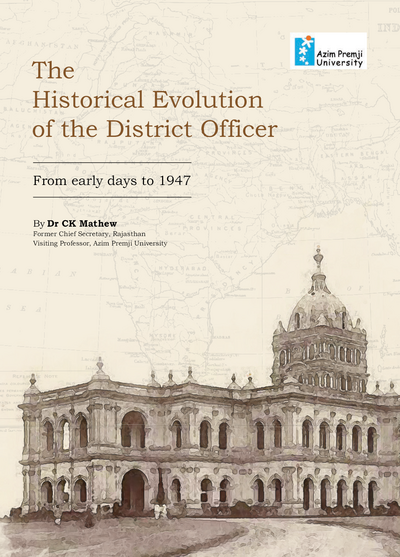
The Historical Evolution of the District Officer: From Early Days to 1947, is the first of five volumes written by Dr CK Mathew (Fmr. Former Chief Secretary, Rajasthan). Popularly known as district collector/deputy commissioner/district magistrate, the district officer is a critical element in the hierarchy of India’s governance structure. Originally, it was created for revenue collection by the British East India Company and extended in its scope over time. In post-independence India, it mutated to become the administrative head of every district, addressing grievances and implementing public welfare programmes.
Links
Governance of Yellow Foot Clam: a case study of Ashtamudi Lake in Kerala
in Azim Premji University

- Published
- Authors
Abstract
Yellow foot Clam (Paphia malabarica) fishery of the Ashtamudi lake, one of the deepest lakes in Kerala supports the livelihoods of thousands of clam-collectors in the region. These clams are highly demanded in the international market and it enables the clam-collectors to generate their income through export began in late 80s. An increased export market demand exerted a lot of pressure on the resource which ultimately led to the depletion of clam resources. As a response to this unexpected decline in resource size and lost income, the clam collector community in Ashtamudi came forward to address the issue by forming a collective of clam-collectors at the village level. As a management strategy, they voluntarily abstained from fishing during the breeding season and demanded management of resource through a participatory mode of governance. After years of experience in the management of resource through voluntary measures, Ashtamudi clam resource entered a new regime of resource management. It got certified as “sustainable” resource by the world’s largest marine wild-catch certification program, the Marine Stewardship Council (MSC) which promotes the governance of marine fisheries resources through market incentives. This study is an attempt to understand these varied and unique governance regime experiences of clam resource from participatory to market-based systems and the implications of these governance regimes in the property rights, livelihoods and social development of clam-collectors of Ashtamudi.
Links

- Published
- Authors
Abstract
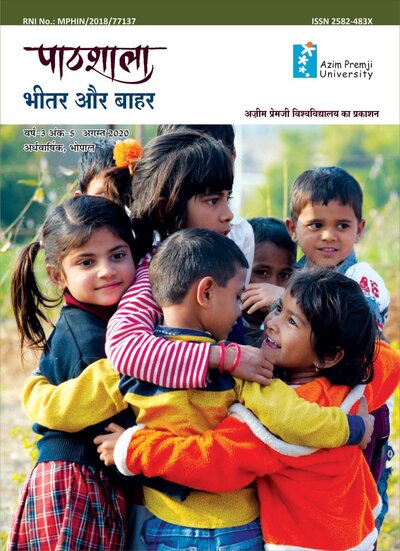
पाठशाला भीतर और बाहर के इस 5वें अंक में शामिल है एक लेख कि बच्चों का सवाल पूछना कितना जरूरी है और उन सवालों को किस तरह से समझा जाए। शिक्षकों के क्षमता संवर्धन में उनके अनुभवों का लिखा जाना कितना जरूरी है, बच्चों को सवाल पूछने के अवसर देना और उनके सवालों को समझना जैसे विषयों पर महत्वपूर्ण आलेख भी इस अंक में शामिल हैं।
Links