
MA in Education
Batch of
Nurturing passionate professionals for Education, Evolving Indian Education System and its need for trained professionals.
Details
The Azim Premji University’s MA in Education programme nurtures professionals with a deep understanding of all stages of School education – Foundational, Preparatory, Middle and Secondary. Students learn multiple disciplines (Philosophy, Sociology, Psychology, History, Systems theory, to name a few), which are essential for practitioners of Education.
The programme will ensure that every student develops competence in curriculum and pedagogy of at least one school subject area. As a part of their study, students must choose from Early Childhood Education, Language Education, Mathematics Education, Science Education or Social Studies Education.
Who should join us?
At Azim Premji University, join us if you are looking for a programme that provides a deep understanding of the Indian education system and hands-on experience of working at the grassroots level. Over the years, we have nurtured a community of individuals, motivated by the values enshrined in the Indian constitution: a commitment to social justice, equity, humane values and sustainability.
The programme’s uniqueness is the opportunity to work closely with the government school system and our faculty members come with expertise and extensive experience in the field. It enables students to understand the domain of Education through various aspects that include teaching, curricular material development, curriculum planning, assessment, schools and the schooling system. A strong theory-practice connection is nurtured through the programme using field placements that provide students with opportunities to analyse and apply the theoretical learnings in the field.
Why study with us?
We help you understand educational theory
Several disciplines contribute to the theoretical and conceptual basis of understanding educational issues. Some of these are teaching, curricular material development, curriculum planning, assessment, schools and the schooling system.
Learn about education practices in the Indian context
You will learn and reflect on diverse learners, communities and systems in the Indian context.
We offer a theory and practice continuum
We help you evaluate theories in terms of ground realities and ensure that your practice is informed by an understanding of theory.
Plan and implement independent educational interventions
You will be able to plan independent interventions in various roles – for example, as a curriculum developer, textbook and resource developer, teacher educator, or researcher.
We nurture your professional development
We help you develop the capabilities for self-motivated professional development.
Programme Structure
Our broad-based programme includes theory, practice, research, policy and planning in the field of education. We help you make connections with the larger context of education in India in a programme that is informed by the principles and practices of Education Studies today.
Our course structure includes a strong foundation for research including a wide range of electives to choose from. You will have a strong field component in which you can practice what you study in the classroom.
You will learn and understand educational theory to address a range of issues across teaching, curricular material development, curriculum planning, assessment, schools and the education system as a whole.
We ensure that you are able to evaluate and critically probe theories while using them for practice. We encourage you to develop capabilities to plan independent educational interventions in various roles.

Course Structure
The teacher, the content and the learner are central to the practice of education. With these three actors at the core of our thinking, we ask: What is education? Why is there a need for it? How do we determine if learning objectives and educational aims are being attained?
Answering these questions involves looking at socio-political assumptions, philosophical assumptions, and psychological aspects of education. It includes a study of the concepts of justice and equality, and ideas of human nature and knowledge. It involves a close understanding of a child’s mind and development in language and emotions.
We contextualise these enquiries within history to ensure that you are able to develop a strong analytical and theoretical basis for educational judgement. These core courses will introduce you to key issues in educational thought, critique and practice.
Philosophy of Education
Core
Explore ideas, values, and assumptions that guide educational thought and practice.
Sociology of Education
Core
Understand how education interacts with society, inequality, and social change.
Child Development and Learning
Core
Study how children learn and develop within school contexts.
Introduction to School System in India
Core
Analyse how historical, social, and policy factors shape schooling.
Schools as Organisations
Core
Examine schools as institutions with cultures, structures, and leadership practices.
Curriculum Studies
Core
Study curriculum as knowledge, experience, and educational intent.
Field Research
Core
Identify and investigate research questions grounded in education practice.
Teacher Professional Development
Core
Examine the evolving role of teachers and teaching across contexts.
Consolidation of Programme Experience
Core
This course aims to help students link, integrate and synthesise their experience across the programme.
An elective allows you to pursue an extended exploration in a subdomain of educational theory and practice, which will include a field internship in a related topic.
You can select courses from a broad area of theoretical, practical or procedural knowledge in particular fields of education and supplement your understanding developed through the core courses.
The five fields offered are Early Childhood Education, Language Education, Math Education, Science Education and Social Science Education. The electives form an interplay between school curricular knowledge, subject knowledge and pedagogy.
Early Childhood Education
Focus on learning, development, and curriculum for children aged 3 – 8, with options for independent or field-based study. (No longer offered in the Bengaluru campus)
Language education
Develop pedagogic approaches for language learning in multilingual Indian classrooms.
Mathematics Education
Understand mathematical knowledge, curriculum, and pedagogy for elementary education.
Science Education
Explore how scientific knowledge is taught and learned, and design meaningful science learning experiences.
Social Studies Education
Integrate history, geography, political science, and economics through curriculum and pedagogy.

We believe that spending time in the field will help you develop a deeper understanding of the theoretical and conceptual ideas that you encounter in the course of your study.
We ensure that you are able to engage with a variety of field settings in the Indian educational context. We think this will help you address and understand dimensions of educational realities and tasks. You will be able to understand educational contexts and organisations, including work culture and ethics, and subject area knowledge.
Weekly practicums
You will have weekly practicums that relate to course work that will help you hone your communication and negotiation skills as well as conceptualise and plan some educational practice. You will visit public and private schools, preschools and anganwadis or NGOs that work with children.
Field practice
You will also have longer, sustained field engagements of two to three weeks in the first and second semesters. You will visit schools and NGOs to understand different aspects of the government education system. You will interact with teachers and children in the classroom setting and in teacher professional development centres in field offices of the Azim Premji Foundation.
In the third semester, you will participate in a 12 week field internship at Azim Premji Foundation field institutes, experiencing and understanding different aspects of school education. During this time, you will engage in field research. Know more here.
Field Practice
Field
Field practice aims to provide students with opportunities to engage in a variety of field settings in the context of Indian education.
Why did Esperanto emerge as a language? What goes into the making of a documentary film? And have you ever wondered whether bamboo is a grass, food, or a tool for furniture?
Learn the history and evolution of cinema as art forms, watch film noir, or appreciate the music of Indian films. Walk through the city to experience it with a new lens or understand the built world around us in a class on architecture for non-architects to. Talk about Indian classical dance in dialogue with a dancer. What wrought Carnatic music into the form it exists in today? Listen to music, read science fiction, star gaze, write poetry, or explore the city in which you live.
In our open courses, you can explore one or two courses outside of your main programme. You will work with visiting faculty who are artists, writers and experts in the field spanning literature, the fine arts, cinema, science, and history. Apart from this, students have to take an open course (mandatory), offered by the School broadly in an area pertaining to Art and Aesthetics in Education.
We offer creative courses for you to choose from every semester. Courses are updated each year.
Classroom Practices
With the primary objective of understanding Education the courses in the programme are organised around themes, such as, policy, curriculum, school, knowledge, teaching and learning. They draw upon relevant theoretical and practical insights and methods from different disciplines.
The classroom practices provide opportunities to construct students’ understanding of key ideas based on reading, direct observation, critical reflection, theoretical and practical insights. A close integration of the taught courses and field practice is maintained across the courses.
Listen to our Faculty members speaking about our practices here.
Publications
Bardapurkar, A. (2022). What is Good? A Study of Educational Insights in Nicomachean Ethics (Book I, II and III). Journal of Human Values, 28(1), 11 – 19. https://doi.org/10.1177/09716858211058778
Rajan, V. (2023). Migrant childhoods and temporalities in India: A reflective engagement with dominant discourses. Journal of Childhood Studies, 48(1), 30 – 43. https://doi.org/10.18357/jcs202320499
Mathai, S. (2021). The good, the popular and the bad: different shades of ‘theory’ use in educational research. Contemporary Education Dialogue 18(2), pp: 250 – 258. CED. This was based on the conference presentation at the Tenth Annual International Conference of the Comparative Education Society of India, 9 – 11 December 2019. New Delhi: Zakhir Husain Centre for Educational Studies, Jawaharlal Nehru University.
Srinivasan, R (2021). Listening to the voices of teachers through Dewey’s ideas. In JuliAnna Ávila, AG Rud, Leonard Waks and Emer Ring (Eds). The Contemporary Relevance of John Dewey’s Theories on Teaching and Learning: Deweyan Perspectives on Standardization, Accountability, and Assessment in Education. Routledge International Studies in the Philosophy of Education.
Our Graduates
There is a widespread perception that becoming a teacher is the only way to contribute to the education system. While the education system does need teachers, there are many other aspects that need trained professionals. We encourage you to become social entrepreneurs to implement path-breaking solutions to social problems.
Some of the other roles that are taken by our graduates are —
- School leaders
- Teacher Educators
- Textbook developers
- Subject matter experts
- Curriculum designers
- Programme managers of educational interventions
- Researchers in education
Resources
-


Navigating the Educational Landscape
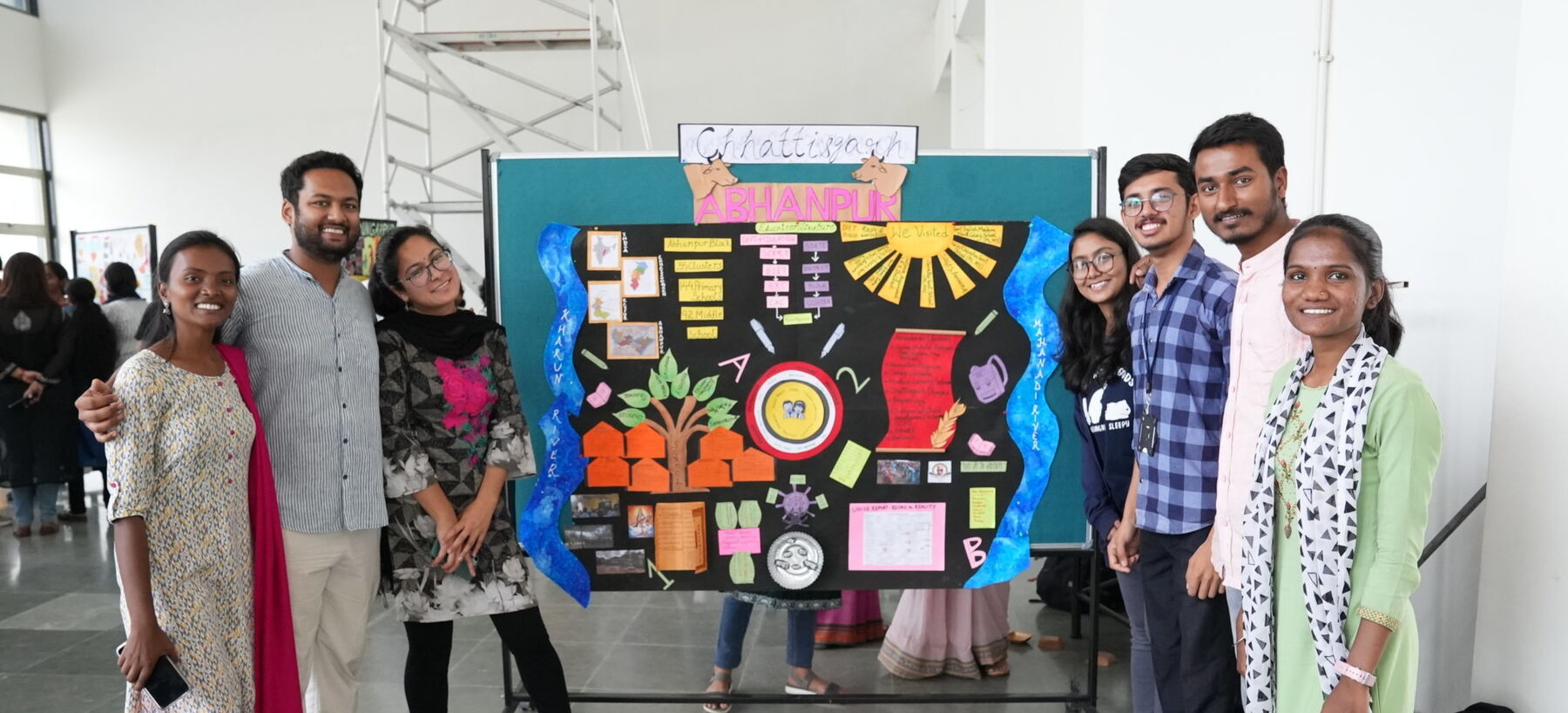
MA Education students share their Field Practice experiences
-
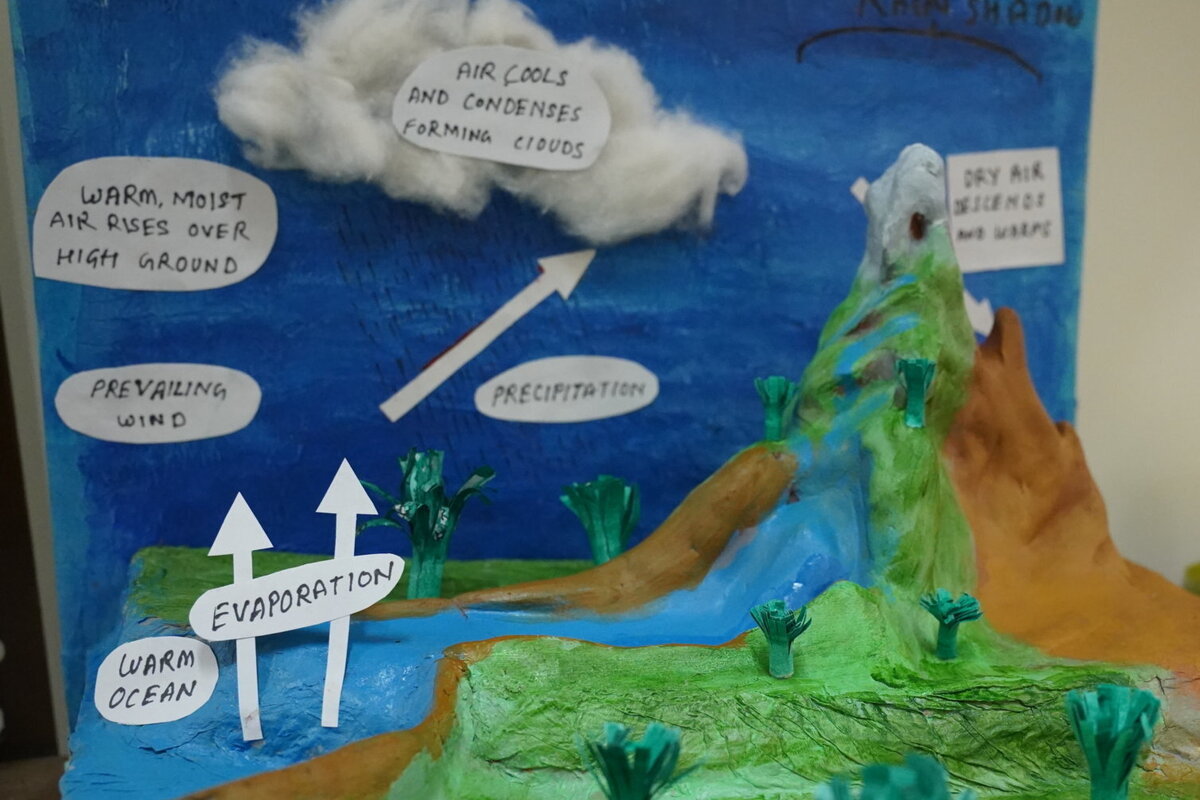
Geography Laboratory
Discover Earth anew through a hands-on experience, by connecting natural science with social science
-
Magazines for School Education
Quality learning resources for teachers, teacher educators, functionaries and those interested in the area of school education.
-
KathaVana: Annual Bilingual Children’s Literature Festival
An exciting collective journey of promoting children’s literature
Related Stories
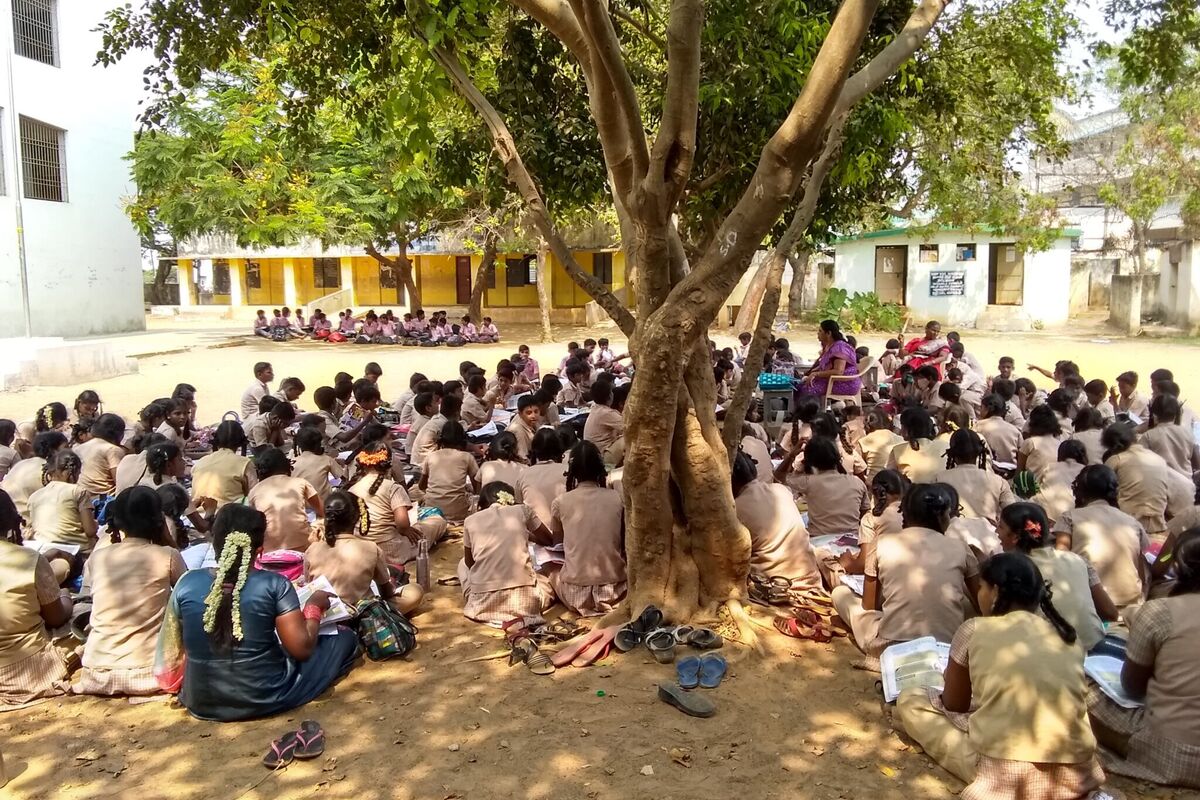
Making it Through an Overstretched Secondary School System
Miriam Thangaraj’s study reveals how systemic pressures and school-level decisions shape the daily realities of secondary schooling in marginalised (Adi Dravida) youth.
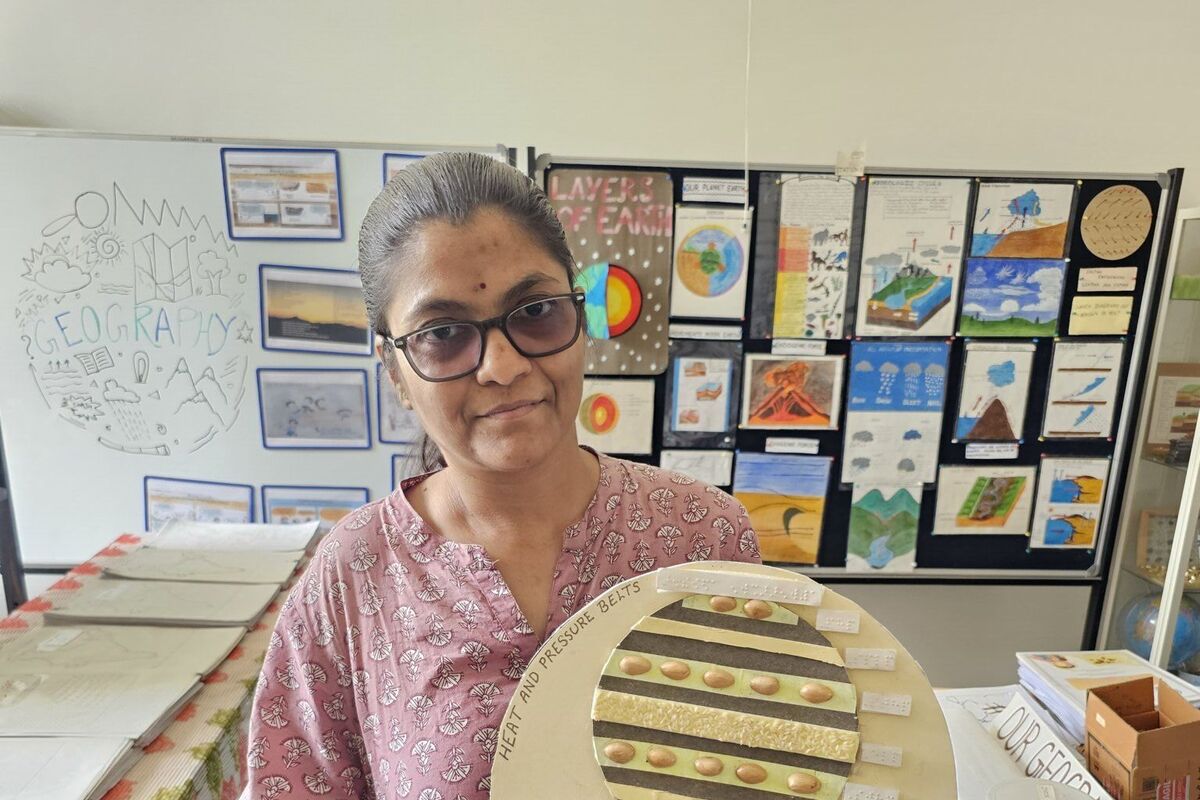
Making Geography More Accessible Through Touch
Saswati Paik is using tactile models and low-cost teaching materials to make geography classrooms inclusive for visually impaired learners.
Reimagining Mathematics Pedagogy
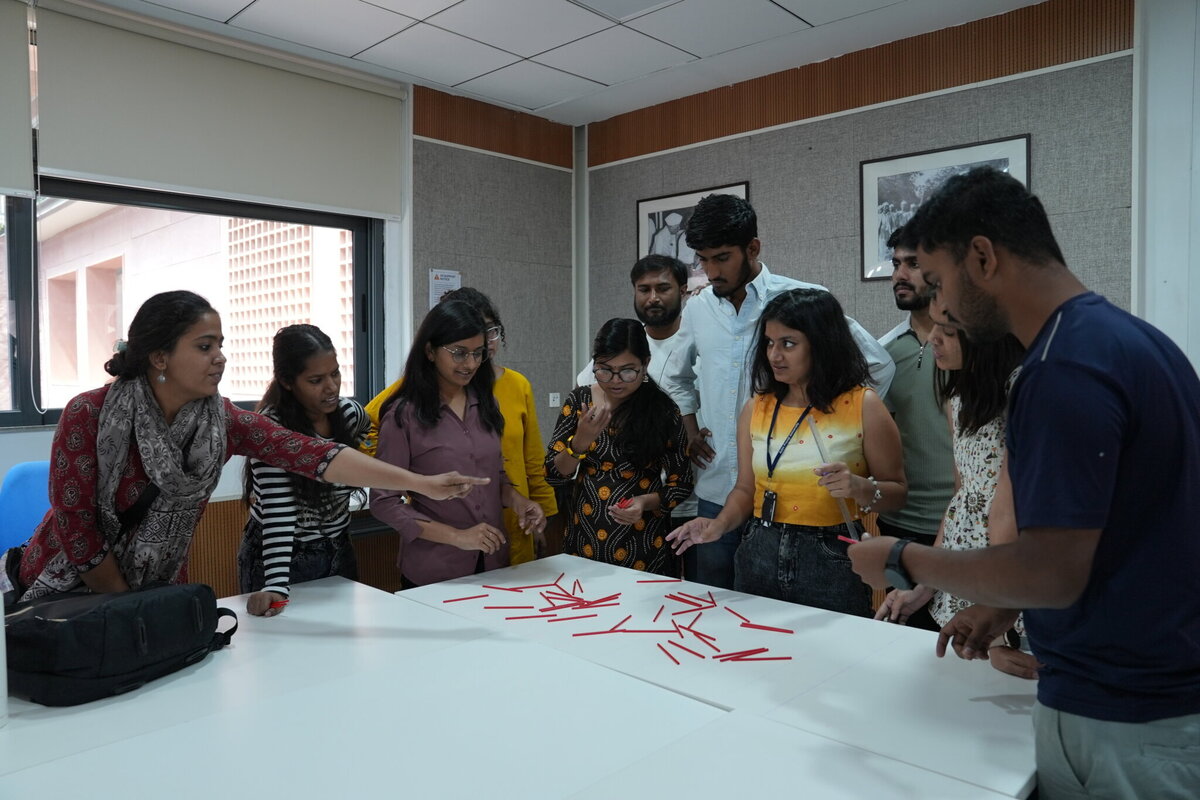
Jeenath Rahaman and Arshdeep Kaur highlight how multiple perspectives in Mathematics Education are prioritised at the University.

The First of May | Louis Paul Boon
On International Workers’ Day, A Giridhar Rao shares a translation of ‘The First of May’, prose poetry by Louis Paul Boon.

On getting back our sense of kinship and intimacy with the environment
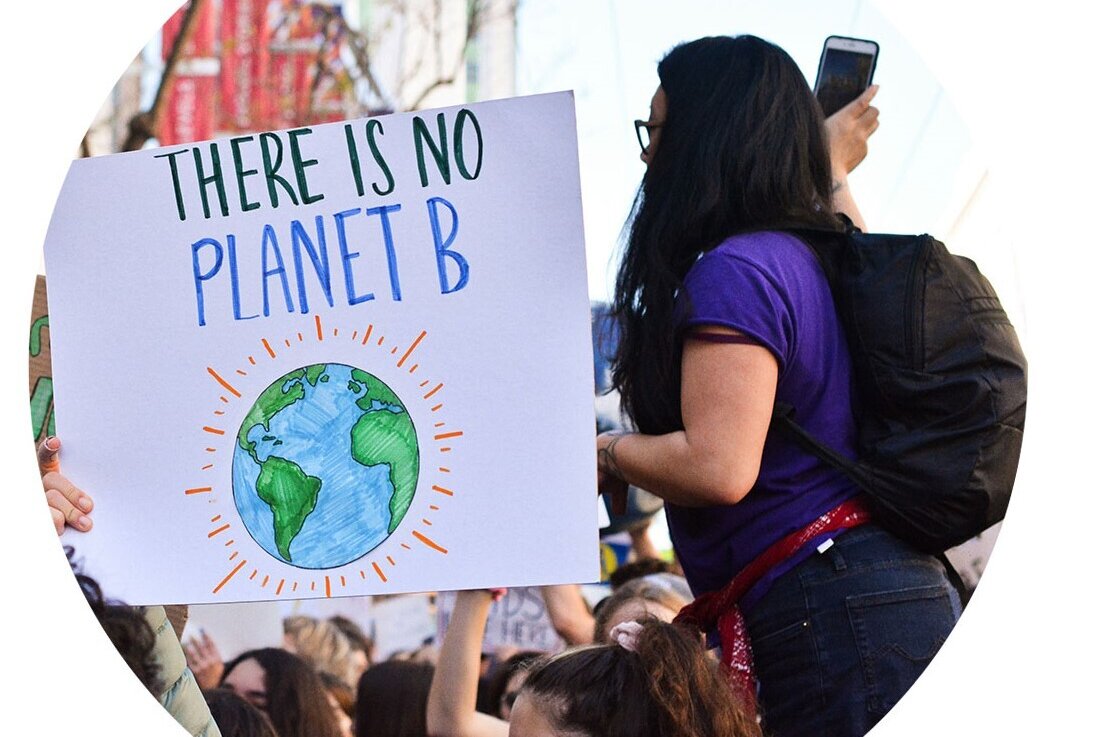
On Earth Day (April 22), Saswati Paik highlights the need to strike a balance between development and moving towards a sustainable environment.
Explore
Faculty
- Aashti Salman
- Abdul Qaiyum
- Abhijeet Bardapurkar
- Agniva Pal
- Alex P Joy
- Ankur Madan
- Anubhuti Sharma
- Aruna Jyothi Vakkalanka
- Ashutosh Vyas
- Chetan Anand
- Deepshikha Singh
- Ira Joshi
- Kinnari Pandya
- Manoj Kumar
- Miriam Thangaraj
- Mohit Sharma
- Nandini R Shetty
- Nisha Butoliya
- Pranalee Sharma
- Rahul Mukhopadhyay
- Rajashree S
- Rishikesh B S
- Sana Khan
- Saurav Shome
- Sharad Sure
- Shinjini Sanyal
- Shipra Suneja
- Sindhu Mathai
- Vetti Giri
- Vignesh Arumugam Nadarajan
- Vijitha Rajan
- Vishnu Prakash Kareepadath
32 of 45 All Programme faculty →