Many Ways to Celebrate Children
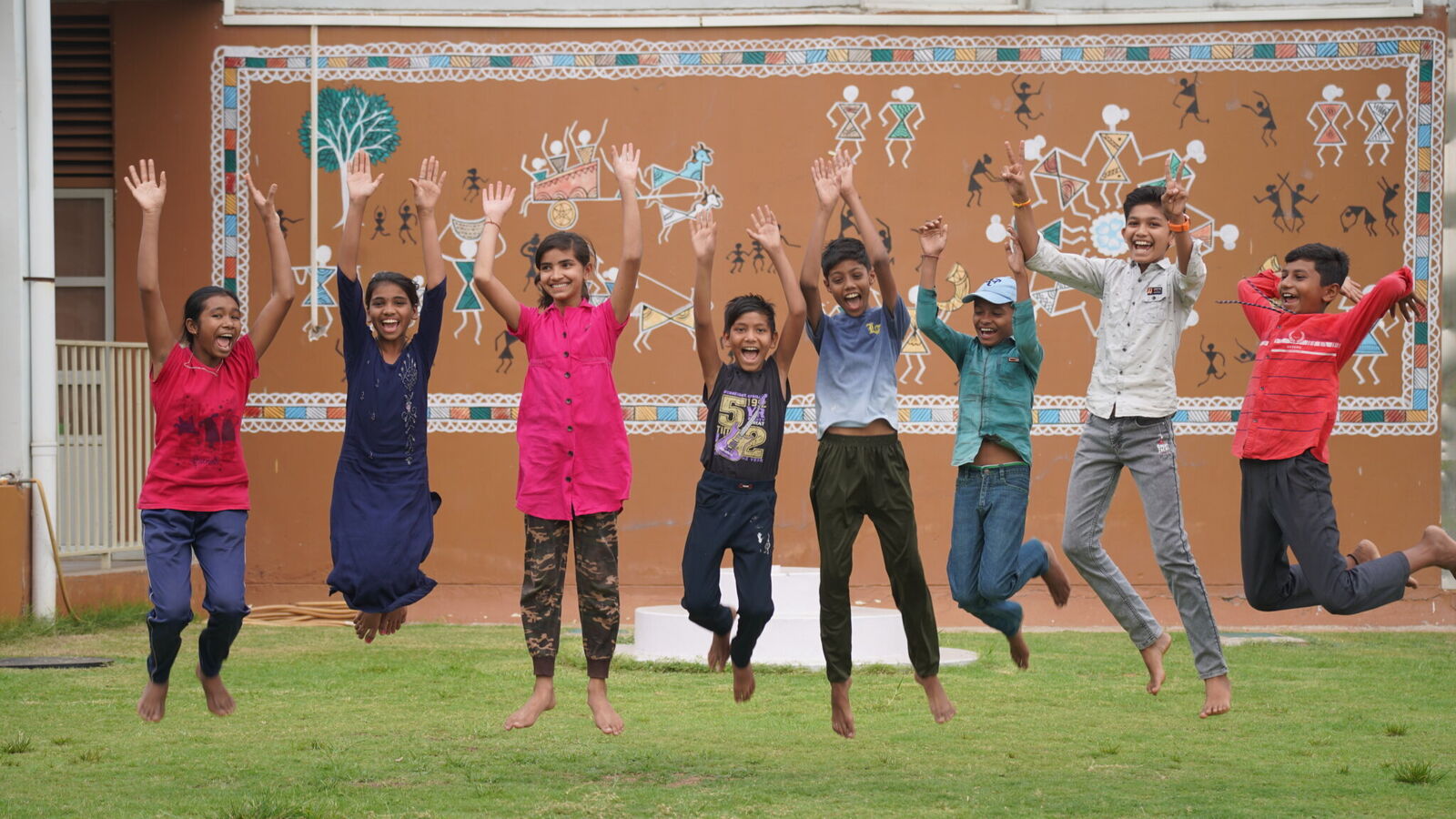
On the occasion of Children’s Day, our faculty members reflect upon diverse ways of celebrating children.
Details
To celebrate children is, perhaps, to pause and see the world a little differently. Children invite us to question what we take for granted, notice what we overlook, and imagine possibilities beyond our assumptions. Their curiosity, resilience, creativity, and sense of wonder enrich our classrooms, families, and communities every day. Drawn from the varied experiences and perspectives of some of our faculty members, here are their diverse voices and reflections.
Caring for children and ensuring their education and well-being, for their futures and for the future of society, ought to be the highest priority of any society that hopes to thrive.
As we, adults, grapple with navigating the world today and prepare children to navigate theirs, several questions come to mind. What collective measures can we take to ensure a safe childhood for every child in our country? Could we commit to providing an education that goes beyond merit and instead offer the one that lays strong foundations for an ethical, sustainable, and inclusive future? What experiences would help children become resilient, skilled, and creative individuals who can both preserve and advance the world, and shape a future full of possibilities for everyone?
As educators, parents, and citizens, let us address these and other such questions so that, together, we can create a different present, a kinder and more hopeful today, as we wish our children a Happy Children’s Day this year.
- Kinnari Pandya
Childhood is a source of joy, hope and promise; it connects the present to the world yet to come. As Rabindranath Tagore famously observed, “Don’t limit a child to your own learning, for he was born in another time.” Children inhabit the present, yet are never entirely of it. Political philosophers have long recognised natality — the human capacity for new beginnings — as a political category par excellence. Childhood, therefore, is profoundly political. Yet the question ‘What is a child?’ remains an enigma, resisting definitive answers. Growing up in contemporary technological societies presents increasingly complex challenges, while accommodating children’s freedom, agency, experience and voice within our social worlds remains an unresolved task. India stands at a juncture where it must engage with universal conceptions of childhood while critically examining their contradictions and attending to the material and historical conditions shaping childhood here. Uncritical adoption risks reproducing colonial hierarchies of knowledge and deepening the separation between adult and child worlds. Yet retreating into particularity risks diminishing the emancipatory promise of Indian constitutional values.
- Chetan Anand
Every child, regardless of their background or (dis)ability, deserves to be celebrated. Celebrating children is about recognising their individuality, nurturing their potential, and creating opportunities for every child to participate, connect, and thrive. For children with disabilities, inclusion begins when we move beyond making decisions for them to creating opportunities to plan and shape celebrations with them. Children’s Day offers an opportunity to listen to children’s voices, respect their choices and recognise their individuality, creativity and aspirations. Whether through festivals, sports, art, music or play, children should have the freedom to participate in ways that work for them, with accessible spaces, sensory-friendly environments and flexible activities. Their ideas, preferences and experiences must guide our efforts, rather than adult assumptions about what they need or enjoy. When children listen to one another, challenge stereotypes and celebrate their differences, they build empathy, friendships and a sense of belonging. Perhaps the best way to celebrate children is to listen to them, and let their voices shape the celebration.
- Bhuvaneswari B
What does it mean to celebrate children? Perhaps it begins with recognising that childhood is not a uniform experience. Children arrive in our classrooms with different languages, memories, questions, anxieties and ways of making sense of the world. Some are quick to speak; others need time and different opportunities to find their voice. Some learn by asking questions, others by observing, experimenting or simply being given the space to wonder. UNICEF’s emphasis on children’s rights to participation, dignity, development and non-discrimination asks us to take these differences seriously. As educators, this calls for more than providing children with opportunities to learn. It asks us to listen to them, take their perspectives seriously and remain open to what they can teach us. Perhaps this is one of the most meaningful ways to celebrate children.
- Sharoon Sunny
On a gray, blustery day I am walking with friends, doing the rounds of my apartment complex. Their 6‑year daughter, a wide-eyed, curly haired creature is running ahead, arms windmilling her mouth open. “I am eating the wind, I am eating the wind!” she shouts from a distance. As we reach her I ask, “What does it taste like?”. She gives me a withering look as if to say, isn’t it obvious and says, ” It tastes windy!”.
This incident rose unbidden in my head when asked to write about “How do we celebrate children?”. The answer seems to lie in my young friend’s response to the wind which was simple, direct, of the moment and joyous. In it lies a great lesson for us, telling us that we don’t need to create theories or pedagogies. For children, like flowers need similar things, sunshine, nutritious food, while making sure we don’t over-water them. And then it is a matter of stepping back and watching them grow, enjoying their bright colours and moods and forms. And in doing so we are looking at the best part of us.
- Kaustubh Rau
As a student in the late 1980s, Children’s Day meant weeks of rehearsing speeches, dramas, and songs. The stage was ours, though only for a selected few. Years later, as a teacher, the roles reversed: I performed on stage while the children became mere spectators. Now, as I mentor student-teachers, I keep reflecting on community gatherings — rural or urban — where children of all ages and backgrounds naturally come together to invent games and learn from one another. No one organises them, and there is no need to!Such moments reveal that children are best celebrated not through an annual event, but by giving them freedom, trust, and opportunities to lead every day. Imagine a Makkala Habba planned entirely by children. It may not run perfectly, but children learn to negotiate, organise, cooperate, and care for one another when adults trust them and step back. In classrooms, this means allowing children to ask questions, express their views freely, learn at their own pace, and grow from their mistakes without fear. The teachers should act as facilitators, ensuring safety and inclusion while intervening only when necessary. Children should be encouraged to lead, participate, perform, and make decisions. Respecting their agency and allowing them to be themselves is the most meaningful way to celebrate them every day.
- Muthulakshmi R T S
“You know what? You are really annoying and I hate you. But that is what friends do. So it’s okay, I love you.”
I asked her why.
“Because when I say, ‘Alien, can I tell you something?’, you always say yes. And if I say I don’t want to do this, you neither say okay, nor say that I have to. You talk to me. You ask so many why’s, and that is annoying. But you don’t push your decisions on me. Every decision we make is ours.”
She put it better than I could. I began spending time with this child by having talking, dancing and sleeping classes, and then one day she suggests “let’s pretend teach.”, so that her parents feel that she is studying. Her refusal to read, write or do any mathematics made me wonder what she wanted. The answer was to listen to her by letting her choose what we do, tell me stories, say no to the stories I bring, take turns reading a story. Whatever I brought, we did together. She became the primary author of her learning, and I the supporting one. Maybe celebrating children is trusting them to write their own journeys and ways of learning.
- Garima Gupta
A 2.5 year old child was flipping through some pages of a book with illustrations of a wild safari. The adult said, “look. There is a cheetah behind those deers. Cheetah is the fastest animal on earth”. The child paused and you could almost see her searching the page for evidence. Half a minute later she announced, ‘Na Na!! The deer is the fastest. Look, the cheetah is behind the deer. Deer is ahead of the cheetah”. She was not wrong, she was reasoning from what she could see.
Moments like these remind us of what it means to celebrate a child. It means letting them finish their ‘finding out’ process, before we intervene. Such opportunities highlight the child’s colours. No two children have the same palette. Making room for their reasoning, welcoming their mess, acknowledging and honouring their pace and encouraging their time and effort is a way to celebrate the many expressions of children.
Children are always full of surprises and we see it all the time, their insistence to wear mismatched shoes, to follow an ant carrying a crumb of roti, to decorate the white walls that become a canvas and asking a hundred questions that follow one answer. Perhaps one of the most important things we can do for children is to make room for the many ways in which they can be children.
- Pranalee Sharma
Last year, a class 9 student in Sarjapur asked me with great interest: “Sir, mathematics is very difficult for me. What I reallllly love is dancing. Can’t they give me marks for dance to make up for poor marks in mathematics?” The other children present all added excitedly that she was an excellent dancer, “the best in the school”. I was invited to the Dussehra celebrations at the school when I saw her dance; not only was her dance very good, she led the other students in her team with tremendous confidence and grace.
Last month I told her I looked forward to her programme this Dussehra as well. She told me sadly she wouldn’t be able to participate this year as she had to assist her father in running his shop during the festival rush.
All around us are children who have little opportunity to do what they love most, to celebrate their own interests and abilities. Perhaps an important way to celebrate children is to find ways by which they can celebrate themselves.
- Ramanujam R
The many reflections gathered here remind us that there is no single way to celebrate children. We celebrate them when we listen to them, trust them, include them, learn from them, and create spaces where they can discover and express who they are.
Featured Image Credit: Purusottam Singh Thakur, Azim Premji Foundation