
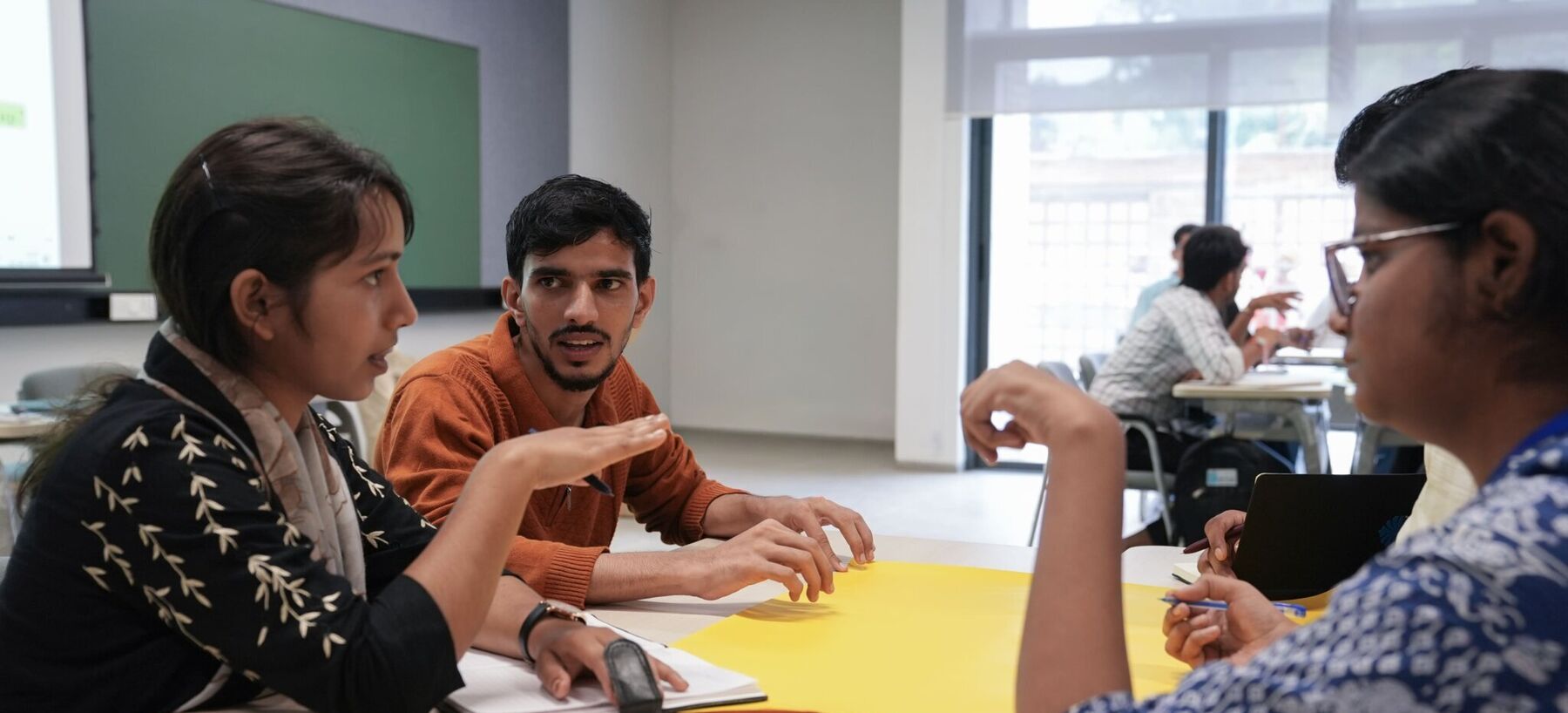
Career Opportunities in Social Sector
Over 6,800 students have graduated and been placed through our campus placement process, with more than 150 organisations visiting
Details
The social sector today offers a wide range of meaningful and professionally rewarding career opportunities for students who want to contribute to India’s development while building strong domain expertise in education, health, economics, development, and sustainability.
Social sector organisations our graduates work with
Graduates from Azim Premji University work across a wide range of organisations, including:
- Non-governmental organisations (NGOs), social enterprises, community-based organisations, civil society groups
- Consultancies, CSR departments, development banks
- Academic bodies, think-tanks/research groups
- Public or government sector
- Bilateral and multilateral agencies (for example, UNO)
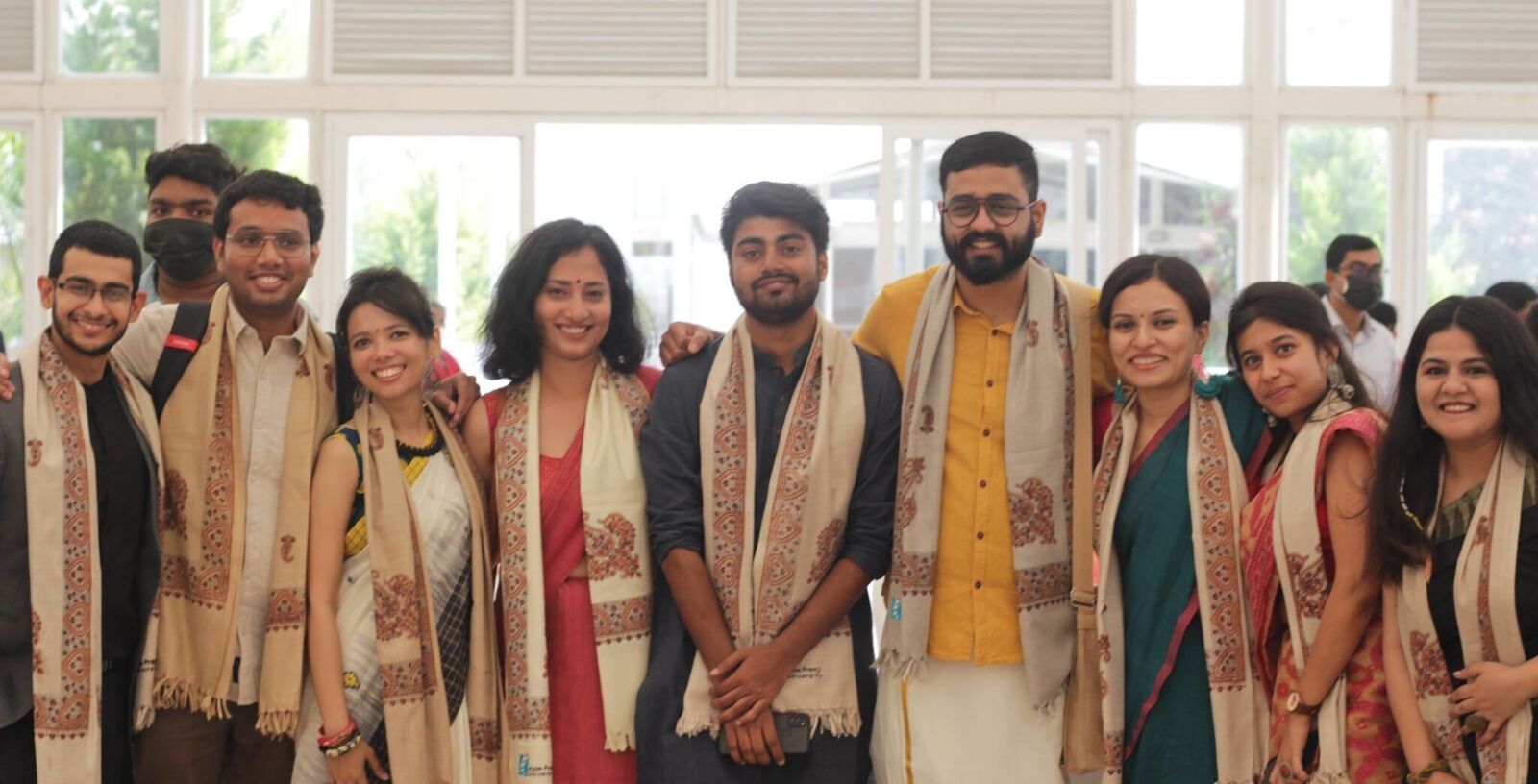
We aim to provide an educational experience that builds good understanding of the domain, deep social commitment, capabilities for action and a career in the social sector.
Our postgraduate programmes, key domains covered, key skills developed, and roles graduates are ready for
Executive MBA (Development Management) is a one-year, full-time programme that prepares experienced professionals to strengthen social sector organisations. It combines management learning with an understanding of development challenges in India, guided by equity, dignity, justice, and sustainability.
Participants learn to manage people, finances, programmes, and organisational relationships. Engagement with communities and organisations helps them develop the judgement and sensitivity these responsibilities require.
Programme structure
The one-year, 40-credit programme combines 12 core courses with electives and field practice. The core courses cover three areas:
Management principles, frameworks, and tools
- Organisation structure and design in the social sector
- Fundamentals of financial management
- Project planning and implementation
- People management in social sector organisations
- Stakeholders and relationship management
General competencies
- Understanding data for organisational decisions
- Storytelling through data
- Professional skills for development managers
- Monitoring and evaluation
Development perspectives and approaches
- Development challenges in the Indian context
- Understanding state institutions and governance
- Approaches to development interventions and action
Elective courses
Students choose three electives to deepen their understanding of areas that interest them, building on the foundation provided by the core courses.
Field practice
A two-week field immersion and an eight-week internship in a social sector organisation connect classroom learning with the experiences of communities and the practical demands of managing organisations.
MA in Development is a two-year interdisciplinary programme that equips students with the analytical and practical tools to engage with India’s most pressing development challenges. Drawing from the social sciences, humanities, and development theory, it cultivates critical thinkers who can navigate the complexity of livelihoods, land rights, women’s empowerment, governance, policy, and ecological sustainability, with over 16 weeks of direct field engagement built into the curriculum.
Key domains covered
- Development theory and history: From modernisation theory to rights-based and post-development critiques
- Indian political economy: Agrarian issues, urbanisation, caste, tribe, gender, ecological contestations
- Governance and institutions: Democratic processes, government structures, civil society mechanisms
- Ethics and social justice: Equity, justice, and pluralism in development practice
Key skills developed
- Programme planning, management, and implementation
- Qualitative and quantitative social research methods
- Monitoring, evaluation, and learning (MEL) frameworks
- Community engagement and participatory approaches
- Policy analysis, advocacy, and documentation
- Field coordination and ground-level stakeholder management
Roles graduates are ready for
Programme Manager/Programme Officer, Social Researcher / Analyst, Monitoring & Evaluation (M&E) Specialist, Field Coordinator, Policy and Advocacy Professional, Development Consultant (NGO or Government), Livelihoods or Rural Development Specialist
MA in Education is a two-year programme that prepares students for the complex, multi-layered demands of the education sector. It builds practitioners who can operate across teaching, curriculum design, teacher development, educational research, and policy analysis. Grounded in philosophy, sociology, and psychology, and enriched by direct field engagement, the programme develops both the theoretical rigour and practical sensibility needed to contribute meaningfully to school systems, education NGOs, government programmes, and research organisations.
Key domains covered
- Theory and philosophy of education: Purposes of education, learning theories, child development across social contexts
- Curriculum and pedagogy: Subject-specific pedagogy and assessment practices
- Education policy and reform: NCF 2005, RTE 2009, NCFTE 2009, NEP 2020, and their ground-level implications
- Socio-political context: Caste, class, gender, and institutional structures shaping educational access and quality
Key skills developed
- Curriculum design and development for diverse school contexts
- Pedagogical planning and in-service teacher development
- Educational research and field observation methods
- Assessment and learning outcome frameworks
- School management and institutional planning
- Policy analysis and advocacy communication
Roles graduates are ready for
Curriculum Developer/Designer, Teacher Educator/Trainer, Education Programme Manager/Officer, School Leadership/Academic Coordinator, Education Policy Analyst, Educational Researcher, M&E Specialist in Education Programmes
The MA in ECCE is a two-year, full-time programme designed to address a critical gap in India’s early childhood workforce by building a professional cadre of ECCE practitioners who contribute through field engagement and research. Grounded in developmental psychology, philosophy, sociology, and childhood studies, and enriched by extensive, graded field engagement across diverse settings — Anganwadis, creches, preschools, paediatric clinics, and early intervention settings — the programme prepares students for professional roles spanning teaching, teacher education, curriculum development, early intervention support, programme planning, research, and advocacy.
Key domains covered
- Theory & Foundations of ECCE — an interdisciplinary understanding of children and childhoods, drawing on developmental psychology, philosophy, sociology, and childhood studies
- Care, Development & Learning — theoretical perspectives and their continuum from birth to 8 years
- Curriculum & Pedagogy — curricular and pedagogical processes for children aged 0 – 3, 3 – 6, and 6 – 8 years
- Diversity, Inclusion & Indian Context — a critical perspective on children and childhoods in Indian and global contexts
Key skills developed
- Curriculum design and pedagogical planning for children from birth to 8 years
- Classroom teaching and facilitation of play-based, developmentally appropriate learning
- Early intervention support and developmental screening
- Teacher education and design of pre-service and in-service professional development
- Educational research and field-based inquiry in ECCE settings
- Programme planning, implementation, and management in early childhood settings
Roles graduates are ready for
ECCE Teacher/Educator, Curriculum Developer/Designer, Teacher Educator/Trainer, Early Intervention Specialist, ECCE Programme Manager/Officer, Researcher in Early Childhood Studies, Academic Coordinator (Preschool/Primary), Policy and Advocacy Professional (ECCE-focused NGOs or Government agencies)
MA in Economics (with specialisation in Development and Policy) is a two-year programme that builds technically rigorous economists firmly anchored in the realities of contemporary India. Students develop strong quantitative and analytical skills — including proficiency in R, Stata, and Python — alongside a deep understanding of economic theory and institutional context, bridged with structured field engagement, survey methodology, and a final-year thesis or internship.
Key domain covered
- Economic theory and development economics: Micro, macro, and development economics in the Indian context
- Indian economy and institutions: Real-world actors, institutions, and policy processes
- Quantitative methods and econometrics: Statistical modelling, causal inference, empirical research
- Public policy and Governance: Labour, agriculture, health, and education policy debates
Key skills developed
- Quantitative analysis using R, Stata, and Python
- Econometric modelling and impact evaluation
- Survey design and implementation using SurveyCTO
- Data management and analysis of large datasets
- Independent research design and thesis writing
- Policy-relevant research communication
Roles graduates are ready for
Research Associate/Analyst; Field Researcher; Monitoring & Evaluation (M&E) Specialist; Data/Policy Analyst; Economist with NGO, Think Tank, or Government, Programme Manager; PhD candidate in Economics or Development Studies
The Master of Public Health (MPH) is a two-year practice-oriented programme that prepares students for careers in public health with a strong commitment to equity, rights, and social justice. Rather than a biomedical focus, this MPH foregrounds the social determinants of health and the population orientation of public health, addressing the structural, economic, and political roots of health inequalities through deep community and health-system engagement.
Key domains covered
- Social determinants of health: How caste, class, gender, and region shape health outcomes in India
- Indian health systems: National Health Mission (NHM), government health programmes, civil society interventions
- Epidemiology and research methods: Disease surveillance and public health research design
- Health equity and ethics: Justice, rights, and equity as central to public health practice
Key skills developed
- Public health programme planning, management, and implementation
- Health systems analysis and strengthening
- Epidemiological and public health research methods
- Monitoring, evaluation, and health surveillance
- Community engagement and participatory health approaches
- Health policy analysis and advocacy
Roles graduates are ready for
Public Health Practitioner (Planning & Fundraising, Programme Manager/Officer/Coordinator, Health Systems Analyst, Monitoring & Evaluation (M&E) Officer, Public Health Researcher, Epidemiologist/Surveillance Officer, Community Health Programme Lead
The MSc in Climate Change and Sustainability is a rigorous interdisciplinary programme (one-year or two-year tracks) that prepares students to address the urgent challenges of climate change and environmental sustainability. Combining natural science with social, economic, and policy perspectives, it develops professionals who apply systems thinking and evidence-based analysis to real-world sustainability challenges across the private sector, government, civil society, and research.
Key domains covered
- Climate Science and Policy: Intergovernmental Panel on Climate Change (IPCC) frameworks, international agreements, national climate commitments
- Sustainability Frameworks: Sustainable Development Goals (SDGs), biodiversity targets, and Environmental, Social, and Governance (ESG) standards
- Indian Context and Vulnerability: Regional diversity and socio-economic compounding factors
- Systems Thinking: Interconnected socio-ecological systems and leverage points for intervention
Key skills developed
- Systems thinking and interdisciplinary environmental analysis
- Geospatial analysis and climate data interpretation
- Sustainability assessment, monitoring, and ESG reporting
- Climate vulnerability and risk analysis
- Independent sustainability research and project design
- Policy communication and advocacy on climate and sustainability
Roles graduates are ready for
Geospatial Analyst (Climate and Environmental Data), ESG Analyst, Sustainability Consultant, Climate Programme Officer (NGO or Government agencies), Biodiversity/Natural Resource Management Professional, Corporate Sustainability Manager, Environmental Researcher
Campus placements and career support
The University has an excellent placements track record. The placements team works closely with students to find meaningful jobs and careers for our graduates. To know all about Placements at Azim Premji University, click here.
Social enterprises
The University also has an active Social Enterprise Cell that encourages students to be entrepreneurs. To know how the Cell can help you network with individuals, incubators and like-minded groups towards creating your own social ventures, click here.
More than 30 of our graduates have established their own organisations/social enterprises and actively contributing in the domains of Education, Health, Livelihoods etc. For the glimpses of some of the ventures, click here.