
Publications & Resources
Our faculty, students and researchers work together everyday to contribute to a better world by grappling with urgent problems we are facing in India. We conduct rigorous work to produce high quality learning resources and publications to contribute to public discourse and social change. Here, we feature a sample from our work for everyone to access. You can explore featured resources, policies, and the latest publications from the University.
To explore all the work of our University, please visit our publications repository.
List of Publications & Resources
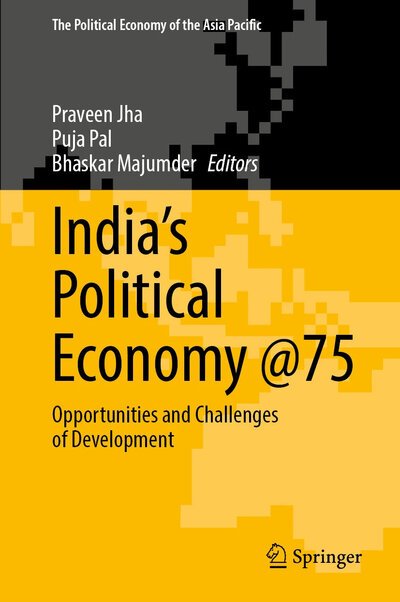
The Political Economy of Reform: A Comparison of Institutional Mechanisms Introduced by the UPA and NDA Governments
in Springer Nature

- Published
- Authors
Abstract
The author is interested in examining the process of introduction of reforms to explain why the same set of reforms failed to translate into growth in the 1990s in India but have had successful impacts on the economy in later political regimes. In particular, he wants to frame the process of introducing reforms within the socio-political context in India which brings unique challenges and political constraints. This book chapter intends to assess how political capacity and institutional mechanisms are key to understanding why reforms have failed in certain contexts.
Agrarian Change and Accumulation in Central India: Revisiting the Agrarian Question of Capital
in Journal of Agrarian Change
Article
- Published
- Authors
Abstract
In this paper, the researchers revisit the relevance of the agrarian question of capital and provide evidence of the dynamism in agriculture based on an empirical enquiry. They study the possibilities, channels and patterns of agrarian accumulation and its spillover on the nonagrarian accumulation dynamics in an agriculturally advanced region lying in central India. Based on this empirical study, they posit that the agrarian question of capital remains important at a regional scale in India. By bringing the focus back on the question of capital, the paper maps the contemporary agrarian change processes as being linked to the process of generation of agrarian surplus and contributes to the debate on the relevance of the agrarian question of capital in the Global South.
Authors: Sunit Arora, Deepak K Mishra
Links
Rural growth and distribution. Two narratives from the PLFS 2017 – 2023
in Azim Premji University

- Published
- Authors
Abstract
This paper investigates a striking puzzle in recent rural India: individual real wages have shown weak or stagnant growth for large segments of the labour force, while house hold per-capita incomes have risen materially and, in many cases, faster among lower deciles. Using microdata from the Periodic Labor Force Survey(PLFS)2017 – 2023, wedocu mentthese contrasting patterns and reconcile them. First we undertake a simple decompo sition that separates (i) average real wage per earner, (ii) the number of earners per house hold, and (iii) household size. Our empirical analysis shows that demographic and labour supply adjustments — chiefly an increase in earners per household driven by rising labour force participation and expanded non-farm employment — accountforthebulkofobserved gains in household per-capita income even as individual real wages remain subdued. Dis tributional analysis reveals that percentage growth has been relatively progressive (lower deciles recording larger proportional gains), but absolute level gaps persist and, in many cases, widen. We further disaggregate decile income by occupational category and find that lower deciles have seen significant shifts from casual work to self-employed status. Since the latter category provides, on average, higher incomes, this can partially explain muchof the observed progressivity of household income growth.
Authors:
Links
Growth, Employment, Productivity and Demographics in Indian States: Lessons from an Accounting Decomposition
in Azim Premji University
- Published
- Authors
Abstract
This paper examines the interaction between demographic change, employment absorption, and productivity growth across Indian states using a transparent accounting decomposition. Methodologically, we extend standard demographic dividend accounting by explicitly incorporating labor-market absorption, decomposing per capita Net State Domestic Product (NSDP) growth into output per employed worker, the employment-to-working-age population ratio, and the working-age share of the population. This employment-adjusted framework separates the mechanical contribution of age structure — the arithmetic demographic dividend — from labor-market dynamics and productivity performance. Using state-level data spanning 1994 – 2023, we document substantial heterogeneity in demographic transitions and growth experiences across Indian states. Declining dependency ratios provided a positive mechanical contribution to per capita growth in almost all states. However, this potential dividend was frequently muted — and in several cases fully offset — by falling employment-to-working-age ratios, particularly during the high-growth period from 2004 to 2017. At the same time, several better performing states, sustained high growth in output per working-age adult over long periods. A three-period decomposition (1994 – 2004, 2004 – 2017, and 2017 – 2023) reveals a marked shift in the composition of growth. While earlier phases were characterized by strong productivity growth alongside weak employment absorption, the post-2017 period exhibits a partial recovery in employment ratios accompanied by a broad-based slowdown in productivity per employed worker. We use the historical bounds implied by these decompositions to construct counterfactual growth trajectories, highlighting the limits of demographic advantage in the absence of employment-intensive productivity growth.
Links
Article
- Published
- Authors
Abstract
Biological invasions pose substantial economic threats globally, yet detailed cost assessments for many Global South nations, especially in Africa, remain scarce. This study presents the first comprehensive breakdown of the potential economic costs of biological invasions in Morocco. The researchers identified 343 invasive alien species, comprising approximately 1.11 percent of the country’s biodiversity. Using the InvaCost database, they retrieved cost estimates for 137 species with available records. They calculated the mean annual cost per species, adjusted these values both socio-economically (using World Bank Purchasing Power Parity) and climatically (via Köppen climatic regions), and extrapolated them based on species prevalence in Morocco. This yielded an estimated annual economic impact ranging from USD 1.14 billion (conservative adjusted value) to USD 5.13 billion (maximum scenario). Across all estimations, damage costs consistently exceeded management costs by one or two orders of magnitude. Despite challenges in extrapolating cost data from other regions, this study underscores the urgent need for more research and for targeted management and policy interventions to minimise the spread of invasive species and reduce their economic toll. Proactive measures in Morocco, coupled with international collaboration, will be critical to mitigating this socio-ecological crisis and ensuring long-term sustainability.
Authors: Jazila El Jamaai, Ahmed Taheri, Liliana Ballesteros-Mejia, Danish A. Ahmed, Alok Bang, Christophe Diagne, Franck Courchamp and Elena Angulo
Links

- Published
- Authors
Abstract
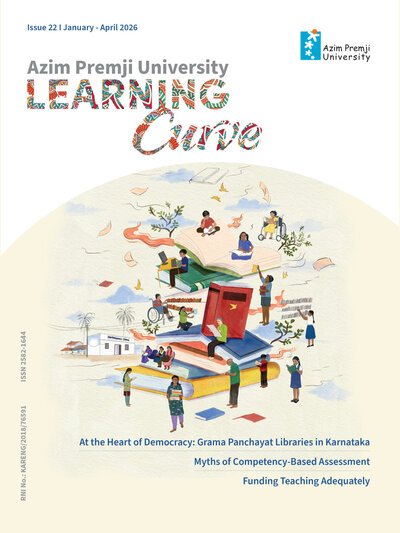
This issue of Learning Curve examines everyday challenges in India’s public education system, including rising household costs and persistent underfunding of teachers that affect access and learning. It highlights practical responses from the field, such as community libraries in Karnataka, a decentralised demonstration-based teacher professional development initiative from Madhya Pradesh, and inquiry-based learning through Bal Shodh Melas from the Uttarakhand experience. It also engages with policy debates, clarifying misconceptions around competency-based assessment and offering practical alternatives to the ongoing school consolidation and merger debate.
Links
Introduction to the Special Issue on Managing and Understanding Synanthropic Primates
in Springer Nature
Article
- Published
- Authors
Abstract
This Special Issue arises from the 2023 International Primatological Society symposium “Abundant Primate Populations: Challenges & Strategies for Coexistence.” The motivation for organising the symposium was to share information and stimulate discussion on how primatologists defined and understood “overabundance” in primate populations, the factors contributing to it, and methods for accurately estimating and modeling populations. This symposium contributed to the growing body of work showing that human-primate coexistence is a global challenge and perceived as problematic by some people who live alongside primates. In this Special Issue, the researchers explore key aspects of synanthropy, including cases where communities view primates as kin and actively engage with them, case studies of sites where a long history of coexistence has recently increased in conflict, the physiological and behavioral changes primates experience from living in close association with people, and strategies designed to foster sustainable coexistence. In this Special Issue, the researchers examine four key topics associated with synanthropy: 1) The dynamics that emerge when humans and synanthropic primates share spaces; 2) Sites with a long history of human-primate coexistence that has recently become conflict; 3) Primate physiological and behavioural change as a result of living alongside humans; and 4) Strategies to promote coexistence.
Authors:
Pebsworth, P. A., Dore, K. M., Hansen, M., Anand, S., & Zinner, D.
Links