
Publications & Resources
Our faculty, students and researchers work together everyday to contribute to a better world by grappling with urgent problems we are facing in India. We conduct rigorous work to produce high quality learning resources and publications to contribute to public discourse and social change. Here, we feature a sample from our work for everyone to access. You can explore featured resources, policies, and the latest publications from the University.
To explore all the work of our University, please visit our publications repository.
List of Publications & Resources

- Published
- Authors
- School of Development
Abstract
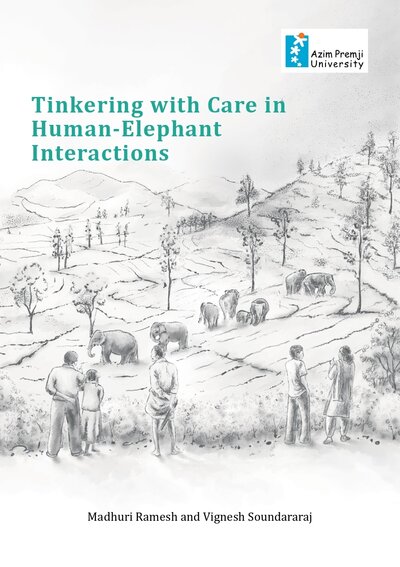
In the Valparai plateau in southern India, encounters between people and Asian elephants (Elephas maximus) are common and sometimes they result in conflict. Building on almost a year of fieldwork, this book presents a polyvocal account of how the Nature Conservation Foundation along with other actors such as the forest department, workers and management of tea plantation companies and ordinary residents engage in a range of care-ful and caring practices that enable people and elephants to share space and cultivate a sense of interspecies sociality. This book speaks to the anthropology of biodiversity conservation, human-wildlife coexistence and multispecies studies.
Authors: Madhuri Ramesh, Vignesh Soundararaj
Links
Realising Rights: A Handbook of Welfare in India
in Centre for the Study of the Indian Economy, Azim Premji University

- Published
- Authors
Abstract
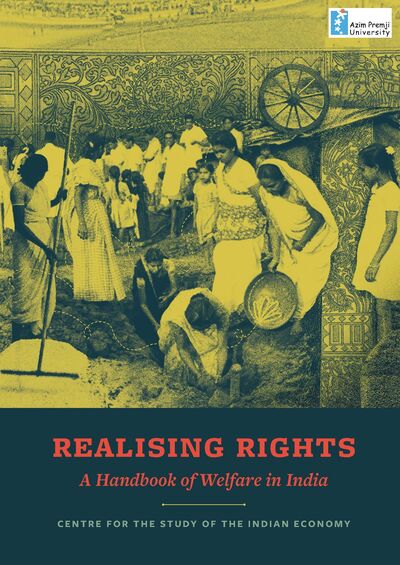
This handbook maps the major interventions of the Union government that together constitute India’s welfare regime. India’s welfare architecture affects the lives and livelihoods of hundreds of millions of people. Understanding how these programmes were created, how they have functioned, and the extent to which they achieve their stated objectives is a matter of considerable economic, social, and political importance. This volume seeks to provide a systematic assessment of these interventions and their place within India’s broader development trajectory. The handbook brings together 18 chapters across the major welfare domains and a set of cross-cutting themes. In addition to the macroeconomics of welfare, the domains covered are: maternity entitlements, the Integrated Child Development Services (ICDS), mid-day meals, the Public Distribution System (PDS), rural employment guarantee, social security pensions, school education, health, PM-JAY, the Right to Education Act, PM-KISAN, and state-level unconditional cash transfers. Chapters on social justice, social accountability, decentralisation and digitisation address the cross-cutting dimensions that shape delivery across the entire architecture.
Editors: Bhargav B S, Dipa Sinha, Rajendran Narayanan, Revati Mathai, Vijay Ram S
Support Files:
Links

- Published
- Authors
Abstract
Gender and Inclusive Development offers a timely and comprehensive exploration of gender mainstreaming across diverse sectors, domains, and regions. Drawing on global experiences and grounded in the framework of Agenda 2030 and the Sustainable Development Goals — particularly SDG 5 — this volume critically examines the evolution of gender equality strategies from Women in Development (WID) to Gender and Development (GAD). It highlights the transformative potential of gender-sensitive policy design and implementation, emphasising the need to dismantle discriminatory institutions and foster inclusive participation in political, economic, and social spheres. Through interdisciplinary contributions, the book engages with pressing questions around gender roles, decision-making, and inequality in development contexts. It presents empirical and theoretical insights that unpack the complexities of gender mainstreaming, offering a nuanced analytical lens to understand its challenges and opportunities. With a focus on real-world impact, the volume aims to inform policy, practice, and academic discourse, providing a blueprint for inclusive and transformative gender mainstreaming that can accelerate progress toward global gender parity.
Editors:
Links

- Published
- Authors
Abstract
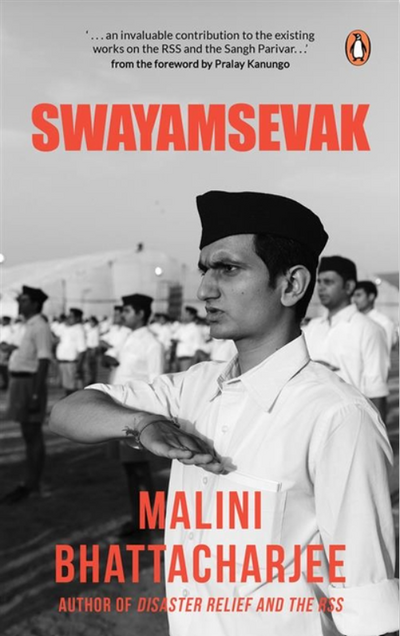
In September 2025, the Rashtriya Swayamsevak Sangh (RSS) completed a hundred years. Founded in 1925 by Dr Keshav Baliram Hedgewar with a small group of handpicked young men, the Sangh sought to reinvigorate Hindu society through sangathan (organization) and seva (service). What sustains the RSS a hundred years on? Who are the individuals who animate this vast and enduring organization? Are they conservative or modern, privileged or marginal, urban or rural? Swayamsevak explores these questions in depth. At its heart are ten compelling life stories of nine swayamsevaks and one sevika. Through these intimate portraits, the book foregrounds the everyday experiences, moral worlds, and motivations that shape their journeys, revealing the discipline, commitment to service, and quiet conviction that sustain the Sangh’s remarkable continuity and expansion. By restoring the swayamsevak to the centre of the narrative, this book opens up a rich and largely unexplored terrain and offers a nuanced and deeply human window into the RSS.
Links