
Publications & Resources
Our faculty, students and researchers work together everyday to contribute to a better world by grappling with urgent problems we are facing in India. We conduct rigorous work to produce high quality learning resources and publications to contribute to public discourse and social change. Here, we feature a sample from our work for everyone to access. You can explore featured resources, policies, and the latest publications from the University.
To explore all the work of our University, please visit our publications repository.

- Published
- Authors
- School of Development
Abstract
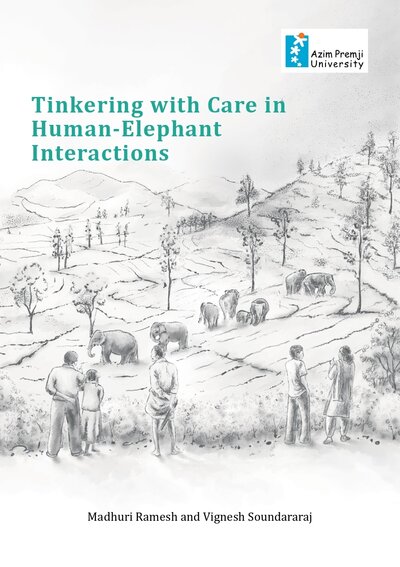
In the Valparai plateau in southern India, encounters between people and Asian elephants (Elephas maximus) are common and sometimes they result in conflict. Building on almost a year of fieldwork, this book presents a polyvocal account of how the Nature Conservation Foundation along with other actors such as the forest department, workers and management of tea plantation companies and ordinary residents engage in a range of care-ful and caring practices that enable people and elephants to share space and cultivate a sense of interspecies sociality. This book speaks to the anthropology of biodiversity conservation, human-wildlife coexistence and multispecies studies.
Authors: Madhuri Ramesh, Vignesh Soundararaj
Links
Book
Realising Rights: A Handbook of Welfare in India
in Centre for the Study of the Indian Economy, Azim Premji University

- Published
- Authors
Abstract
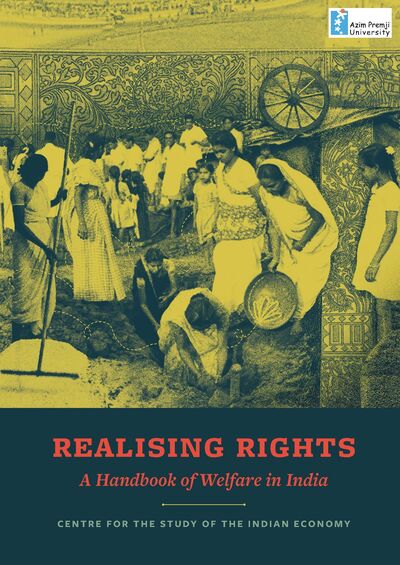
This handbook maps the major interventions of the Union government that together constitute India’s welfare regime. India’s welfare architecture affects the lives and livelihoods of hundreds of millions of people. Understanding how these programmes were created, how they have functioned, and the extent to which they achieve their stated objectives is a matter of considerable economic, social, and political importance. This volume seeks to provide a systematic assessment of these interventions and their place within India’s broader development trajectory. The handbook brings together 18 chapters across the major welfare domains and a set of cross-cutting themes. In addition to the macroeconomics of welfare, the domains covered are: maternity entitlements, the Integrated Child Development Services (ICDS), mid-day meals, the Public Distribution System (PDS), rural employment guarantee, social security pensions, school education, health, PM-JAY, the Right to Education Act, PM-KISAN, and state-level unconditional cash transfers. Chapters on social justice, social accountability, decentralisation and digitisation address the cross-cutting dimensions that shape delivery across the entire architecture.
Editors: Bhargav B S, Dipa Sinha, Rajendran Narayanan, Revati Mathai, Vijay Ram S
Support Files:
Links

- Published
- Authors
Abstract
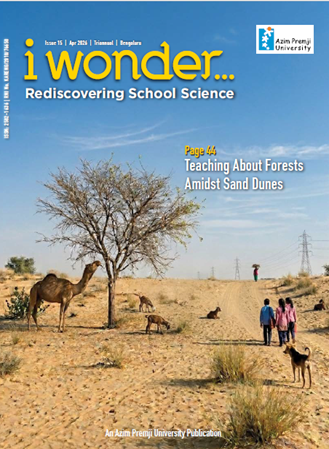
How can we use textbooks to teach our students about forests from direct observation of local ecosystems? In ‘Teaching about forests: Interpreting curricular aims’ a government school teacher explores national curricular aims within a state’s cultural history. ‘Teaching about forests amidst sand dunes’ shows how a teacher educator extends dense, wet forest examples to community-managed scrub forests in arid landscapes. ‘Teaching about forests in the laboratory of the real world’ uses a journalist’s lens to reveal the uneven impacts of conservation models on forest-dependent communities. Together, these stories show how we can use the textbook to turn our surrounding environments into living, breathing science classrooms.
Links

- Published
- Authors
Abstract
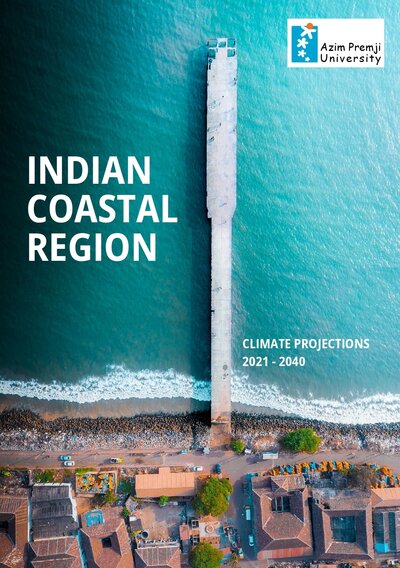
The Indian Coastline is a dynamic mosaic of diverse landscapes, stretching from the salt marshes of Kachchh to the fertile deltas of the East. Characterised by golden beaches, dense mangrove forests like the Sundarbans, and rugged rocky cliffs, it hosts a vibrant marine ecosystem rich in biodiversity. These coastal waters support millions of livelihoods through fishing and trade, while acting as a crucial buffer against monsoonal shifts and rising sea levels. This booklet offers a glimpse of how the climate of the Indian coastal region is expected to change in the coming decades. By using high-resolution data at a granular 25 x 25 km scale, this booklet provides precise climate projections that are essential for developing strategies to build climate resilience and adaptation. Derived from CMIP6 models corrected for regional bias, the booklet aims to help various stakeholders make informed decisions in the face of climate change. By providing precise climate projections, it helps various stakeholders — including policymakers, local authorities, and communities — prepare for specific risks in their regions. These insights will guide decisions on how to adapt to climate changes and mitigate risks, ensuring that strategies are practical and effective in safeguarding lives, livelihoods, and ecosystems across India. The insights presented here are based on the SSP2‑4.5 scenario which assumes that society will take moderate steps to reduce emissions and adapt to climate change, leading to a future with moderate effects.
Links


- Published
- Authors
Abstract
The March 2026 issue takes you on a journey – learning mathematics does have challenges and is all the more valuable because of these, but the role of the teacher is to scaffold this climb and to help students enjoy the view at each peak that they surmount. We discuss the need for, as well as the challenges of, conducting summative assessment at the primary level. But we also give you delightful wayside stops to stare at clocks, at posters of ten-frames, at activities with polyominoes, at interesting websites. Read on and enjoy!
- Published
- Authors
Abstract
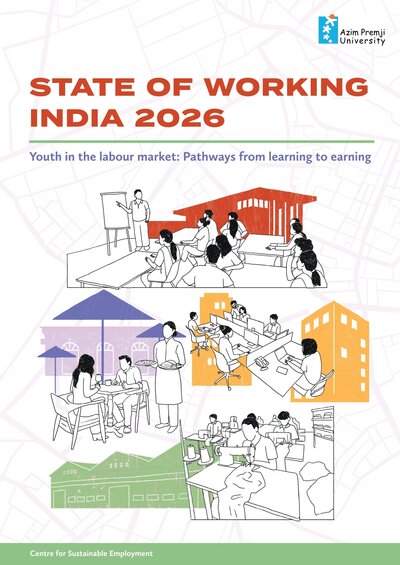
Youth in the Labour Market: Pathways from Learning to Earning
India is nearing the peak of its demographic dividend, with the share of the working-age population expected to begin declining after 2030. On the one hand, higher education in the country has become increasingly democratised with a rapid increase in the number of institutions. Graduate salaried earnings exceed non-graduates both at the time of entry into employment and over their lifetime. On the other hand, financial barriers continue to restrict access, particularly in professional fields such as engineering and medicine. The transition from education to employment remains a major challenge. The rise in the number of graduates has not been matched by commensurate growth in graduate employment. This year’s State of Working India report traces the arc of a young worker’s transition from school or college into employment, and how this has changed in the last forty years.
Report Files
Full Report — download PDF file
Executive Summary (PDF)
Tables (spreadsheet)
Results Appendix (PDF)
All Figures (Figures 1.1−4.7, Figures 4.8−7.10 )
Figures Data(spreadsheet)
Press Release (English | Hindi | Kannada)
Media Coverage (spreadsheet)
Links

- Published
- Authors
Abstract
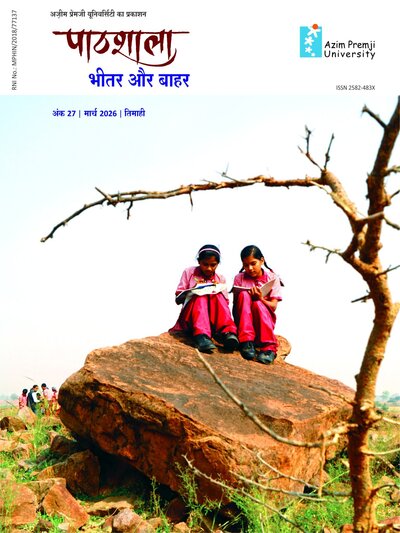
पाठशाला भीतर और बाहर का मार्च अंक शिक्षण के लिए उपयोगी अनुभवजन्य सामग्री को समेटे है। इस अंक में आप पढ़ेंगे कि विद्यार्थी उच्च कक्षाओं में तो पहुँच जाते हैं, लेकिन बहुत सारे विद्यार्थियों की दक्षता का स्तर पिछली कक्षाओं के अनुरूप नहीं बन पाता है। ऐसे में शिक्षकों के सम्मुख जो चुनौती होती है, उसका समाधान कैसे करें? शिक्षण योजना बनाकर शिक्षण करने के अनुभव और इससे बच्चों के सीखने में आए अन्तर को समझना हो या इबारती सवालों की इबारत में उलझे बच्चों की उलझन को सुलझाना, या ऐसे ही अन्य विविध विषयों पर बात करते लेख, सब इस अंक का हिस्सा हैं। हमेशा की तरह शिक्षकों की डायरी, इनसे मिलिए सहित, किताबों से दोस्ती और आइए, करके देखें जैसे सभी स्थाई स्तम्भ भी अंक में शामिल हैं।
Chapter in a Book
Taking Geography Seriously: Exploring Spatial Heterogeneity in Determining Childhood Malnutrition in Rural Maharashtra
in Economics of Development: Looking through Environmental and Behavioural Lens, Routledge

- Published
- Authors
Abstract
Childhood malnutrition is a significant challenge for India. Literature exploring the determinants of malnutrition has emphasised the importance of the local context. Malnutrition is an outcome of the various socio-economic forces that are entwined in local specificities. This makes it very important to keep the context in mind for designing policy and avoid “one-size-fits-all” solutions. In this context, this chapter takes a different route by exploring the spatial heterogeneity in the associations between variables known to impact childhood malnutrition. The variations in associations can be learnt from the data instead of being specified in an ad hoc a priori manner. This can give better insights into the spatiality of the context within which socio-economic processes interact to produce malnutrition. This analysis is performed in the context of rural Maharashtra using Mission Antyodaya and several other databases.
Links

- Published
- Authors
Abstract
The COVID-19 pandemic and the subsequent nationwide lockdown in India had a profound impact on migrant workers, who were forced to return home due to job losses and lack of livelihood opportunities. This mass movement of people led to a humanitarian crisis, with thousands of migrants stranded without proper food or shelter on their long journeys home. This chapter presents narratives of migrant workers, their movement from one place to another during the pandemic, and the challenges they faced along the way. While migrants undertook gruelling journeys and lived through uncertain living conditions during the pandemic, many people in cities led a relatively sedentary lifestyle. This is not to argue that urban dwellers were unaffected by the pandemic. As they coped with increased anxiety and social isolation, the migrants had to confront substantial and unforeseen difficulties related to mobility and access to necessities. The chapter presents narratives of affected migrant labourers compiled by a citizens’ collective, Project Rebuilding Livelihoods (PRL). PRL worked to provide rations and financial and medical aid to distressed migrant labourers hailing from different parts of India.
Article
Policy Evaluation in the Absence of Survey Data: Customised Border Designs With Satellite Data
in Journal of Agricultural Economics
Article
- Published
- Authors
Abstract
Developing country governments often launch new agricultural programmes without collecting pre-implementation survey data, making it difficult to evaluate the effects of such programmes. Leveraging the flexibility of granular pixel-level satellite panel data and a well-developed quasi-experimental policy evaluation design, we study a programme where pre-implementation data is unavailable. We estimate the effect of cash transfers on agricultural productivity in Telangana, India. Treatment and control regions are within 10 km on either side of the state border. They are identical in all respects except for the difference in exposure to policy treatment. Agricultural productivity increased in the major monsoon cropping season due to the cash transfer programme. The findings also reveal that cash transfers helped reduce productivity gaps between irrigated and rainfed agricultural areas. Our results are robust to two different sources of satellite data, three alternative indicators of productivity, two rounds of full-scale resampling, 100 rounds of small-scale resampling and three alternative border designs. Placebo regressions of two previous years also confirm our results. This approach to policy evaluation is applicable anywhere satellite data are available in the world.
Authors: Muddasir Ahmad Akhoon, Abhishek Shaw, Vidya Vemireddy
Links
Chapter in a Book
The Political Economy of Reform: A Comparison of Institutional Mechanisms Introduced by the UPA and NDA Governments
in Springer Nature

- Published
- Authors
Abstract
The author is interested in examining the process of introduction of reforms to explain why the same set of reforms failed to translate into growth in the 1990s in India but have had successful impacts on the economy in later political regimes. In particular, he wants to frame the process of introducing reforms within the socio-political context in India which brings unique challenges and political constraints. This book chapter intends to assess how political capacity and institutional mechanisms are key to understanding why reforms have failed in certain contexts.
Article
Agrarian Change and Accumulation in Central India: Revisiting the Agrarian Question of Capital
in Journal of Agrarian Change
Article
- Published
- Authors
Abstract
In this paper, the researchers revisit the relevance of the agrarian question of capital and provide evidence of the dynamism in agriculture based on an empirical enquiry. They study the possibilities, channels and patterns of agrarian accumulation and its spillover on the nonagrarian accumulation dynamics in an agriculturally advanced region lying in central India. Based on this empirical study, they posit that the agrarian question of capital remains important at a regional scale in India. By bringing the focus back on the question of capital, the paper maps the contemporary agrarian change processes as being linked to the process of generation of agrarian surplus and contributes to the debate on the relevance of the agrarian question of capital in the Global South.
Authors: Sunit Arora, Deepak K Mishra
Links
Article
- Published
- Authors
Abstract
Biological invasions pose substantial economic threats globally, yet detailed cost assessments for many Global South nations, especially in Africa, remain scarce. This study presents the first comprehensive breakdown of the potential economic costs of biological invasions in Morocco. The researchers identified 343 invasive alien species, comprising approximately 1.11 percent of the country’s biodiversity. Using the InvaCost database, they retrieved cost estimates for 137 species with available records. They calculated the mean annual cost per species, adjusted these values both socio-economically (using World Bank Purchasing Power Parity) and climatically (via Köppen climatic regions), and extrapolated them based on species prevalence in Morocco. This yielded an estimated annual economic impact ranging from USD 1.14 billion (conservative adjusted value) to USD 5.13 billion (maximum scenario). Across all estimations, damage costs consistently exceeded management costs by one or two orders of magnitude. Despite challenges in extrapolating cost data from other regions, this study underscores the urgent need for more research and for targeted management and policy interventions to minimise the spread of invasive species and reduce their economic toll. Proactive measures in Morocco, coupled with international collaboration, will be critical to mitigating this socio-ecological crisis and ensuring long-term sustainability.
Authors: Jazila El Jamaai, Ahmed Taheri, Liliana Ballesteros-Mejia, Danish A. Ahmed, Alok Bang, Christophe Diagne, Franck Courchamp and Elena Angulo
Links
- Published
- Authors
Abstract
This issue of Learning Curve examines everyday challenges in India’s public education system, including rising household costs and persistent underfunding of teachers that affect access and learning. It highlights practical responses from the field, such as community libraries in Karnataka, a decentralised demonstration-based teacher professional development initiative from Madhya Pradesh, and inquiry-based learning through Bal Shodh Melas from the Uttarakhand experience. It also engages with policy debates, clarifying misconceptions around competency-based assessment and offering practical alternatives to the ongoing school consolidation and merger debate.
Links