
Publications & Resources
Our faculty, students and researchers work together everyday to contribute to a better world by grappling with urgent problems we are facing in India. We conduct rigorous work to produce high quality learning resources and publications to contribute to public discourse and social change. Here, we feature a sample from our work for everyone to access. You can explore featured resources, policies, and the latest publications from the University.
To explore all the work of our University, please visit our publications repository.
List of Publications & Resources

- Published
- Authors
Abstract
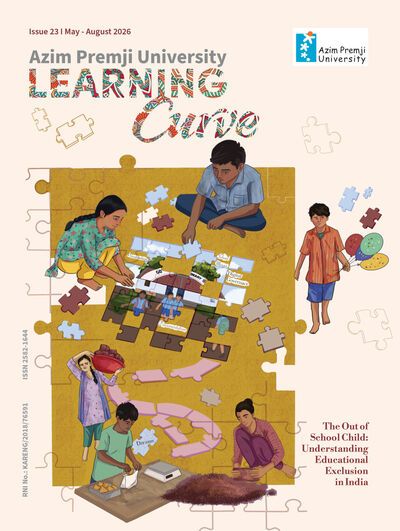
The education system has to ensure children can remain in school, even when life around them is difficult. A child’s opportunities are determined long before they are old enough to make choices.
What happens to them at two years of age determines what is open to them at twelve years; what happens to them in a classroom dictates whether they will have choices later in life. If any one of these things is neglected, then there is a child somewhere who will suffer the consequences.
The articles in this issue of Learning Curve examine these challenges and more.
Links

- Published
- Authors
Abstract
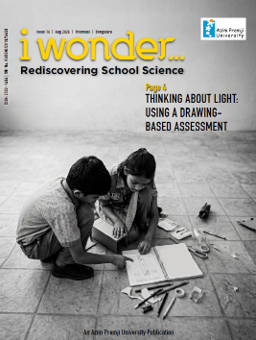
How can we help students make sense of everyday observations to build a deeper scientific understanding of light? In ‘Thinking about light: Using a drawing-based assessment’, the author shows how inviting students to draw light paths can reveal hidden assumptions and strengthen scientific thinking. In ‘Thinking about light: Using a sequence of connected investigations’, the author shows how prompting students to connect ideas across investigations helps them bridge gaps between observation and explanation to build a coherent conceptual framework. Together, these articles show how classroom instruction can encourage students to use their own observations to construct, compare, and refine explanations of how light behaves.
Links
India’s Economy in the last decade: a view through the Flow of Funds
in Azim Premji University

- Published
- Authors
Abstract
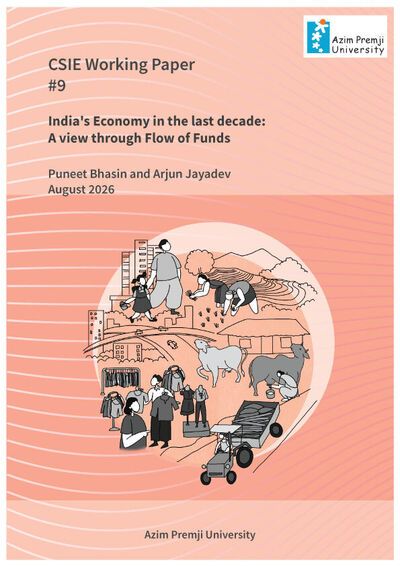
Using the RBI’s Flow of Funds data, this paper examines changes in India’s sectoral balance sheets between FY2011-12 and FY2023-24. It confirms two longstanding features: households remain the dominant creditor and government the dominant borrower. It identifies a break in the historical stability of household asset portfolios, with savings increasingly moving into mutual funds, insurance, and pension products, though deposits remain the largest asset class. It further finds that deleveraging has left corporate balance sheets healthier, and that non-banking financial institutions have displaced banks as the dominant holders of government debt. The paper then draws out four macroeconomic insights: personal consumption appears increasingly supported by credit; private investment remains tepid on weak demand, despite repaired balance sheets; non-banking intermediation has deepened capital markets while raising exposure to market and regulatory dynamics; and persistent current account deficits leave India’s growth dependent on mobile foreign capital.
Authors:
Links