
Publications & Resources
Our faculty, students and researchers work together everyday to contribute to a better world by grappling with urgent problems we are facing in India. We conduct rigorous work to produce high quality learning resources and publications to contribute to public discourse and social change. Here, we feature a sample from our work for everyone to access. You can explore featured resources, policies, and the latest publications from the University.
To explore all the work of our University, please visit our publications repository.
List of Publications & Resources

- Published
- Authors
Abstract
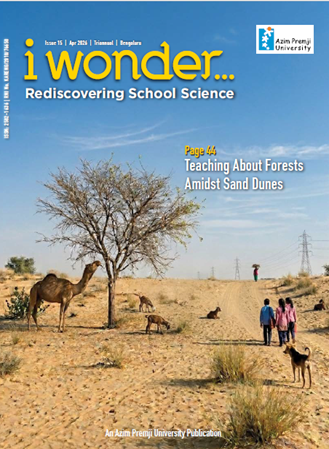
How can we use textbooks to teach our students about forests from direct observation of local ecosystems? In ‘Teaching about forests: Interpreting curricular aims’ a government school teacher explores national curricular aims within a state’s cultural history. ‘Teaching about forests amidst sand dunes’ shows how a teacher educator extends dense, wet forest examples to community-managed scrub forests in arid landscapes. ‘Teaching about forests in the laboratory of the real world’ uses a journalist’s lens to reveal the uneven impacts of conservation models on forest-dependent communities. Together, these stories show how we can use the textbook to turn our surrounding environments into living, breathing science classrooms.

- Published
- Authors
Abstract
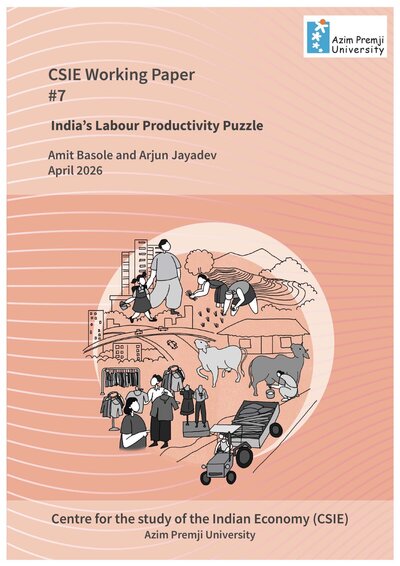
This paper documents that despite relatively robust output growth, India has experienced a marked and puzzling slowdown in labour productivity over the last decade. This we argue, is partly because of a intensification in dualism. While employment rates have risen, across most kinds of occupations, there is a proportionately greater shift toward self-employment and informal activities (especially among women), which are lower productivity sectors. Overall we document a sustained reversal in labour reallocation toward lower-productivity sectors, especially towards agriculture. We show that this pattern is unusual in international perspective. Sectoral, household, and gender-based evidence indicates that rising per capita incomes have been sustained through labour intensification despite stagnant or declining earnings per worker. An additional and puzzling fact is that there has been a decline in labour productivity growth even in larger firms. Taken together, the findings point to an intensification of dualism-with some growth in formal higher value added activity being offset by much larger growth in activity in lower value added sectors.
Authors:
Links

- Published
- Authors
Abstract
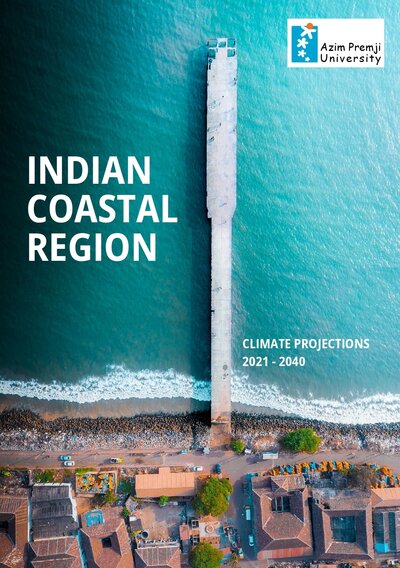
The Indian Coastline is a dynamic mosaic of diverse landscapes, stretching from the salt marshes of Kachchh to the fertile deltas of the East. Characterised by golden beaches, dense mangrove forests like the Sundarbans, and rugged rocky cliffs, it hosts a vibrant marine ecosystem rich in biodiversity. These coastal waters support millions of livelihoods through fishing and trade, while acting as a crucial buffer against monsoonal shifts and rising sea levels. This booklet offers a glimpse of how the climate of the Indian coastal region is expected to change in the coming decades. By using high-resolution data at a granular 25 x 25 km scale, this booklet provides precise climate projections that are essential for developing strategies to build climate resilience and adaptation. Derived from CMIP6 models corrected for regional bias, the booklet aims to help various stakeholders make informed decisions in the face of climate change. By providing precise climate projections, it helps various stakeholders — including policymakers, local authorities, and communities — prepare for specific risks in their regions. These insights will guide decisions on how to adapt to climate changes and mitigate risks, ensuring that strategies are practical and effective in safeguarding lives, livelihoods, and ecosystems across India. The insights presented here are based on the SSP2‑4.5 scenario which assumes that society will take moderate steps to reduce emissions and adapt to climate change, leading to a future with moderate effects.
Links
Researching with Children Diagnosed with Neurodevelopmental Disorders in India: A Reflective Account
in Springer Nature

- Published
- Authors
Abstract
Children’s participation in research has evolved significantly in recent times, reflecting a shift from their historical exclusion. Ethical and scientific advancements have encouraged researchers to engage with children as active contributors to knowledge. In psychology, children’s involvement in research has improved the understanding of their mental health outcomes and has led to the development of more relevant, age-specific interventions. However, researchers continue to experience logistical and ethical challenges when working with children. These challenges range from obtaining informed consent from parents to mitigating power imbalances during the procedure of the study. This chapter is based on my doctoral research that explores the effects of visual brainwave entrainment (BWE) on children’s cognitive performance. In my research, I worked with children diagnosed with neurodevelopmental disorders, namely, attention-deficit hyperactivity disorder (ADHD) and autism. The chapter outlines five key lessons that I learned from engaging with the children during my fieldwork. The chapter highlights practices such as conceptualizing age-appropriate research protocols, facilitating child-friendly and inclusive environments, and offering appropriate ‘ethical gifts’ that help in gaining trust, mitigating stress, and promoting mutual engagement. The chapter also contextualizes these lessons within India’s cultural and institutional landscape, emphasizing how stigma, inconsistent research infrastructure, and child – adult hierarchy impact ethical research practices. It offers practical guidance for researchers in low-and-middle-income countries aspiring to work with children by bridging theoretical knowledge with on-ground realities. This reflective narrative underscores the importance of relational ethics, humility, and child-centred approaches in conducting meaningful research with vulnerable populations, such as children with neurodevelopmental disorders.
Author:
Links