
Publications & Resources
Our faculty, students and researchers work together everyday to contribute to a better world by grappling with urgent problems we are facing in India. We conduct rigorous work to produce high quality learning resources and publications to contribute to public discourse and social change. Here, we feature a sample from our work for everyone to access. You can explore featured resources, policies, and the latest publications from the University.
To explore all the work of our University, please visit our publications repository.
List of Publications & Resources
Long-Run Performance of the Organised Manufacturing Sector in India- Aggregate Trends and Industry-level Variation
in Azim Premji University

- Published
- Authors
Abstract
Despite its weak performance in terms of job creation in recent years, the organised manufacture sector remains vital to employment policy. This paper investigates the aggregate trends in this sector, in employment, output, labour-capital ratio, as well as wage share and wage rates at the three-digit NIC level over a long period from 1983 to 2016 using the Annual Survey of Industries data. We show that three distinct sub-periods can be identified within the overall period. Further, using shift-share decomposition we show that most of the decline in the L/K ratio can be explained by within industry changes. Finally, we analyze industries with respect to their capacity to deliver job growth as well as wage growth.
Authors:
- Amit Basole
- Amay Narayan
Links
A call for development of a growth standard to measure malnutrition of school-age children
in Azim Premji University

- Published
- Authors
Abstract
There is no globally established standard for measuring malnutrition among children aged 5 – 18 years. Growth references are used as a standard but there are many limitations to using such references to assess nutritional status of Indian children. As per the World Health Organization, standards and references both serve as a basis for comparison, but each enables a different interpretation. A standard defines how children should grow; and deviations from the pattern it prescribes are evidence of abnormal growth. A reference, on the other hand, does not provide a basis for such value judgments, although in practice, references often are mistakenly used as standards. This paper has conducted a methodological review of prevalence of malnutrition from openly accessible literature pertaining to assessment of nutritional status of school-going children in India from the year 2000 to 2016. The methodological review reveals that a combination of different national and international references have been used in assessing nutritional status of Indian children. International references includes NCHS 1977, CDC 2000, WHO 2007, IOTF 2012 extended Body Mass Index (BMI) cut- offs, Gomez classification, Waterlow’s classification and national references such as — Agarwal standards, ICMR reference values, IAP reference and BMI cut-off for overweight & obesity of Indian children. A new national growth reference has been recently developed by Marwaha and others (2011) for BMI, but no assessment of nutritional status using this reference was found. Each of these methods was then applied to a database containing height, weight, age and sex of 5340 school-going children. Though there are three nutritional indicators for school-age children, majority of the study conducted used only BMI chart to assess nutritional status. Therefore BMI-for-age is considered for the analysis to i) understand the methodological application of the above growth references ii) compare the differences in nutritional status and iii) recommend an appropriate growth reference (from those available) to assess the nutritional status of Indian school-age children. The literature review also reveals that malnutrition among school-age children is prevalent in India. There is no national level data available to support this judgement across regions, gender and caste. Given a likely high prevalence of malnutrition, this paper calls for the development of a growth standard to measure malnutrition among school-age children in India. Though this paper is focused on malnutrition, it simultaneously provides similar importance to over growth. A growth Standard therefore fills up such gaps in measuring double burden of malnutrition i.e. under-nutrition and over-nutrition.
Links

- Published
- Authors
Abstract
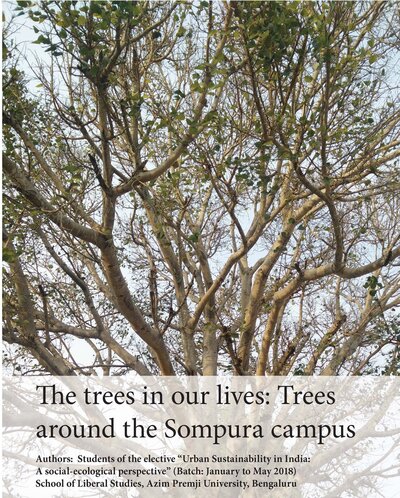
Sompura falls under Anekal taluk of Bengaluru, and the campus is located in a typical peri-urban interface with rural and urban features existing alongside each other. Thus, in this peri-urban landscape, it is not an uncommon sight to see cows saunter along paved streets followed by their herders amidst the upcoming layouts and apartment complexes. It is in this rapidly urbanising landscape, that the undergraduate students at the University who had taken the elective “Urban sustainability in India: A social-ecological perspective” were involved in an exercise to map the trees in the vicinity of the campus. In all, the students mapped 63 trees of 20 different species. The trees included both native and introduced species. The more common trees that the students identified were coconut, neem and tamarind, all of which have multiple uses. They also observed the peepal, a keystone species, in the landscape, as well as fruit bearing trees such as jamun, mango and jackfruit. The students also identified a specimen each of the Indian hog plum and the gooseberry. The ornamental flowering species they recorded included the African tulip with its bright red flowers, the more subdued pink poui, the fragrant Indian cork and the canopy of blue jacaranda. The students also identified and measured teak and casuarina that are popular plantation species grown for their wood. The canopy trees that are popular avenue trees in Bengaluru included the rain tree and Indian beech. Mesquite, an aggressive invasive, was the other species that the students could spot in the landscape. They also recorded the large leaved Indian almond and the camel-foot tree that gets its name from the hoofed shape of its leaves.
Links


- Published
- Authors
Abstract
Preponderance of small (that is, less than 10 workers) sized manufacturing establishments in India is said to reject their inability to growth in size on account of prohibitive cost of regulatory compliance (and the associated corruption). Similarly, the “U” shaped (or bi-modal) distribution of manufacturing employment by size of establishment or enterprise – popularly termed the “missing middle” – is argued to be the outcome of the rigid labour laws, adversely a acting productivity growth. Do the foregoing propositions represent hard facts, or artefacts of mis-measurement and misinterpretation of the evidence? The paper contends that it is the latter: the observed employment distribution by size is more likely to reject the widespread and growing evasion of o3cial registration, and under-reporting or mis-representation in the administrative data. Further, the wide schism observed between the organised (formal) and unorganised (informal) labour markets represents persistence of surplus labour, and organisational dualism – a la Hella Myint — on account of technology and organisation of production in the modern sector; and perhaps not on account of policy induced rigidities in the labour market, as many contend.
Author:
- R.Nagaraj
Links
The Fourth Industrial Revolution- Realizing India’s Demographic Dividend
in Azim Premji University
- Published
- Authors
Abstract
This paper attempts to explore the avenues for future jobs given the impact of technology in the form of internet of things, robots, cloud computing, nano technology, automization of manufacturing etc. and the measures in place to address these challenges. The paper explores the labour market from the supply side, the demographic advantage that India has along with the constraints involved in converting the advantage into a dividend. The demographic spread of the labour force is geographically different in that the South we have an ageing workforce with longer life expectancy while in the North and Central India the new entrants to the labour market is the youth. The demographic advantage is concentrated in the North. This is then addressed against the backdrop of the impact of the Fourth Industrial Revolution on jobs and the skill gaps that exist in addressing them. The skill gap therefore needs to be addressed differently. While the policy focus is on skilling/up-skilling and re-skilling the emphasis of each of these components differ according to the geographical spread of the demographic advantage. There should be continuous upgrading of the training curriculum to incorporate the technological advancements. More number of youth should be motivated to opt for vocational courses that enhance their skill set and employability to enable India convert its demographic advantage into dividend.
Author:
- A. Srija
Links
The Indian Labour Market- A Fallacy, Two Looming Crises and a Silent Tragedy
in Azim Premji University
- Published
- Authors
Abstract
Analyses of the Indian labour market have been been characterized by the lack of recognition of one major fallacy or myth, two looming crises, and a silent tragedy resulting from unrealized expectations. The fallacy is that 12 mn join the Indian labour force every year, looking for work. The first of the two looming crisis is that millions need and wish to agriculture behind in search of non-agricultural work, but at least since 2011-12 they are not finding enough work to pull them away from agriculture. The second looming crisis is that youth are joining the age group of 14+ in growing numbers, each year with higher and higher levels of education, and are not finding nonagricultural work – despite their aspiration being only for such work. The final concern, which is simmering rather than reached the ‘ready-to-boil-over’ stage, is the sub-group of the second looming crisis of youth who are getting better educated, is for girls who have reached gender parity in secondary education, and hence aspire for nonagricultural work. All three categories of workers have plenty among them who are disheartened workers, for whom there are too few non-agricultural opportunities.
Author:
- Santosh Mehrotra
Links
Analysis of Payment Delays and Delay Compensation in MGNREGA
in Azim Premji University

- Published
- Authors
Abstract
The Mahatma Gandhi National Rural Employment Guarantee Act (MGNREGA) provides 100 days of work in a year for every rural household at a minimum wage. Because of MGNREGA, for the first time in the country, a transaction-based management information system (MIS) has been made available in the public domain, a feather in the cap of transparency. An essential safeguard in MGNREGA is delay compensation to be paid when workers do not receive wages within 15 days of completion of work. Despite several attempted measures, payment delays are rampant and the method of calculating delay compensation is flawed leading to massive under-calculation of the true payable compensation. By analysing over 90 lakh transactions for the financial year 2016 – 2017 across 10 states, we observe that only 21% of the payments were made on time and the central government alone was taking an average of over 50 days to electronically transfer wages. On aggregate, in our sample, while the true total delay compensation payable is about Rs. 36 crores, only about Rs. 15.6 crores is being calculated in the MIS. The Ministry of Rural Development (MoRD) has acknowledged the correctness of the findings and the Supreme Court of India has also issued Orders to the MoRD based on these findings.
Authors:
- Rajendran Narayanan
- Sakina Dhorajiwala
- Rajesh Golani
Links
- Published
- Authors
Abstract
The policymakers, particularly on the right side of the aisle, have traditionally stigmatized any form of environmental regulations, as being a detrimental practice, which raises the cost of production, disproportionately affects the small businesses, and imposes expenses on the economy that tend to stifle economic growth and cut levels of employment (Murphy et al. [2015]). So, what this argument does is to essentially juxtapose environmental regulations against the growth and job opportunities in any economy. In the specific context of developing countries, this raises serious concerns about any environmental regulations as these economies are already reeling under problems of severe unemployment and poverty. Therefore, any discussion on clean energy in the context of a developing economy is usually taken with a grain of salt since it somehow tends to generate a feeling among the politicians as well as the policymakers that it will inflict hardships on the economy.
Authors:
- Rohit Azad
- Shouvik Chakraborty
Links

- Published
- Authors
Abstract
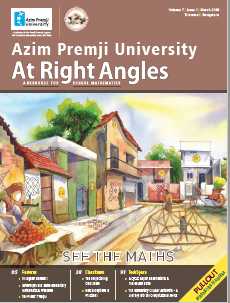
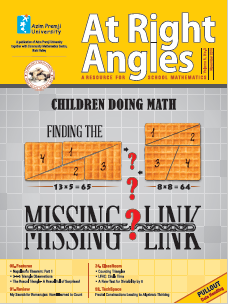
Volume 7 Issue 1: This issue of AtRiA welcomes you to the Math Village. Where house numbers, rangoli patterns, piles of fruit and even a child’s amusement device speaks to the instictive mathematician in each of us.
Read about these in Triangular Numbers in Features and the House Number Problem in ClassRoom. Appropriately, many of these problems were prompted by Ramanujan in his village. The Review is of a book which was used to teach a pre-course at the School of Arts and Sciences, Azim Premji University and it syncs perfectly with the theme of finding mathematics in the most unexpected places.
Hone up on how to create a Conjecturing ClassRoom or generate Elementary Cellular Automata! Misconceptions in Fractions and an analysis of common errors in Algebra give an insight into students’ struggles with mathematics and the PullOut, too, focuses on Algebra and how to make a seamless move from Arithmetic to Algebra.
Links
Lakes of Bengaluru : the once living, but now endangered peri-urban commons
in Azim Premji University

- Published
- Authors
Abstract
Cities of the Global South are expanding both spatially and demographically. While urbanization may contribute to economic growth and employment generation, the impacts of urbanization on sustainability of cities is manifold. One area that is witnessing rapid land use change as a result of urbanization is the peri-urban interface of cities in India. This is especially true in the case of natural spaces that are also common pool resources. In this working paper, we examine the transformation of lakes in the peri-urban interface of Bengaluru city in the south Indian state of Karnataka. Based on GPS observations and interviews, we found that lakes in our study area varied in status and use: ranging from those in a good condition that served multiple uses to those converted to other forms of land use, resulting in loss of all services. We also accessed archival information to underscore the role that one of the lakes in the study area played in serving as a source of water during a time of scarcity. Using the example of lakes in Bengaluru, this paper presents the threats faced by commons in the peri-urban interface of rapidly expanding cities in the Global South. These threats are not restricted to changes to land use alone, but also concern their transformation into recreational sites at the cost of users who depend on them for livelihood and subsistence. We argue for management of the lakes in the peri-urban interface not only as ecosystems that supports ecological and economic uses, but as commons that are a reflection of the diversity and heterogeneity that cities such as Bengaluru represent.
Links

- Published
- Authors
Abstract
It is different for each one of us which is why when people reminisce about their school, opinions can differ about the same subject or teacher. The teacher, for her part, also has unique relationships with the class she goes to. It is a dynamic, organic process. The same concern, involvement and thoughtfulness that was evident in the experiences recounted in the first part are present in the narratives of this Issue too.
Links
The Evolution of India’s Industrial Labour Share and its Correlates
in Azim Premji University

- Published
- Authors
Abstract
There has been substantial recent interest in the decline of labour shares across countries. For the most part, attention has been focused on developed countries. We examine the evolution of India’s labour share in its formal industrial sector from 1983- 2016. Using two datasets corresponding to sectoral aggregate data and plant-level data respectively, we document a secular decline in the labour share across all sectors from 1983, with a stabilisation at very low levels (around 8 to 10 percent) starting around 2005. We then use the plant-level data to identify correlates that illuminate reasons for the overall decline in the labour share. We find strong evidence to support multiple causes: increased capital intensity, greater informalisation, greater privatisation, and productivity increases in larger firms. As such, we suggest that the declines in labour share experienced are due to a composite set of factors. Conversely, other potential explanations (e.g. regional variation in the labour share) have less explanatory power.
Authors:
- Arjun Jayadev
- Amay Narayan
Links
An Approach to the Problem of Employment in India
in Azim Premji University
- Published
- Authors
Abstract
The challenge of employment in the Indian economy, especially after it growth acceleration since the mid-1980s, relates to its quality rather than its quantity. While employment growth has kept pace with the labour force over the long run, what has grown is informal employment. The coexistence of rapid capital accumulation, robust output growth and lack of growth of formal employment can be understood using the well-known Harris-Todaro model of a dual economy. This framework highlights the key role of the wage gap between the modern and traditional sectors as a determinant of urban informal employment. Hence, one of the most effective and egalitarian ways to address the employment problem is to adopt policies to increase agricultural productivity and income, which can reduce the wage gap. Since crop yields in India are far lower than many other countries in the world, including China, Brazil, and Bangladesh, there is ample scope for land-augmenting and labour-absorbing technological change in Indian agriculture. Efforts to ramp up industrialization should be taken up in earnest only after the wage gap has been narrowed significantly.
Author:
- Deepankar Basu
Links
Understanding the Performance of India’s Manufacturing Sector- Evidence from Firm Level Data
in Azim Premji University

- Published
- Authors
Abstract
India’s overall economic performance over the last fifteen years has been outstanding, with the economy growing at an average of over 7% p.a. Growth has been service-led with the services sector accounting for over 60% of GDP growth over the period. Importantly, India’s structural transformation has been marked by a shift straight from agriculture to services led growth, leapfrogging manufacturing. The problem with this pattern of growth has been that it has generated relatively fewer opportunities of employment generation. The role of the manufacturing sector, ordinarily considered to be an important engine of growth and job creation for low and middle income countries, has been rather limited. Its share in total GDP and employment has continued to hover around 15% and 12% respectively for the last three decades.
Author:
- Radhicka Kapoor
Links
Women Workers in India – Labour Force Trends, Occupational Diversification, and Wage Gaps
in Azim Premji University

- Published
- Authors
Abstract
Understanding the nature of work performed by women in India requires rest of all that we broaden our understanding of what is work, and recognize the different kinds of socially necessary as well as other work. The nature of work and how to capture it in empirical data have indeed been among the most complicated and debated issues in social sciences. This is particularly so in societies where much work occurs in informal, often even very private, settings that can be very hard to identify, let alone measure. The fact that international de nations of work and of economic activity have themselves been changing over time only adds to the complexity.
Authors:
- Bidisha Mondal
- Jayati Ghosh
- Shiney Chakraborty
- Sona Mitra
Links

- Published
- Authors
Abstract
What happens within the classroom has the power to change lives — for the better or for the worse. We ourselves know from our own school experiences of transactions which empowered or disabled or left us unmoved, according to the atmosphere in the classroom. This is not quite the same as the relationship between teacher and student, vital as that is. In this issue, we have a number of articles which explore the boundaries of the classroom and its importance as an investment for the future.
Links


- Published
- Authors
Abstract
Volume 6 Issue 3: The word ‘heuristics’ has always left me fumbling for the perfect definition. Rule of thumb seems adequate but too informal, as a teacher trainer, I’ve always preferred to illustrate rather than define this word. And the first article in the November issue does just that- Gaurav Bhatnagar, leads you gently into the Exponential Series- a heuristic definition! The relaxed tone continues with V. G. Tikekar setting the stage to arrive at formulae which are usually given and proved using mathematical induction. He, on the other hand, uses the narrative mode to set the context which explains and then proves the sum of squares and sum of cubes formulae. From story we move to song, V. Ramprashanth’s article Tonic Ambiguity is a delightful depart from our usual articles and it explains very simply, using just the concepts of ratios, how two hearers can place the same tones at different positions on the musical scale. CoMaC and then Shailesh Shirali, wrap up the Features section with a bouquet of proofs.
ClassRoom opens with Prithwijit De’s trademark investigative style – the title simply says A Triangle Problem – read on to find out more. Student Corner is our happy space and this time, we have Vinay Nair’s students talking about Happy Numbers and Bodhideep Joardar Investigating Pi. Next, we have Naveen Yadav combining Set Theory, Geometry and Combinatorics in Scalene Triples and Ujjwal Rane follows up on his previous article on Fagnano’s Theorem with a very visual, very practical alternative proof. A video of this result has also been uploaded by him on YouTube, it is available at https://youtu.be/5MrNM-VxXd8. Low Floor High Ceiling features a modification of an investigation into triangles having the same area and perimeter and conditions for congruency. Learn about G numbers in Hara Gopal’s article. We’re particularly delighted to bring in yet another new sub-section to ClassRoom – Course Correction features vignettes from pedagogical experience, ways in which pitfalls leading to misconceptions can be addressed and used to advantage to strengthen student understanding. This time, we feature the solution of a problem from a traditionally ambivalent topic- Combinatorics.
On to TechSpace, we have not one but two articles this time. Thomas Lingefjard describes the use of technology to introduce concepts in Calculus and Sangeeta Gulati describes changes in the Desmos software and how it can now be used to build activity kits. Problem Corner is a treasure trove of interesting problems in addition to the usual Middle School, Senior School and Adventures in Problem Solving articles.
Review features an old classic – R. Ramanujam takes us through a lovely guided tour of Hardy’s A Mathematician’s Apology. And there is an unexpected bonanza, with this issue, we will feature a mini- review, it may be of a video clip, a game, a story…………..all things mathematical in essence. This time, J. Shashidhar talks about Marcus du Sautoy’s Story of Mathematics. Read the facing page to know more about this fascinating mathematician.
Pullout has graduated to Upper Primary – with this issue, we bring you a compendium of information about teaching Integers- surely the point when students begin to have negative thoughts about mathematics. I’m sure you’ll enjoy reading how to combat those tendrils of fear.
Links
NSSO surveys along India’s periphery : data quality and its implications
in Azim Premji University
- Published
- Authors
Abstract
Sample surveys conducted by the National Sample Survey Office (NSSO) are the most widely used sources of household level information about consumption, employment, and other socio-economic indicators in India. The representativeness of samples, the wide range of topics surveyed, and the availability of a long-time series are some of the reasons for the appeal of NSSO data for research and policy. This paper assesses the quality of the NSSO data for Nagaland and Jammu and Kashmir, which lie in India’s politically restive ethno-geographical periphery. It argues that the NSSO data for these states during 1973 – 2014 lack representativeness and inter-temporal comparability due to faulty sampling frames, frame and sample non-coverage, and biased samples. It quantifies the impact of data quality on statistics of interest to policy-makers. The paper shows that the estimates of monthly per capita consumption expenditure (MPCE) are sensitive to non-coverage and argues that the incidence of poverty is underestimated because NSSO surveys failed to capture the complete distribution of consumption expenditure due to non-coverage. In Nagaland, the degree of non-coverage was so high that in most years between 1993 – 94 and 2011-12 the state’s poverty headcount ratio was the lowest in the country despite the possible overestimation of its poverty line. The paper concludes with a discussion of the implications of the use of non-representative survey data. Put together, the unreliability of government statistics in Jammu and Kashmir and Nagaland highlights systemic problems that have wider implications for our understanding of the relationship between state, statistics, and policy-making.
Links

- Published
- Authors
Abstract
Education policies have resulted in several enduring legacies in keeping with the ever-changing society, as well as its political manifestos. Because of the dynamic nature of society in general, and the speed with which the world changes, bringing with it changes vis-a-vis every aspect of socio-economic-political change, national education policies from 1968 have seen changes in 1986, 1992 and now a draft policy in 2016. It is expected that each policy, when introduced, will take into account the demands of the day while preserving the central core of its goals. National educational policies are, or at least should be, the consequence of a clear understanding of the socio-cultural beliefs of India, and at the same time having clarity in introducing a system that is aligned to the goals enshrined in our Constitution and has the avowed purpose of creating a democratic society of enlightened citizens. In this Issue, we have articles which examine education policies from 1968, which was the starting point chosen for this issue. The draft policy of 2016 has been closely examined, as have the ways in which language and literacy have been addressed. Another article is an examination of the history of educational policy documents. Other articles have been written about specific aspects such as CCE and the Midday Meal Scheme. This is only a sampling and we hope that readers will find this Issue interesting.
Links


- Published
- Authors
Abstract
Volume 6 Issue 2: It is a pleasure to share with you, our readers, the collection of articles in this, the July 2017 issue. The (un)popular view of mathematics being a terrifying subject takes a completely new twist with the first article in which a mathematician takes on a terrorist threat! The hunt for answers to a mathematical problem is usually an absorbing one, at least to aficionados of the subject but Arun Vaidya’s fascinating story I M Code makes it a matter of life and death.
Following this, we have an article on another application of mathematics: Interpolation by Sankaran Viswanath. You will see again how mathematics is a tool for prediction, and how data can be fitted into mathematical expressions which then provide a mathematical model. From here, we move on to card tricks; yes, fun and mathematics can go together — and At Right Angles shows you how in Suhas Saha’s Ternary Base Magic Trick. A quick peek behind the magic reveals patterns based on the ternary base, it’s not as complex as it sounds, read on to find out. Our Features section ends with Shailesh Shirali’s exposition on Quadrilaterals with Perpendicular Diagonals, a nice bouquet of Arithmetic, Algebra and Geometry for you.In ClassRoom, we have the second part of the Inequalities series started in the March 2017 issue, again, both Algebra and Geometry are used to first prove the arithmetic mean- geometric mean inequality and then apply it in several situations to illustrate the power of this relationship and also view its implications in graphs, geometric figures, functions.the list of connections seems endless! Moshe Stupel and David Ben-Chaim appear next with their article Three Elegant Proofs, the name says it all, we promise it lives up to its title. CoMaC, as usual, provides an indepth analysis of an often-asked question, now increasingly appearing even in WhatsApp forwards: What’s the next number? Is the answer really unique as the question implies it to be? More on numbers with Swati Sircar and Sneha Titus, writing on the Sums of Consecutive Natural Numbers; mental mathematics becomes visual all of a sudden, and this Low Floor High Ceiling activity is sure to appeal to a variety of learning styles. Vinay Nair takes up the theme of Divisibility by Primes and provides some powerful tests using an ‘osculator’. Students are sure to be intrigued. ClassRoom concludes with a Proof Without Words on a property of the Orthocentre of a triangle.
For some time now, we have been featuring articles by students and we are particularly happy when they write in with their own discoveries. So much so, that from this issue onwards, we have devoted space to Student Corner in the ClassRoom section. Featured this time are Bodhideep of class 6 and Parthiv of class 11, you are sure to be impressed with their discoveries.
Our cover this time, features Golden Quadrilaterals and the illustrations have been provided by Michael de Villiers, who continues his series on constructive defining. These beautiful quadrilaterals have been defined by investigation and are an interesting activity for students who believe that everything in mathematics is pre-defined and that there is nothing new in mathematics to be discovered.
Problem Corner has seen some changes over the last few issues. In a deliberate attempt to avoid a ‘camp’ approach to problem solving and to make this section more inclusive, we have a wide variety to interest our readers. Prithwijit De sets the ball rolling with his article on ProblemPosing. This is followed by Middle and Senior Problems addressed to different age groups. CoMaC presents a theorem about a triangle and a problem about a rational number; the titles are deliberately bland but these are as fun as Shailesh Shirali’s Adventures in Problem Solving.
The Review this time will certainly have you leaping to order this book: The Cartoon Guides to Calculus and Algebra, a series whose name says both all and nothing. Can such a serious subject be illustrated with cartoons? With mathematical rigour? Read the Review and I’m sure you’ll be convinced.
Our issue concludes with the PullOut — Padmapriya Shirali focuses on Large Numbers and how students can grasp this concept. I am sure that adults too will enjoy this refresher course and pick up tips on how to make this topic child- friendly and approachable. So it’s over to you now! Happy reading.…Links
Exploring hybrid spaces through an informal science learning programme
in Azim Premji University
- Published
- Authors
Abstract
This paper explores the construction of hybrid spaces through the observation of middle school children engaged in short science projects in an informal science learning programme. Hybrid spaces are not just physical structures, but refer to contexts, relationships and knowledges developed by children as their social worlds and identities merge with the normative expectations of school science. Hybrid spaces have been characterised in three different ways: as a convergent space between academic and traditionally marginalized knowledges and discourses; as a navigational space, or a way of crossing and succeeding in different discourse communities; and as a space of cultural, social and epistemological change where competing knowledges and discourses challenge and reshape both academic and everyday knowledges. (Moje et al., 2004; Barton et al., 2008). This paper characterises such hybrid paces by analysing activities of children working on short projects in the broad area of: ‘Trees, plants and insects’, during a summer camp held at the Azim Premji University. Children seemed to primarily use the ‘third space’ to navigate between different funds of knowledge and succeed in science. They developed science artefacts such as scrapbooks and a children’s magazine, and negotiated new roles for participating and expressing their developing science identities. They also brought in local knowledge and activities from their home contexts such as gardening, cooking and socialisation with members of their own and wider community. Informal settings help in the negotiation, construction and development of these hybrid spaces, and is particularly meaningful for children who otherwise see science as being alien and outside their everyday lives. Children brought different funds of knowledge into their participation and discussions from both their formal and informal experiences linked to science. Children decided their own trajectory of learning experiences in consultation with the facilitator. This paper also describes various possibilities in informal settings and learning experiences within and outside formal school settings, which help children explore and engage more deeply with their developing interests in science.
Links
Exploitative Informal Labour Process in India: a conceptualisation
in Azim Premji University

- Published
- Authors
Abstract
This working paper will focus on conceptualising why informal labour continues to persist in the Indian economy. More specifically, it will try to theorise why, despite generating growth, informal labour has been locked in unequal and exploitative terms of contracts. Crucially, it will try to understand why informal labour processes do not evolve mechanisms for providing security and support to labour in the form of benefits and rights. In this paper, I will focus specifically on highly exploitative and unequal informal labour processes. I categorise under this category those labour processes that do not provide a mechanism to reproduce labour power. These processes are predicated on maximising the appropriation of surplus from labour, without providing any provision to support the workers in ill health, facing work related accidents and injuries, or due to retrenchment. While informal labour is defined as labour without legal rights or contracts, I specifically focus on those processes where there do not exist any norms or mechanisms of providing security to labour within the production process. Hence, I refer to these processes as highly exploitative and unequal labour processes. This paper will be structured in the following manner. Firstly, it will introduce the concept of labour process and argue that highly exploitative informal labour processes in India broadly fall into two distinct labour processes namely: informal coercive accumulation process and petty commodity production. It will then derive concepts from the Paris Regulation School to modify the labour process framework. It will then describe concrete case studies conducted by other researchers, to demonstrate that this framework can be utilised to make sense of field work based research on the informal sector. Lastly, I will assess the questions posed in this paper based on the derived framework and will argue that informality is connected to the nature of capitalist development in India.
Links
Role of voluntary teacher forums (VTFs) in continuous teacher professional development in India: experiences from Rajasthan, Karnataka and Puducherry
in Azim Premji University
- Published
- Authors
Abstract
The quality of education depends largely upon the teacher. Hence building teacher capacity through continuous professional development of teachers is critical to the quality of education. Systems and programs for continuous professional development for school teachers in the formal educational system in India are inadequate and often ill-conceived. Apart from other lacunae, they often do not recognize the professional identity and agency of the teacher. Voluntary Teacher Forums (VTFs) that are facilitated by Azim Premji Foundation in different locations of India, as part of an integrated and multimodal approach to continuous professional development, try to address this central issue. This study shows that VTFs are evolving as very useful platforms for collaboration and peer learning amongst teachers in various locations. It shows that given an environment that allows for easy access to meaningful opportunities, teachers will commit their time, talents and resources to their own professional development. The study further recognizes however, that the real issue is to understand how such forums can be made to happen in different locations in a context as complex as the Indian public education system. While this study highlights certain crucial dimensions of the VTFs – including what happens within these forums and the efforts that go behind it – these continue to be subjects for our future research works.
Links
- Published
- Authors
Abstract
Economic reforms sought to replace the Indian statedominant economy with a liberal, competitive market economy. However, a plethora of recent scams indicate that collusive rentsharing arrangements between business and policy makers are prevalent. A nexus has developed, linking politicians and business, as well as the bureaucracy. These trends signal a breakdown of competitive markets and the accumulation of wealth via corruption. This paper explains crony capitalism within a framework of interaction between four stakeholder groups whose motives and behaviour have altered in the recent context. These are political executives, political parties, business entities and the bureaucracy. Using the coal mine block allocation controversy as a case study, we examine the modus operandi of crony capitalism as a capture of the policy process. We examine the limitations of the present corrective political and legal processes.
The paper concludes with a set of recommendations for curbing crony capitalism via reform of :
(a) the political funding system,
(b) the policy process,
© the audit institution and
(d) the business environmentLinks

- Published
- Authors
Abstract
Volume 6 Issue 1: The Art of the Matter — can a picture be a powerful pedagogical tool? At Right Angles believes it can, and if you read the write up on the facing page, I’m sure you will agree with us. Going to the heart of the art is key to mathematics and there’s more of the same inside this issue. We begin with Ramya Ramalingam, a sixteen-year-old school girl, unravelling the mysteries of Knot Theory for us. And Haneet Gandhi picks up where her series on Tessellations stopped, with a fascinating article on tiling and the pictures we can create with different combinations and permutations of polygons.
In the Classroom section, Khushboo Awasthi opens up the Square Root Spiral with a series of investigative questions; Ujjwal Rane proves Fagnano’s Theorem in several innovative ways. CoMaC describes an unusual way to bisect an angle and also manages to pull yet another 3−4−5 triangle which has long connected math with art pops up in Kepler’s triangle — read more about it in Marcus Bizony’s article. And in How To Prove It, Shailesh Shirali uses Ptolemy’s theorem to reveal all kinds of fascinating relationships in cyclic quadrilaterals.Tech Space features the first part of a two-part series on constructive definitions; Michael de Villiers shows you how to do so with a GeoGebra activity centered on the golden rhombus. Truely cutting edge math pedagogy!
Our review this time is by Kamala Mukunda who shares her views on Liping Ma’s classic Knowing and Teaching Elementary Mathematics. This is a must-have for every school library and a must-read for mathematics teachers of all classes.
Finally, it’s Time — this Pull Out by Padmapriya Shirali will give you several new ideas to introduce this all important concept and help students quantify something which impinges on their consciousness long before they come to school.Links

- Published
- Authors
Abstract
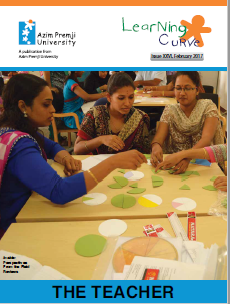
The teacher is central to the teaching — learning process, whatever a school’s policies, whether private or public, whatever board it has chosen to adopt. The teacher is an essential component of the success of the process. This being the case it is essential to consider what ‘creates’ a good, effective teacher and what sustains her and , through her, the framework of the school. This Issue is aimed at not only teachers and teacher-educators, but also policy makers and observers, in short, anyone with an interest in education. The focus articles deal with the policy and practice of teacher development and suggests alternatives while two more examine gender sensitisation and pre-service teacher preparation discussing in considerable detail the curriculum and its realities. This is followed by articles from practitioners across the field, from both private and public institutions. Teachers have recounted their experiences on the ground. There are critiques of the present system holding up practices against the light of theory, while some teachers have described their positive encounters, testifying to the dedication of colleagues working with enthusiasm and vigour in remote areas, without the help of sophisticated teaching aids.
Links


- Published
- Authors
Abstract
Engage with 2 themes — ‘Emerging Trends in Physics’ and ‘Indian Science Facilities’ — by exploring methods & processes defining future research in areas as fascinating as the discovery of black holes, understanding dark matter, using radio-astronomy to probe the universe, enabling space travel, the search for exoplanets, & establishing human settlements on Mars. In ‘Origins’ & ‘Annals of History’, piece together current understanding of our shared history through the beginnings of space-time & planetary worlds, the notion of elements, or that of life. Discover simple classroom activities to reveal & challenge mental models of force in ‘The Science Lab’, encourage the use of art to study ecology in ‘The Science Teacher at Work’, or integrate social justice in the science curriculum in ‘Research to Practice’. Also discover little-known aspects of ‘The Origins of Composting’ & ‘Ocean Microbes’ in our pull-out posters!
Links
- Published
- Authors
Abstract
Empirical research in economics and, to a lesser extent, in other social sciences is largely dependent upon government statistics. It is generally assumed that governments are committed to collecting and disseminating correct statistics. As a result, the mutually constitutive relationship between politics, economy, and statistics, and the possibility of systematic manipulation of statistics-driven by the structural features of this relationship, has received insufficient attention within economics. This paper examines the implications of the absence of shared preferences over the quality of statistics within a government. It explores the multiplicity of conflicting maps of the State of Nagaland issued by different tiers and wings of the government to underscore the lack of attention paid to a statistic as crucial as area. The paper situates the cartographic-statistical confusion in its political and economic contexts, and suggests that political-geographic arguments are being used to advance political-economic interests along contested borders. It argues that the confusion is not amenable to a technical resolution as it is linked to the dispute over Nagaland’s place within the Union of India and the border disputes between Nagaland and its neighbouring states.
Links
An intervention into the debates on ‘work-in-education’ and skill development in India
in Azim Premji University
- Published
- Authors
Abstract
The paper analyses the debates surrounding ‘work’ as part, or as an outcome, of school education in India and argues that these have not reckoned adequately the socioeconomic reality of the corresponding times. The outcome of education depends on ideas and resources shaping its provisioning, and the use by the people. Colonial rulers provided a liberal schooling which did not aim at ‘schooling for all’ or imparting skills as part of schooling. Such an education was attractive to those children who were not working in agriculture or artisanal occupations for their livelihood or who belonged to a ‘rentier’ class. The lower opportunity cost of time for these children and the probability of getting a job in the colonial administration enabled this small section of society to opt for such a liberal schooling. It is in this context that Gandhi wanted to use work (or agricultural and artisanal skills) as a pedagogical tool for education. However, the majority of children who were bound to do such work then did not view formal schooling, which aimed at imparting these ‘skills’, attractive.
Links

- Published
- Authors
Links