
Publications & Resources
Our faculty, students and researchers work together everyday to contribute to a better world by grappling with urgent problems we are facing in India. We conduct rigorous work to produce high quality learning resources and publications to contribute to public discourse and social change. Here, we feature a sample from our work for everyone to access. You can explore featured resources, policies, and the latest publications from the University.
To explore all the work of our University, please visit our publications repository.
List of Publications & Resources
Ownership, Accumulation, and the Land Question: Insights from a Village Survey in Central India
in Economic and Political Weekly
Article
- Published
- Authors
Abstract
The consolidation of agricultural lands by dominant socio-economic groups is discussed in the context of contemporary debate on the land question by foregrounding market-led land transfers as a driver of accumulation in rural India. Empirically rooted in central India, the paper studies the commodification and increasing concentration of land as an outcome of the processes of agrarian change at work.
Links
Delivering Affordable Nutrition Security through Fish: Evidence from a Rural Village in Telangana
in Indian Journal of Agricultural Economics
Article
- Published
- Authors
- School of Development
Abstract
The study explores the role of fish consumption in addressing nutrition security and malnutrition in a rural village in Telangana, India. It highlights that fish, particularly small indigenous species, provide affordable, high-quality protein and micronutrients. The study compares fish with other protein sources like poultry and livestock, finding that fish consumption significantly meets the nutritional needs of the rural population more effectively than other animal sources. India, despite being the third-largest fish producer globally, still faces challenges with malnutrition, especially among children and women. National Family Health Survey (NFHS) reports show alarming rates of stunting, wasting, and anemia, particularly in Telangana. The study demonstrates how increased fish consumption can play a crucial role in reducing these malnutrition rates by offering a cost-effective and nutrient-dense food source. The state government has encouraged fish production in Telangana through subsidies and initiatives like Pradhan Mantri Matsya Sampada Yojana. However, the research suggests that the fish distribution infrastructure needs significant improvement to increase access to fish for the broader population. The paper concludes that promoting fish consumption can be a viable strategy to combat malnutrition, improve food security, and provide economic opportunities for rural communities. Policy recommendations include enhancing market infrastructure, increasing fish production through scientific aquaculture, and raising awareness about the nutritional benefits of fish. These measures could ensure that fish contributes more significantly to achieving Sustainable Development Goals (SDG) related to hunger and malnutrition.
Authors: Gummadi Sridevi, Amalendu Jyotishi, Balaji Patturi, Matta Srinivas
Contexts and Priorities: Reflections on Developing a Master of Public Health Programme in India
in Azim Premji University

- Published
- Authors
- School of Development
Abstract
While the recent COVID-19 pandemic has accentuated attention to the public health challenges of our times, many of these concerns are certainly not new. There are multiple public health concerns including the rising burden of non-communicable diseases, health risks due to environmental degradation and climate change, and re-emergence of several communicable diseases. Responses to these challenges, including educational responses, have often been reductionist and hence found to be inadequate. There has been an increasing global recognition of the need for transformative education to address the complex health challenges of the 21st century. In this article, we discuss one such effort in designing a public health education programme in India that echoes the sentiment of transformative learning that is contextual, competency-driven, trans disciplinary, reflective, and collaborative. We discuss how these aspects of learning were reflected and considered through a series of internal deliberations within the university and external consultations with different stakeholders. This process involved examining existing gaps in public health education, articulating the core competencies, developing the curriculum, and envisaging students’ contribution to public health practice in India.
Authors:
Arima Mishra, Adithya Pradyumna, Mukta Gundi, Edward Premdas Pinto and Prasanna Saligram
Links
Article
- Published
- Authors
Abstract
When NASA provided free worldwide access to the Landsat data archive, scientists greatly expanded the analysis of new locations and novel topics. Of course, data democracy is not just for scientists. When citizens own the rights to generate and access data that speaks to their concerns, democracy is strengthened. Data democracy began to gain prominence in the early 2000s, with the growth of the open data movement. In today’s era of climate change, the term assumes increasing significance. Yet despite the large volume of opensource climate data, access remains largely limited to academia and business. Climate data democracy enables all sections of society to access climate data; understand how to use and interpret it; and be able to use data for climate action. Given the lack of data and severity of the crisis in the Global South, we argue that these regions must take the lead in driving conversations around climate data democracy.
Links
Reasonable Accommodation and Interdependence: Revisiting the Dynamics of Disability Inclusion in Higher Education in India
in Journal of Gender Studies

- Published
- Authors
- Meghana Rao
- Shilpaa Anand
Abstract
The principle of reasonable accommodation according to Article 2 of the United Nations Convention on the Rights of Persons with Disabilities (UNCRPD) is defined as ‘necessary and appropriate modification and adjustments not imposing a disproportionate or undue burden, where needed in a particular case, to ensure to persons with disabilities the enjoyment or exercise on an equal basis with others of all human rights and fundamental freedoms’. Exploring the relationship between inclusive policies enacted in institutions of higher education in India, and their impact on those who claim accommodation, we discuss the nature of care that informs and animates such interactions. Drawing on feminist disability studies scholarship on care, particularly, Akemi Nishida’s recommendation that care is inherently collective we analyse two sets of transactions selected for study as enabling care in patronising and charitable manners, while simultaneously ignoring the politics of responding to and providing accommodations. We find that institutional responses to accommodation claims are less reflective of the socio-political and affective aspects integral to the RA principle. Instead, the focus seems to be on providing either technocratic solutions or interpreting RA claims as causing undue burden. By reading the RA principle through the lens of scholarship on interdependence, we aim to broaden the scope of adopting and interpreting the RA principle.
Links
Nature based solutions in cities of the global South — The ‘where, who and how’ of implementation
in Environmental Research: Ecology
Article
- Published
- Authors
Abstract
Nature-based solutions have gained popularity as an approach to reduce the impacts of climate and environmental change, providing multi-fold and multi-sectoral benefits especially in cities. Yet there has been growing concern about their utility for cities of the Global South, a concern fuel led by the paucity of studies, including scientific peer reviewed and gray literature. In this paper, we contribute to this knowledge gap, based on an analysis of 120 case studies of NBS in Global South cities, documented in two databases (Urban Natural Atlas and Oppla). These cases fall largely under categories of blue and green infrastructure, with a few cases also focusing on grey infrastructure (in buildings or campuses). While most cases are in Asia, several have also been documented in Africa and Central/South America. Two-third of documented NBS cases are aligned towards either national, or lower-level (regional and local) policies indicating the importance of policy mechanisms for driving their implementation. Institutional arrangements are usually non-government, government or collaborative arrangements, with the goal of climate resilience, biodiversity support and ecosystem restoration — along with social goals of creating public spaces. However, when private players take on the mandate for NBS, they focus primarily on grey infrastructure (in buildings and campuses), primarily meant for private or employee benefits,and not for the public. In cases where public engagement is a stated priority, we find tokenistic approaches deployed, primarily seeking engagement through information dissemination and consultation predominate. Despite the stated importance for participation and engagement, only a few cases focused on empowerment and co-creation of NBS with local communities. We suggest that there is a greater need for documentation regarding the modes of participation especially on roles and levels of actors involved, to enrich our understanding of the impact of NBS on values of justice and equity in the cities of the global South.
Links
Laughter and Fieldwork in Nagaland: A Dialogue
in ACME-An International Journal for Critical Geographies


- Published
- Authors
- Dolly Kikon
- Krishnapriya Tamma
Abstract
This is a dialogue and reflection about fieldwork, laughter, and decolonising methodology. Is there a time to laugh? How and why should researchers laugh? By focusing on the Naga people in Northeast India, an Indigenous community with a deep history of militarisation, this dialogue draws our attention to the meaning of laughter, fellowship, and emotional connections. An Indigenous Naga anthropologist in conversation with an ecologist, this dialogue dwells on the meaning of laughter as sharing an experience of fellowship together. Social science methodologies are often structured on examinations, investigations interviews, fieldnotes, and observations. This dialogue opens a space to reflect on fieldwork, research, and decolonisation. Laughter, as this dialogue highlights, is about affection, solidarity, and collective vision. For any long-term relationship that one seeks to establish as a researcher, acknowledging and respecting the history of the land, adopting a community-approach, and mentoring Indigenous local scholars to lead the research among their respective communities are important steps towards decoloniality.
Links
Understanding Graphical Literacy Using School Students’ Comprehension Strategies
in Contemporary Education Dialogue
Article
- Published
- Authors
Abstract
Graphical literacy or graphicacy is a critical component of scientific literacy. Graphs are used to integrate and represent complex sets of information requiring abstraction from perceptual experience. They form essential parts of the Mathematics and Science curriculum across school curricular stages. A key to developing meaningful pedagogic practices to inculcate graphical literacy is in understanding how students perceive and comprehend features of graphs and interpret them. This study attempts to understand how children from the primary, middle and high school years, perceive and interpret information in bar and line graphs. Two hundred and twenty-nine children from four different school contexts in Grades V, VII and IX were administered questionnaires and interviewed based on tasks requiring comprehension of graphs. It was found that children’s understanding of graphs was tied to the curricular progression which was significant at Grades V and IX. Comprehension of bar graphs with nominal data was easier compared to line graphs requiring integration of information from two dimensions and interpreting them. Further, graphs requiring preliminary levels of statistical understanding were easier to comprehend. While prior experience and facility with graphical conventions played a role, interpretation from spatial to symbolic representations posed challenges. Students did not have a clear preferred strategy or a linear comprehension trajectory, but moved back and forth between conventions, clustering of graphical elements and written content in questions, to make meaning. Those who had performed well used various perceptual strategies simultaneously. Further, they were found to employ transformational reasoning based on a sense of ‘how things work’. It was observed that meaningful pedagogic practices at school and informal experiences outside the classroom aid graphical literacy.
Authors
The Intersection of Justice and Urban Greening: Future Directions and Opportunities for Research and Practice
in Urban Forestry and Urban Greening

- Published
- Authors
Abstract
The global uptake of green infrastructure in urban settings holds considerable promise for fostering both social and ecological benefits. Recognising the imperative to ensure equitable distribution of these advantages, this paper draws on the rich traditions of justice considerations within urban studies to inform research on urban greening. Focusing on three key trends — reconceptualising the ‘urban’ category, acknowledging the role of historical processes in shaping contemporary uneven and unjust geographies, and considering power dynamics in infrastructure development — we propose five tenets for advancing justice-focused urban greening research. These tenets encourage researchers to act as knowledge brokers, practice reflexivity, recognise the complex dimensions of justice which diversity of scale might reveal, embrace uncertainty, and cultivate a “modest imaginary” concerning infrastructure projects.
Authors:
Derickson, K., Walker, R., Hamann, M., Anderson, Adegun, O.B., Castillo, A. C.,Guerry, A., Keeler, B., Llewellyn, Liz, Matheney, A., Mogosetsi-Gabriel, N., Mundoli, S., Gajjar, S.P., Sitas, N., & Xie, L.P.
Links
Schooling and Constructions of Citizenship: Some Reflections on Student Agency and Choice
in Contemporary Education Dialogue

- Published
- Authors
Abstract
A national system of education in modern nation-states is usually geared towards nation-building and schools play a significant role in grooming children as future citizens. While the dominant and powerful usually emerge as the ‘ideal citizen’ in the national imagination, the marginalised are constructed as the ‘other’, vilified, and stigmatised. The school, with its overt and hidden curriculum, operates as a major site for the reproduction of dominant ideology while at the same time creating opportunities for exercising human agency. This article, an ethnographic study conducted in a government co-educational school in Delhi, examines how it sought to mould the students into ‘ideal’ citizens and how this was received by them. Belonging to a relatively lower socio-economic background compared to the teaching community, did they give their acquiescence? Or were they able to exercise their agency to challenge the entrenched power structures in society? Were their responses shaped by their specific social locations and the unfolding of ‘cultural politics’? Moreover, when the nature of ‘official knowledge’ itself has undergone radical shifts and the idea of citizenship has been redefined with the introduction of the National Curriculum Framework 2005, were the students able to leverage the epistemological shifts embodied in the textbooks to reimagine and construct ideas of citizenship regarding marginalised communities? These are some questions that the present article seeks to address.
Impact of Interventions Supporting Girls’ Education on Early Marriage, Pregnancy and Work Participation: Evidence Synthesis
in Indian Journal of Human Development
Article
- Published
- Authors
- Mukta Gundi
- Radhika Dayal
Abstract
This article synthesises the evidence on the impact of interventions supporting adolescent girls’ and young women’s education on delaying marriage, childbearing and improving work participation. A total of 13 studies (eight from sub-Saharan Africa and five from South Asia) during the years 2000 – 2020 met our inclusion criteria. A major focus of the included studies was to reduce the schooling cost, with limited focus on strategies such as supplementary coaching, making schools girl-friendly, monitoring performance and sensitising communities about educating girls. Most studies that measured the effects on marriage and childbearing showed a positive impact. However, interventions were less successful in influencing work participation. Although a majority of studies reported positive effects on educational outcomes, fewer measured or reported positive effects on other social and health outcomes. This evidence synthesis suggests a need for studying long-term effects of such interventions on girls’ and women’s families, work and social life to inform policy. Studies that explore the varying impacts of such interventions on girls and women from different sociocultural settings are needed. Our evidence synthesis underscores the importance of making comprehensive efforts to support girls’ education in order to meet the global development commitments of ensuring equitable life opportunities for adolescent girls and young women.
Links
Entrepreneurship and Marginalised Social Identities in India
in Economic and Political Weekly
Article
- Published
- Authors
Abstract
The nature and extent of the under-representation of marginalised caste groups in enterprise ownership in India are examined. It is found that exclusion takes place in three distinct stages. First, the share of Scheduled Caste (SC), Scheduled Tribe (ST) or Other Backward Class (OBC) individuals in ownership of any enterprise is less than their share in the workforce. Second, among those who do engage in entrepreneurial activities, a disproportionately higher share of entrepreneurs from the marginalised identity groups are engaged in enterprises, which are not purely commercial and are likely to be subsistence-oriented. And finally, even within the owners of purely commercial enterprises, those from marginalised groups tend to be concentrated in the smaller enterprises and are severely under-represented in the larger and more productive ones.
Links
Article
- Published
- Authors
Abstract
Fifty years ago this week, Gaura Devi, an ordinary woman from a nondescript village in India, hugged a tree, using her body as a shield to stop the tree from being cut down. Little did she know that this simple act of defiance would be a seminal moment in the history of India and the world. Or that Reni village, where she lived, would come to be recognised as the fountainhead of the Chipko environmental movement. What the foot soldiers of Chipko wanted was an acknowledgement of their Indigenous rights to access forest resources that were crucial for their survival. What they got instead was a national law and a ministry populated by a new breed of power brokers — who, in the years to come, would decide at times that habitat preservation is possible only by keeping local communities out.
“I pray to God that greed never sets in”: Community health workers’ reflections on “care” during the COVID-19 pandemic
in Indian Journal of Medical Ethics

- Published
- Authors
- Arima Mishra
- Sanjana Santosh
Abstract
Background: Care provision received renewed attention during the COVID-19 pandemic as several healthcare providers vied for the coveted title of “frontline warrior” while they struggled to provide care efficiently under varying health system constraints. While several studies on the health workforce during the pandemic highlighted their difficulties, there is little reflection on what “care” or “caring” itself meant specifically for community health workers (CHWs) as they navigated different community and health systems settings. The study aimed to examine CHWs’ caregiving experiences during the pandemic.
Methods: Twenty narrative interviews with CHWs including ASHAs (Accredited Social Health Activists) and ANMs (Auxiliary Nurse Midwives) were conducted in different states between July and December 2020.
Results: Our findings highlight the moral, affectual, and relational dimensions of care in the CHWs’ engagement with their routine and Covid-19 related services, as well as the “technical” aspects of it. In this article, we argue that these two aspects are, in fact, enmeshed in complex ways. CHWs extend this moral understanding not just to their work, but also to their relationship with the health system and the government, as they express a deep sense of neglect and the lack of “being cared for” by the health system.
Conclusion: CHWs’ experiences demand a more nuanced understanding of the ethics of care or caring that challenges the binaries between the “technical” and moral aspects of care.
Links
Public Health Perspectives on Mental Health: Reflections from Teaching
in Indian Journal of Medical Ethics
- Published
- Authors
Abstract
The mental health discourse in India has been primarily viewed through a biomedical lens that often overlooks the cultural context and social inequalities. To ensure equitable access to preventive, promotive, curative, and rehabilitative mental healthcare, India needs practitioners who combine a social perspective with an empathetic approach. To address this need, we designed a course titled “Critical Perspectives on Mental Health” that aims to introduce the relevant perspectives and community-based approaches to mental health. In this article, we share our reflections on designing this course and facilitating it in the form of a post-graduation programme.
Links

- Published
- Authors
Abstract
Biological invasions have profound impacts on biodiversity and ecosystem functioning and services, resulting in substantial economic and health costs estimated in the trillions of dollars. Preventing and managing biological invasions are vital for sustainable development, aligning with the goals of the United Nations Biodiversity Conference. However, some invasive species also offer occasional benefits, leading to divergent perceptions among stakeholders and sectors. Claims that invasion science overlooks positive contributions threaten to hinder proper impact assessment and undermine management. Quantitatively balancing benefits and costs is misleading, because they coexist without offsetting each other. Any benefits also come at a price, affecting communities and regions differently over time. An integrated approach considering both costs and benefits is necessary for understanding and effective management of biological invasions.
Authors: Laís Carneiro, Philip E Hulme, Ross N Cuthbert, Melina Kourantidou, Alok Bang, Phillip J Haubrock, Corey J A Bradshaw, Paride Balzani, Sven Bacher, Guillaume Latombe, Thomas W Bodey, Anna F Probert, Claudio S Quilodrán, Franck Courchamp
Links
Reflections on the Design and Application of ‘Surveypura’: A Simulation-Based Pedagogical Tool for Quantitative Research Methods in Public Health and Social Sciences
in BMC Advances in Simulation, Springer Nature

- Published
- Authors
Abstract
It has been reported from various contexts that learning quantitative methods for public health and social research is challenging for students. Based on our observations of these challenges, we designed a simulation-based pedagogical tool called Surveypura to support classroom-based learning of quantitative research methods. The tool includes a large illustration of a fictional village with 155 houses, alongside data for each of the households. The features of the houses, household characteristics, and the village have been carefully designed to give the visual feel of an actual village and better assist the pedagogical process. The tool was used by five facilitators with their master’s students at Azim Premji University in courses on social research and epidemiology. Our observations of the sessions and interactions with facilitators and students suggested that the tool supported more engaged learning of quantitative research methods in a non-intimidating manner. We believe that Surveypura can be a useful simulation-based pedagogical tool to teach quantitative research methods in epidemiology and social sciences even in other contexts.
Explore more here.
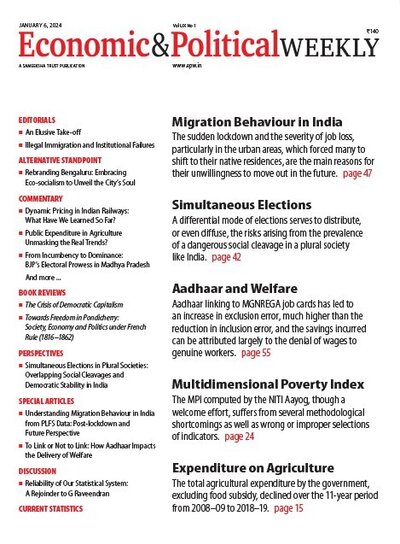
To Link or Not to Link: How Aadhaar Impacts the Delivery of Welfare
in Economic and Political Weekly

- Published
- Authors
Abstract
According to the Government of India, linking Aadhaar with the delivery of welfare schemes has saved nearly INR 2,73,093 crore till March 2022 due to, apparently, the removal of duplicate/fake beneficiaries and plugging of leakages, etc. What is the overall impact of Aadhaar on welfare delivery? We try to understand this through a case study of MGNREGA in Jharkhand. Surveying nearly 3,000 workers in eight villages in Jharkhand to assess both the costs and benefits of linking MGNREGA with Aadhaar, the paper focuses on its impact on errors of inclusion and exclusion.
Authors:
Anjor Bhaskar, Arpita Sarkar, Preeti Singh
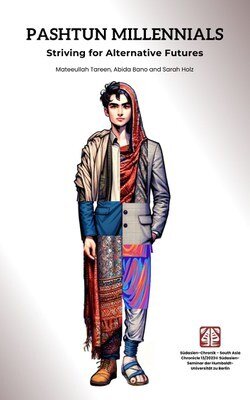
A Classic Case of “Waste Dumping” or a Latent Opportunity: Alang-Sosiya and the Making of the World’s Largest Shipbreaking Yards
in Sudasien – Chronik/South Asia Chronicle

- Published
- Authors
Abstract
This article explores the birth of multiple shipbreaking yards in India, such as Darukhana, Mumbai (1912); Sachana, Jamnagar (1977); and Alang, Gujarat (1983). It tells a story of how, specifically, the inception of the Alang shipbreaking yards is intricately linked to the changing geographies of ship disposal facilities in the 1970s and 1980s. This article demonstrates how India’s domestic policies on importing obsolete vessels for scrapping were in tandem with the shift in global waste flows. As major ship scrapping facilities closed in Western countries followed by Southeast Asian countries, shipbreaking yards mushroomed in different parts of South Asia, primarily in India, Bangladesh, and Pakistan. This article scrutinises the convoluted image of the Alang shipbreaking yards as a passive recipient of “waste” in the form of end-of-life vessels from the Global North.
Links
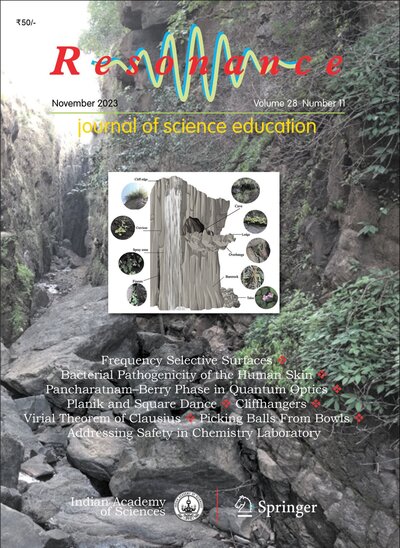
Bacterial Pathogenicity of the Human Skin: The Case of Staphylococcus aureus and its Multiple Attack Strategies
in Resonance Journal of Science Education

- Published
- Authors
Abstract
The skin microbiome is mainly comprised of commensal and mutualistic bacteria. Some commensal species can behave as pathogens under the right circumstances, and one of the most common examples of this is Staphylococcus aureus. This bacterium can damage multiple parts and systems of the human body, both directly and indirectly. The factors responsible for the pathogenesis of S. aureus are discussed in this article, along with its particular role in the skin disorder atopic dermatitis, shedding light on how bacteria can use complex strategies to survive in a host.
The Rich Have Peers, the Poor Have Patrons: Engaging the State in a South Indian City
in American Journal of Sociology (AJS)

- Published
- Authors
Abstract
Research on democracy has shed much light on two kinds of democratic politics: patterns of voting and patterns of associational or movement politics. But there is growing recognition that in order to better understand the quality or depth of democracy, we need to move beyond this dualistic focus to better understand the everyday practices through which citizens can effectively wield their rights; these practices often diverge from the formal equality enshrined in laws and constitutions. The researchers study this question through a large, unique sample survey carried out in a South Indian city. We find that effective citizenship is refracted through the institutional specificities of urban India and that, as a result, the poor access the state through political participation and the rich through particularistic connections to persons of influence. But unlike the conventional celebration of participation as a citizenship-deepening activity, we also find that a substantial part of participation is associated with forms of brokerage that compromise democratic citizenship.
Article
- Published
- Authors
- School of Development
Abstract
If one asks a teacher in preschool learning spaces in India, about the most usual story that is narrated to children, what is the most common answer? Will there be unanimity in the fact that the story of Thirsty Crow works just as well in many Indian languages, as it does in Indian Sign Language? Those who engage with early childhood care and learning would often stress upon the need to have a visually rich environment in these learning spaces, full of picture books and enthusiastic teachers who never give up a chance to bring out yet another story. Bringing Indian Sign Language to early childhood learning spaces, creating an immersive experience for children before they enter school years by making available in these spaces Indian Sign Language resources (and then taking such initiatives to schools, colleges, and community spaces) would allow us to slowly move toward the dream cherished by deaf adults.
Fifteen Years of Fragmentation and Land Cover Change in India’s Ten Largest Cities – A Google Earth Engine Analysis
in Cities and the Environment (CATE)
Article
- Published
- Authors
- Harini Nagendra
- Preeti Rao
- Shivani Agarwal
Abstract
Urbanisation is one of the most transformative drivers of global environmental change today, with India representing one of the fastest urbanising countries. The researchers map the urban expansion of India’s ten largest cities from 2001 to 2016, through a regression tree classification of Landsat data in Google Earth Engine. Indian cities are growing through sprawl, and simultaneously densifying through in-filling. In Delhi, Mumbai and Pune, urban growth is multinucleated, aggregating to form a larger urban region. However, the dominant pattern in most cities is mono-nucleated growth via edge-expansion. The colonial signature is visible in many cities such as Bengaluru, where due to the British colonial practice of planting trees in the cantonment, the city interior has lower urban density at the core as compared to the periphery. Much of the urban growth between 2001 – 2016 is at the expense of agriculture and fallow areas. Across all cities, urban patches have expanded and coalesced into larger units. At the same time, there is an overall loss of surface water cover within cities. Urban growth has led to fragmentation of tree cover, agriculture/fallow and water bodies. This paper demonstrates that India’s urbanisation is leading to severe impacts on water security (because of the loss of surface water), biodiversity (because of the fragmentation of tree cover and the conversion of agriculture and fallow lands to built-up urban cover), factors which if left unaddressed will severely impact the sustainability of Indian urbanisation.
Monolingual Ideologies in Multilingual Classrooms: Exploring Tacit Aspects of the Indian Education System
in Language and Language Teaching

- Published
- Authors
- School of Education
Abstract
Globalisation has resulted in ever increasing linguistic diversities and a worldwide recognition of the need to support linguistic pluralism through education (UNESCO, 2003). Keeping abreast with the global trend, India’s education policy has provided for the cultivation of multilingualism by including at least three languages in the curriculum. However, in reality, India’s education system is guided by monolingual ideologies that disregard multilingual realities and promote a form of “monolingual multilingualism” (Neumann, 2015). This translates into separatist pedagogy and practices that keep languages strictly compartmentalised at schools. Different time slots are allotted to teaching learning of disparate languages. Proficiency in a language is interpreted as the ability to use it without “resorting” to any other language. In effect, monolingual ideologies function to reject translanguaging (Garcia, 2009), or natural language practices of multilinguals, that enter into classrooms. Strategies such as code-switching and translating are invalidated when they occur in spoken or written conversations in classrooms. This article aims to study the monolingual ideologies that permeate the education system to understand their implications for the process of teaching and learning in Indian classrooms.
Pluralisation challenges to religion as a social imaginary: Anti-caste contestations of the Muslim quota in India
in Religions, Multidisciplinary Digital Publishing Institute (MDPI)

- Published
- Authors
Abstract
Postcolonial democratic deepening brings new challenges to religion as a social imaginary in India. Increasing cultural differentiation and pluralisation are countered by fundamentalisation, but also challenge existing minority/multicultural imaginations. Religion, as the overarching identity category, has come under scrutiny given the politicization of caste among Muslims, who form the country’s most significant religious minority. Through social-justice and anti-caste politics in the 1990s, lowered-caste Muslims started to enact a new identity named Pasmanda, which means “those who have been left behind”. The Pasmanda discourse emphasises internal heterogeneities and hegemonies and pluralises the “Muslim”. It thus ruptures the imaginary of Muslims as a homogeneous minority in a culturally diverse country and problematises the majority – minority framework. An important site of contestation is the reservation (quota) policy in public employment, education, and the legislature. While privileged-caste Muslims generally prefer a quota based on religion, the lowered-caste Pasmanda Muslims increasingly mobilise for a caste-based quota, thus challenging systems of recognition and redistribution.
Authors:
Article
- Published
- Authors
Abstract
The canvas of science education needs to be viewed in its totality to prevent the confounding of some basic issues and to enable us to evaluate the fads and fashions in educational practice. Policies and processes in education are tacitly shaped by theories in the humanities and social sciences. Inadequate understanding of these theories, or the lack of attention to uncalled-for implications of their practical import, takes education in undesirable directions. To be a good science teacher has never been easy. The teacher is a master of knowledge in science. But that is not all. She is equally committed to the principles governing the practice and communication of science.
Good Luck or Bad Omen: Attitudes Towards the Slender Loris in the City of Bengaluru, India
in Urbanisation

- Published
- Authors
- Harini Nagendra
- Kaberi Kar Gupta
- Varsha Bhaskaran
Abstract
Cities are characterised by social and cultural diversity. The management of urban wildlife requires developing a better understanding of cultural beliefs associated with wildlife in diverse urban settings. We document a range of cultural beliefs associated with the slender loris (Loris lydekkerianus), an endemic, nocturnal primate, in the Indian megacity of Bengaluru. Many residents associate the loris with practices such as black magic, and they believe that the animal’s call is a bad omen that brings death and misfortune. Others consider it a harbinger of good luck that offers protection to young children. These superstitious beliefs may motivate illegal wildlife trafficking of the loris. Urbanisation has led to changes in these perceptions, and many respondents now report that they consider these beliefs to be old-fashioned superstitions that hold no place in a modern city. This study contributes to knowledge on changing urban attitudes to wildlife, which is vital to developing conservation strategies that involve local residents.

- Published
- Authors
- Sudhansu S Biswal
- Sushree S Mishra
- Sridhar K
Abstract
Due to the heavy-quark symmetry of Non-Relativistic Quantum Chromodynamics (NRQCD), the cross-section for the production of ηc can be predicted. This NRQCD prediction when confronted with data from the LHCb is seen to fail miserably. We address this LHCb ηc anomaly in this paper using a new approach called modified NRQCD, an approach that has been shown to work extremely well for studying J/ψ, ψ′ and χc production at the LHC. We show, in the present paper, that the predictions for ηc production agrees very well with LHCb measurements at the three different values of energy that the experiment has presented data for. Modified NRQCD also explains the intriguing agreement of the LHCb ηc data with the colour-singlet prediction. The remarkable agreement of the theoretical predictions with the LHCb data suggests that modified NRQCD is closer to apprehending the true dynamics of quarkonium production.
Critiquing ‘Component C’: The Health Parameter of the Comprehensive Environmental Pollution Index
in Economic and Political Weekly
Article
- Published
- Authors
Abstract
The comprehensive environmental pollution index has been applied to identify and monitor industrially polluted clusters in India. In the calculation of the CEPI, there is a health parameter (Component C), which uses local health-related data. The article draws attention to the gaps in the design and guidelines to calculate Component C.

- Published
- Authors
Abstract
The article argues that industry is coming alive to its social purpose, with considerations like equity, environmental impact and ethics. It starts with the history of industrial revolutions from 0.0 to 4.0, detailing their impact on society. It goes on to introduce the concept of Industry 5.0, which is built on the principles of human centricity, sustainability and resilience. The author explains the implications of Industry 5.0 to society, leadership, and HR. He argues that Industry 5.0 is not a revolution but an evolution of the manufacturing process, which is characterised by the integration of various technologies such as artificial intelligence, the Internet of Things, and robotics. He concludes by discussing how individuals can adapt to the requirements of Industry 5.0. The article points to Industry 5.0 becoming more humane with greater responsibility for equity, justice, and sustainability.