
Publications & Resources
Our faculty, students and researchers work together everyday to contribute to a better world by grappling with urgent problems we are facing in India. We conduct rigorous work to produce high quality learning resources and publications to contribute to public discourse and social change. Here, we feature a sample from our work for everyone to access. You can explore featured resources, policies, and the latest publications from the University.
To explore all the work of our University, please visit our publications repository.
List of Publications & Resources

- Published
- Authors
Abstract
This article presents a historical account of emergence and development of the territorial power of Jats in Punjab through analysing three elements. First, their historical appropriation of the village as their agrarian territory, which was often perpetuated under the discourse of ‘village community’/clans and the monopolisation of the peasant identity. Second, the often-benevolent administration in Punjab during the colonial rule. Third, the development of a discourse of caste-progressiveness of Jats. The Punjab experience in this regard is significant to understand similar processes in other states and to make appropriate strategies for social movements and policy advocacy regarding agrarian/social reforms.
Résumé
Cet article présente un compte rendu historique de l’émergence et du développement du pouvoir territorial des Jats au Pendjab en analysant trois éléments. Premièrement, leur appropriation historique du village en tant que territoire agraire, qui s’est souvent perpétuée sous le discours de la « communauté villageoise »/clans et de la monopolisation de l’identité paysanne. Deuxièmement, l’administration souvent bénévole du Pendjab pendant la période coloniale. Troisièmement, le développement d’un discours sur la progressivité de la caste des Jats. L’expérience du Pendjab à cet égard est importante pour comprendre des processus similaires dans les autres États et pour élaborer des stratégies appropriées pour les mouvements sociaux et le plaidoyer politique concernant les réformes agraires/sociales.

- Published
- Authors
- School of Arts and Sciences
Abstract
Reflecting a longstanding intellectual heritage in Marxist political economy, contributions to agrarian studies have variously referred to the production, distribution and extraction of value. Despite this central role within the heritage of agrarian studies, the concept of value is often used inconsistently between authors and sometimes deployed without clear elucidation of the underlying theoretical tenets. As such, value often tends to be used more as a metaphor suggestive of conditions of exploitation rather than a detailed conceptual framework. In response, we must ask if there is still a robust case for value analysis forming a foundational pillar of agrarian studies? To address this challenging question, we invited three authors to give their perspective on the value of value for agrarian studies. First and foremost, we asked them to consider what value analysis does that is otherwise missed in critical agrarian studies and how we can mobilise its potential to sharpen analyses. Two further pivotal questions arise, spurred on by recent trends in the literature. First, to what extent do the categories of value enrich or hinder our evolving understanding of the dynamics of social reproduction within agrarian households and communities, including the gendered relations through which agriculture and livelihoods are performed? Similarly, are the largely anthropogenic concepts of value fit for the purpose of explaining environmental change and the more-than-human dynamics through which agricultural landscapes are produced and change over time?
Authors: A Haroon Akram-Lodhi, Srishti Yadav, Alessandra Mezzadri, Marcus Taylor
Methodological Holism in Marx’s Capital Volume 1: The Conceptualisation and Measurement of Individual Units
in Review of Development and Change, Sage

- Published
- Authors
Abstract
This article aims to understand the methodological position that Marx takes in Capital Volume 1 and the implications of that on the individual units in his analysis. With the understanding that Marx adopts a fundamentally holist methodological standpoint, the article outlines how the individuals within classes and the system of capitalist production are measured and contextualised. This question is answered by examining Marx’s Capital Volume 1 as the primary text. Where relevant, the researcher engages with Marx’s intellectual background and tradition. The individual units discussed in this study are the commodity, the worker and the capitalist.
This article examines how the concept of the representative individual emerges through averaging and how this process unfolds in Marx’s Capital, shaped by his methodological approach. The article illustrates the method of averaging in Marx, through his intellectual engagement with Quetelet as it also focuses on Hegel’s influence on Marx’s method and elaborates on the parallels and divergences between them. With the given engagement with Capital and Marx’s intellectual interactions, the researcher arrives at a specific understanding of holism that can be attributed to Marx in Capital Volume 1.
Author: Sushmita Rama Subrahmanyam, Student, MA in Economics (2024−2026)
Links
Methodological Holism in Marx’s Capital Volume 1: The Conceptualisation and Measurement of Individual Units
in Sage Journal

- Published
- Authors
Abstract
This article aims to understand the methodological position that Marx takes in Capital Volume 1 and the implications of that on the individual units in his analysis. With the understanding that Marx adopts a fundamentally holist methodological standpoint, the article outlines how the individuals within classes and the system of capitalist production are measured and contextualised. This question is answered by examining Marx’s Capital Volume 1 as the primary text. Where relevant, the author engages with Marx’s intellectual background and tradition. The individual units discussed in this study are the commodity, the worker and the capitalist.
This article examines how the concept of the representative individual emerges through averaging and how this process unfolds in Marx’s Capital, shaped by his methodological approach. The article illustrates the method of averaging in Marx, through his intellectual engagement with Quetelet as it also focusses on Hegel’s influence on Marx’s method and elaborates on the parallels and divergences between them. With the given engagement with Capital and Marx’s intellectual interactions, we arrive at a specific understanding of holism that can be attributed to Marx in Capital Volume 1.
Author: Sushmita Rama Subrahmanyam
The “Global Learning Crisis”: The Classroom View from Kanchipuram, India
in Comparative Education Review
Article
- Published
- Authors
Abstract
“Global learning crisis” narratives, in focusing on the “proximate determinants” of the crisis, represent a welcome “classroom turn” in international education and development. Extant learning crisis literatures are problematic, however, as their homogenizing gaze distorts how teachers and students co-constitute classrooms as locally meaningful learning spaces. Drawing on anthropological approaches in comparative education, this article addresses the “learning crisis” in a middle-school classroom in a weavers’ neighborhood in Kanchipuram. Constituted in an elaborate “notebook economy,” this classroom was an inventive response that not only accommodated students’ material cultures and social-educational disadvantages but also affected their belonging in a resource-scarce public education system. If the learning it afforded was disdained in “learning crisis” narratives, it was nevertheless relevant for students, readily translated into educationally unintensive assembly-line jobs. In producing contempt for such classrooms, “learning crisis” narratives merely distract from — and thus entrench — the deeply unequal economic and educational development that necessitated the notebook economy in the first place.
Recent allopolyploidization and transcriptomic asymmetry in the mangrove shrub Acanthus tetraploideus
in Springer Nature
Article
- Published
- Authors
Abstract
Background
Mangrove species are vital to the ecosystems of tropical and subtropical coastlines worldwide. Despite the underexplored role of polyploidization in these species, deciphering its impact on gene expression is essential for understanding the connection between polyploidization and species diversification. Our initial investigation, integrating multiple nuclear loci with morphological and cytological data, indicates that the tetraploid Acanthus tetraploideus likely originated from allopolyploidization events involving the diploid species A. ilicifolius and A. ebracteatus. Expanding on these insights, this study utilises genome-wide evidence to confirm the divergence patterns among extant Acanthus mangrove diploids and to investigate the origin and transcriptome asymmetry of the tetraploid A. tetraploideus.
Results
Phylogenetic analysis and molecular dating revealed a closer evolutionary relationship between A. ebracteatus and A. volubilis than between A. ebracteatus and A. ilicifolius, diverged approximately 6.92 Mya and 9.59 Mya, respectively. Analysis of individual whole transcriptomes revealed that homeologous sequences in A. tetraploideus were preferentially clustered with A. ilicifolius and A. ebracteatus, rather than A. volubilis, in a roughly 1:1 ratio. The high similarity in nucleotide sequences and homologous polymorphisms between the tetraploid A. tetraploideus and its two parental diploids, A. ebracteatus and A. ilicifolius, supports the hypothesis of a recent allopolyploid origin for A. tetraploideus. Estimation of homeolog expression revealed a general attenuation of homeolog expression divergence in A. tetraploideus compared to the in silico parental mix, with 22.87% and 67.66% of genes exhibiting biased homeolog expression, respectively. Further investigation identified remarkable retention of parental expression dominance in the tetraploid, suggesting that parental genetic legacy substantially influences the reconfiguration of homeolog expression in the derived tetraploid. Meanwhile, the observation of numerous novel expression patterns between the two homeolog sets suggests that the transcriptome shock (i.e., the transcriptomic changes induced by interspecific hybridisation) associated with allopolyploidization and subsequent post-polyploid evolutionary processes also significantly impact transcriptome asymmetry in A. tetraploideus. While no strong evidence directly links transcriptomic changes to specific adaptive traits, the patterns in unbiased and novelly biased genes in A. tetraploideus suggest adaptations to stable polyploidy. Unbiased genes involved in fundamental cellular processes and novelly biased genes related to chromosome dynamics and cell cycle regulation may stabilise polyploid genomes, supporting the species’ establishment and long-term success. These findings underscore the role of transcriptomic stability in polyploid adaptation.
Conclusions
Our study sheds light on the evolutionary origins and the intricate transcriptional reconfiguration of the tetraploid A. tetraploideus. These insights significantly enhance our comprehension of the pivotal role that polyploidization plays in speciation and adaptative evolution of mangrove species.
Authors: Wuxia Guo, Achyut Kumar Banerjee, Hui Feng, Wei Lun Ng, Haidan Wu, Weixi Li, Yang Yuan & Yelin Huang
Links
The Intersection of Justice and Urban Greening: Future Directions and Opportunities for Research and Practice
in Urban Forestry and Urban Greening

- Published
- Authors
Abstract
The global uptake of green infrastructure in urban settings holds considerable promise for fostering both social and ecological benefits. Recognising the imperative to ensure equitable distribution of these advantages, this paper draws on the rich traditions of justice considerations within urban studies to inform research on urban greening. Focusing on three key trends — reconceptualising the ‘urban’ category, acknowledging the role of historical processes in shaping contemporary uneven and unjust geographies, and considering power dynamics in infrastructure development — we propose five tenets for advancing justice-focused urban greening research. These tenets encourage researchers to act as knowledge brokers, practice reflexivity, recognise the complex dimensions of justice which diversity of scale might reveal, embrace uncertainty, and cultivate a “modest imaginary” concerning infrastructure projects.
Authors:
Derickson, K., Walker, R., Hamann, M., Anderson, Adegun, O.B., Castillo, A. C.,Guerry, A., Keeler, B., Llewellyn, Liz, Matheney, A., Mogosetsi-Gabriel, N., Mundoli, S., Gajjar, S.P., Sitas, N., & Xie, L.P.
Links
Article
- Published
- Authors
Abstract
The canvas of science education needs to be viewed in its totality to prevent the confounding of some basic issues and to enable us to evaluate the fads and fashions in educational practice. Policies and processes in education are tacitly shaped by theories in the humanities and social sciences. Inadequate understanding of these theories, or the lack of attention to uncalled-for implications of their practical import, takes education in undesirable directions. To be a good science teacher has never been easy. The teacher is a master of knowledge in science. But that is not all. She is equally committed to the principles governing the practice and communication of science.
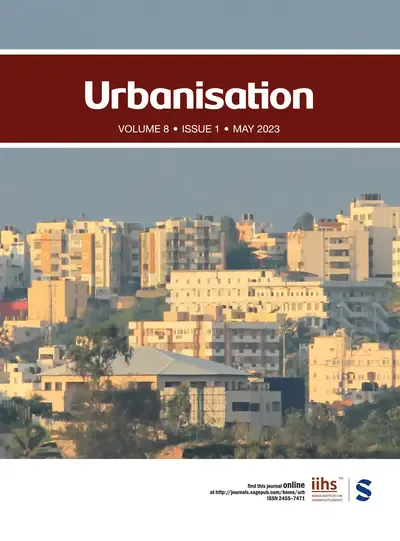
Good Luck or Bad Omen: Attitudes Towards the Slender Loris in the City of Bengaluru, India
in Urbanisation

- Published
- Authors
- Harini Nagendra
- Kaberi Kar Gupta
- Varsha Bhaskaran
Abstract
Cities are characterised by social and cultural diversity. The management of urban wildlife requires developing a better understanding of cultural beliefs associated with wildlife in diverse urban settings. We document a range of cultural beliefs associated with the slender loris (Loris lydekkerianus), an endemic, nocturnal primate, in the Indian megacity of Bengaluru. Many residents associate the loris with practices such as black magic, and they believe that the animal’s call is a bad omen that brings death and misfortune. Others consider it a harbinger of good luck that offers protection to young children. These superstitious beliefs may motivate illegal wildlife trafficking of the loris. Urbanisation has led to changes in these perceptions, and many respondents now report that they consider these beliefs to be old-fashioned superstitions that hold no place in a modern city. This study contributes to knowledge on changing urban attitudes to wildlife, which is vital to developing conservation strategies that involve local residents.


- Published
- Authors
- Sudhansu S Biswal
- Sushree S Mishra
- Sridhar K
Abstract
Due to the heavy-quark symmetry of Non-Relativistic Quantum Chromodynamics (NRQCD), the cross-section for the production of ηc can be predicted. This NRQCD prediction when confronted with data from the LHCb is seen to fail miserably. We address this LHCb ηc anomaly in this paper using a new approach called modified NRQCD, an approach that has been shown to work extremely well for studying J/ψ, ψ′ and χc production at the LHC. We show, in the present paper, that the predictions for ηc production agrees very well with LHCb measurements at the three different values of energy that the experiment has presented data for. Modified NRQCD also explains the intriguing agreement of the LHCb ηc data with the colour-singlet prediction. The remarkable agreement of the theoretical predictions with the LHCb data suggests that modified NRQCD is closer to apprehending the true dynamics of quarkonium production.
Critiquing ‘Component C’: The Health Parameter of the Comprehensive Environmental Pollution Index
in Economic and Political Weekly
Article
- Published
- Authors
Abstract
The comprehensive environmental pollution index has been applied to identify and monitor industrially polluted clusters in India. In the calculation of the CEPI, there is a health parameter (Component C), which uses local health-related data. The article draws attention to the gaps in the design and guidelines to calculate Component C.
The Social Contract and India’s Right to Education
in International Institute of Social Studies, The Hague; Wiley
Article
- Published
- Authors
Abstract
India’s 2009 Right of Children to Free and Compulsory Education (RTE) Act presents an idealised social contract which assigns roles to multiple actors to uphold a mutual duty, or collective responsibility, to secure children’s access to a quality school education. This article explores how the social contract assumed by the RTE Act misrepresents the conditions required to enact mutual responsibilities as well as actors’ agreement to do so. Qualitative data from Bihar and Rajasthan show how state actors, parents, community groups and teachers negotiate and contest the RTE Act norms. The analysis illuminates the unequal conditions and ever-present politics of accountability relations in education. It problematises the idealisation of the social contract in education reform: it proposes that if the relations of power and domination through which ‘contracts’ are entered into remain unaddressed, then expressions of ‘mutual’ responsibility are unlikely to do other than reproduce injustice. It argues that policy discourses need to recognise and attend to the socially situated contingencies of accountability relations and that doing so would offer an alternative pathway toward addressing structural inequalities and their manifestations in education.
Links
Re-situating the Region: Media Technologies and Media Forms in India
in South Asian Popular Culture
- Published
- Authors
Abstract
There is an air of deceptive obviousness about the idea of the ‘region’. Inheriting a sense of assurance from long-established linguistic, geographical, and historical boundaries and contours, one feels secure in taking a somewhat simplistic cartographic view of the matter even as one acknowledges the overlaps and the blurring margins. But it shouldn’t take long to understand that the very use of the term ‘regional’ may imply that a researcher has probably placed himself/herself squarely at the centre, taking recourse to binary contrasts through a construct such as Bollywood or some other imaginary nub or vantage point from where she surveys the cultural margins, the nooks and the by lanes. What if one reverses this view to see things from within the region aiming one’s sights at the distant cultural firmaments? This is not mere wordplay but only an instance of everyday living! The real purpose here is to underline the plurality of stances, perspectives and viewpoints that may be applied for the study of culture. The ‘regional’ thus may mean not simply a location but also a stance and a perspective to be made explicit and to be acknowledged.
Authors:
Bindu Menon Mannil, Azim Premji University, Bengaluru
Ratnakar Tripathy, Asian Development Research Institute, Patna