
Publications & Resources
Our faculty, students and researchers work together everyday to contribute to a better world by grappling with urgent problems we are facing in India. We conduct rigorous work to produce high quality learning resources and publications to contribute to public discourse and social change. Here, we feature a sample from our work for everyone to access. You can explore featured resources, policies, and the latest publications from the University.
To explore all the work of our University, please visit our publications repository.
List of Publications & Resources
Ownership, Accumulation, and the Land Question: Insights from a Village Survey in Central India
in Economic and Political Weekly
Article
- Published
- Authors
Abstract
The consolidation of agricultural lands by dominant socio-economic groups is discussed in the context of contemporary debate on the land question by foregrounding market-led land transfers as a driver of accumulation in rural India. Empirically rooted in central India, the paper studies the commodification and increasing concentration of land as an outcome of the processes of agrarian change at work.
Links
Delivering Affordable Nutrition Security through Fish: Evidence from a Rural Village in Telangana
in Indian Journal of Agricultural Economics
Article
- Published
- Authors
- School of Development
Abstract
The study explores the role of fish consumption in addressing nutrition security and malnutrition in a rural village in Telangana, India. It highlights that fish, particularly small indigenous species, provide affordable, high-quality protein and micronutrients. The study compares fish with other protein sources like poultry and livestock, finding that fish consumption significantly meets the nutritional needs of the rural population more effectively than other animal sources. India, despite being the third-largest fish producer globally, still faces challenges with malnutrition, especially among children and women. National Family Health Survey (NFHS) reports show alarming rates of stunting, wasting, and anemia, particularly in Telangana. The study demonstrates how increased fish consumption can play a crucial role in reducing these malnutrition rates by offering a cost-effective and nutrient-dense food source. The state government has encouraged fish production in Telangana through subsidies and initiatives like Pradhan Mantri Matsya Sampada Yojana. However, the research suggests that the fish distribution infrastructure needs significant improvement to increase access to fish for the broader population. The paper concludes that promoting fish consumption can be a viable strategy to combat malnutrition, improve food security, and provide economic opportunities for rural communities. Policy recommendations include enhancing market infrastructure, increasing fish production through scientific aquaculture, and raising awareness about the nutritional benefits of fish. These measures could ensure that fish contributes more significantly to achieving Sustainable Development Goals (SDG) related to hunger and malnutrition.
Authors: Gummadi Sridevi, Amalendu Jyotishi, Balaji Patturi, Matta Srinivas
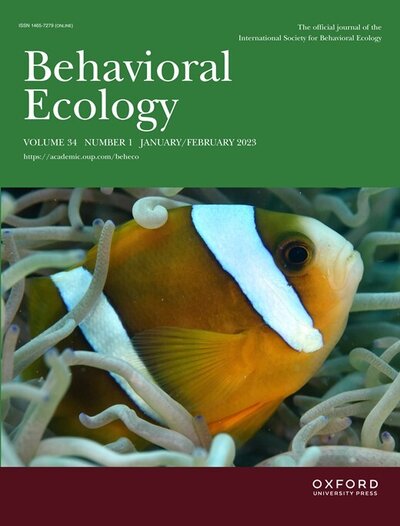
An arachnid’s guide to being an ant: Morphological and behavioural mimicry in ant-mimicking spiders
in Behavioral Ecology

- Published
- Authors
Abstract
Batesian mimicry imposes several challenges to mimics and evokes adaptations in multiple sensory modalities. Myrmecomorphy, morphological and behavioral resemblance to ants, is seen in over 2000 arthropod species. Ant-like resemblance is observed in at least 13 spider families despite spiders having a distinct body plan compared to ants. Quantifying the extent to which spiders’ shape, size, and behavior resemble model ants will allow us to comprehend the evolutionary pressures that have facilitated myrmecomorphy. Myrmaplata plataleoides are thought to closely resemble weaver ants, Oecophylla smaragdina. In this study, we quantify the speed of movement of model, mimic, and non-mimetic jumping spiders. We use traditional and geometric morphometrics to quantify traits such as foreleg size and hindleg size, body shape between the model ant, mimic, and non-mimics. Our results suggest that while the mimics closely resemble the model ants in speed of movement, they occupy an intermediate morphological space compared to the model ants and non-mimics. Ant-mimicking spiders are better at mimicking ants’ locomotory movement than morphology and overall body shape. Some traits may compensate others, suggesting differential selection on these mimetic traits. Our study provides a framework to understand the multimodal nature of mimicry and helps discern the relative contributions of such traits that drive mimetic accuracy in ant-mimicking spiders.
Links