
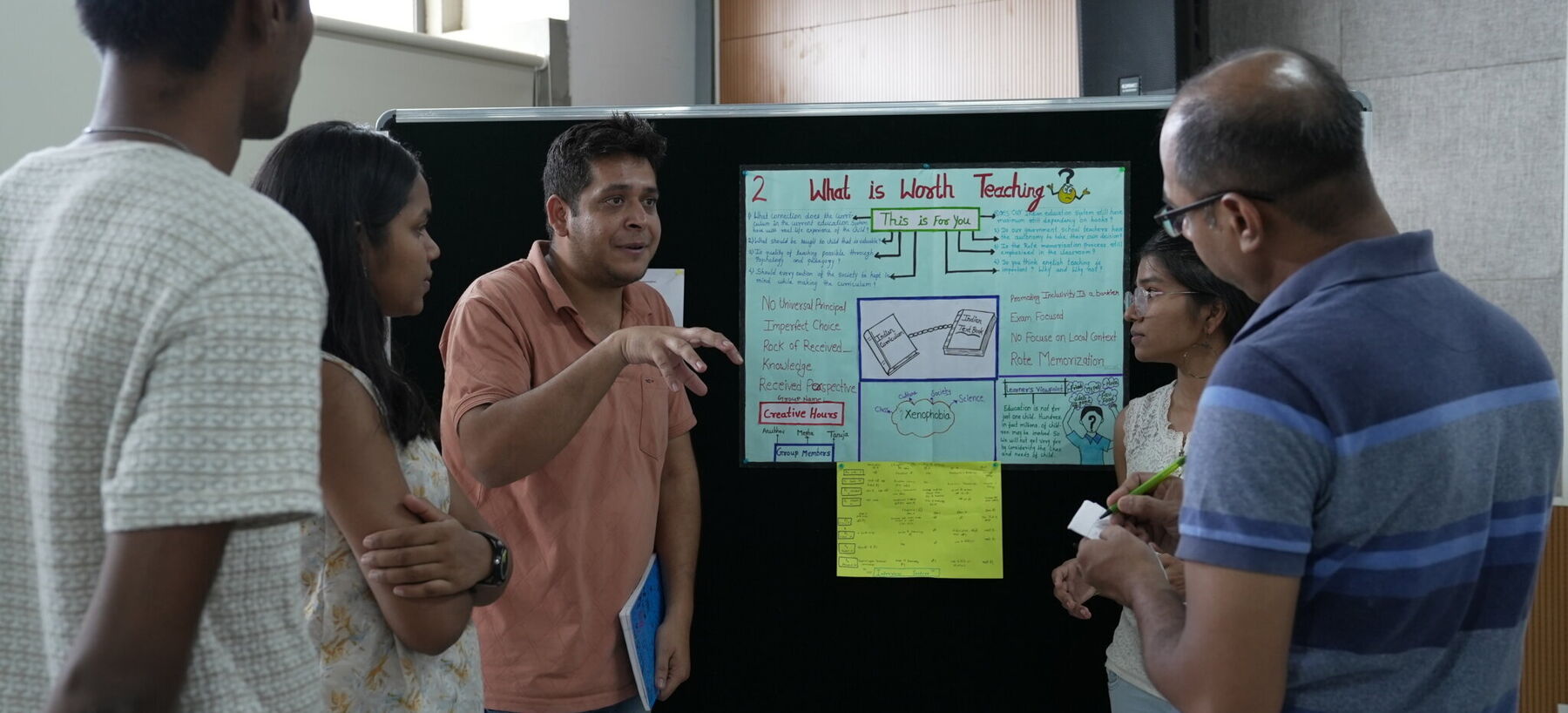
MA in Education
Build a career to teach and inspire the next generation
Details
India’s education system needs professionals who can work across classrooms, schools, curriculum, and policy with a deep understanding of how learning actually happens. The MA in Education at Azim Premji University prepares you for meaningful careers across school education, from the foundational years to secondary schooling.
This two-year, full-time postgraduate programme in Education combines strong theoretical grounding with sustained field engagement. You will study education through multiple disciplinary lenses and gain hands-on experience in teaching, curriculum development, assessment, and school systems.
If you want a career that strengthens schools, supports teachers, and improves learning outcomes, this programme is for you.
Who should join?
You should consider this programme if you want to:
Understand education systems
Examine how philosophy, sociology, psychology, history, and public policy shape education and why educational change must be context-sensitive.
Develop strong teaching and curricular capabilities
Build competence in pedagogy, curriculum planning, assessment, and learning material development for school education.
Connect theory with classroom practice
Critically evaluate educational theory and apply it meaningfully through field placements, observation, and reflective practice.
Prepare for diverse education careers
Graduates work as teachers, teacher educators, curriculum designers, programme managers, school leaders, and education researchers across India.
Why study Education at Azim Premji University?
Deep engagement with Indian school education
Work closely with government schools and education systems to understand schooling realities at the grassroots level.
Faculty with extensive field experience
Learn from educators and researchers with long-standing engagement in school education, curriculum reform, and teacher professional development.
A strong theory – practice continuum
The programme helps you test ideas against lived classroom realities, ensuring your practice is informed and reflective.
Ethics, equity, and social justice at the core
Grounded in constitutional values, the programme foregrounds inclusion, fairness, and humane education.
A collaborative learning community
Learn alongside peers committed to strengthening education, supported by mentoring, dialogue, and shared enquiry.
Programme Structure
From understanding education to shaping practice
MA in Education is a two-year postgraduate programme that integrates theory, fieldwork, research, and policy engagement.
You will:
- Build strong conceptual foundations in education studies
- Specialise in teaching of one school subject
- Engage continuously with schools and education organisations

Core areas of study
You will study education through key themes such as:
- Education policy and governance
- Curriculum and assessment
- Teaching and learning
- Schools as institutions and organisations
- Inclusion, equity, and justice in education
The curriculum encourages you to ask foundational questions: What is education? Who is it for? What is quality in education? How do we know learning is taking place?
Course Structure
Philosophy of Education
Core
Explore ideas, values, and assumptions that guide educational thought and practice.
Sociology of Education
Core
Understand how education interacts with society, inequality, and social change.
Child Development and Learning
Core
Study how children learn and develop within school contexts.
Introduction to School System in India
Core
Analyse how historical, social, and policy factors shape schooling.
Schools as Organisations
Core
Examine schools as institutions with cultures, structures, and leadership practices.
Curriculum Studies
Core
Study curriculum as knowledge, experience, and educational intent.
Field Research
Core
Identify and investigate research questions grounded in education practice.
Teacher Professional Development
Core
Examine the evolving role of teachers and teaching across contexts.
You will choose one area of specialisation to build subject depth and professional identity. Each combines subject knowledge, pedagogy, and field engagement.
Early Childhood Education
Focus on learning, development, and curriculum for children aged 3 – 8, with options for independent or field-based study. (No longer offered in the Bengaluru campus)
Language education
Develop pedagogic approaches for language learning in multilingual Indian classrooms.
Mathematics Education
Understand mathematical knowledge, curriculum, and pedagogy for elementary education.
Science Education
Explore how scientific knowledge is taught and learned, and design meaningful science learning experiences.
Social Studies Education
Integrate history, geography, political science, and economics through curriculum and pedagogy.

Learning with schools, not just about them
Field engagement runs across the programme to strengthen the theory-practice connection.
Weekly Practicums
Regular engagement with schools and NGOs to apply classroom learning and build professional skills.
Field Practice (Semesters I & II)
Sustained visits to schools and organisations to understand teaching practices, school culture, and public education systems.
Field Internship (Semester III – 10 weeks)
Work with education organisations and field institutes of the Azim Premji Foundation, combining field research with professional practice.
Field Practice
Field
Field practice aims to provide students with opportunities to engage in a variety of field settings in the context of Indian education.
Alongside your core programme, you can explore open courses that broaden your perspective, including:
- Art and aesthetics in education
- Cinema, music, literature, and architecture
- Academic reading, writing, and creative expressions
These courses enrich your understanding of education as a cultural and social practice.
Classroom Practices
Courses are organised around enquiry, discussion, observation, and reflection.
Learning happens through readings, field notes, case studies, group work, and engagement with practitioners and scholars.
Classroom learning and field practice are closely integrated, ensuring ideas are understood through lived educational realities. Our faculty members speak about our practices here.
Graduates of the MA in Education programme work across teaching, curriculum, leadership, research, and education reform.
Typical roles include:
School teachers and school leaders
Teach in schools and lead academic practices, mentoring teachers and shaping learning environments.
Teacher educators and trainers
Design and deliver training programmes that support teachers’ professional growth and classroom practice.
Curriculum designers and textbook developers
Create curricula, textbooks, and learning resources aligned with educational goals and student needs.
Programme managers in education initiatives
Plan, implement, and manage education programmes across schools, organisations, and public systems.
Education researchers and policy associates
Study education systems, generate evidence, and support policy and practice through research and analysis.
Graduates work with schools, NGOs, foundations, research institutions, and government programmes, contributing to education at both the classroom and system levels.
Related Stories
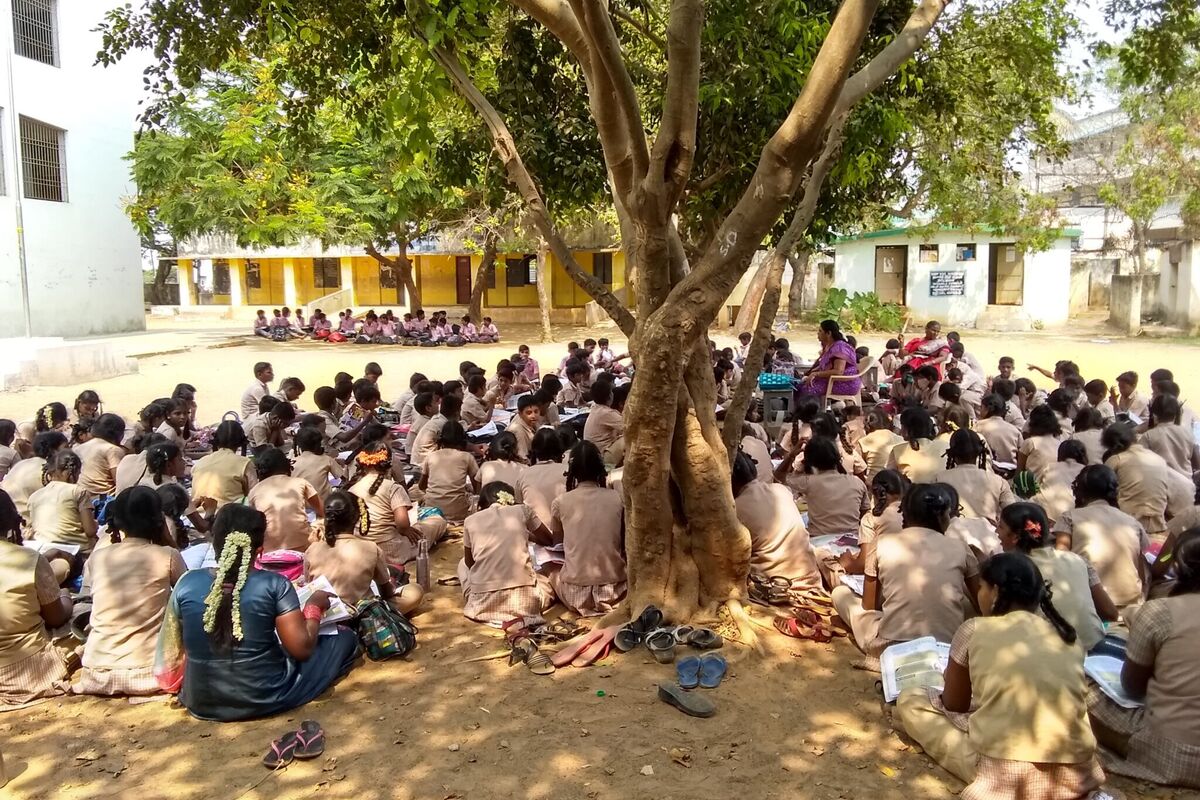

Making it Through an Overstretched Secondary School System
Miriam Thangaraj’s study reveals how systemic pressures and school-level decisions shape the daily realities of secondary schooling in marginalised (Adi Dravida) youth.
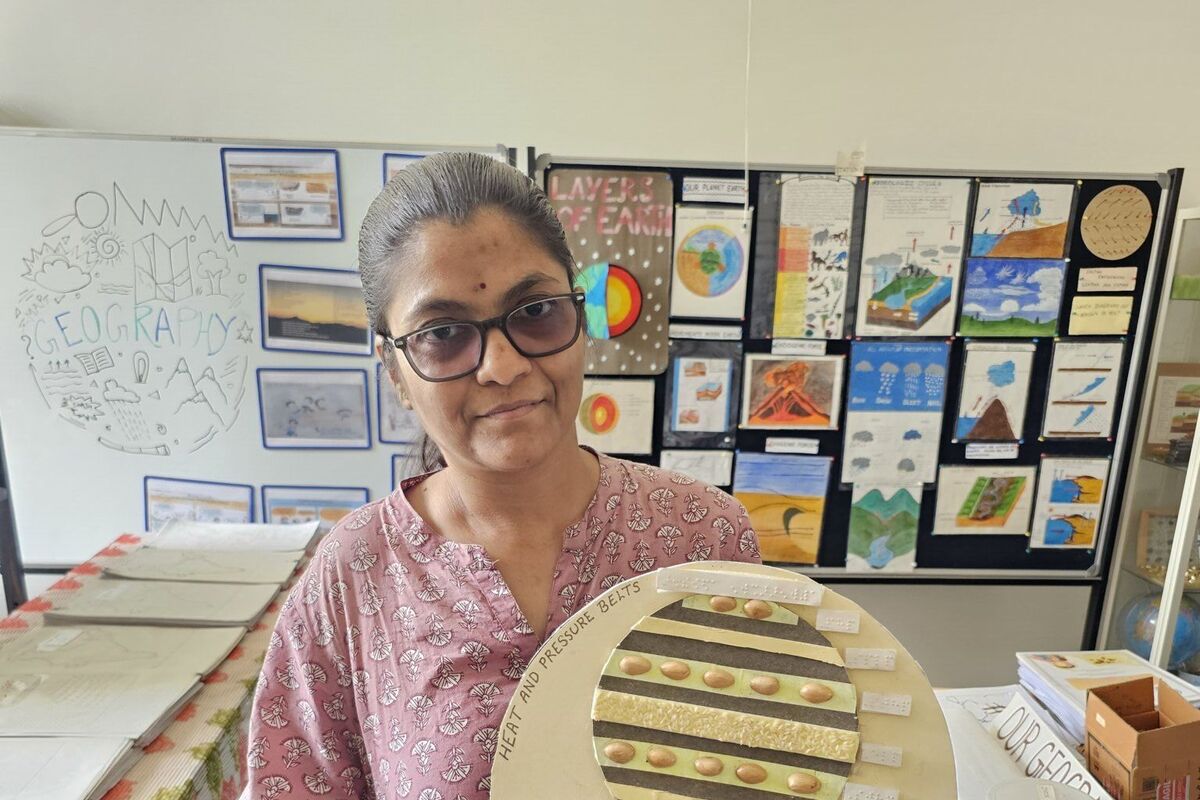
Making Geography More Accessible Through Touch
Saswati Paik is using tactile models and low-cost teaching materials to make geography classrooms inclusive for visually impaired learners.
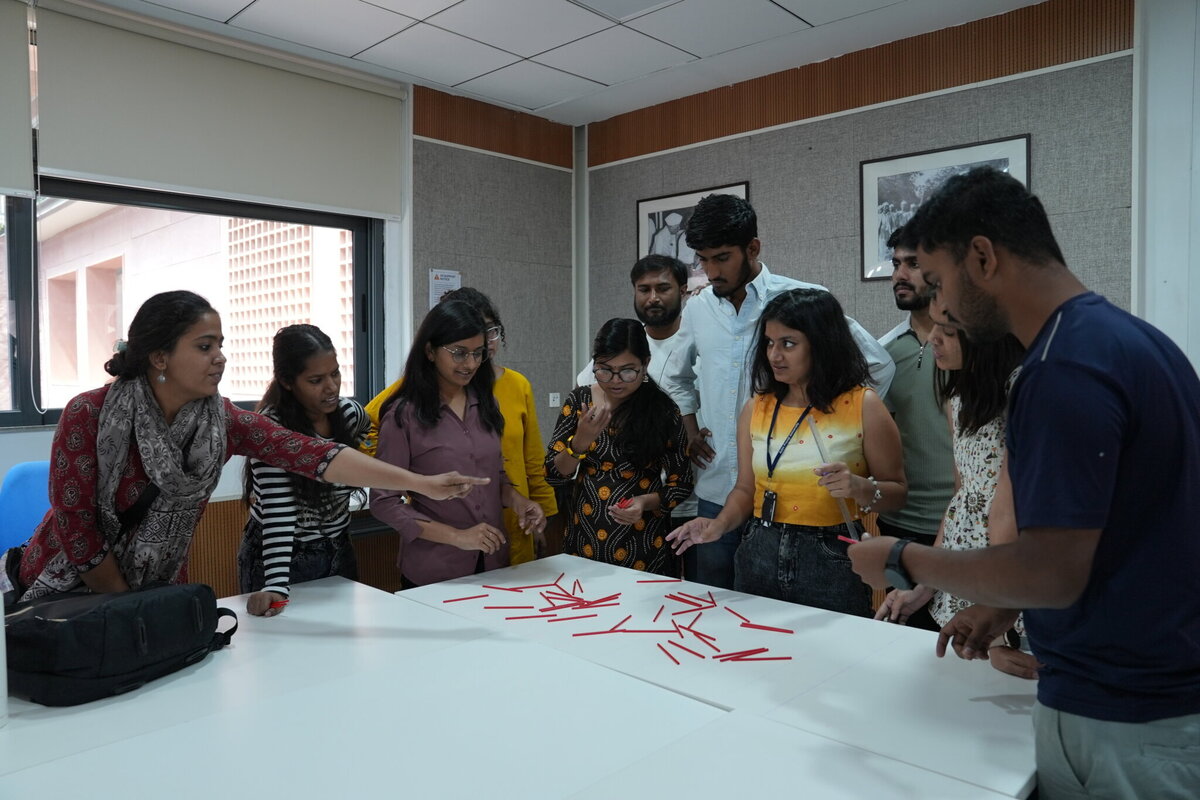
Reimagining Mathematics Pedagogy
Jeenath Rahaman and Arshdeep Kaur highlight how multiple perspectives in Mathematics Education are prioritised at the University.

The First of May | Louis Paul Boon
On International Workers’ Day, A Giridhar Rao shares a translation of ‘The First of May’, prose poetry by Louis Paul Boon.


On getting back our sense of kinship and intimacy with the environment
On Earth Day (April 22), Saswati Paik highlights the need to strike a balance between development and moving towards a sustainable environment.
Explore
Faculty
- Abdul Qaiyum
- Abhijeet Bardapurkar
- Alex P Joy
- Amman Madan
- Ankur Madan
- Anubhuti Sharma
- Aparna Mukherjee
- Arun L Naik
- Ashutosh Vyas
- Chetan Anand
- Deepshikha Singh
- Ishwar Singh
- Jeenath Rahaman
- Kinnari Pandya
- Malavika Rajnarayan
- Manoj Kumar
- Miriam Thangaraj
- Mohit Sharma
- Nandini R Shetty
- Nisha Butoliya
- Rahul Mukhopadhyay
- Rajashree S
- Rishikesh B S
- Sana Khan
- Saurav Shome
- Sharad Sure
- Shinjini Sanyal
- Shipra Suneja
- Varadarajan Narayanan
- Vignesh Arumugam Nadarajan
- Vijitha Rajan
- Vishnu Prakash Kareepadath
32 of 45 All Programme faculty →