
BSc in Mathematics
Batch of
Explore quantity, shape, structure and change, and engage in discovery and conjecture.
Details
“To do Mathematics is to engage in an act of discovery and conjecture, intuition and inspiration …”
Who should join us?
This programme is for those who love mathematics and want to excel in it. But this programme is also for those who are eager to explore the world of Mathematics and see how they fit in it. We encourage students from disadvantaged backgrounds, who would like to avail of a good quality mathematics education, to join.
Our programme enables students who are seeking a pathway for higher studies in Mathematics, as well as students who are looking for mathematical and statistical skills to enable them to perform well in the job market.
Our programme is also tailored for those who seek to become mathematics teachers and education specialists.
The study of mathematics help us develop the capacity to think, reason and model a wide range of situations. It helps us think, speak and write with precision. It provides the language for representing knowledge across domains and the tools for solving problems in almost every field. Mathematical and statistical models underlie modern technology and innovation. A student of mathematics is equipped with a problem-framing and problem-solving mindset.
We help you experience the joy of mathematics
Mathematics is a creative field. Our programme helps all students to acquire a taste for mathematics, and to engage with it as in a game. At the same time, we help students use their knowledge and skills to become capable and responsible citizens.
Classrooms, Clubs and Studio experiences
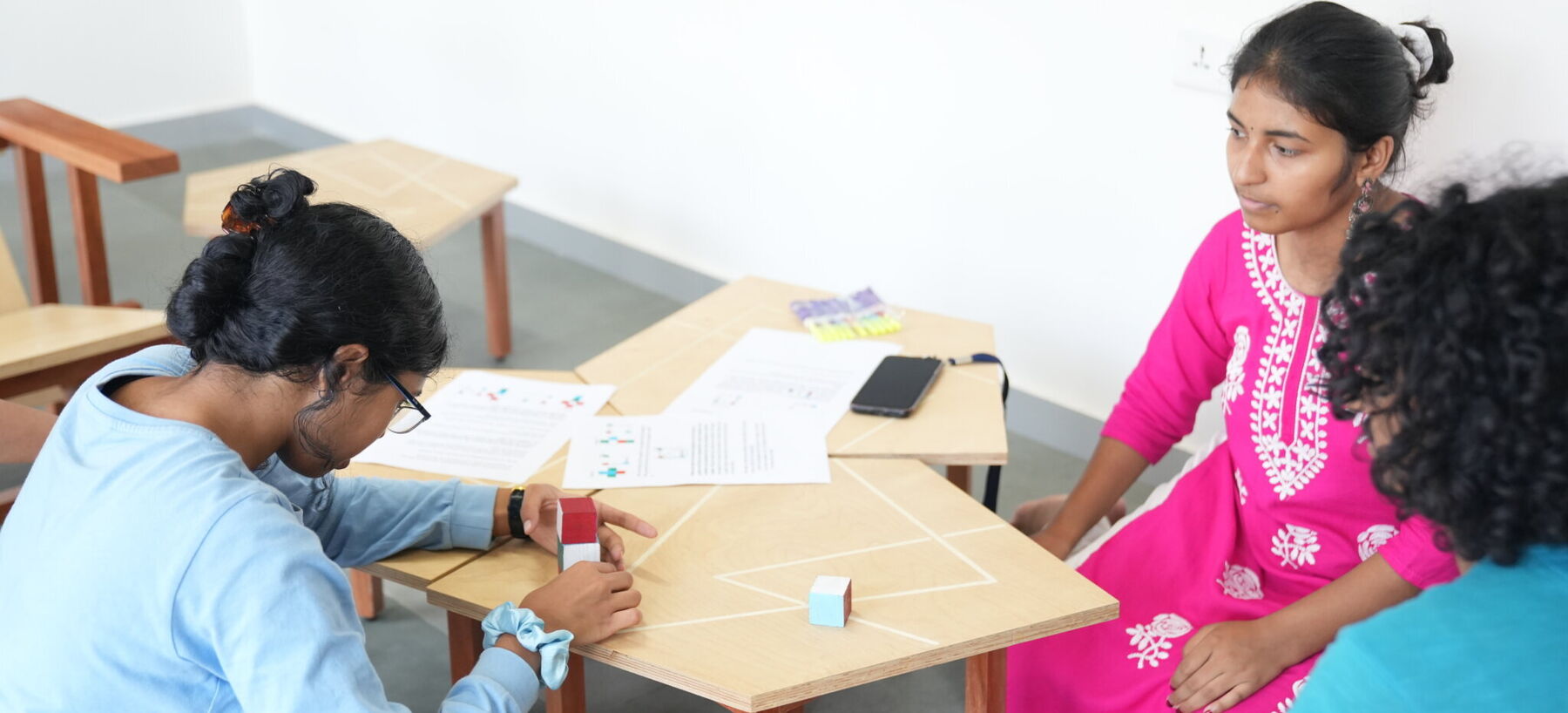
We will use classrooms, laboratories, club activities, exhibitions and events to engage with mathematics. Mathematics learning happens over discussions in the cafetaria, group presentations, book readings, modeling, knitting, drawing and music. And also in the classrooms!
Why study with us?
We offer Interdisciplinary Openness
Our programmes encourage you to explore and follow your interests. We design our courses to ensure that you can specialise in a subject of your choice while learning various subjects across disciplines.
A Common Curriculum for all students
You will meet all your classmates at the beginning of your course to build all the tools you need for your four years of study. This includes foundational courses, an understanding of India, interdisciplinary studies, and courses in creative expressions.
We provide Academic Assistance
Our consistent academic assistance through language support, peer tutoring, faculty mentorship, etc., ensures that you meet the programme’s academic requirements.
We ensure Financial Support
We extend need-based financial assistance to students that cover tuition and accommodation expenses.
Programme Structure
This programme will help you understand the practice of mathematics. We help you recognise patterns in geometric, numerical and algebraic forms, abstraction and the interpretation of mathematical arguments. You will learn to apply mathematical ideas creatively and precisely and understand complex mathematical texts.

The Common Curriculum will introduce students to the study of the themes and areas that emphasise and build critical and analytical abilities, and sensibilities for dialogue, reflection and cooperative learning. The Common Curriculum has four sub-components organised as below:
Academic Reading and Writing: Introduces students to domain specific reading and writing skills
Creative Expressions: Students are empowered to participate with meaningful social connection, fostering a community of active and responsible citizens
Public Reasoning/The World of Computing: The students will do one of the two courses.
- Public Reasoning: Introduces students to the practices of understanding as well arguing for claims in the public realm.
- The World of Computing: This enables students to explore the potential of computing devices and computational reasoning
Understanding India: India’s history, society and possible future.
These core courses focus on mathematical language and thinking and explore a rage of topics. These courses set the tone for higher mathematics and help you with logical and analytical thinking, proof techniques and the communication of arguments.
Our core courses sometimes require an understanding of other scientific disciplines, and to ensure that you are able to study with ease, we offer you supportive courses in methods, chemistry, physics and biology. You have to study programming, a laboratory based course, and one course in economics or philosophy.
Introduction to Mathematical Explorations I
Disciplinary Major
Taught through inquiry-based learning, this course, is an exploration of geometry and algebra motivated by questions of congruence of triangles, along with the nature and language of mathematics.
Introduction to Mathematical Explorations II
Disciplinary Major
Introduction to Programming
Disciplinary Major
Helping you explore programming with depth.
Analysis I
Disciplinary Major
This course focuses on the structure of the real line and functions on the reals. Notions of convergence and continuity are studied and also some important results in calculus about these concepts, and the properties of the real line that lead to these results.
Analysis II
Disciplinary Major
Continuing our study of real numbers and their properties, we study functions on reals and their properties through some theory of differentiation and integration. We will also study how these two concepts are related.
Analysis III
Disciplinary Major
In this third course in the analysis sequence, we study the calculus of functions of two or three variables and interpret the fundamental theorems of calculus in higher dimensions, and which have rich applications in the physical sciences.
Ring Theory
Disciplinary Major
Delves deep into inquiries like - Is -2 a prime number? Why do integers and polynomials have same the division algorithm? Why does algebra shed light on the geometry of polynomial curves? - and many more, offering comprehensive answers and insights.
Linear Algebra
Disciplinary Major
The plane is thought to be two-dimensional, experienced space as three-dimensional and represent them by coordinate systems. This course leads to vector spaces and linear maps which crop up everywhere in mathematics.
Probability and Statistics I
Disciplinary Major
In this course you will learn how to represent chanciness mathematically and construct mathematical models for games of chance.
Groups and Symmetries
Disciplinary Major
Provides you with the knowledge needed to address challenges related to symmetry with precision and a deep understanding.
Discrete Mathematics
Disciplinary Major
Discrete mathematics is the study of structures like graphs, lattices etc which are finite, or infinite without being dense. Reasoning about them involves counting, permutations and combinations, probability and more.
Ordinary Differential Equations
Disciplinary Major
Students must be prepared for the world of work at the end of the programme should they choose to enter it. We aim to provide the required skills and competencies for this through a Minor featuring courses in an Occupational or Interdisciplinary theme. These sets of courses are aimed to provide both conceptual understanding and skills and tools that will allow students to contribute through work and further study.
Students can opt for a Minor in any one of the indicative areas listed below.
The selection of these indicative areas is based on the availability of courses and our evaluation of the student’s interests and academic needs. For each cohort, a final list of available courses will be announced at the end of their second semester.
Music Education
The undergraduate Occupational Track programme in Music Education is designed in collaboration with SaPa, the Subramaniam Academy of Performing Arts. SaPa is on a mission to make quality music education accessible to all. A large part of this involves creating enough music teachers to build the ecosystem for music education, and creating certifications and knowledge sets to make music teachers employable, both in schools and at music institutions.The Music Education OT aligns with this objective and aims to offer students an understanding of music itself, and how music may be taught in different environments. This will help students be employable,…Design for Communities
Design concerns itself with envisioning, planning and creating objects, spaces or interactive systems to address a need or a problem. It attempts to meet the needs of a variety of users with responses that are aligned with their specific contexts. It aims to understand situations and create holistic, appropriate solutions. While design is a large discipline with many domains, this Occupational Track will look at the design of products, the practical use of technology in various enterprises and the design of spaces for accessibility and interaction. It includes the process of ideating, developing and refining products that meet specific market…Sports and Fitness
We believe that a regimen of physical activity can have a powerful effect on an individual’s physical, mental, and emotional well-being. Sport can be used as an effective tool to help an individual learn crucial life skills and also to build an empathetic, equitable community. In these set of courses, we want you to have a powerful experience of sport not just as a physical activity but as a way to build yourself and your social surroundings. We also want to teach you ways in which you can create these transformational experiences for others.Data, Democracy and Development
The set of courses will orient you to think about data as an essential part of building empathy and democratic values. We ensure you have the requisite tools for data collection, analysis, presentation, and dissemination so that you can construct the right platforms and build technologies that embody democratic principles. These courses will foster a culture of investigation with data, keeping in mind questions of ethics and politics.Climate Studies
These courses will help you develop the knowledge necessary to understand the earth’s climate systems. You will examine and analyse the role of human activity on the earth’s climate and its effects on the present and future climate scenarios, and identify the effects of climate change on biodiversity through the lens of historical changes in the Holocene. We hope you will apply systems thinking to examine the origins of the climate crisis and proposed solutions and grow comfortable with civic engagement and transfer of knowledge and resources for climate solutions at different levels.Technology for Social Good
The Technology for Social Good occupational track has been designed based on the Azim Premji Foundation’s extensive experience in working with social sector organizations. Many of these organizations are addressing long-standing social problems through utmost dedication and a strong desire to improve the society we live in. There is a lot of scope for facilitating the work of these organizations through the use of digital technology. While accomplishing social change is a slow process requiring long-term engagement, digital technology can assist these organizations in making their operations more effective and by permitting better utilization of scarce resources. At present, these…Biodiversity Conservation
Biodiversity conservation, management, and habitat restoration requires a multi-pronged approach, and an interdisciplinary understanding is essential. This OT will acquaint students with the rich biodiversity of the Indian subcontinent and the associated threats to them, and provide the students with the lens to identify pertinent questions such as — what to conserve, why to conserve, when to conserve, and how to conserve. The field of conservation binds the need for species and ecosystem conservation with the requirements for human well-being, livelihood, and rights. Through this curriculum, the students will be aware of the interdisciplinary approach in this field and will…Media and Journalism
These courses will introduce you to the critical and conceptual tools involved in media texts. This course is based on research and practice, and you will study how media texts are created and their social, historical and political contexts. This course is for students who wish to prepare for careers in journalism, communications, and social work.Education
The Occupational Track (OT) in Education at Azim Premji University leverages the liberal arts tradition by fostering a deep understanding of human society and its relationship with education. This program delves into psychology, sociology, politics, and philosophy, revealing how these disciplines influence how individuals and societies approach learning. Additionally, the arts, humanities, and diverse philosophical perspectives enrich our understanding of educational thought and practice.The OT in Education recognizes the importance of analysing educational processes and systems at various levels, from individual student experiences to national and international trends. By examining different perspectives – personal, communal, organisational, national, and international –…

Students can craft their own educational experience by selecting courses in the following ways:
- Students will have the option to take additional courses in their Disciplinary major
- Students will have the option to take additional courses in another discipline as a minor
- Interdisciplinary minor that will enable them for their further higher studies or career pathways.
These courses could also be selected to enhance and broaden their
- Language skills and Quantitative reasoning capacities/programming skills
- Understanding of themes outside their Major subject.
Classroom Practices
Mathematics classroom practice is based on Inquiry-Based Learning in the first year. This means that students are encouraged to frame problems, identify the assumptions, axioms and definitions required and then proceed to derive results or theorems and thus engage in mathematical discovery. These practices are further grounded in learning behaviours encouraging discussion, sharing, collaboration and are designed to erase differences of background, linguistic ability, gender differences, etc. among the students.
Classroom work is supported by experimental, modelling and computational activities in the vibrant Mathematics Studio. Most courses of study have lectures, tutorials and lab components. Computer programming is taught at an early stage. Students are encouraged to take up project work, where the faculty mentor them.
Students
learn in a conducive atmosphere with opportunities for multiple modes of
learning and expression at every stage.
Selected Honours Projects:
2020
- Fat-tailed Distributions: Statistical Properties and Applications, Anjali Susan Oommen, mentored by Shailaja D Sharma
- Topological Data Analysis, Madhuleka V Iyer, mentored by Divakaran D
- Understanding Alexander S Theorem (Knot Theory) through the Lens of Algorithm, R. Vijayashri, mentored by Shantha Bhusha
- Godel’s First Incompleteness Theorem, Tanu Prasad, mentored by Divakaran D
- Integer Multiplication in Time O(n log n), Vighnesh V. Iyer, mentored by Divakaran D
Our Graduates:
- Pursuing higher studies in Mathematics
- Pursuing higher studies in Management
- Pursuing civil services exams
- In the teaching profession
- Coders in gaming industry
- Insurance/ actuarial practice
- Data anlalytics jobs/ internships
- Management trainees
- Education software
Roles: [ listing down some of the roles]
- Data Analyst
- Research Assistant
- Project Assistant
- Assistant Manager/ Manager
- Teacher
Resources
-

Mathaapu | Celebrating the Art of Doing Mathematics
A Collaboration of the Mathematics Community at Azim Premji University, Bengaluru
-
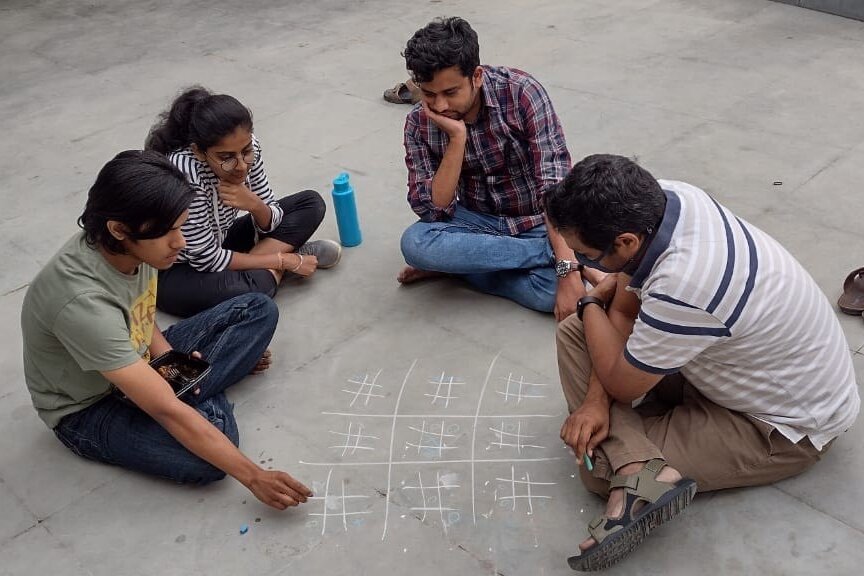

Math Club
A space for mathematics enthusiasts and geeks
-


Understanding Breakthrough Science
Contextualising groundbreaking scientific discoveries for undergraduates and anyone curious about cutting-edge research
Partnerships and Collaborations:
BMTC (Bangalore Mathematics Teachers’ Circle) is an initiative within which undergraduate Mathematics teaching and learning experiences are shared across members of the professional community. This initiative is a collaboration between the Mathematics teachers at the University as well as several other colleges and Universities across the country.
Related Stories
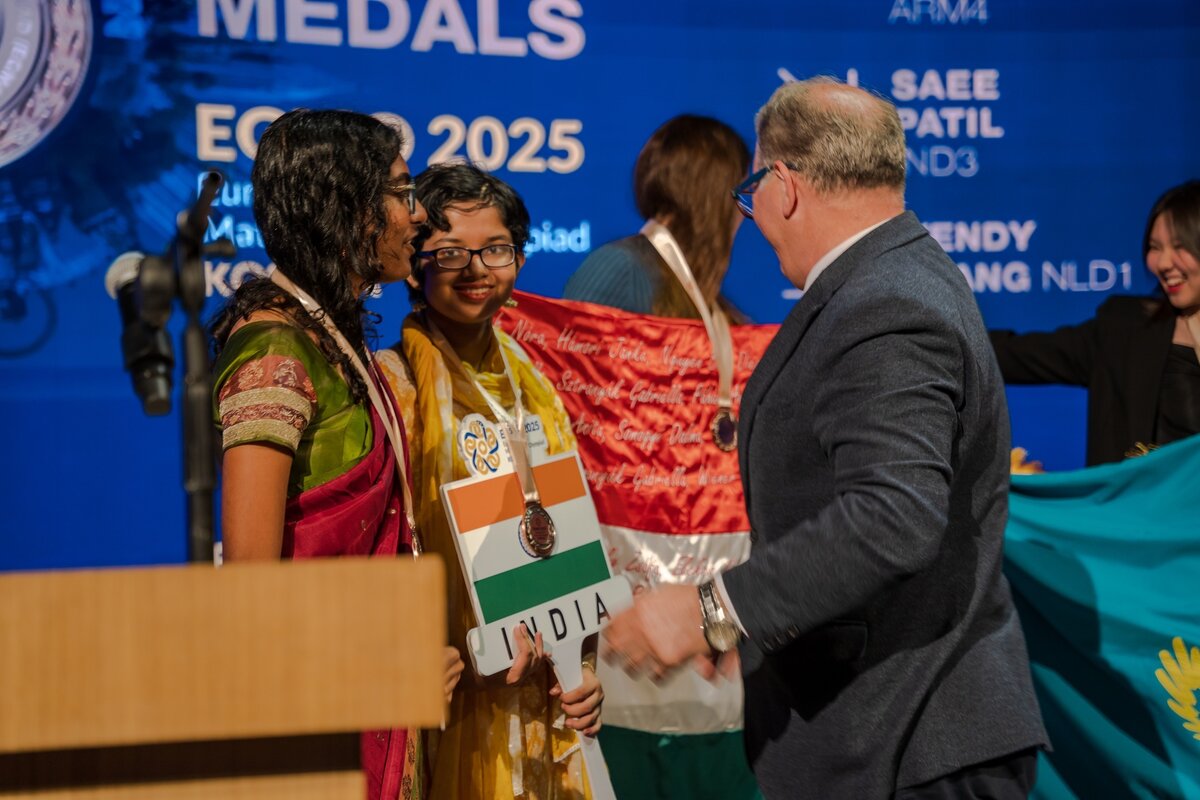
The Future of the Olympiads is Diverse
Mohan R and Ajaykumar K reflect on the evolution of the mathematical olympiads, and caution the community from forgetting its original goals.
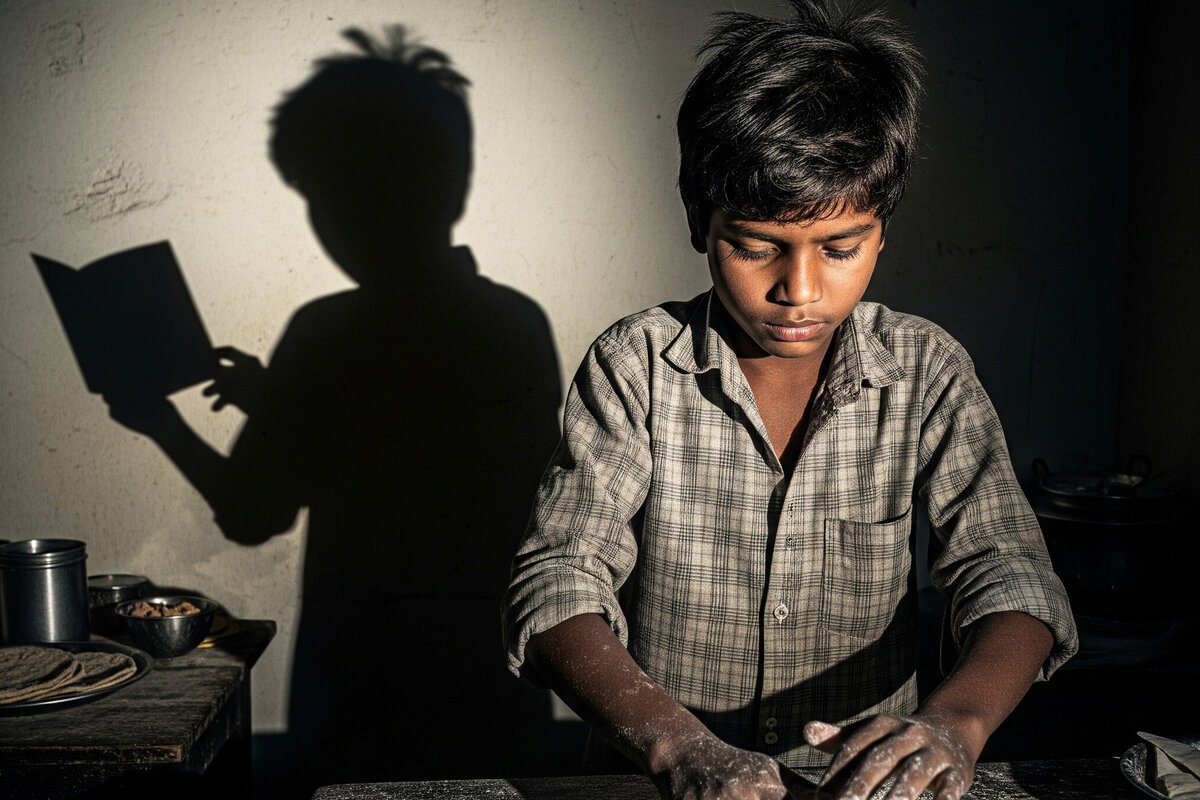
Lessons from L B Road, Chennai
R Ramanujam shares some of his experiences from taking classes for child workers.
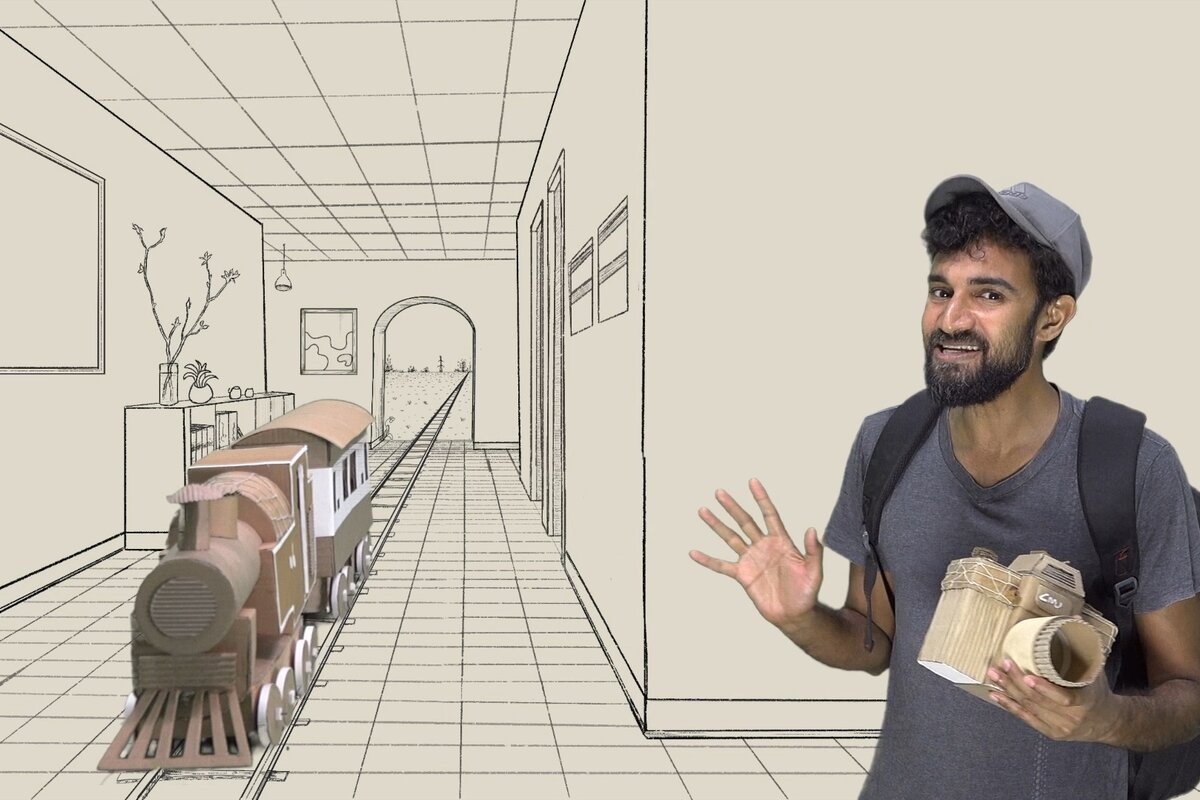
Experience mathematics with puppets, theatre and storytelling
Three years after the release of his course ‘Geometry of Vision’ on NPTEL e‑learning platform in 2022, puppeteer-mathematician Vijay Ravikumar gears up to teach it to the undergraduates at the University for the first time.
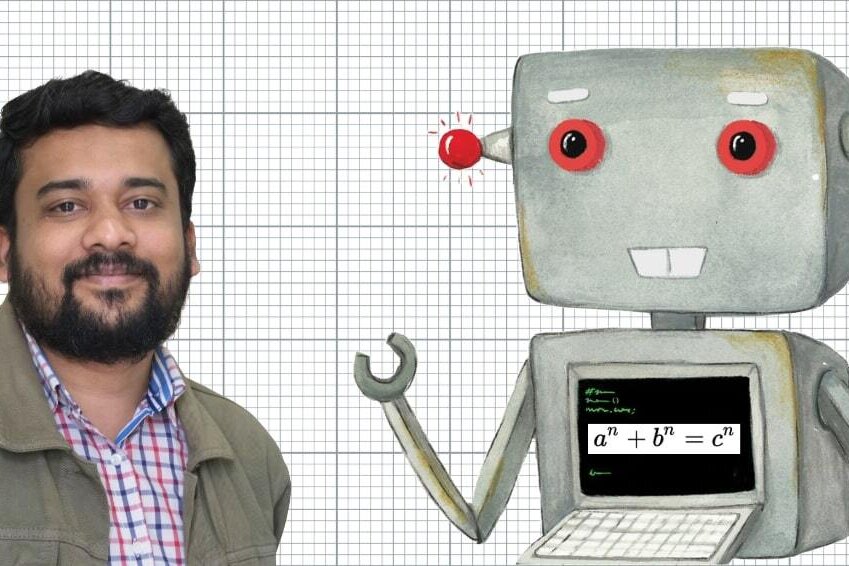

Has Artificial Intelligence Conquered Mathematics?
The short answer is no, but Mohan R and Nandita Jayaraj discuss some sure signs that a new era of mathematics is approaching.
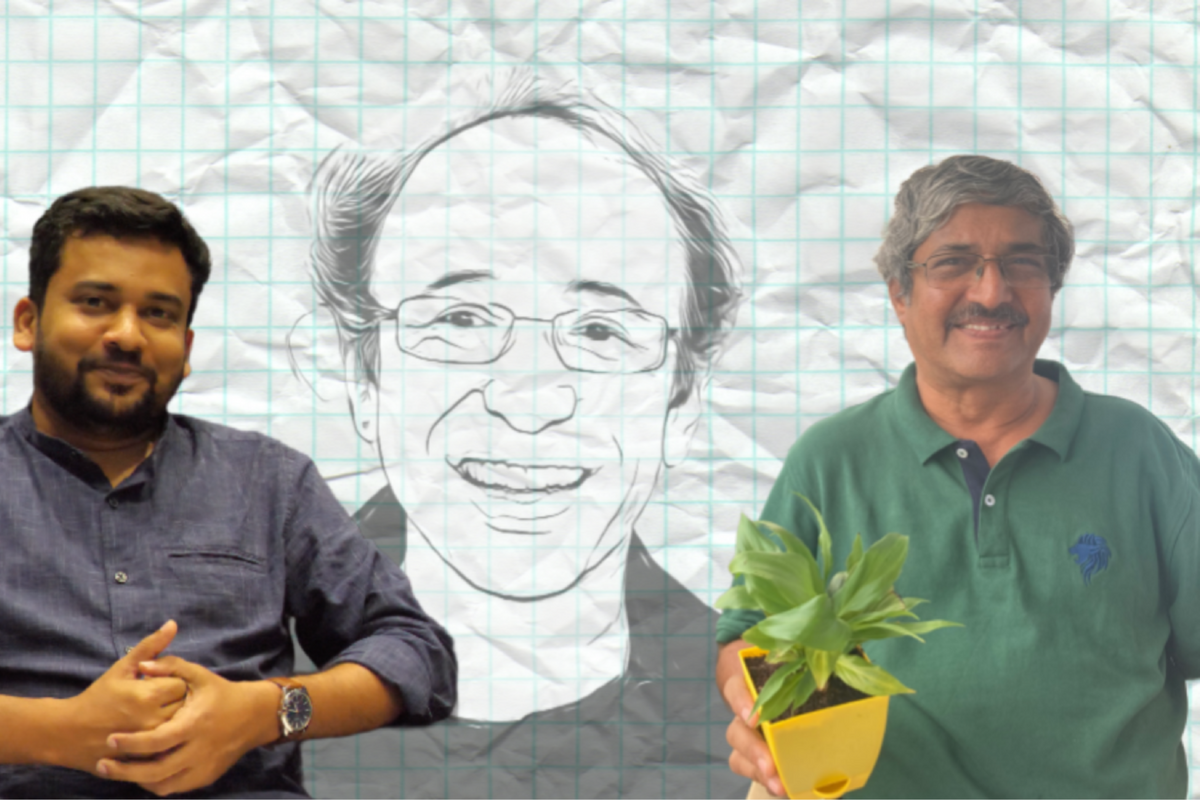
The expensive simplicity of Daniel Spielman’s mathematics
A mathematician and a computer scientist, Mohan R and Ramanujam R, help us make sense of the fascinating mathematics of Daniel Spielman, a name that turns heads in the math world today.
Explore

Faculty
14 of 14 All Programme faculty →