The Future of the Olympiads is Diverse
Mohan R and Ajaykumar K reflect on the evolution of the mathematical olympiads, and caution the community from forgetting its original goals.
Details
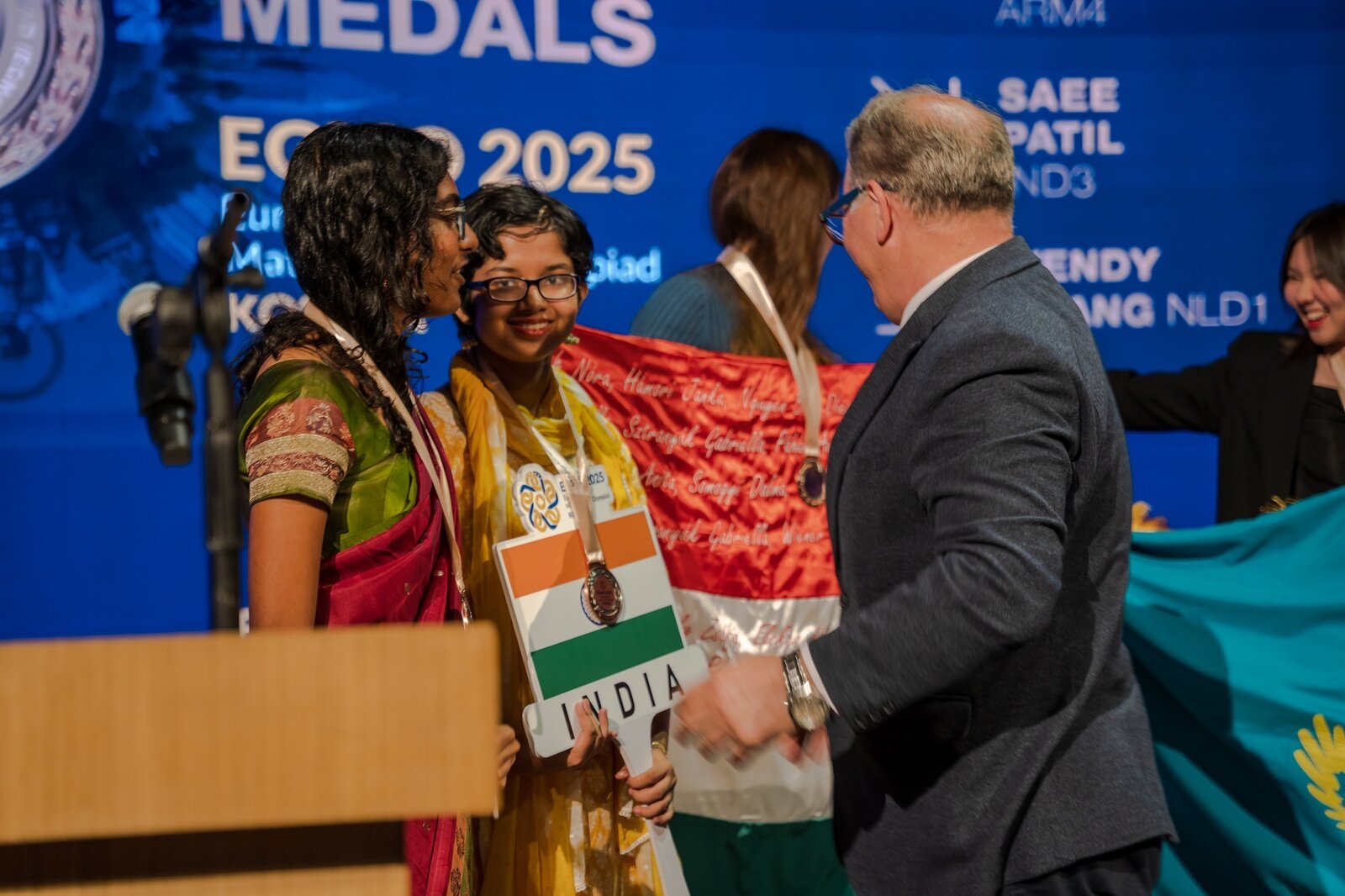
Saee Patil and Shreya Gupta Ray receive their medals at the EGMO 2025 held at Kosovo in April. Credit: EGMO 2025
It’s been a great year for India as far as international mathematical olympiads are concerned. In April, the national team won four medals and came twelfth out of the 56 countries that participated in the European Girls’ Mathematical Olympiad (EGMO) held in Prishtina, Kosovo. More recently, in July, at the International Mathematical Olympiad (IMO) 2025 held at Sunshine Coast, Australia, the team from India won six medals, including three gold.
When he heard about this, Mohan R, a maths faculty at Azim Premji University, took this as a positive sign that the efforts of the national Olympiad community were paying off. At the same time, he is slightly concerned by the inequities in the system that prevent a vast majority of our young problem solvers from joining the playing field.
Early days
The EGMO and the IMO are among the most prestigious international math competitions organised for high school and pre-university students around the world. They typically involve solving a number of exceptionally difficult problems over a fixed time period — six problems over 9 hours spread across two days, in the case of EGMO and IMO. The first Olympiad took place in Romania in 1959; India began participating only in 1989, but since then the competition has soared in popularity in the country.
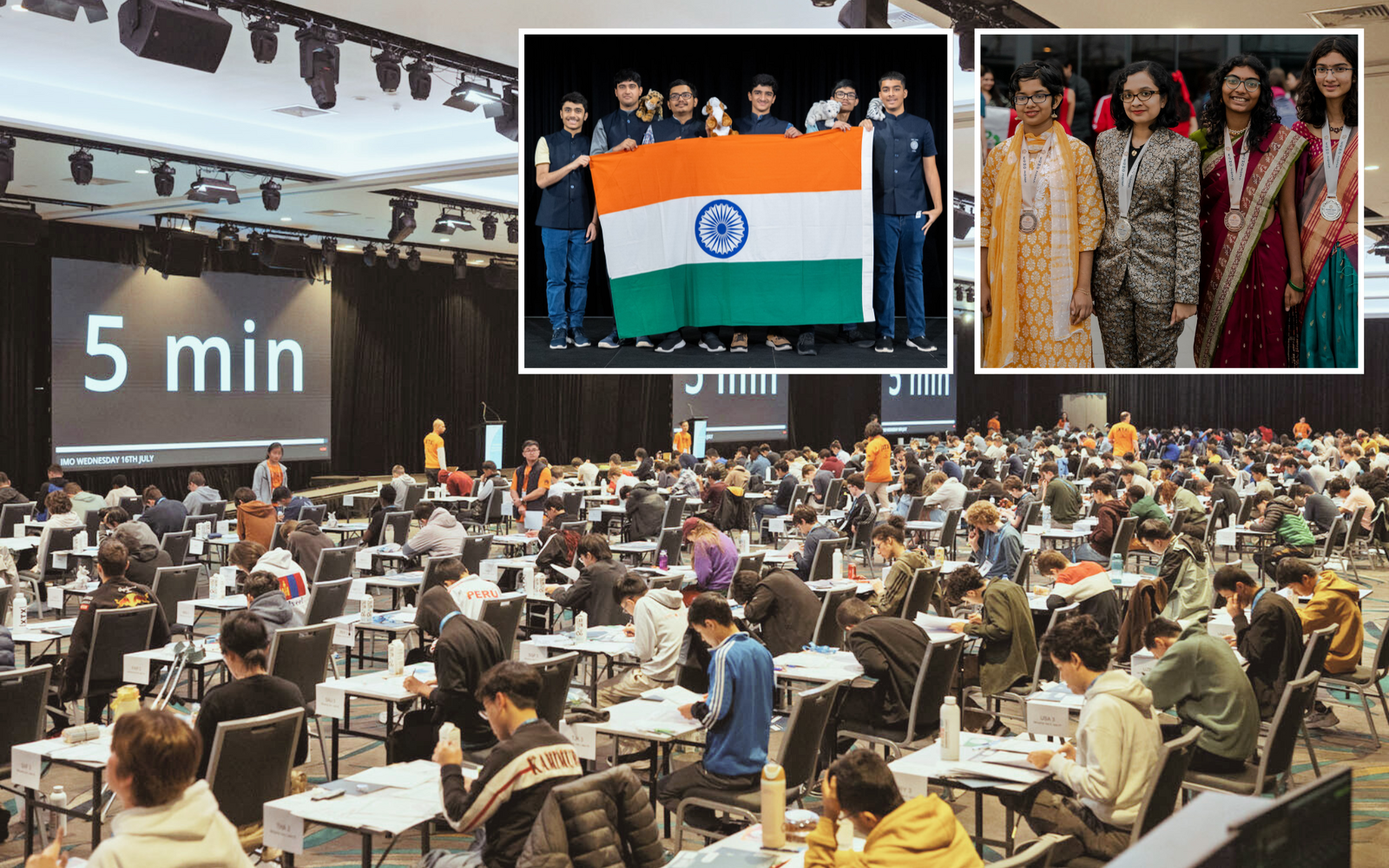
The IMO 2025 underway in July at Sunshine Coast, Australia. Inset images show the winning IMP and EGMO teams. Credit: Australian Maths Trust, EGMO 2025
For the past two years, Azim Premji University has been an important part of the maths Olympiad ecosystem of India. Our Bengaluru campus has hosted various activities for prospective participants, while two of our faculty members, Mohan and Ajaykumar K, have been coordinator and joint coordinator respectively, for the Karnataka region.
“The idea of exams like the Olympiads was not so much about solving very difficult problems, but to create a problem solving culture where students enjoy doing mathematical problems.”
An algebraist by training, Mohan is a keen believer in what exams like the Olympiads stand for. The Olympiad “movement” began in the Soviet and eastern European countries way back in the late 19th century. The idea, according to Mohan, was to gather students from nearby, including villages and small towns, and get them involved in problem solving. “It was not so much about solving very difficult problems, but to create a problem solving culture where students enjoy doing mathematical problems,” he said. This would, of course, also be a way to identify talent. “Mathematics is not easy. Not everybody can excel in it. We have to find these natural talents and nurture them.” Eventually, the tradition spread across Europe, the US, and all over the world.
What do we have to gain by competitions like the Olympiads? Being able to think creatively and tackle math problems can translate into real-world problem solving, asserted Mohan. “Mathematics not only teaches us about the [technical] concepts. It also tells us how to approach a problem in a systematic way.”
Adulterating the joy of maths
Ajay, who also teaches mathematics at the university, likes to draw a parallel with sports. “You see young children engaging in sports, right? Not all of them have professional aspirations, but there are still lots of benefits. It enhances not just their psychomotor abilities but also their social skills and community building,” he said. “Similarly, problem solving in maths, too, can be joyful. It can be pursued as something that is cooperative and collaborative in nature. Why can’t groups come together to solve problems?”
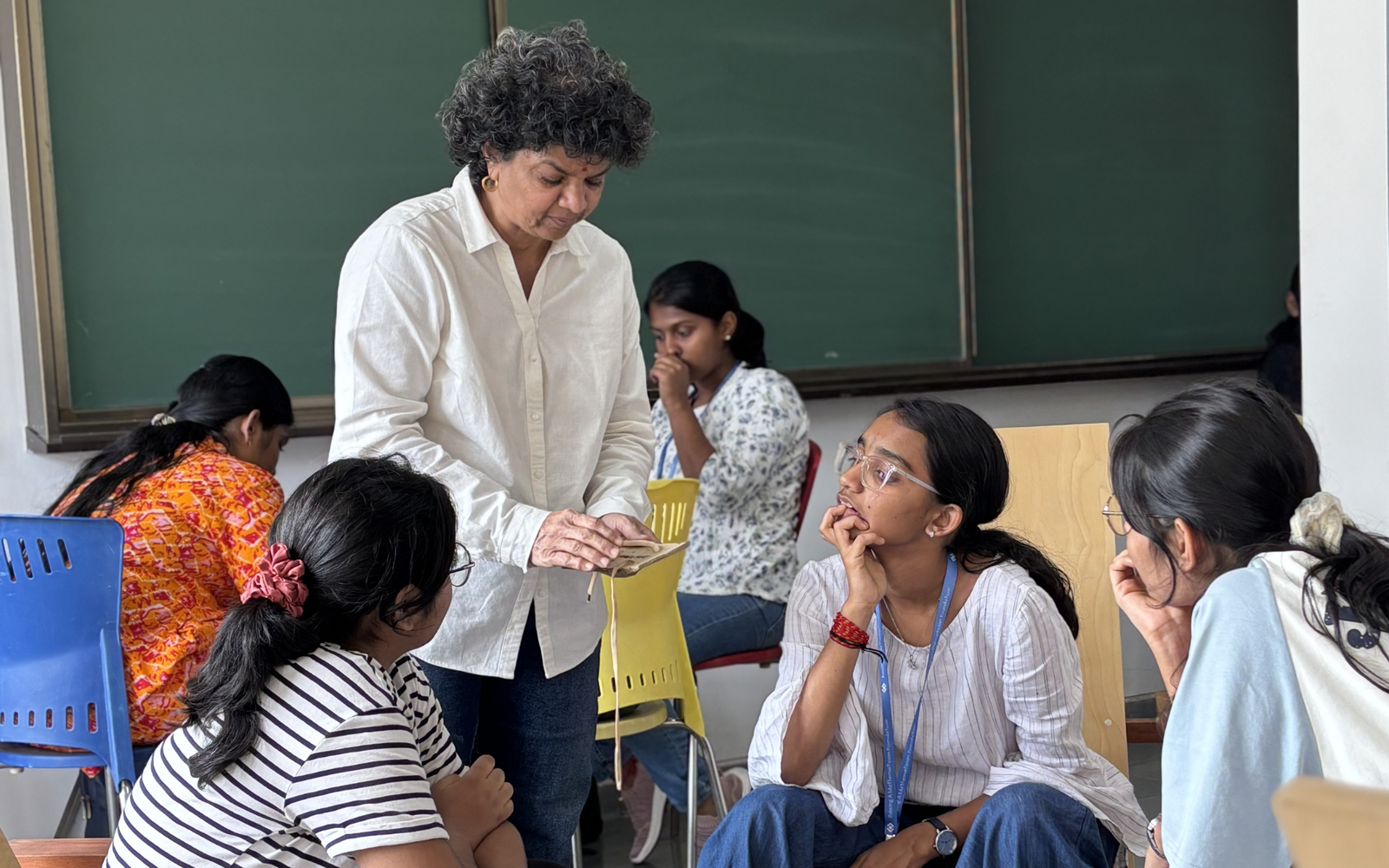
Shantha Bhushan, with participants of AG MNC, attempting to solve the “shoelace problem”. Credit: Ajaykumar K
Unfortunately, the growth in popularity of the Olympiads is not completely organic in India, but spurred on by private entities who have realised that parents of schoolgoers are a huge market to be tapped. “In India, there is an unnecessarily created pressure from society where your child has to excel whenever there is a competition. They take it very personally,” commented Mohan.
Commercial entities now sell their own ‘olympiad’ programmes to students as young as in primary school. These programmes have no relation to the global Olympiad exams. When some IITs began offering direct admission to students who have participated and won medals at the IMO (thereby bypassing the JEE), coaching institutes were quick to cash in by integrating Olympiad training into their courses. Therefore, Mohan wasn’t entirely surprised to see students arrive at the Indian National Mathematical Olympiad Training Camp (INMO TC) in the university in December 2024 wearing their coaching institute t‑shirts.
The Olympiad pipeline
As coordinators, Mohan and Ajay have been organising regional mathematical Olympiad activities for the Karnataka region since 2023. The annual cycle begins with the Regional Mathematical Olympiad (RMO), a three-hour examination written by around 300 students who have qualified through the Indian Olympiad Qualifier in Mathematics (IOQM). Students who perform well in the RMO are invited to a week-long training camp, the INMO Training Camp (INMO TC), where they engage in intensive problem-solving sessions and interact with experts in the field.
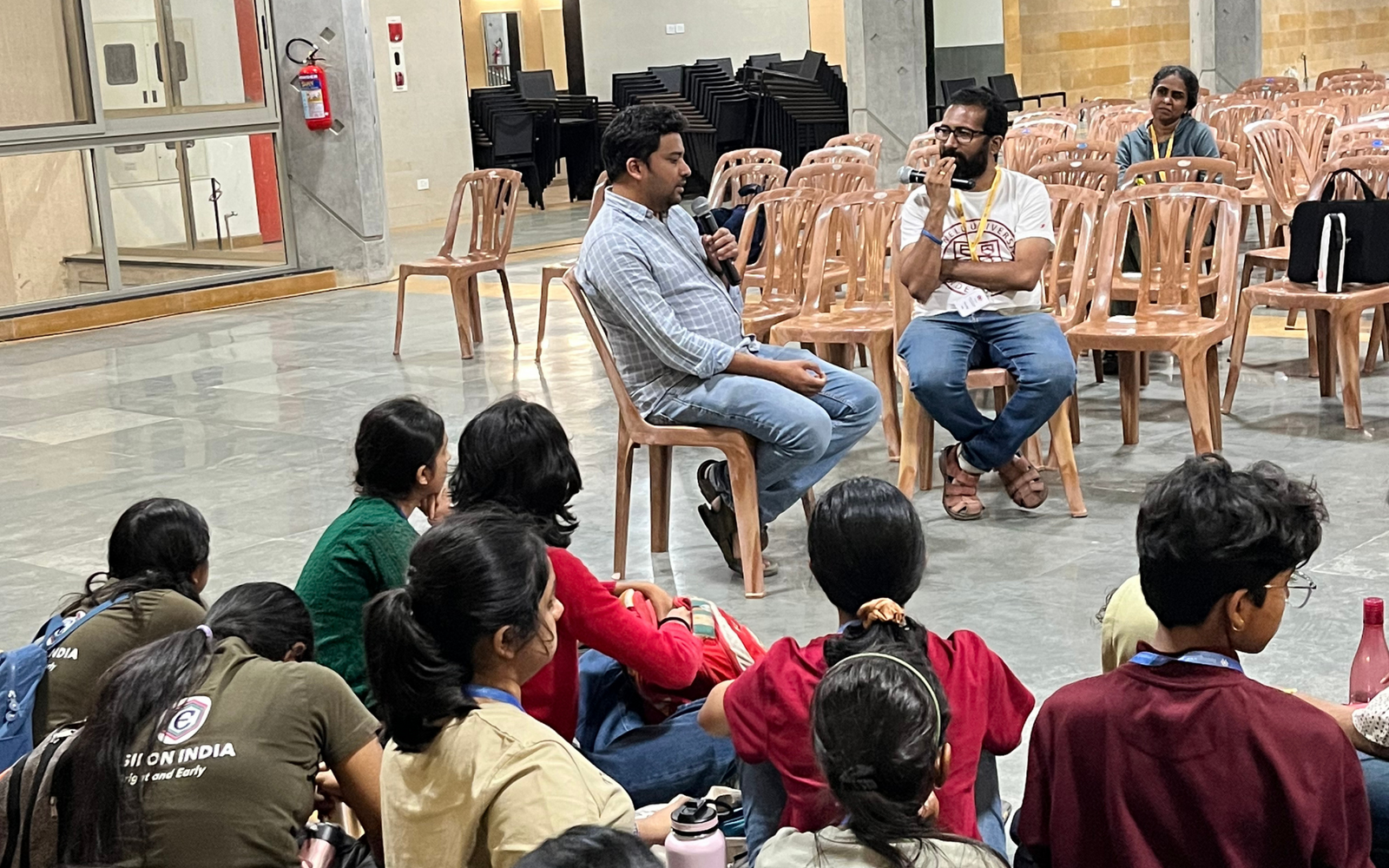
Mohan in a conversation with Vinay Nair, co-founder, Raising A Mathematician (RAM) foundation, during AG MNC 2024. Credit: Ajaykumar K
This is followed by the Indian National Mathematical Olympiad (INMO), the national-level competition. Close to 50 students from the state of Karnataka write the INMO exam. Students who excel in the INMO are then invited to participate in the Asian Pacific Mathematics Olympiad (APMO). Since 2023, Mohan and Ajay have been coordinating these activities for the Karnataka region, with support from Azim Premji University.
The latest INMO TC was held at the university from 23 to 28 Dec 2024. This year, 32 participants registered for the camp. Mohan and Ajay gathered a group of five experts comprising educators and mathematicians to facilitate the week-long sessions.
The gender gap
Alongside this camp, there was another camp underway, with similar yet distinct goals. The All Girls Math Nurture Camp (AG MNC) was a week-long residential camp, organised in collaboration with the Raising a Mathematician foundation. Here, the aim wasn’t to train the participants for a specific exam, but to inspire mathematically talented young girls to pursue mathematics and sciences through mentorship and interaction with successful women in STEM. The sessions continued online for the next three months, to make sure the participants would build on their learning.
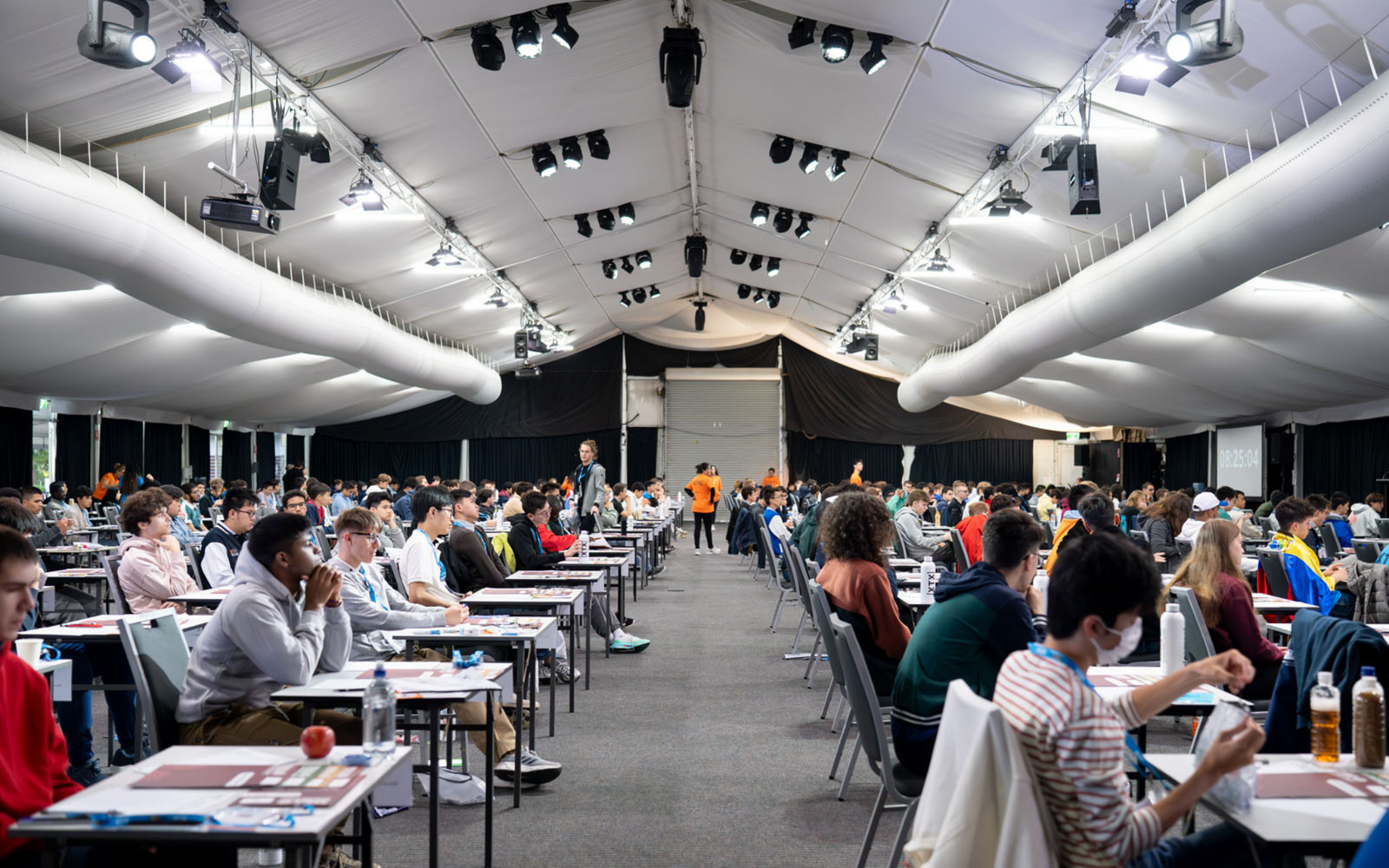
The IMOs have historically been very male-dominated, but there are initiatives ongoing to address this. Credit: Australian Maths Trust
It only takes a cursory glance at maths Olympiad teams over the years to understand why such an initiative is needed. Somehow, girls’ participation in maths competitions is extremely rare, globally. This year, the Indian team had no girls in it, and this was the case in 2024, 2023 and 2022. The AG MNC is an initiative that hopes to bridge this gap.
Another such initiative, but on the global scale, is the European Girls’ Mathematical Olympiad (EGMO). Started by the United Kingdom in 2012, this is a competition “exclusively for high school female students who enjoy mathematics beyond the regular school curriculum”. The 2025 edition took place in April and the team of Indian girls won four medals. Interestingly, pointed out Ajay, one of them, Shreya Shantanu Mundhada had participated in the INMO TC organised by the university in 2023.
“There are talented girls but there is a gap when it comes to nurturing. Sending young girls out from their villages and towns is a very big concern for parents. That’s why we wanted to run this camp,” explained Ajay.
While there are steps being taken to boost girls’ performance in these programmes, there is another challenge that plagues the Olympiad ecosystem in India. “It’s rare that we get students from government or state board schools writing this exam. And that is the concern for us,” summed up Mohan. Even during the camps, almost all of the Karnataka region INMO TC participants came from Bengaluru, with just a couple from Mangaluru.
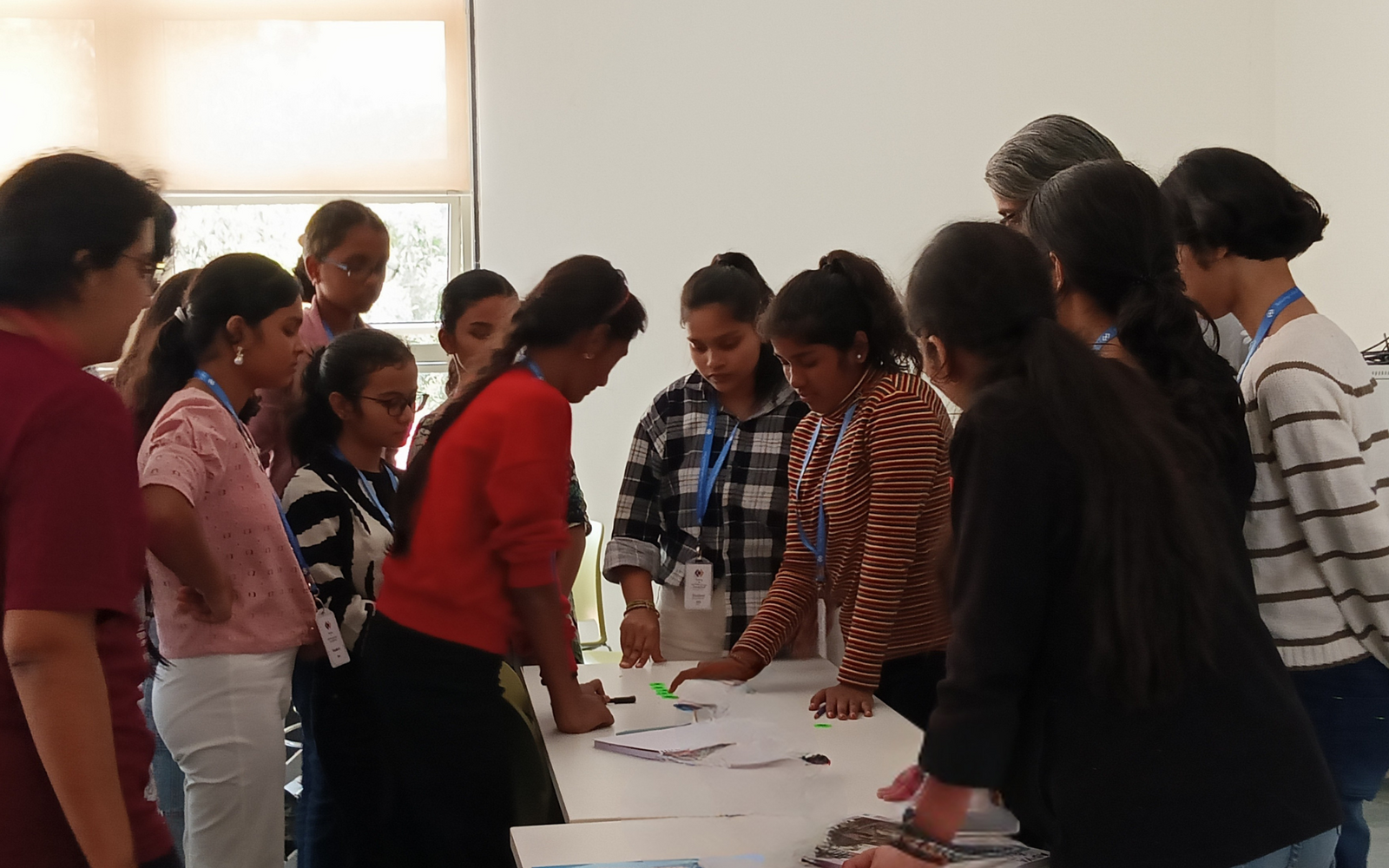
Students engaged in a hands-on activity during a session on rational tangles at AG MNC 2024. Credit: Ajaykumar K
A geographical gap
Mohan illustrated the scenario with his own experience as a government school student in a village near the industrial town of Hosur: “Forget the Olympiads, we did not even know about IIT! Most of my classmates wanted to get into an ITI (Industrial Training Institute), not IIT. They only worried about getting a stable job after school. And not much has changed today.” Mohan recalled that when he was in Grade XI, his maths teacher had in fact suggested he write an exam that would qualify him for the RMOs— “but I did not understand its purpose, or how to prepare for it. I decided that this was not for me.”
It was more or less the same for Ajay, despite growing up in the city of Mysuru. Now that both of them are coordinating Olympiad activities for the Karnataka region, they are keen to change things. They have realised that the only certain way is for the coordinators to actually go out there and put the word out about these competitions. However, there is a dearth of resources to enable this level of outreach. “We need support from the state machinery. Right now, it is a purely voluntary activity. We only get some funding from Homi Bhabha Centre for Science Education (the TIFR centre under DAE who is in charge of the mathematical olympiad programme in India). We can’t really reach out to all the places that we need to,” he said. “Eventually, we’ll need to have sub-regional coordinators.”
Last year, Mohan and Ajay wrote an email to Karnataka’s Principal Secretary of School Education, to request help in trying to reach out to public schools. There was no response, but they don’t plan to give up. “Next time, we will try to meet them in person,” said Ajay. “We want to make this a broader programme, make it more inclusive, geographically and genderwise.”
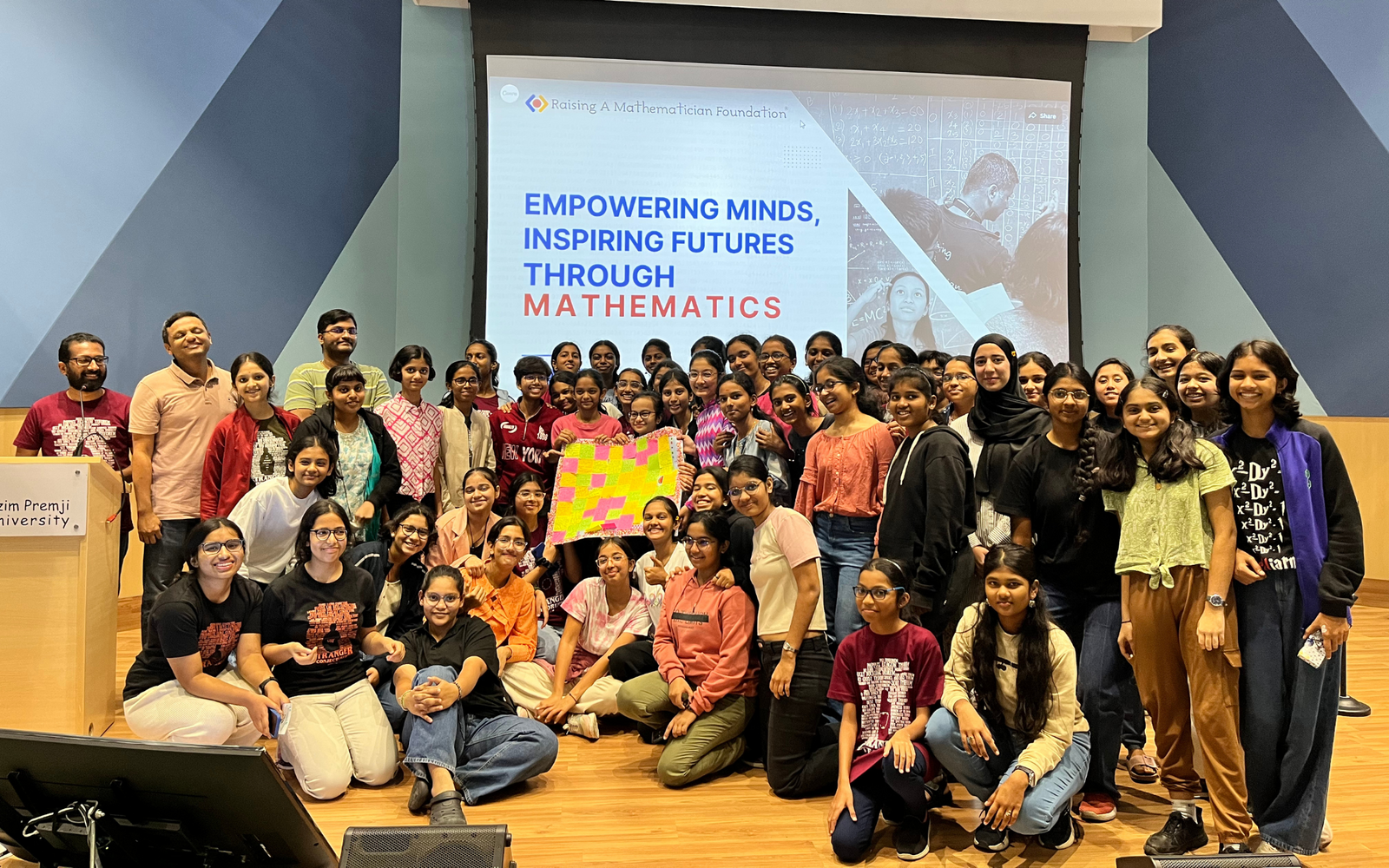
A jubilant group of math lovers after the 2024 AG MNC at the university. Credit: Ajaykumar K
Before one mistakes the duo for being Olympiad evangelists, Mohan clarified, “Our aim is not to ensure India a high rank. It’s very, very simple – just like how Ajay and I did not know about the Olympiads, neither do most other students in government schools and districts outside Bengaluru. I want them to know about Olympiads, try to apply, and have the opportunities to sit together socially and solve problems outside of the classrooms. This is what we are really aiming for. It’s not just the competition that matters to us. It is the journey it takes you on.”
About the author
Nandita Jayaraj is a science writer and communications consultant at Azim Premji University. She may be contacted at nandita.jayaraj@apu.edu.in