
Publications & Resources
Our faculty, students and researchers work together everyday to contribute to a better world by grappling with urgent problems we are facing in India. We conduct rigorous work to produce high quality learning resources and publications to contribute to public discourse and social change. Here, we feature a sample from our work for everyone to access. You can explore featured resources, policies, and the latest publications from the University.
To explore all the work of our University, please visit our publications repository.

- Published
- Authors
Abstract
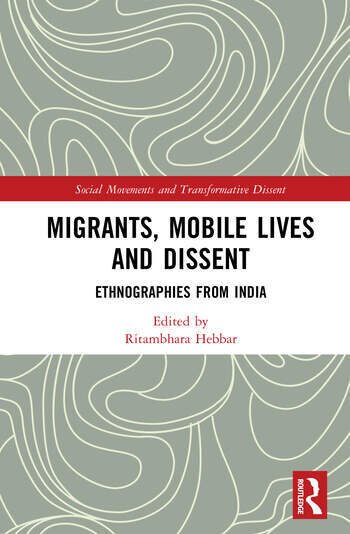
The COVID-19 pandemic and the subsequent nationwide lockdown in India had a profound impact on migrant workers, who were forced to return home due to job losses and lack of livelihood opportunities. This mass movement of people led to a humanitarian crisis, with thousands of migrants stranded without proper food or shelter on their long journeys home. This chapter presents narratives of migrant workers, their movement from one place to another during the pandemic, and the challenges they faced along the way. While migrants undertook gruelling journeys and lived through uncertain living conditions during the pandemic, many people in cities led a relatively sedentary lifestyle. This is not to argue that urban dwellers were unaffected by the pandemic. As they coped with increased anxiety and social isolation, the migrants had to confront substantial and unforeseen difficulties related to mobility and access to necessities. The chapter presents narratives of affected migrant labourers compiled by a citizens’ collective, Project Rebuilding Livelihoods (PRL). PRL worked to provide rations and financial and medical aid to distressed migrant labourers hailing from different parts of India.
Article
Policy Evaluation in the Absence of Survey Data: Customised Border Designs With Satellite Data
in Journal of Agricultural Economics
Article
- Published
- Authors
Abstract
Developing country governments often launch new agricultural programmes without collecting pre-implementation survey data, making it difficult to evaluate the effects of such programmes. Leveraging the flexibility of granular pixel-level satellite panel data and a well-developed quasi-experimental policy evaluation design, we study a programme where pre-implementation data is unavailable. We estimate the effect of cash transfers on agricultural productivity in Telangana, India. Treatment and control regions are within 10 km on either side of the state border. They are identical in all respects except for the difference in exposure to policy treatment. Agricultural productivity increased in the major monsoon cropping season due to the cash transfer programme. The findings also reveal that cash transfers helped reduce productivity gaps between irrigated and rainfed agricultural areas. Our results are robust to two different sources of satellite data, three alternative indicators of productivity, two rounds of full-scale resampling, 100 rounds of small-scale resampling and three alternative border designs. Placebo regressions of two previous years also confirm our results. This approach to policy evaluation is applicable anywhere satellite data are available in the world.
Authors: Muddasir Ahmad Akhoon, Abhishek Shaw, Vidya Vemireddy
Links