
Publications & Resources
Our faculty, students and researchers work together everyday to contribute to a better world by grappling with urgent problems we are facing in India. We conduct rigorous work to produce high quality learning resources and publications to contribute to public discourse and social change. Here, we feature a sample from our work for everyone to access. You can explore featured resources, policies, and the latest publications from the University.
To explore all the work of our University, please visit our publications repository.
List of Publications & Resources
Governance of Yellow Foot Clam: a case study of Ashtamudi Lake in Kerala
in Azim Premji University


- Published
- Authors
Abstract
Yellow foot Clam (Paphia malabarica) fishery of the Ashtamudi lake, one of the deepest lakes in Kerala supports the livelihoods of thousands of clam-collectors in the region. These clams are highly demanded in the international market and it enables the clam-collectors to generate their income through export began in late 80s. An increased export market demand exerted a lot of pressure on the resource which ultimately led to the depletion of clam resources. As a response to this unexpected decline in resource size and lost income, the clam collector community in Ashtamudi came forward to address the issue by forming a collective of clam-collectors at the village level. As a management strategy, they voluntarily abstained from fishing during the breeding season and demanded management of resource through a participatory mode of governance. After years of experience in the management of resource through voluntary measures, Ashtamudi clam resource entered a new regime of resource management. It got certified as “sustainable” resource by the world’s largest marine wild-catch certification program, the Marine Stewardship Council (MSC) which promotes the governance of marine fisheries resources through market incentives. This study is an attempt to understand these varied and unique governance regime experiences of clam resource from participatory to market-based systems and the implications of these governance regimes in the property rights, livelihoods and social development of clam-collectors of Ashtamudi.
Links

- Published
- Authors
Abstract
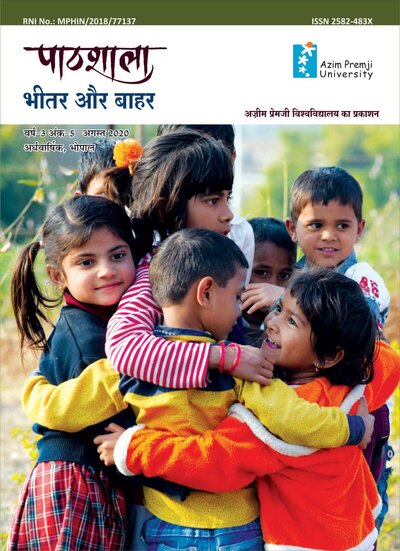
पाठशाला भीतर और बाहर के इस 5वें अंक में शामिल है एक लेख कि बच्चों का सवाल पूछना कितना जरूरी है और उन सवालों को किस तरह से समझा जाए। शिक्षकों के क्षमता संवर्धन में उनके अनुभवों का लिखा जाना कितना जरूरी है, बच्चों को सवाल पूछने के अवसर देना और उनके सवालों को समझना जैसे विषयों पर महत्वपूर्ण आलेख भी इस अंक में शामिल हैं।
Links
Did Employment Rise or Fall in India between 2011 and 2017- Estimating Absolute Changes in the Workforce
in Azim Premji University

- Published
- Authors
Abstract
The recently released data from the 2017 – 2018 Periodic Labour Force Survey have created a controversy regarding the quantity of employment generated in the past few years in India. Estimates ranging from an absolute increase of 23 million to an absolute decline of 15.5 million have been published. In this paper we show that some of the variation in estimates can be explained by the way in which populations are projected based on Census 2011 data. We estimate the change in employment using the cohort-component method of population projection. We show that for men total employment rose but the increase fell far short of the increase in working age population. For women, employment fell. The decline is concentrated among women engaged in part-time or occasional work in agriculture and construction.
Authors:
- Paaritosh Nath
- Amit Basole
Links
Income Distribution and Effective Demand in the Indian Economy
in Azim Premji University
- Published
- Authors
Abstract
Does there exist a trade-off between labour’s income share and output growth rate? Or does a reduction in wage share in itself reduce the output growth rate? These questions have returned to the centre stage in the midst of India’s present crisis as the government sought the dilution and suspension of labour laws as a counter-cyclical policy instrument. In the absence of any other stimulus or countervailing factors, the impact of such a policy would hinge on the relationship between income distribution and effective demand. This paper attempts to lay bare this relationship for the Indian economy through an empirical analysis of India’s macro data and a theoretical model on the basis of regression results.
Author:
- Zico Dasgupta
Links

- Published
- Authors
Abstract
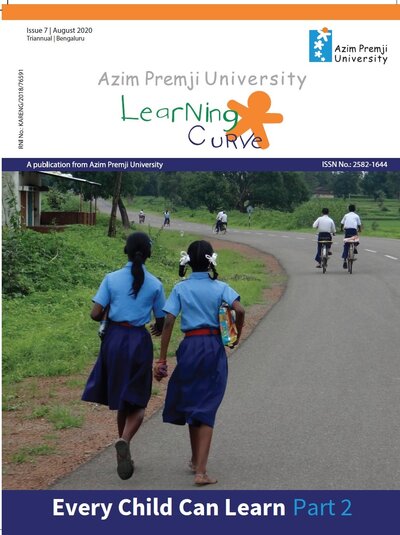
This issue proves that children can, and do, learn, provided they get the encouragement, support, respect and dignity that is due to them during the process and after. The response got for the topic was so overwhelming that it led to the creation of a second part.. It is all about children learning. and enjoying themselves in the process, rather than just getting a formal education.
Links