
Publications & Resources
Our faculty, students and researchers work together everyday to contribute to a better world by grappling with urgent problems we are facing in India. We conduct rigorous work to produce high quality learning resources and publications to contribute to public discourse and social change. Here, we feature a sample from our work for everyone to access. You can explore featured resources, policies, and the latest publications from the University.
To explore all the work of our University, please visit our publications repository.
List of Publications & Resources
Ownership, Accumulation, and the Land Question: Insights from a Village Survey in Central India
in Economic and Political Weekly
Article
- Published
- Authors
Abstract
The consolidation of agricultural lands by dominant socio-economic groups is discussed in the context of contemporary debate on the land question by foregrounding market-led land transfers as a driver of accumulation in rural India. Empirically rooted in central India, the paper studies the commodification and increasing concentration of land as an outcome of the processes of agrarian change at work.
Links
Delivering Affordable Nutrition Security through Fish: Evidence from a Rural Village in Telangana
in Indian Journal of Agricultural Economics
Article
- Published
- Authors
- School of Development
Abstract
The study explores the role of fish consumption in addressing nutrition security and malnutrition in a rural village in Telangana, India. It highlights that fish, particularly small indigenous species, provide affordable, high-quality protein and micronutrients. The study compares fish with other protein sources like poultry and livestock, finding that fish consumption significantly meets the nutritional needs of the rural population more effectively than other animal sources. India, despite being the third-largest fish producer globally, still faces challenges with malnutrition, especially among children and women. National Family Health Survey (NFHS) reports show alarming rates of stunting, wasting, and anemia, particularly in Telangana. The study demonstrates how increased fish consumption can play a crucial role in reducing these malnutrition rates by offering a cost-effective and nutrient-dense food source. The state government has encouraged fish production in Telangana through subsidies and initiatives like Pradhan Mantri Matsya Sampada Yojana. However, the research suggests that the fish distribution infrastructure needs significant improvement to increase access to fish for the broader population. The paper concludes that promoting fish consumption can be a viable strategy to combat malnutrition, improve food security, and provide economic opportunities for rural communities. Policy recommendations include enhancing market infrastructure, increasing fish production through scientific aquaculture, and raising awareness about the nutritional benefits of fish. These measures could ensure that fish contributes more significantly to achieving Sustainable Development Goals (SDG) related to hunger and malnutrition.
Authors: Gummadi Sridevi, Amalendu Jyotishi, Balaji Patturi, Matta Srinivas

- Published
- Authors
Abstract
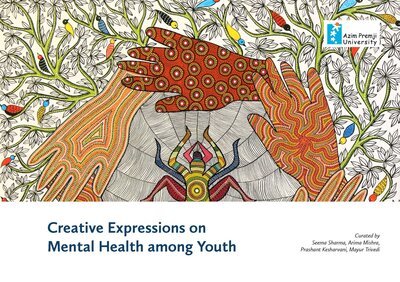
What does mental health mean to the youth? How is it expressed beyond just diagnostic labels? The book on ‘Creative expressions on mental health among youth’ features over 40 powerful contributions through a range of forms that include poetry, prose, Gond and Bhil art, sketches, doodle art as well as excerpts from diaries. The writings are presented in Hindi, English and Pardhi languages thus creating a safe and inclusive space for many. Each word and each image encapsulate a story that is hidden yet spoken. This book is an effort to break silences around the conversations on mental health.
Curators:
Seema Sharma, Arima Mishra, Prashant Kesharvani, Mayur Trivedi
Links
Capacity-Building Needs of Elected Women Representatives — Stories from Peri-Urban Panchayats of Bangalore
in Springer Nature

- Published
- Authors
Abstract
While the 73rd and 74th constitutional amendments contributed to the increase in women elected representatives in the Indian political ecosystem, the efficacy of this phenomenon has been questioned multiple times. The evidence points out that electoral participation is merely a symbolic gesture, which ultimately undercuts women’s empowerment by co-opting them into a patently corrupt, male-dominated political system. It is widely acknowledged that the political journey is not smooth for elected women representatives (EWR) in a patriarchal society, which is further divided on caste lines. Due to the existing structural challenges and insufficient support system, EWRs take a longer time to understand their responsibilities and perform their duties effectively. Training and awareness-building programmes of the state government and NGOs have had limited success in solving these challenges. Therefore, this research project was taken up by faculty and students of Azim Premji University to understand the challenges faced by EWRs, and thereby, design training modules, which will help them resolve these challenges. Data collection was done in seven panchayats around Azim Premji University. EWRs along with other respondents have given us substantial insights based on which an attempt to create a typology of challenges by EWRs is made.
Links