
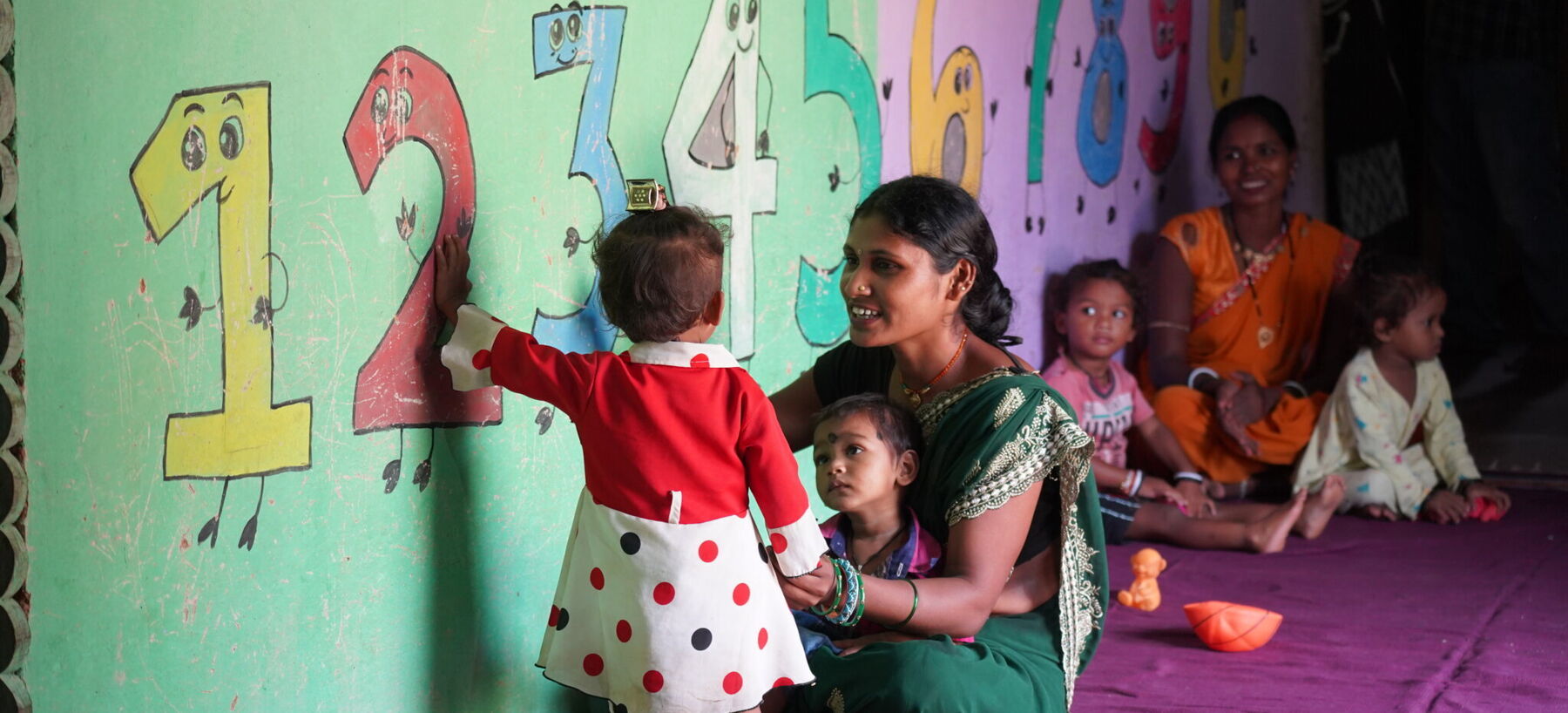
MA in Early Childhood Care and Education
Batch of
Developing early childhood professionals for shaping future citizens
Details
The importance of providing quality care and education in the early years of childhood is widely recognised. Global research indicates 80% brain development occurs in the first 8 years of life. The National Education Policy (NEP) 2020 followed by the National Curriculum Framework-Foundational Stage 2022 provides the much-needed impetus and direction to this critical goal for India. As we work towards the fulfilment of the goal, the need to build practices and programmes that are contextually relevant, innovative and build strong foundations for young children’s learning is becoming increasingly clear. To achieve this end, the country needs to build a cadre of education professionals who possess the capabilities to contribute towards this understanding.
Who should join us?
The MA in ECCE is not just a higher-education degree. It is a commitment to bring about change in the way India approaches child care, learning and development of young children. Join us in this journey and pursue your dream of contributing to the care of the young for a better future!
If you are a graduate with any disciplinary background, such as arts, sciences, home science, psychology, engineering, commerce, and working professionals seeking to contribute to change, then this programme is your call.
Why study with us?
The Master of Arts in Early Childhood Care and Education (MA in ECCE), offered by the Azim Premji University, a two-year full-time programme aims to:
- Develop a cadre of reflective practitioners with an in-depth understanding of the domain of early childhood care and education.
- Equip you with critical knowledge and skills through evidence-based practice, theoretical perspectives, and direct engagement with the Indian contextual realities.
- Enable you with capabilities to plan and implement educational action and research in ECCE.
- Help you strengthen dispositions of care, sensitivity, inclusivity and ethics towards the wellbeing of the young child.
- Offer you the opportunity to be part of a community of learners with a commitment to work as informed and self-motivated professionals.
Course structure
- Our programme is designed to provide a blend of theoretical knowledge, field experience, and research on the principles, perspectives, practices and programmes for children in the 0 to 8 years age group.
- You will engage with key concepts and domains of knowledge and build a well-rounded, interdisciplinary understanding of the ECCE domain.
- You will develop an understanding of children and childhoods in Indian and global contexts including contemporary debates and issues in the domain foregrounded in the principles of diversity and inclusion.
- Our programme will provide a strong foundation of curricular and pedagogical principles to develop learning experiences for young children.
- It will help you develop a range of skill sets required to your development as ECCE professional enabling you to conceptualise, design and implement research and intervention programmes in varied ECCE settings in India.
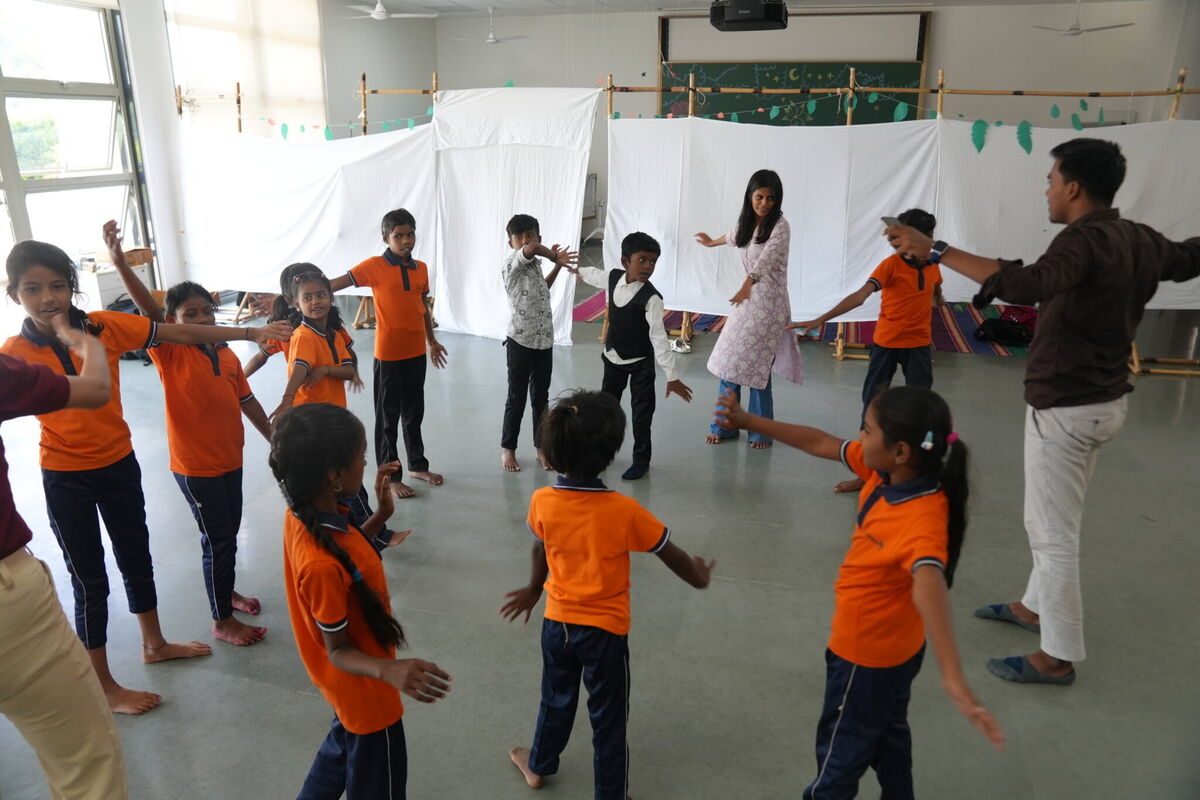
Care and education of the young child is a complex endeavour. Thoughtful engagement is required to provide quality experiences to children. Various people — parents, caregivers, educators directly engage with young children. Other actors, systemic services and infrastructure in the neighbourhood of children contribute to their overall development. All early childhood professionals need a strong foundation on various perspectives, processes, knowledge, skills and dispositions that may enable them to contribute in their roles effectively.
Our core courses are compulsory foundational perspective building courses. These lay a core foundation in core concepts, theoretical perspectives and offer a broad landscape of the domain of ECCE. These would focus on the why, where, what and how of early childhood care and education for young children. A core integral part of the programme is an ongoing opportunity to engage with various local field sites that cater to children upto 8 years of age.
Development and Learning in Early Years‑I
Core
Critical perspectives on the domains of development, their interlinkages and implication for educational and caring experiences of children in the early years
Development and Learning in Early Years – 2
Core
Perspectives and theoretical frameworks to help understand children’s thinking and learning in the early years
Foundations of Early Childhood Care and Education
Core
Integrated, interdisciplinary understanding of ECCE, and its significance for laying the foundation of lifelong development and learning in children.
Childhoods in Contexts
Core
Critically engage with multiple perspectives on children, childhoods and the diverse contexts (both Indian and global) in which children live
ECCE: Policy, Systems and Programmes in India
Core
A systemic perspective on care, education and safety provisions for children in India through policies, structural elements and quality criteria.
Early Stimulation, Health and Wellbeing
Core
Explore children’s growth and development in natural environments in the light of child-rearing practices, parenting styles, and cultural contexts
Play, Creativity and Materials in Early Childhood
Core
A hands-on course to enable direct engagement with materials and play experiences in ECCE
Curriculum and Pedagogy for Foundational Years (CPFY)
Core
Understand principles and processes that underpin curriculum development for children in the 3-8 years
Language and Literacy in Foundational Years
Core
Understand the importance of conversations, storytelling, extended discussions and play in supporting children’s oral language development and literacy
Professional Development of Early Childhood Educators
Core
Insights into the multiple roles that an Early Childhood Educator is expected to play besides education—creating awareness, supporting nutrition, health and caregiving needs of children
Introduction to Research in ECCE
Core
Discuss children as subjects of research, and the significance of their voices and participation in research
Social and Emotional Development in Early Years
Core
Insights into key components that contribute to social and emotional development in children
Inquiry in Foundational Mathematics & Science
Core
On integrated learning between domains, and more
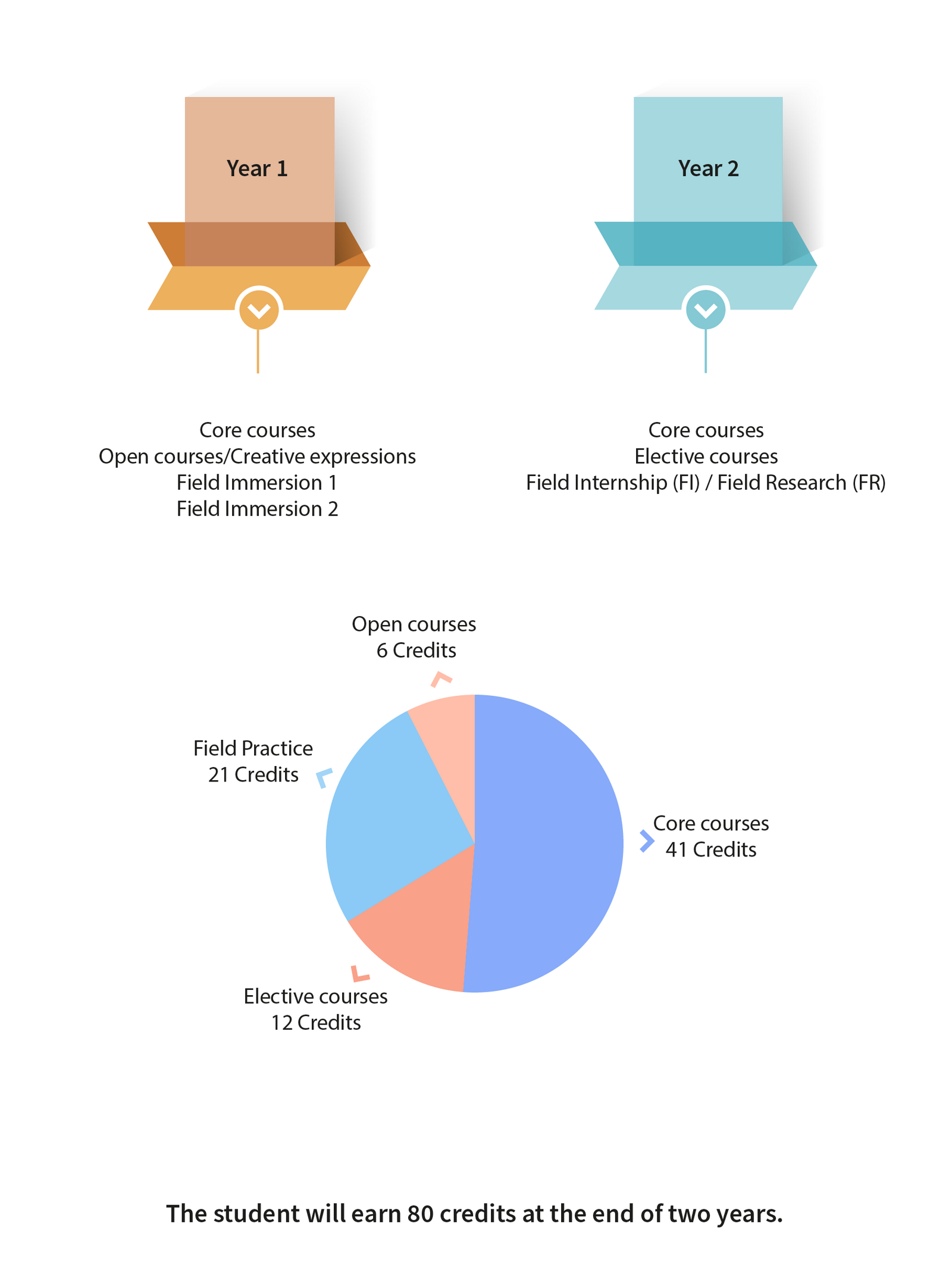
A wide range of electives, considering the contemporary needs of the domain to help expand as well as deepen the domain knowledge and strengthen the skill set required for working in the domain will be offered in the fourth semester.
An elective allows you to pursue an extended exploration in a subdomain of educational theory and practice.
You can select courses from a broad area of theoretical, practical or procedural knowledge in particular fields of education and supplement your understanding developed through the core courses. Elective courses will focus on illustrative areas such as media and early years, entrepreneurship in ECCE, advocacy and communications with families and communities, assessment in early years and so on.
The open courses will offer an opportunity to explore diverse creative expressions in the form of courses related to strengthening academic reading and writing for students who need to strengthen English language engagement to meet the programme needs and also through courses like story telling that shall aid in domain based skill development aspects.
We believe that spending time in the field will help you develop a deeper understanding of the theoretical and conceptual ideas that you encounter in the course of your study.
Exposure to ground realities through various field engagements form an integral part of the programme across semesters.
Field Immersion 1 – Exploring Diverse ECCE Contexts (3 credits)
Located in the first semester, this field engagement will offer opportunities to understand diverse ECCE contexts, across varied, social, cultural and economic landscapes within an urban Indian context. The immersion would focus on developing skills of observing, documenting and interacting in professional spaces and reflecting on the core foundational concepts of the semester 1 courses. This will run through semester 1, twice a week (Tuesdays and Wednesdays).
Field Immersion 2 — Working with Young Children (3 credits)
This field component aims to help you get first-hand classroom teaching experience for a period of three weeks. This will help you in developing skills important for an early childhood educator. The focus of this immersion will be to engage directly with children in educational settings and shadow/apprentice with an experienced teacher to design teaching plans, implement various play-based learning experiences. This would largely build on to the core concepts of courses in semester 2 and would be organised at the end of semester 2.
Field immersion 3 - Field Internship/Field Research Pathway (15 credits)
Scheduled in the third semester this is a longer field engagement that shall map across organisations and institutes pan nation. This component shall offer students scope to choose from two pathways:
Pathway 1: Field Internship within an organisational context.
Pathway 2: Field Research on a question of choice and interest.
Pathway 1: Field Internship (FI)
This pathway will provide opportunities to experience a professional work and organisational context to develop skills to work as an ECCE professional. The field internship will involve working on student led projects with guidance from faculty and field mentors from select organisations.
Pathway 2: Field Research (FR)
The Field immersion 3 for those students who opt for the Field Research (FR) pathway will require them to take on an independent research-based project. This will enable them to explore a topic through a small-scale empirical research study which will culminate into a master’s level dissertation. You will critically engage with available research in the field and reflect on their own assumptions about the area of study and their position as a researcher.
*A two-credit preparatory course will be offered during the taught time of the third semester on campus. Both these preparatory courses will be hands-on, guided to help students to articulate their ideas and processes for engaging with field and research during the on-field time for both the pathways.
Weekly Practicum
Through the weekly Practicum, you will have weekly engagement with the local field sites that will help you hone your communication and negotiation skills. The practicum opportunities will help extend theoretical understandings built in courses to field sites. These sites will range from public and private schools, preschools, Anganwadis, NGOs, and other sites working for and with children.
ECCE is a growing domain with a need for professionals across the spectrum — from home and family environments to policy and research. The domain offers the following scope for professionals with ECCE preparation:
- Child-care professionals: working directly with children or with parents and families of children under 8 years of age
- Foundational Stage Teachers: working with preschool (3- to 6‑year-olds) and early primary grades (6- to 8‑year-olds)
- Early Interventionists: specifically for children from their birth to 3 years of age in child-care clinics/centres
- Teacher Educators: developing professionals for ECCE spaces in the role of NGO trainers, resource personnel, and so on
- Content and curriculum developers: learning and development curricula for young children
- Educational material developers: sustainable and educational toys, print, technology and other mass-media content for young children
- Non-governmental organisation personnel: programme managers, resource persons, trainers
- Leaders and entrepreneurs: administrators, contextual and innovative programme creators, setting up new institutions focused on ECCE
- Policy analyst, Advocates and Researchers: working to influence policy, advocating evidence-based practices in the public system and other sectors engaging with young children
- The MA ECCE programme would provide diverse learning experiences to students to meet the programme goals. Diversity of students, and universal learning principles would be actively considered while planning classroom engagements. In-class taught course pedagogy would include lecture cum discussion, group work, hands-on material development, group work with peers and so on. Collaborative work and reflective teaching would be the thrust of these engagements.
- On- field immersion would include direct engagement with participants and stakeholders the domain caters to; such as children, parents and teachers/caregivers in practice settings. Specific skill based modules will be organized for both research and field pathways.
- Use of readings, audio-video material, case-studies, engagement with scholars and practitioners from the domain will be planned to ensure holistic learning experience considering the contemporary needs, challenges and scope of professional engagement in the domain.
- The programme pedagogy would strive to provide opportunities for critical reflection, inquiry, direct engagement and construction of alternatives for contributing to the domain.
ECCE Resource Centre
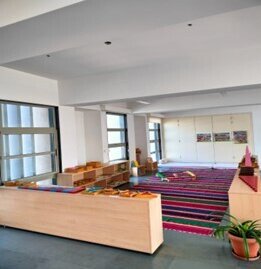
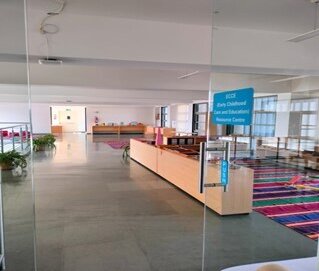
Early Childhood Care and Education is an important thrust area at Azim Premji University. ECCE Resource Centre is proposed as an extension to the wide range of academic and practice-based programmes at the University for Early Childhood Education. It is a dedicated space to create, practice and provide training in innovative and quality practices in Early Childhood Care and Education. It is envisioned to provide hands-on experiences including material development to students of the different ECCE programmes at the University as well as to the ECCE practitioners in the larger network.
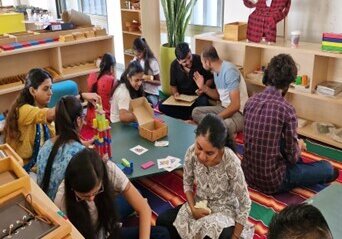
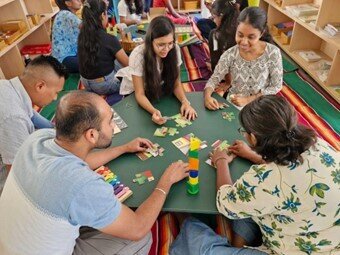
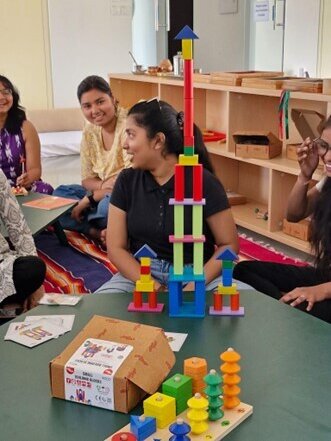
Students and teachers use this space to
- Learn about the variety of materials and resources available in ECCE, representing different approaches and contexts.
- Have a hands-on experience of an ECCE learning environment that is stimulating and suited for quality learning in the foundational stage.
- Reflect on the principles of material design and develop activities/ material for use with children in the early years.
- Plan and organise sessions for special events like Baal Mela, Teacher Mela and for work with Anganwadis/community.
- Engage in experimental activities using the space as laboratory and conduct workshops to demonstrate the use of these materials and resources for practitioners, teachers, and students.
Related Stories


Indo-Finnish Research Seminar on Education — Charting Collaborative Pathways in ECCE
Ira Joshi summarises various aspects of studies presented in the seminar.
A Child-Centred Model of Learning for the Early Years
Muktangan Education Trust, Mumbai
By Ira Joshi | Oct 4, 2024
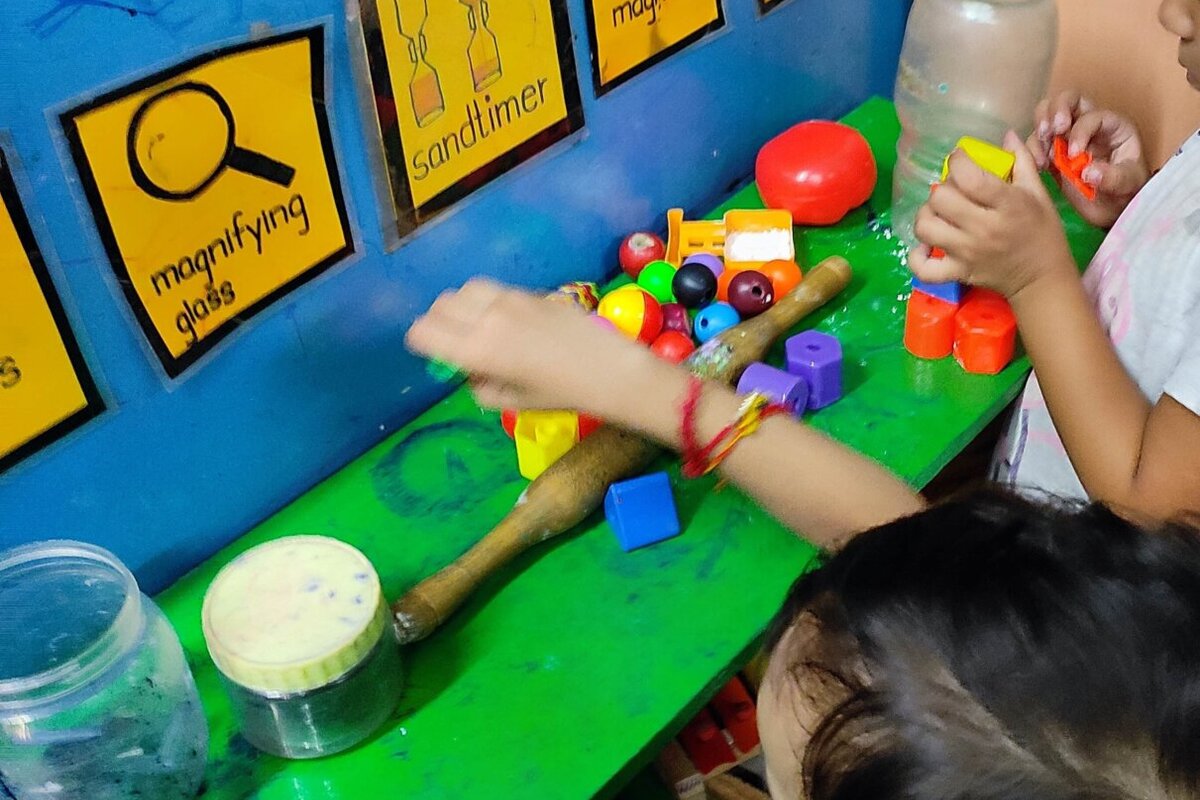
Muktangan-run BMC preschools follow a child-centred, inclusive, and community-based education model to promote quality learning experiences for children from underserved communities. The schools are founded on the philosophy of ‘active constructivism’, a perspective that views children as competent and active beings.

ECE Resource Centre: Demonstrating a Model Learning Environment
By Shankar K | Oct 27, 2023
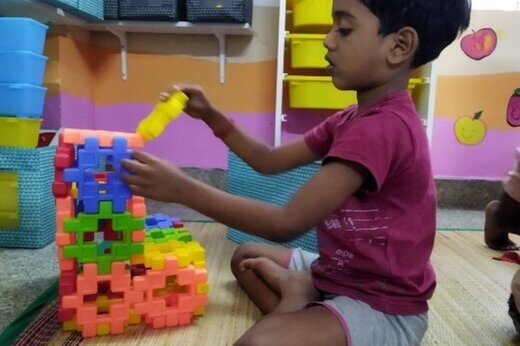
This successful model has inspired the Samagra Shiksha, Puducherry to establish 50 more similar ECE Resource Centres in the academic year 2023 – 24 across all districts of Puducherry.

Spatial Understanding and Thinking in Early Childhood Education: Implications for School Readiness
By Akila Radhakrishnan | Sept 6, 2023
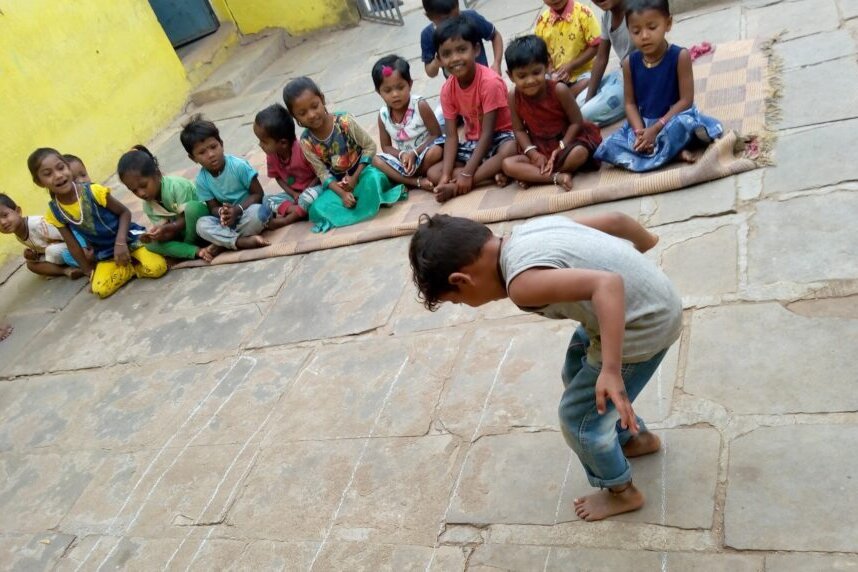
In Anganwadi centres, spatial learning is fostered through various activities, such as playing with building blocks, puzzles, and educational games, that are designed to help children develop spatial awareness. Additionally, Anganwadi centres can incorporate elements of sensory integration therapy to help children develop spatial awareness.

Early Intervention Programme: Lessons from National Institute of Speech and Hearing
By Ankur Madan | July 2, 2019
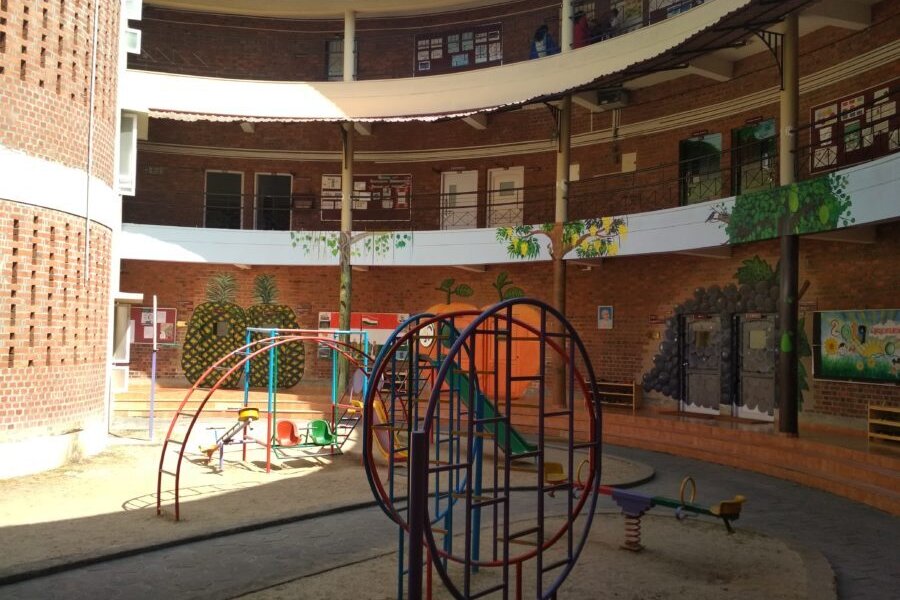
According to the 2011 Census data, 7.01 percent of children in the age group of 0 – 6 years in India have a disability, inborn or acquired. In this regard, early identification and intervention services can play a crucial role in prevention as well as remediation of the developmental delays that occur in young children.
Explore
Faculty
16 of 16 All Programme faculty →