
Growing Pains and Teaching Gains: Azim Premji University’s First Pedagogy Conclave
How do faculty members keep their wits, stick to their principles and not run out of energy in the midst of a rapidly growing university? Collective sharing may be the answer.
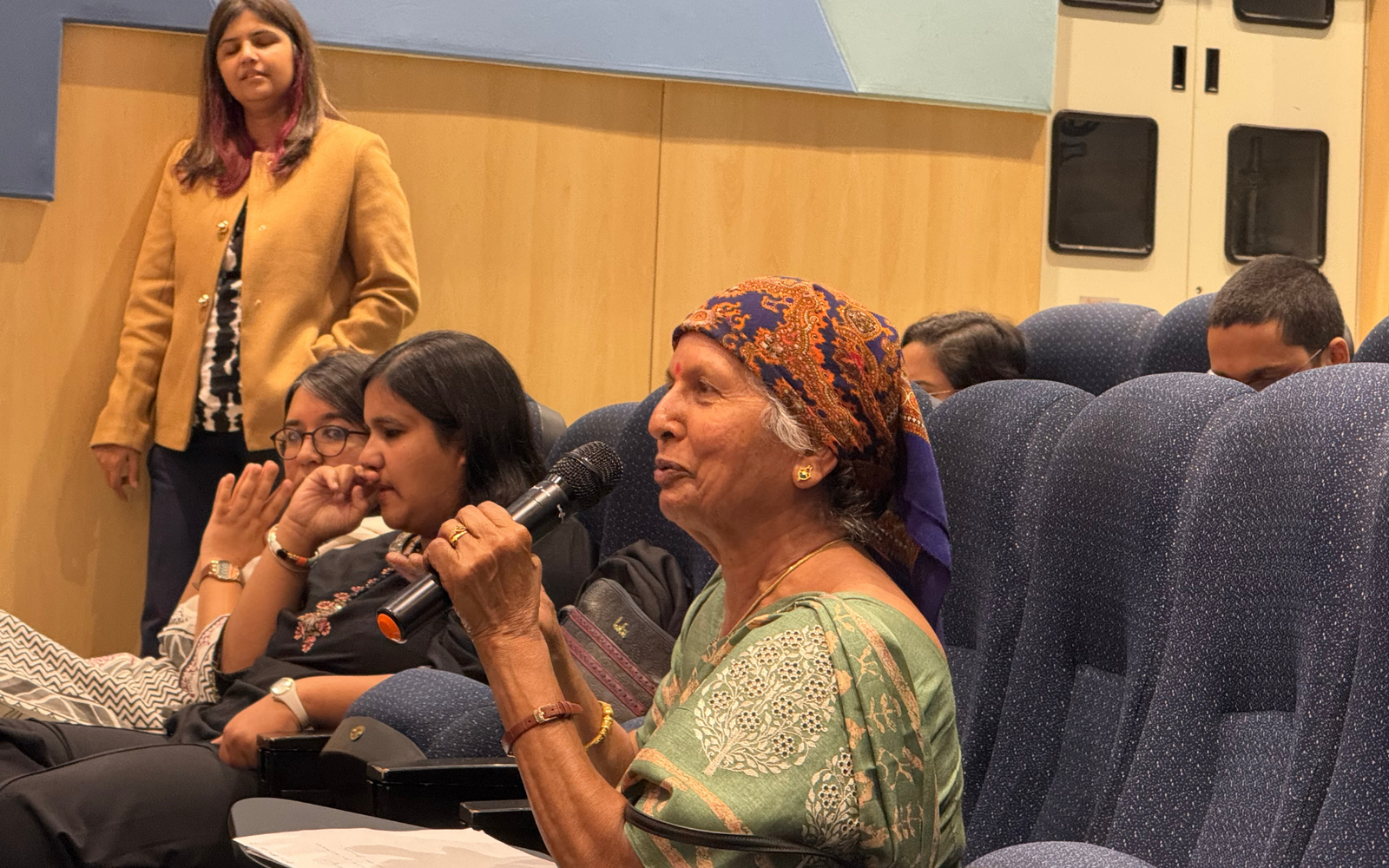
Details
MA in Education was one of the two first programmes to be offered at Azim Premji University at its inception in 2010. Since then, it has been the backbone of virtually every programme and course introduced, from economics, English, philosophy, to chemistry, public health and information sciences. “Teaching well is at the heart of what we want to do,” affirmed Richa Govil, the Vice-Chancellor, at her welcome address during the university’s first ever Pedagogy Conclave (Innovations and Reflections in Pedagogy) held on 9 January 2026.
She pointed out that faculty members are constantly discussing classroom experiences — “how to help students understand, what worked, what didn’t, what made students fall asleep, what woke them up” — not just at official meetings but also during chance encounters at corridors, canteen queues and coffee machines. Could there be a more efficient way to channel all these parallel conversations happening all across the university campuses (Bengaluru and Bhopal)? Yes, believes economist Anand Shrivastava, who heads the university’s Academic Office. “These conversations about what we have tried in classrooms have potential to be scholarly work,” he insisted as he flagged off the conclave. It was to be a day of talks, posters and experiences about pedagogy, curated by educators at the university, for educators at the university.
In total, there were about 40 short talks, over two dozen posters and 11 experiential sessions that were distributed between multiple, and sometimes parallel, sessions in the course of a single day.
- 40 Short talks
- 24+ Posters
- 11 Experiential sessions
Short talks, big ideas
Faculty from various disciplines shared their experiences, which included observations, conversations, theories, methodologies, philosophies, innovations, adaptations, surveys, coping mechanisms, alternative perspectives, accidental discoveries and evaluation techniques. For example, Anshu Saluja made several astute points about teaching history. “If we want to study the performance of historical actors, we need to know about the stage,” she said, adding that for history to convey the true fraught relationship between the past and the present, an effective history pedagogy is essential. She also shared examples of what that may look like.
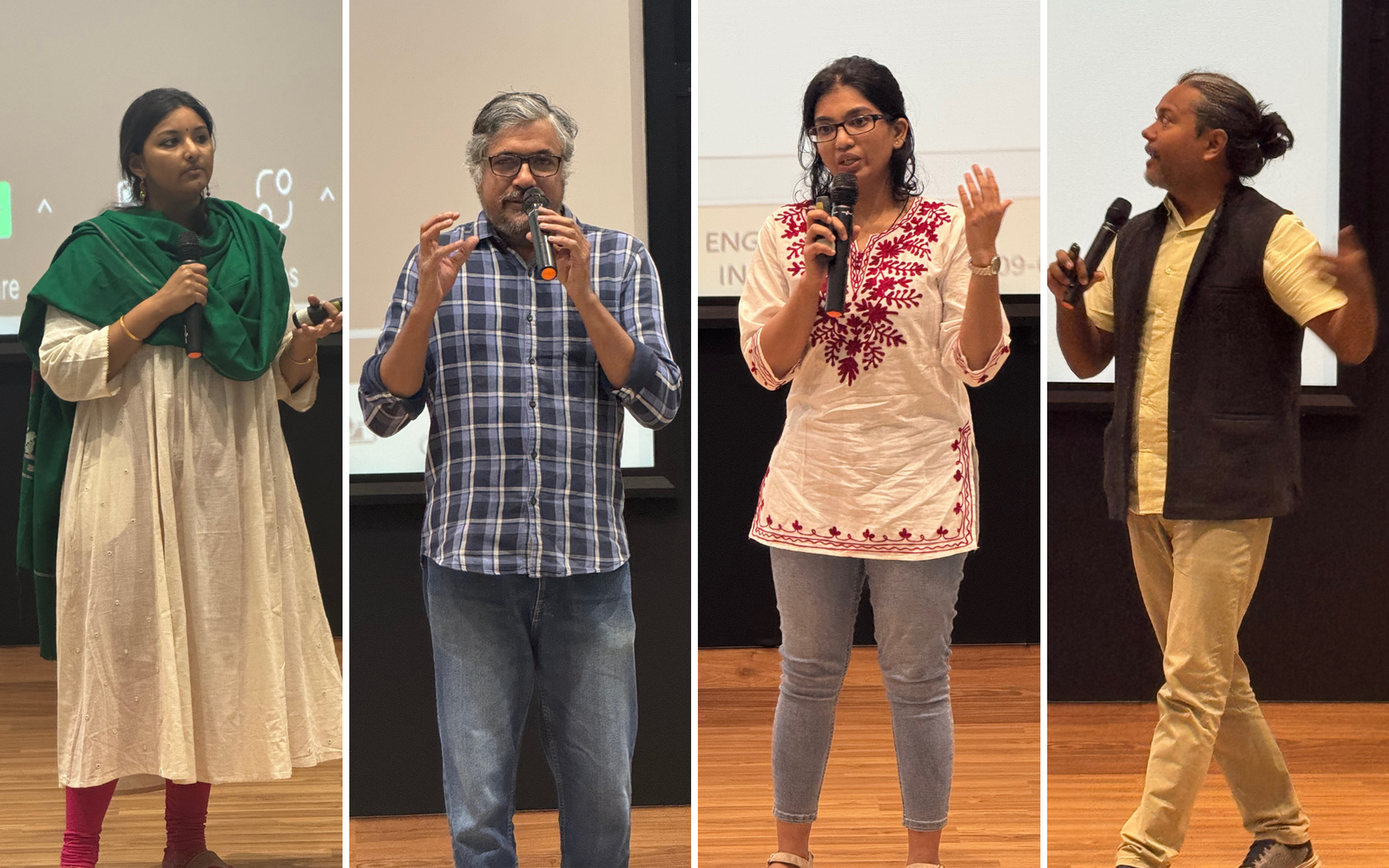
Faculty members present their short talks during the 2026 Pedagogy Conclave
Malavika T Ananthakrishnan shared how a “computation first” approach helped her team level an otherwise uneven playing field in their statistical principles classroom. “Teaching statistical principles can get technical quickly, leaving students, especially those not trained in quantitative methods, with little sense of what formulae mean,” she said. “But reversing the order of learning helped reach a wider set of students and build confidence in thinking statistically. It did not bore students who knew a lot about statistics, nor did it frighten those who knew little.”
A short talk by Asim Siddiqui and Alok Ranjan highlighted the value and challenges of preparing students to positively and ethically contribute to the field of development. “The MA in Development programme at the university has centrally located empathy as a core competency, and while it’s not possible to ‘teach’ empathy, it is possible to cultivate it,” he said, pointing out several of the important nuances complicating this pedagogical journey.
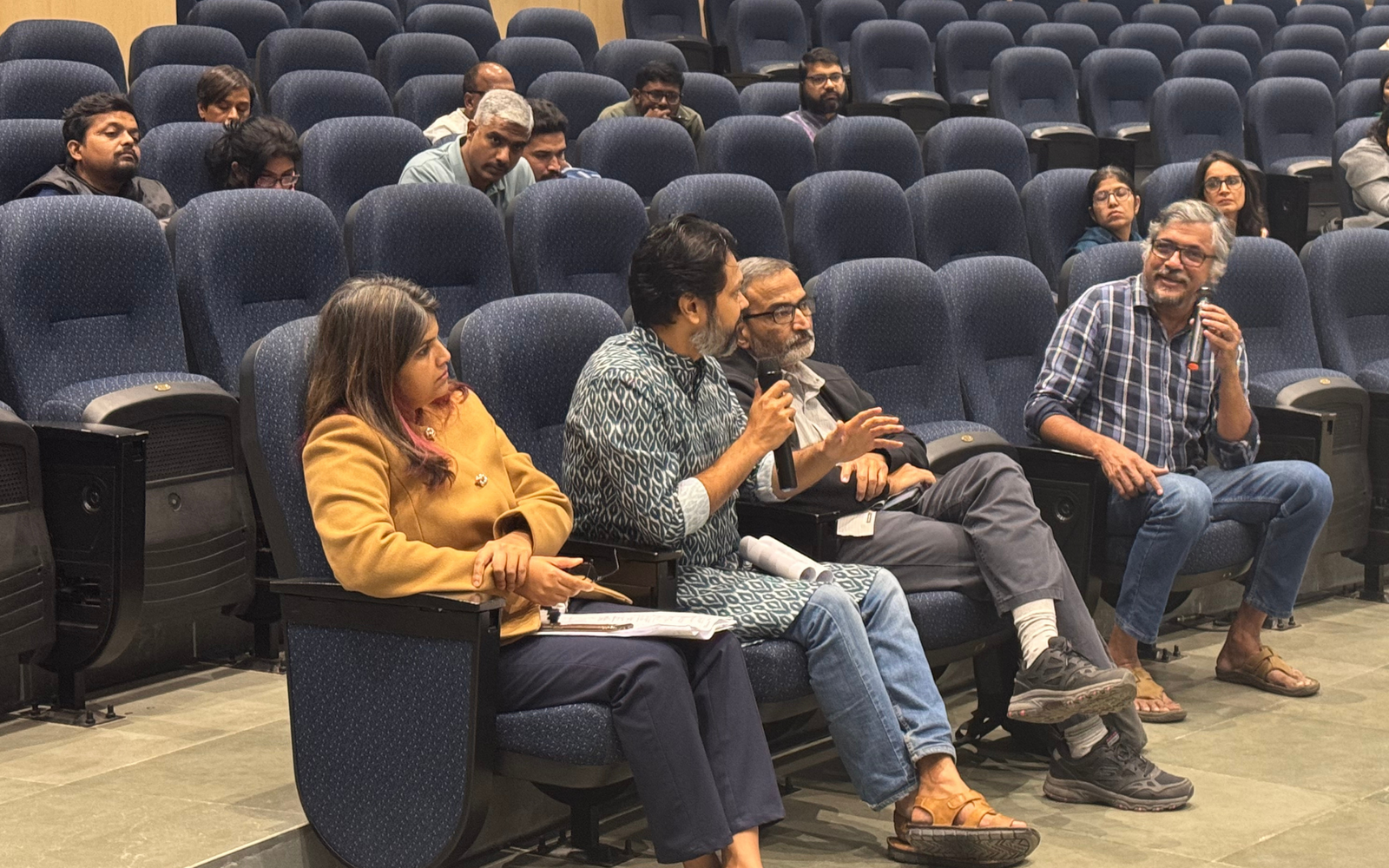
A discussion underway at the 2026 Pedagogy Conclave
There were also several talks that explored problem areas and potential solutions to improve science education and teaching. S Kumar Mallavarapu questioned the siloed teaching of various concepts in physics such as mechanics, electromagnetism, quantum mechanics and thermodynamics, and mused on what we stand to gain by taking a more holistic approach. “Students may learn the methods and core results of each area, or each ‘peak’ in a misty mountain range,” he said, “but once the mist lifts, it reveals a deeply connected base, consisting of symmetry, conserved quantities, and coordinates or variables that simplify complex interactions.”
Posters, experiences and a panel
Posters lined up outside the auditoriums that explored themes ranging from teaching data to a diverse cohort, developing English language competence of teachers, a pictorial and effective method for chemistry students to solve trigonometric problems and using biographical narratives to explore sociological intersections presented in everyday life. Besides the more traditional talk and poster format, the conclave included a fourth format that allowed for a more immersive experience of pedagogical approaches and experiments.
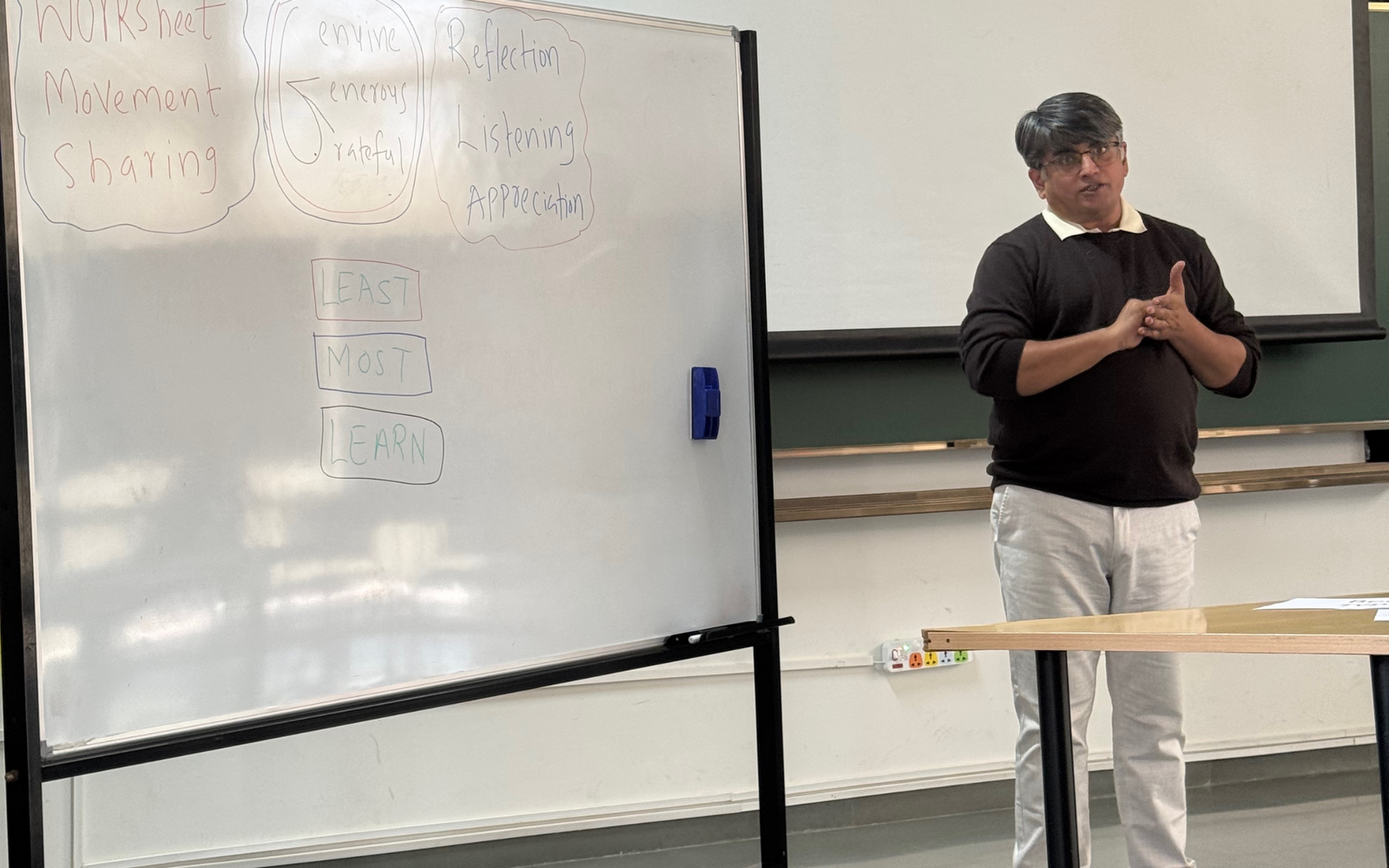
Experiential sessions allowed for a more immersive experience of pedagogical approaches and experiments
In his experiential session, Mayur Trivedi offered the audience a chance to see how a “Social Identity Wheel” can be adapted to enable students to think critically about identities and marginalisations, and how this is useful in public health contexts. Later, Prakhar Manas shared a lesson plan developed by his students to facilitate a discussion about philosophy and distributive justice among school children.
In total, there were about 40 short talks, over two dozen posters and 11 experiential sessions that were distributed between multiple, and sometimes parallel, sessions in the course of a single day.
Now in its second decade of existence, the university is rapidly growing. With new programmes and courses being introduced every year, faculty and student numbers mushrooming, and the birth of new campuses in Bhopal and Ranchi, there is an air of exhilaration, but also moments of apprehension and, of course, exhaustion. A panel discussion between directors of the various schools of the university offered some guidance through these growing pains.
Arima Mishra, the Director of the School of Development, made a strong case for faculty members to view themselves as co-learners in the classroom. ”I am learning with peers, from and with students,” she said, emphasising the need to find a balance between defining processes and being well-prepared, but without losing out on the space for reflection. Ankur Madan, the Director of the School of Education, pointed out that the strong culture of teaching and learning at the university isn’t something that happened by chance, but consciously cultivated from its very earliest days of recruitment.
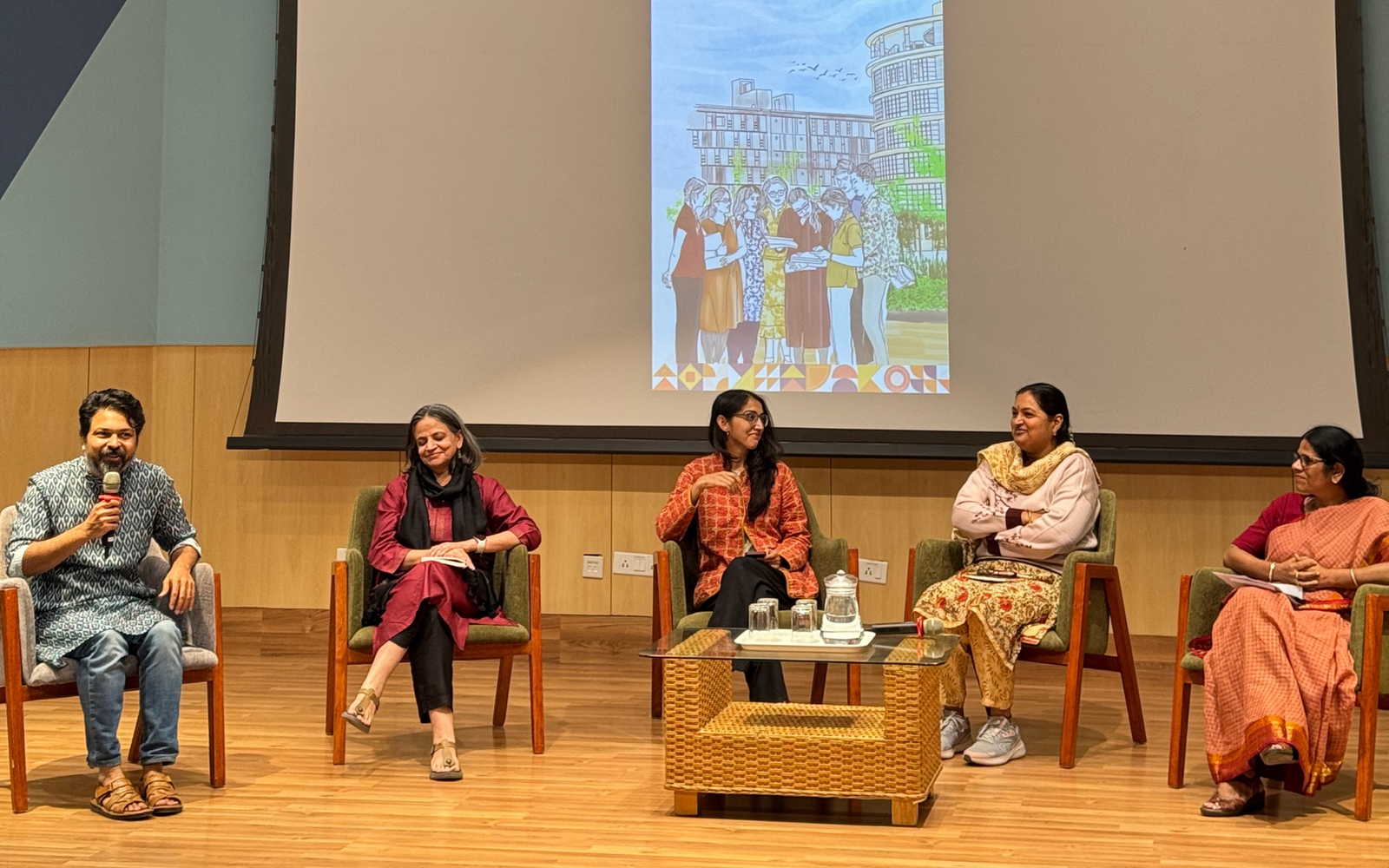
A panel discussion between directors of the various schools of the university
In this age of information overload and artificial intelligence tools, how do teachers look at learning? Nisha Butoliya, Head of Programmes at Azim Premji University, Bhopal, advocated for a pedagogical shift. While acknowledging that available time is a serious restraint, she asked: “Can the anchor of our questions be our experience rather than the right answer?” Nisha argued that when it comes to readings, the focus needs to extend beyond its content, to what it meant to the students, what they understood from it and how they feel towards it. “This originality in expression and thinking will bring authenticity and rigour into the classroom.”
“As we scale up, there are times you feel desperate as a teacher and that’s where collective sharing helps,” admitted Sravanti Uppaluri, Head of Programmes for School of Arts and Sciences at Azim Premji University, Bengaluru. “At the end of the day, we want our students to turn out to be kind, cooperative people who are capable of working independently. That is the kind of society we want to build,” she reminded.
Images by Nandita Jayaraj
About the Author
Nandita Jayaraj is a Science writer and Communications Consultant at Azim Premji University.