
Publications & Resources
Our faculty, students and researchers work together everyday to contribute to a better world by grappling with urgent problems we are facing in India. We conduct rigorous work to produce high quality learning resources and publications to contribute to public discourse and social change. Here, we feature a sample from our work for everyone to access. You can explore featured resources, policies, and the latest publications from the University.
To explore all the work of our University, please visit our publications repository.
List of Publications & Resources

- Published
- Authors
Abstract
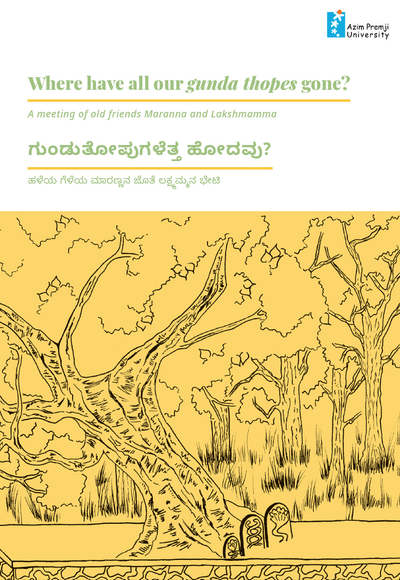
India is rapidly urbanising, but our cities are facing an environmental crisis. Whenever there is any development, for building a road, a flyover or a metro, the first casualties are trees. This story is our attempt to communicate the work we have done on gunda thopes to a wider public, hoping to partner with them to protect the city’s environment.
Trees are our city’s lungs, cleaning the air of dust and toxic fumes from vehicles and industries. Trees are a source of food, fuelwood and medicines, especially for the urban poor, and a source of shade in the hottest days to all. The very presence of trees helps us deal with the stress of city life. For many of us, trees are also of cultural and sacred significance. When trees in cities are cut to make way for urban projects, we also lose the many services that trees provide. But more importantly, what we and our future generations lose forever is a connect to nature, and a way of living that encompasses trees as living beings — neighbours, friends and spiritual guides. This is a fictitious story. But the village, which remains unnamed, exists just as it is described in the outskirts of Bengaluru. The thope exists too. All the elements of the story are drawn from our conversations with the village residents. Finally, this may be a story of loss — the loss of nature as a city expands. We also hope that the story will fuel an urge for us to get to know more about nature in our neighbourhood. We hope that each of you who read this book will be enriched by the understanding of trees and thopes—sentinels and companions in the cities we live in.