
Publications & Resources
Our faculty, students and researchers work together everyday to contribute to a better world by grappling with urgent problems we are facing in India. We conduct rigorous work to produce high quality learning resources and publications to contribute to public discourse and social change. Here, we feature a sample from our work for everyone to access. You can explore featured resources, policies, and the latest publications from the University.
To explore all the work of our University, please visit our publications repository.
List of Publications & Resources
Changes in Production Regimes and Challenges to Collective Bargaining- A study of the Gurgaon Industrial Belt
in Azim Premji University


- Published
- Authors
Abstract
This study focuses on the Gurgaon-Manesar-Dharuhera-Bawal-Tapukara-Neemrana industrial belt in Haryana and Rajasthan, which is an important ‘node’ or part of Delhi-Mumbai Industrial Corridor (DMIC) and a major destination of capital in the last few decades. The study is based on primary survey work of qualitative nature of over 6 months from September 2017 to March 2018. Primary respondents are workers of different segments, plant-level Trade Union leaders and Trade Union activists of the belt, with some inputs from secondary literature, workers magazine and data published by the companies and the government.
Authors:
- Amit
- Nayanjyoti
Links

- Published
- Authors
Abstract
After independence in 1947, India embarked on an ambitious path of industrialisation, following the standard modern developmental prescription drawn from the experience of the so-called developed countries. Since the inauguration of the reform era in 1991, this model of development, duly globalised, has been reinforced by the decisions made by metropolitan policy elites both within and beyond India.
Author:
- Aseem Shrivastava
Links
Domestic Workers and the Challenges of Collective Action in Informal Work
in Azim Premji University
- Published
- Authors
Abstract
Domestic workers (henceforth, DW), are a part of the large ‘informal’ sector of urban economy and society in India.ii According to the NSSO data, over the last two decades, the DW populationiii has emerged as the second largest urban informal workforce (Chen and Raveendran 2011), next only to ‘home based workers’ (artisans and petty commodity producers). According to the NSS 68th round (July 2011- June 2012), it is estimated that 41.3 lakhs workers work in the households of others, and an overwhelming 27.9 lakhs of this total are women.iv An increasing number of studies are emerging about DWs around the world including the phenomenon of international migration of DWs for work. This paper is a critical commentary on the collectivization of DWs, based upon an ongoing empirical study that combines ethnographic and quantitative inquiry among DWs in different parts of Bengaluru, India. Our aim here is to provide readers with general insights into some of the key struggles of and prospects for domestic workers in a particular context – DWs who work in a mega-city and in multiple homes (rather than as live-ins).
Authors:
- Balmurli Natrajan
- Rajesh Joseph
Links
Gender Differentials in Expansion of Informal Enterprises
in Azim Premji University

- Published
- Authors
Abstract
The policy framework in India has provided support to the micro and small enterprises. In 2006, the Micro, Small and Medium Enterprises (MSME) Act 2006 came into existence (msme.gov.in). This Act aimed at promoting and developing micro, small and medium enterprises. In India, the MSME sector’s contribution to GDP was 17 percent of GDP during 2004-05 to 2009-10. More recently, a comprehensive policy called the National Policy for Skill Development and Entrepreneurship 2015 came into existence. This policy supersedes the National Skill Development Policy of 2009. The vision statement of the policy is “To create an ecosystem of empowerment by Skilling on a large Scale at Speed with high Standards and to promote a culture of innovation based entrepreneurship which can generate wealth and employment so as to ensure Sustainable livelihoods for all citizens in the country.” Recent policies such as demonetization and implementation of the Goods and Services Tax (GST) have created a setback for the micro enterprises that operated in the informal economy based mainly on cash transactions.
Authors:
- Jeemol Unni
- Ravikiran Naik
Links
Long-Run Performance of the Organised Manufacturing Sector in India- Aggregate Trends and Industry-level Variation
in Azim Premji University
- Published
- Authors
Abstract
Despite its weak performance in terms of job creation in recent years, the organised manufacture sector remains vital to employment policy. This paper investigates the aggregate trends in this sector, in employment, output, labour-capital ratio, as well as wage share and wage rates at the three-digit NIC level over a long period from 1983 to 2016 using the Annual Survey of Industries data. We show that three distinct sub-periods can be identified within the overall period. Further, using shift-share decomposition we show that most of the decline in the L/K ratio can be explained by within industry changes. Finally, we analyze industries with respect to their capacity to deliver job growth as well as wage growth.
Authors:
- Amit Basole
- Amay Narayan
Links
A call for development of a growth standard to measure malnutrition of school-age children
in Azim Premji University

- Published
- Authors
Abstract
There is no globally established standard for measuring malnutrition among children aged 5 – 18 years. Growth references are used as a standard but there are many limitations to using such references to assess nutritional status of Indian children. As per the World Health Organization, standards and references both serve as a basis for comparison, but each enables a different interpretation. A standard defines how children should grow; and deviations from the pattern it prescribes are evidence of abnormal growth. A reference, on the other hand, does not provide a basis for such value judgments, although in practice, references often are mistakenly used as standards. This paper has conducted a methodological review of prevalence of malnutrition from openly accessible literature pertaining to assessment of nutritional status of school-going children in India from the year 2000 to 2016. The methodological review reveals that a combination of different national and international references have been used in assessing nutritional status of Indian children. International references includes NCHS 1977, CDC 2000, WHO 2007, IOTF 2012 extended Body Mass Index (BMI) cut- offs, Gomez classification, Waterlow’s classification and national references such as — Agarwal standards, ICMR reference values, IAP reference and BMI cut-off for overweight & obesity of Indian children. A new national growth reference has been recently developed by Marwaha and others (2011) for BMI, but no assessment of nutritional status using this reference was found. Each of these methods was then applied to a database containing height, weight, age and sex of 5340 school-going children. Though there are three nutritional indicators for school-age children, majority of the study conducted used only BMI chart to assess nutritional status. Therefore BMI-for-age is considered for the analysis to i) understand the methodological application of the above growth references ii) compare the differences in nutritional status and iii) recommend an appropriate growth reference (from those available) to assess the nutritional status of Indian school-age children. The literature review also reveals that malnutrition among school-age children is prevalent in India. There is no national level data available to support this judgement across regions, gender and caste. Given a likely high prevalence of malnutrition, this paper calls for the development of a growth standard to measure malnutrition among school-age children in India. Though this paper is focused on malnutrition, it simultaneously provides similar importance to over growth. A growth Standard therefore fills up such gaps in measuring double burden of malnutrition i.e. under-nutrition and over-nutrition.
Links
Role of voluntary teacher forums (VTFs) in continuous teacher professional development in India: experiences from Rajasthan, Karnataka and Puducherry
in Azim Premji University
- Published
- Authors
Abstract
The quality of education depends largely upon the teacher. Hence building teacher capacity through continuous professional development of teachers is critical to the quality of education. Systems and programs for continuous professional development for school teachers in the formal educational system in India are inadequate and often ill-conceived. Apart from other lacunae, they often do not recognize the professional identity and agency of the teacher. Voluntary Teacher Forums (VTFs) that are facilitated by Azim Premji Foundation in different locations of India, as part of an integrated and multimodal approach to continuous professional development, try to address this central issue. This study shows that VTFs are evolving as very useful platforms for collaboration and peer learning amongst teachers in various locations. It shows that given an environment that allows for easy access to meaningful opportunities, teachers will commit their time, talents and resources to their own professional development. The study further recognizes however, that the real issue is to understand how such forums can be made to happen in different locations in a context as complex as the Indian public education system. While this study highlights certain crucial dimensions of the VTFs – including what happens within these forums and the efforts that go behind it – these continue to be subjects for our future research works.
Links

- Published
- Authors
Abstract
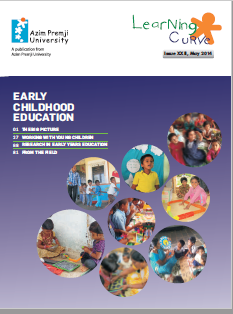
This issue of the Learning Curve focuses on one of the most important periods in any individual’s life — early childhood. Whatever differences there may be on any other aspect of education, this is one area on which everyone agrees: that the years between birth and eight are the most significant and can make or break a life. So universal is this that it is equally true in all cultures. You will find focus articles by some of the most well-known and much respected educationists in the country, followed by very practical and hands-on approaches to Early Childhood Education (ECE).
Links

- Published
- Authors
Abstract
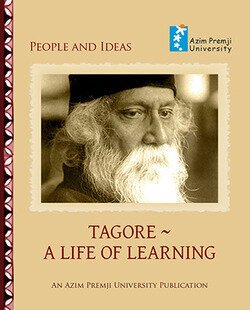
Azim Premji University attempts to explore ideas, lives and work of many social reformers, writers, thinkers and philosophers who have influenced us deeply, and fundamentally shaped our vision and philosophy. This graphic novel is on Rabindranath Tagore’s ideas and philosophy of education. Tagore is an educator for all times and his ideas are as relevant today, as they were when he lived. Tagore expresses in all his writings, that he experienced no joy while being taught by a series of teachers, or shifting from one conventional school to another. His approach to teaching grew from his life experiences. The school he set up in Santiniketan was ‘conceived to free the students’ minds and lead them to a state of creative unity where they would respect human beings, irrespective of caste or creed’. Tagore tried to inculcate the joy of learning among his students by integrating the classroom with nature. The myriad celebrations at Visva Bharati were envisaged to educate his students about the natural and human world around them, about collective action and community involvement. The dream was to foster complete human development where the unique potential of each child could flower in a happy and secure environment.
Note: Best viewed as two pages with the cover separate

- Published
- Authors
Abstract
In this issue of the Learning Curve, the importance of community participation in education is explored and we read about Bindooben, a highly remarkable teacher in Gujarat. Paulo Freire’s ‘Pedagogy of the Oppressed’, in which the author delineates the incredible potency of education as a tool for liberation (genuine revolution of the people) and its capacity to dominate people, is reviewed.
Links