
Publications & Resources
Our faculty, students and researchers work together everyday to contribute to a better world by grappling with urgent problems we are facing in India. We conduct rigorous work to produce high quality learning resources and publications to contribute to public discourse and social change. Here, we feature a sample from our work for everyone to access. You can explore featured resources, policies, and the latest publications from the University.
To explore all the work of our University, please visit our publications repository.
List of Publications & Resources

- Published
- Authors
Abstract
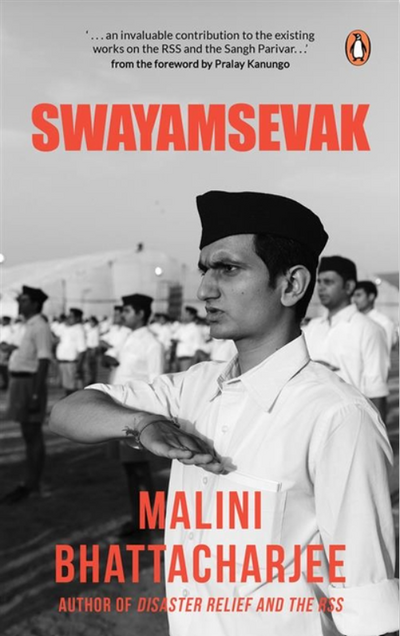
In September 2025, the Rashtriya Swayamsevak Sangh (RSS) completed a hundred years. Founded in 1925 by Dr Keshav Baliram Hedgewar with a small group of handpicked young men, the Sangh sought to reinvigorate Hindu society through sangathan (organization) and seva (service). What sustains the RSS a hundred years on? Who are the individuals who animate this vast and enduring organization? Are they conservative or modern, privileged or marginal, urban or rural? Swayamsevak explores these questions in depth. At its heart are ten compelling life stories of nine swayamsevaks and one sevika. Through these intimate portraits, the book foregrounds the everyday experiences, moral worlds, and motivations that shape their journeys, revealing the discipline, commitment to service, and quiet conviction that sustain the Sangh’s remarkable continuity and expansion. By restoring the swayamsevak to the centre of the narrative, this book opens up a rich and largely unexplored terrain and offers a nuanced and deeply human window into the RSS.
Links

- Published
- Authors
Abstract
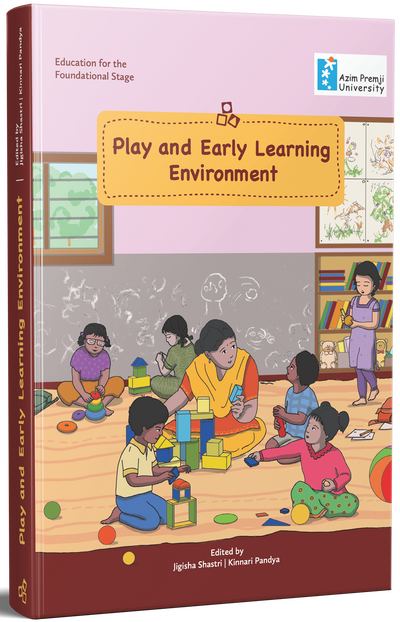
Play and Early Learning Environment is the first in the series on Education for the Foundational Stage. This thematic volume is a collection of articles on concepts, practices and programmes on play and early learning environment. The papers in the volume provide rich insights on what playful learning looks like in the foundational years in diverse Early Childhood settings and illustrates the ways in which we can develop playful and inclusive learning environments for children.
Editors:
Links

- Published
- Authors
Abstract
Azim Premji University attempts to explore ideas, lives and work of many social reformers, writers, thinkers and philosophers who have influenced us deeply, and fundamentally shaped our vision and philosophy. This graphic novel is on Rabindranath Tagore’s ideas and philosophy of education. Tagore is an educator for all times and his ideas are as relevant today, as they were when he lived. Tagore expresses in all his writings, that he experienced no joy while being taught by a series of teachers, or shifting from one conventional school to another. His approach to teaching grew from his life experiences. The school he set up in Santiniketan was ‘conceived to free the students’ minds and lead them to a state of creative unity where they would respect human beings, irrespective of caste or creed’. Tagore tried to inculcate the joy of learning among his students by integrating the classroom with nature. The myriad celebrations at Visva Bharati were envisaged to educate his students about the natural and human world around them, about collective action and community involvement. The dream was to foster complete human development where the unique potential of each child could flower in a happy and secure environment.
Note: Best viewed as two pages with the cover separate