
Publications & Resources
Our faculty, students and researchers work together everyday to contribute to a better world by grappling with urgent problems we are facing in India. We conduct rigorous work to produce high quality learning resources and publications to contribute to public discourse and social change. Here, we feature a sample from our work for everyone to access. You can explore featured resources, policies, and the latest publications from the University.
To explore all the work of our University, please visit our publications repository.
List of Publications & Resources

- Published
- Authors
Abstract
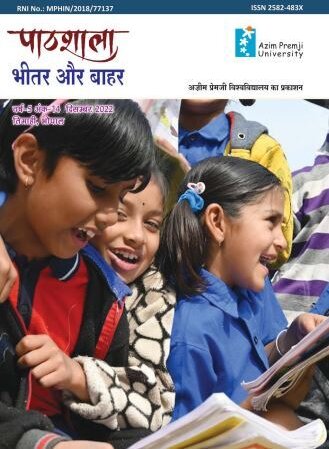
यह अंक कक्षा में बच्चों से खुले सवाल पूछने और सोचने के महत्त्व जैसे कुछ प्रमुख मुद्दों की उपयोगिता को सामने लाता है। वैज्ञानिक स्वभाव के मायने क्या है और यह कक्षाओं में कैसे प्रतिबिंबित होता है, कक्षा में विभिन्न पृष्ठभूमियों के बच्चों के बीच संवाद के अवसर कैसे बन सकते हैं, जैसे मुद्दों पर भी इस अंक में लेख हैं। इसी के साथ बहुत सारे लेख कक्षाओं को अच्छे से चलाने के तरीक़े सुझाते हैं, जिनमें बुनियादी गणित शिक्षण से जुड़े उदाहरण / लेख भी शामिल हैं।
This issue brings out the importance of some key issues like importance of open questioning and thinking by children in classrooms. What does scientific temper mean and how does it get reflected in classrooms? How can diverse backgrounds get to dialogue in classrooms and along with that many articles that suggest ways of conducting meaningful classes including many examples from foundational mathematics.
Links

- Published
- Authors
Abstract
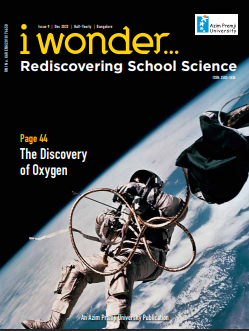
How was oxygen discovered? When was it first recognised as a chemical element?
How do we transform the science lab into a space that encourages students to learn about germination by designing and conducting their own experiments?
How do metaphors, explanations, and illustrations in textbooks and our classroom instruction shape common misconceptions about the atomic theory?
What role do empathy and care for local places have in addressing the ecological crisis?
Join us in exploring these and many other questions.
Links

- Published
- Authors
Abstract
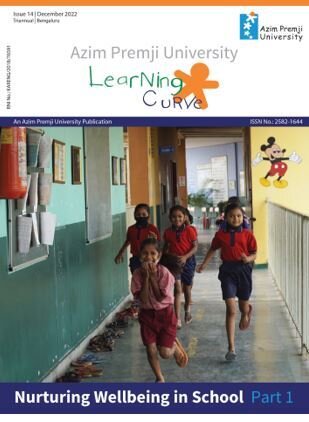
This issue is about a term that is very much in the minds of educators today: Socio-emotional Learning (SEL), and which has become an integral part of learning and school life. Schools have ‘Happiness Curriculums’ to develop self-awareness, enable effective communication, and work collaboratively towards collective goals instead of individual ones to bring equity to the learning process by becoming inclusive and empathetic. Teachers are looking at children as citizens who need to take their place in the larger social setting and learn to contribute to society while themselves leading meaningful and mindful lives.
Links

- Published
- Authors
Abstract
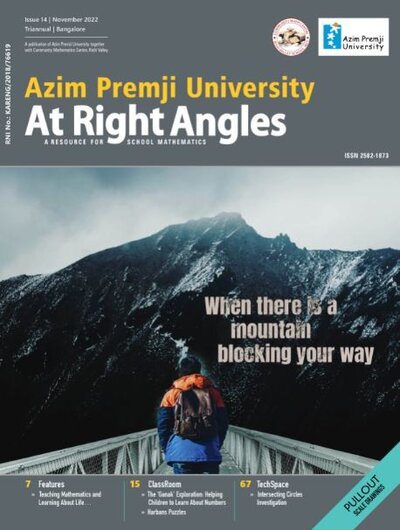
Construction of a Tunnel through a Mountain- a broad theme for the power of mathematics to help you solve daily life problems.
Links

- Published
- Authors
Abstract
पाठशाला भीतर और बाहर के तेरहवें अंक में भाषा और गणित शिक्षण के कक्षा अनुभवों पर कई लेख हैं। संवाद में, कोविड के दौरान स्कूलबन्दी से विभिन्न स्तरों पर हुई सीखने की क्षति के प्रभावों व भरपाई के लिए सम्भव उपायों पर, शिक्षक प्रशिक्षकों के विचार शामिल हैं। अंक में ऐसे लेख हैं जो बच्चों की विविधता को दर्शाते हैं। विशेष रूप से एक लेख वन क्षेत्र के बच्चों बारे में बताता है कि स्कूल के लिए समय निकालने में कठिनाइयों के बावजूद, उनमें पर्यावरणीय अध्ययन और गणित विषय की अपनी समझ को लेकर बहुत आत्मविश्वास और क्षमता है। एक और दिलचस्प लेख, विज्ञान, वैज्ञानिक सोच और विज्ञान शिक्षण पर है, जो इस मसले पर हमारे सामने आने वाली चुनौती की गम्भीरता को सामने लाता है।
The 13th issue of Pathshala Bheetar aur Baahar carries many articles on classroom experiences of teaching language and mathematics. It carries a dialogue among educators on the after effects, programs initiated for and lessons for education arising from the COVID episode. There are articles that reflect on diversity of children and in particular an article on children of forest areas points out that in spite of difficulties in finding time for school, they have a lot of confidence and competence in EVS and even in Mathematics. Another interesting piece is on Science, Scientific temper and Science education which brings out the seriousness of the challenge we face.
Links

- Published
- Authors
Abstract
This issue of the Learning Curve tries to answer some hard questions about the present environmental crisis : who can we turn to make the changes required? How can we attempt to restore some of the lost balance? How can we make sure that this planet does not become extinct by the next millennium? Schools across the country are doing their bit, beginning with primary school, to create a well-informed, environmentally-aware generation.
Links

- Published
- Authors
Abstract
The Lens of Computational Thinking teaches us to look at the same things with fresh eyes, the July 2022 issue invites you to do just that!
Links

- Published
- Authors
Abstract
पाठशाला भीतर और बाहर, जून 2022 के अंक में शिक्षणशास्त्र और कक्षा अनुभवों पर दिलचस्प लेख हैं। ये लेख शिक्षा की समसामयिक चुनौतियाँ और उनसे पार पाने के उपाय सामने लाते हैं। इस अंक का संवाद शिक्षा में कोरोना के बाद की चुनौतियों को सामने लाते हुए इनसे आगे बढ़ने की राह सुझाता है। इसमें जातिगत और भाषा की विविधता को सम्बोधित करते, समावेशन और सहभागिता के परिप्रेक्ष्य आधारित लेखों के अलावा एक शिक्षक का साक्षात्कार भी शामिल है। इस साक्षत्कार में शिक्षक ने अपने जीवन के समृद्ध अनुभवों को रखा है, जिनमें उसकी शैक्षिक यात्रा, खुशियों, चुनौतियों और सीखों की जानकारी मिलती है।
The June 22 Issue of Pathshala carries interesting articles on pedagogy and classroom experiences. They bring out contemporary challenges and ways to overcome them. The Samwad is also focused around the post corona challenges and way forward. Apart from perspective articles dealing with inclusion and participation involving caste and language diversity, the teacher interview brings out the rich life experience of a teacher who traces her journey, joys, challenges and learnings.
Links

- Published
- Authors
Abstract
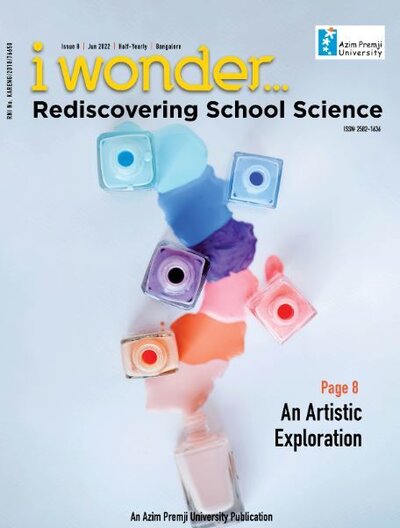
What role do ‘chemical experiences’ play in helping children grasp the particulate nature of matter and use this idea to explain observed phenomena?
How do we use the art and aesthetics of lithography to introduce children to chemical reactions? What skills would children learn from this multisensorial and fun approach to science?
Why is it important for teachers to trace the history of evolving definitions of elements and atoms, and communicate the conditional nature of their validity?
Can we use poetry to teach chemistry? How would it change the ways in which students engage with science?
Join us in exploring these questions in three sections of our latest issue – Our Chemical World, I am a Scientist, and Snippets.
Links

- Published
- Authors
Abstract
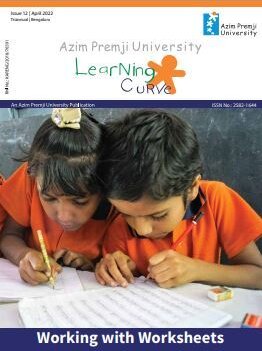
In the list of new teaching methods that teachers quickly thought of for online classes during the pandemic, the worksheet emerged as a learning aid that is creative, and participative, making children want to use their minds more independently. This issue features articles that showcase tried and tested methods of creating and using worksheets.
Links

- Published
- Authors
Abstract
पाठशाला भीतर और बाहर का ग्यारहवाँ अंक, गणित पढ़ाने और सीखने पर केन्द्रित है। इसमें, गणित और संस्कृति, प्रारम्भिक वर्षों में गणित पढ़ाना ‚गणित के प्रति डर व इसकी उत्त्पति, गणित शिक्षण में ठोस सामग्री का उपयोग और गणितीय सोच विकसित करने के तरीकों और उनकी पड़ताल करते लेख शामिल हैं। हमेशा की तरह इस अंक में भी स्कूली शिक्षा के विविध आयामों पर कुछ और लेख शामिल हैं।
The March issue of Pathshala is focused on Teaching and Learning Mathematics. There are article exploring mathematics & culture, teaching mathematics in early years, fear of mathematics & origin, concrete material and developing mathematical thinking. As always you also have articles on different dimensions of school education.
Links

- Published
- Authors
Abstract
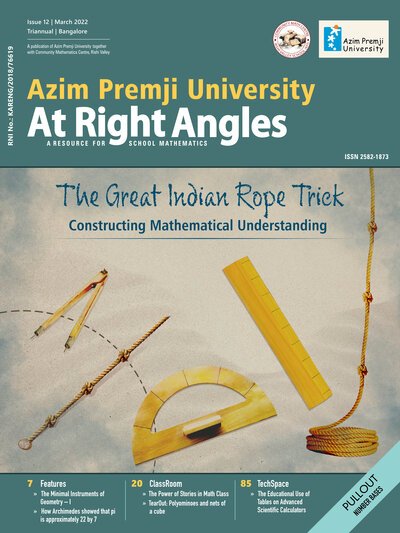
The Lens of Computational Thinking teaches us to look at the same things with fresh eyes, the July 2022 issue invites you to do just that!
Links