
News
List of News
Why activists, educationists want Karnataka caste survey to be taken seriously
The survey is a “long overdue exercise” aimed at generating social measures for disadvantaged groups across the board, says A Narayana. | By Kavitha Shanmugam, The Federal
AI from Class III: Is India’s emphasis on technology in primary education a leap forward or one too soon?
AI is both seductive and addictive. We need to exercise social wisdom in taking decisions about placing it in the hands of small children, writes R Ramanujam in The Indian Express.
Vintage Deepavali letters, postcards on display in Bengaluru
The exhibition is at the Indian Heritage Academy, Koramangala. Curated by author Ankita Pandey, and organised by Azim Premji University, the exhibition will be on till Sunday, 26 Oct 2025 (11 AM‑5 PM).
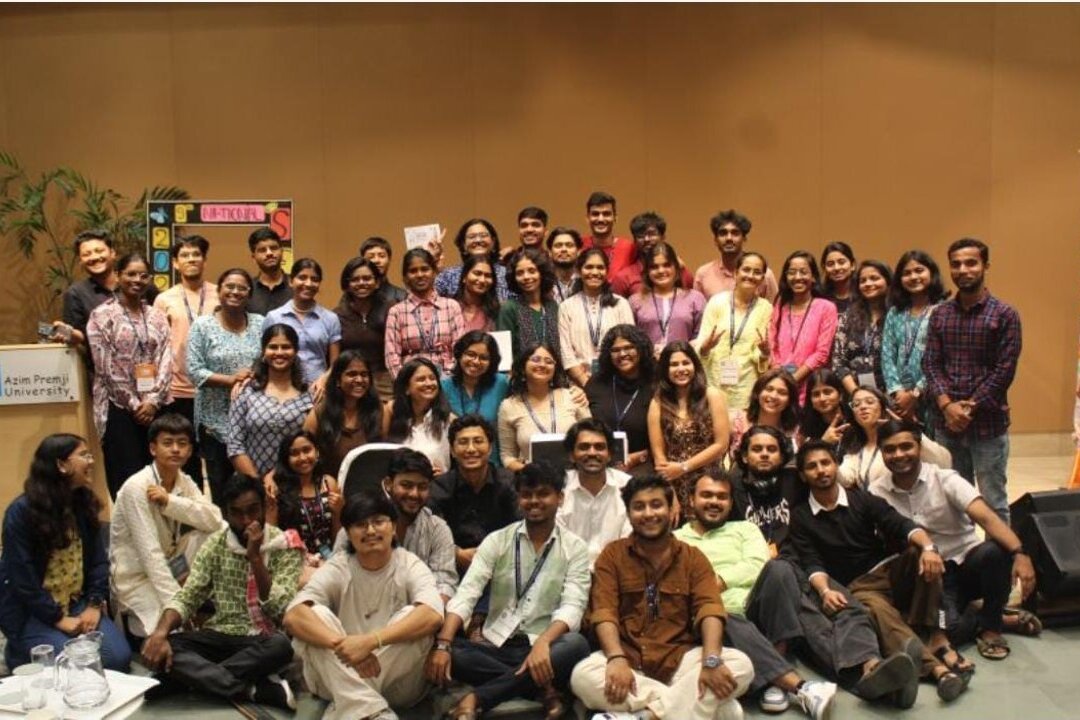

Meet the Winners | 9th National Social Enterprise Idea Challenge
Students of D J Sanghvi College of Engineering, Thakur College of Engineering and Technology, Rajiv Gandhi Institute of Technology, and NMIMS (Mumbai) emerge winners in Social Enterprise Idea Challenge organised by Azim Premji University.
Campus Bengaluru
How to build an enabling school culture
Every member of the school community — students, educators, parents, and support staff — must feel equally valued, respected, and believe that they have a voice and representation in matters that affect them, writes Ankur Madan in The Hindu.
The climate plot thickens
From stories about cloud monsters to reimagined fairytales, environmental literature is emerging as a growing trend in children’s publishing, writes Mohd Shehwaaz Khan in The New Indian Express.
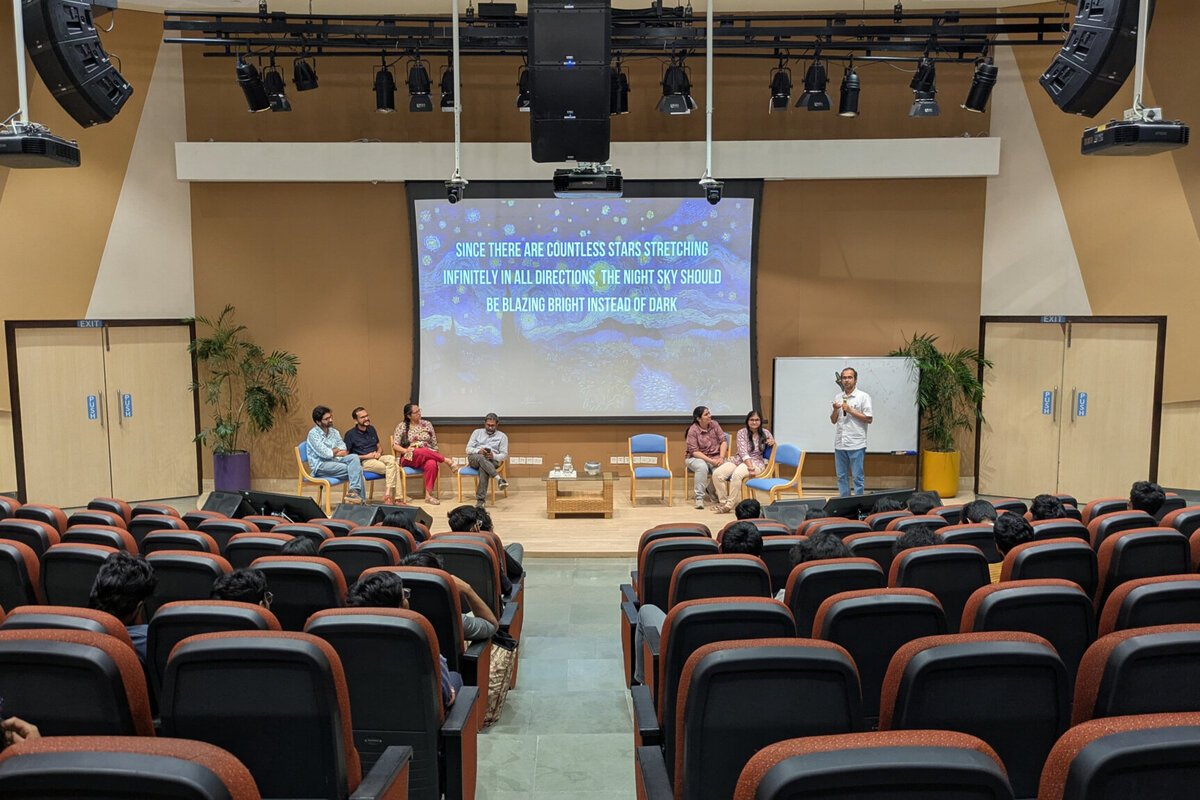

0K Physics Fest 2025
Zero Kelvin— the lowest achievable temperature and the coolest a fest can get!
Campus Bengaluru
National Women Farmers’ Day: India’s natural farming policies risk perpetuating gender bias, burdening women in agriculture
As India moves towards sustainable farming, women’s labour and equity challenges come into sharper focus, writes Manjula M in Down To Earth.
Donors must change how they engage NGOs for India to achieve better social outcomes
Clarity, operational simplicity, and a tone of equality, along with the money, can go a long way for NGOs to invest their energies where they should, writes Anurag Behar, in Mint.
Caste over Constitution
Institutional spaces remain saturated with caste-based humiliation, writes K Kalyani in Frontline.
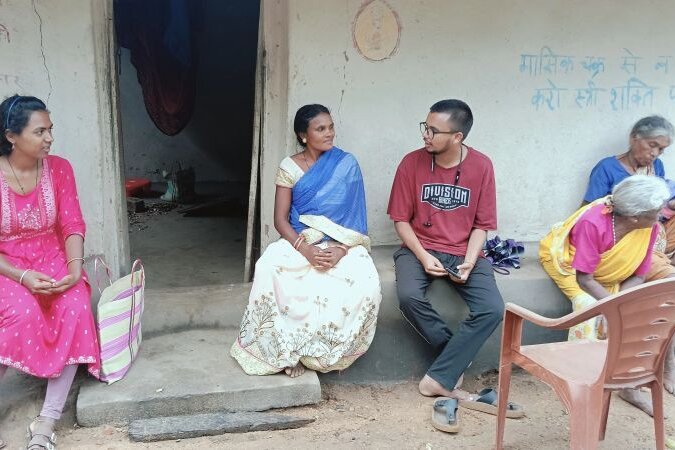

From water scarcity to water tourism
Once riddled with issues such as water scarcity and migration, Khamdhodhagi in Chhattisgarh has shown how collective action can lead to sustainable transformation, highlights Manthati Sai Kiran in Village Square.
Postcards and censuses
Vikas Kumar, in Frontline, shares how the humble postal system helped build trust in the decennial population counts — a lesson for today’s digital age and its anxieties.
From slums to Bristol streets: A scholar’s tale of resilience
Growing up in a slum didn’t deter Triveni Dhamdhare from pursuing studies in a prestigious institution overseas, writes Sudhir Suryawanshi in The New Indian Express.
Campus Bengaluru
Scrutiny please: The social sciences seem overburdened by dodgy claims
To make the knowledge system useful, we should stop giving it a free pass, question its claims and approach its prescriptions with humility. In social sciences, many of these are perspectives, not universal truths, writes Anurag Behar, in Mint.
India’s New Narrative about its Population Growth with Data
India must counter its age-old narrative of population control by investing in disaggregated data to acknowledge disparities across caste, class, and gender, writes Mayur Trivedi, in SustainabilityNext.
6,239 Indian faculty featured in Stanford’s World’s Top 2% Scientists
A total of 80 researchers from the All India Institute of Medical Sciences (AIIMS), with a significant 56 hailing from AIIMS New Delhi, earned a place in the prestigious top 2% global scientist list. Harini Nagendra, Azim Premji University, features in the list.
Caste census is an idea whose time has come
The conversation on caste census must be anchored in a firmer normative ground of crafting a decent nation through substantive democracy, writes Khalid Anis Ansari in The New Indian Express.
It is an honour to be in the same list as other pioneers, says Iconic Changemaker Azim Premji Foundation
“You work to create a positive and lasting social change and you derive satisfaction from the difference you make in the lives of the most disadvantaged people in the country,” Sudheesh Venkatesh said.
By Sindhu Hariharan
Why dowry-related crimes are underreported
Evidence suggests that dowry deaths are misreported as accidental deaths, thereby underestimating the number of women who die following dowry harassment, writes Kawinkumar B in IndiaSpend.
Best of Both Sides: UGC’s draft Mathematics curriculum will make students less capable
It compromises current strength in core Mathematics, fails to root itself in Indian heritage, writes R Ramanujam in The Indian Express.
Millennium Fellowship Class of 2025: Over 4,000 young leaders making the SDGs and UNAI Principles reality
This year’s Millennium Fellows were selected from over 60,000 applicants from over 7,500 campuses across 160 countries. 23 students from Azim Premji University have qualified for the same.
Campus Bengaluru
AI Bot in the Classroom: Time to Fight off This Attack on Education
At the heart of education is the teacher and her relationship with her students and technology cannot replace that, writes Anurag Behar in Mint.
From internet access to hazard mapping: Karnataka’s Social & Educational Survey questionnaire ready
A team of 11 experts, including Amit Basole and Arjun Jayadev from Azim Premji University, has designed the questionnaire for the survey. It is scheduled to start from 22 Sept 2025.
Education accountability: Dump classroom cameras and trust teachers
Intrusive surveillance will hurt an endeavour that thrives on professional ethics and human bonds, writes Anurag Behar in Mint.
Asphalt and the Art of Sharing
True development does not just build roads, but relationships — between people, land, and the spaces in between. It listens to the land, to the people, to memory, writes Arvind Lakshmisha in Sikkim Express.
Azim Premji University launches fellowship for children’s literature in Kannada
Interested authors should submit a proposal with one writing sample along with other details by 30 Nov 2025.
Invisible in Plain Sight: How Bengaluru erases its homeless citizens
The shelters for the urban homeless in Bengaluru city are poorly maintained and often see low occupancy. This lack of use is cited by the state as evidence for low demand, writes Michelle Abraham in The News Minute.
Why you should acknowledge your self-worth
Being aware of our inherent worth helps us recognise that every person, though unique, is valuable, writes Aruna Sankaranarayanan in The Hindu.
This Executive MBA is for anyone who’s asked: ‘Can I make a living & make a difference?’
Azim Premji University’s Executive MBA (Development Management) equips professionals with the tools to lead in India’s social sector | Krystelle Dsouza, The Better India
Campus Bengaluru
RSS and the Redefined Patriot
The inclusion of RSS in the national narrative reminds us that national narratives are not static. The idea of India, after all, is not a single story but many competing stories, writes Malini Bhattacharjee in Deccan Herald.