Dialogues in a Democracy: Fostering Thoughtful Engagement on Campus
Amman Madan and Arshdeep Kaur highlight the University’s efforts to nurture students’ ability to question each other’s convictions, listen, and evolve through 3 workshops with 350 undergraduate students.
Details
Universities as spaces for dialogue
Universities have always been places that nurture diverse voices, mindsets, and ideas. Canteens, lawns, shared corridors, and other campus spaces often become platforms for healthy discussions around social and economic issues and political ideologies. These conversations encourage students to question, listen, and evolve. These discussions also quietly create spaces for many students to discover the confidence to express thoughts and perspectives they may never have voiced before.
Too often, however, such discussions lead to dead ends and lasting bitterness. Frustrations lead to insults and attempts to silence the other. When this happens, students may stop talking to their peers and communicate through hostility, threats and distrust instead.
Undoubtedly, democracy flourishes when people can discuss openly, question freely, and listen respectfully. Keeping human bonds alive despite disagreement is essential. Otherwise, a culture of fear and distrust grows, preventing people from examining their own positions and changing for the better.
Reclaiming conversations through the workshops
Azim Premji Foundation’s vision to contribute towards a just, equitable, humane and sustainable society, along with our core belief in Indian constitutional values, guides us.
Over the last year, it was observed that groups of students on the Bhopal campus were finding it increasingly difficult to communicate with each other. To address this, three workshops were conducted during March and April 2026 for our undergraduate students. Rooted in constitutional values, the workshops aimed to rebuild spaces for dialogue and understanding on campus.
From ideation to implementation
Several preparatory meetings were held with members of the faculty, Student Life, and the Conversations team who volunteered to be part of this workshop. These were followed by some sessions with the students.
The students were divided into seven groups, ranging from 33 to 80 in size.
Strategies and emotions
How do you deal with emotions that come up when you feel wronged?
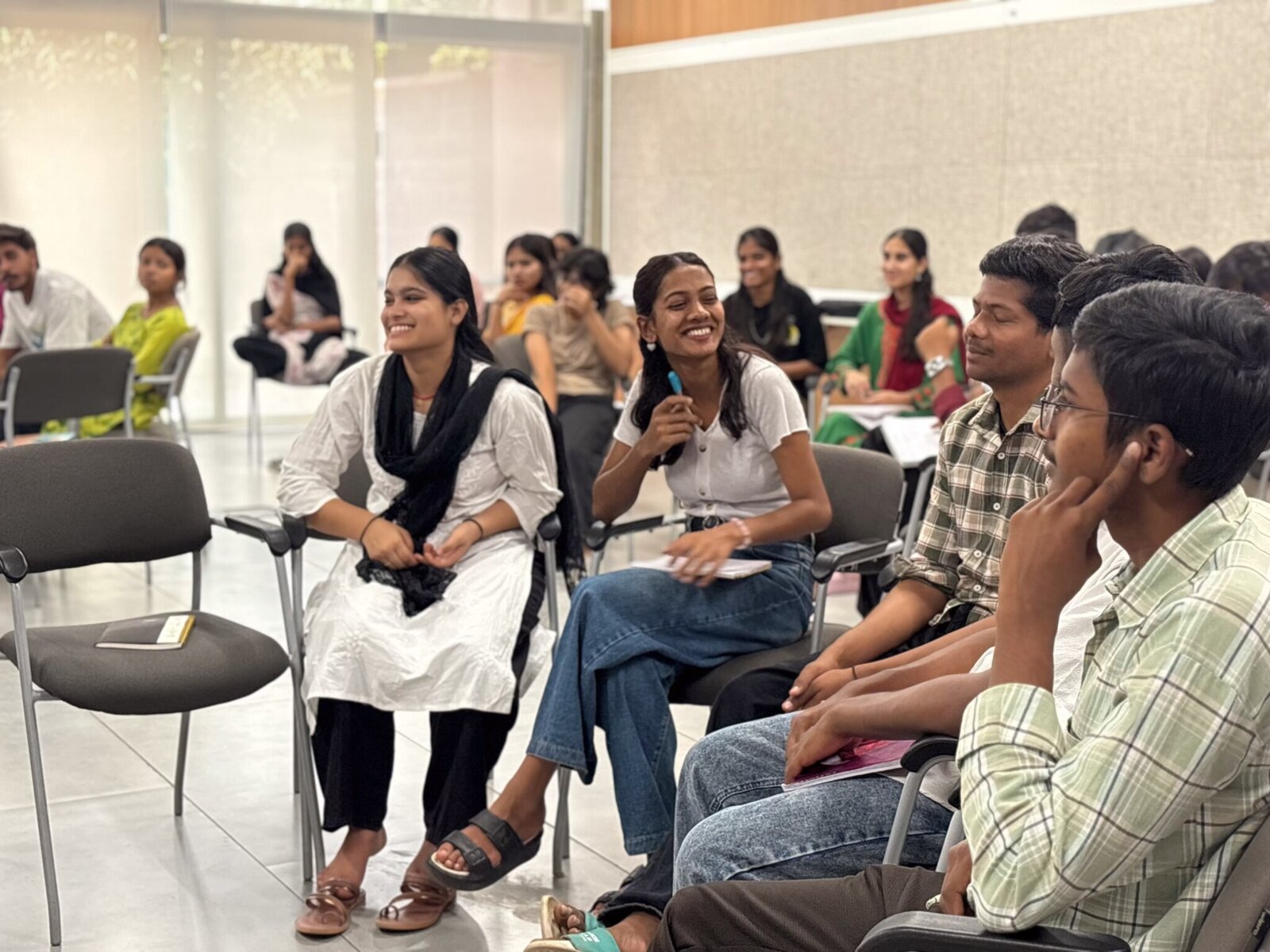
Drawing examples from non-violent movements around the world, the session showed how managing one’s emotions can lead to better outcomes than just having an outburst. The workshop highlighted ways to recognise emotions and manage them. Students practised simple exercises that could help them see issues positively. They were better equipped to deal with their emotions and avoid blind reactive outbursts.
After the end of the first workshop, a facilitator spoke to a student involved in a disciplinary case over ideological conflict. He reflected how he hadn’t seen his struggle in this light before. He agreed now that real change comes from winning hearts and not through suppression or fear.
“Forming us into groups and picking a particular sweet to represent our emotion was a very simple yet deep activity. It helped me understand how things change with our emotions towards something. The meditation activity also taught us how to calm ourselves down during difficult situations.”
Ways of listening and talking
When in conflict, what are your options?
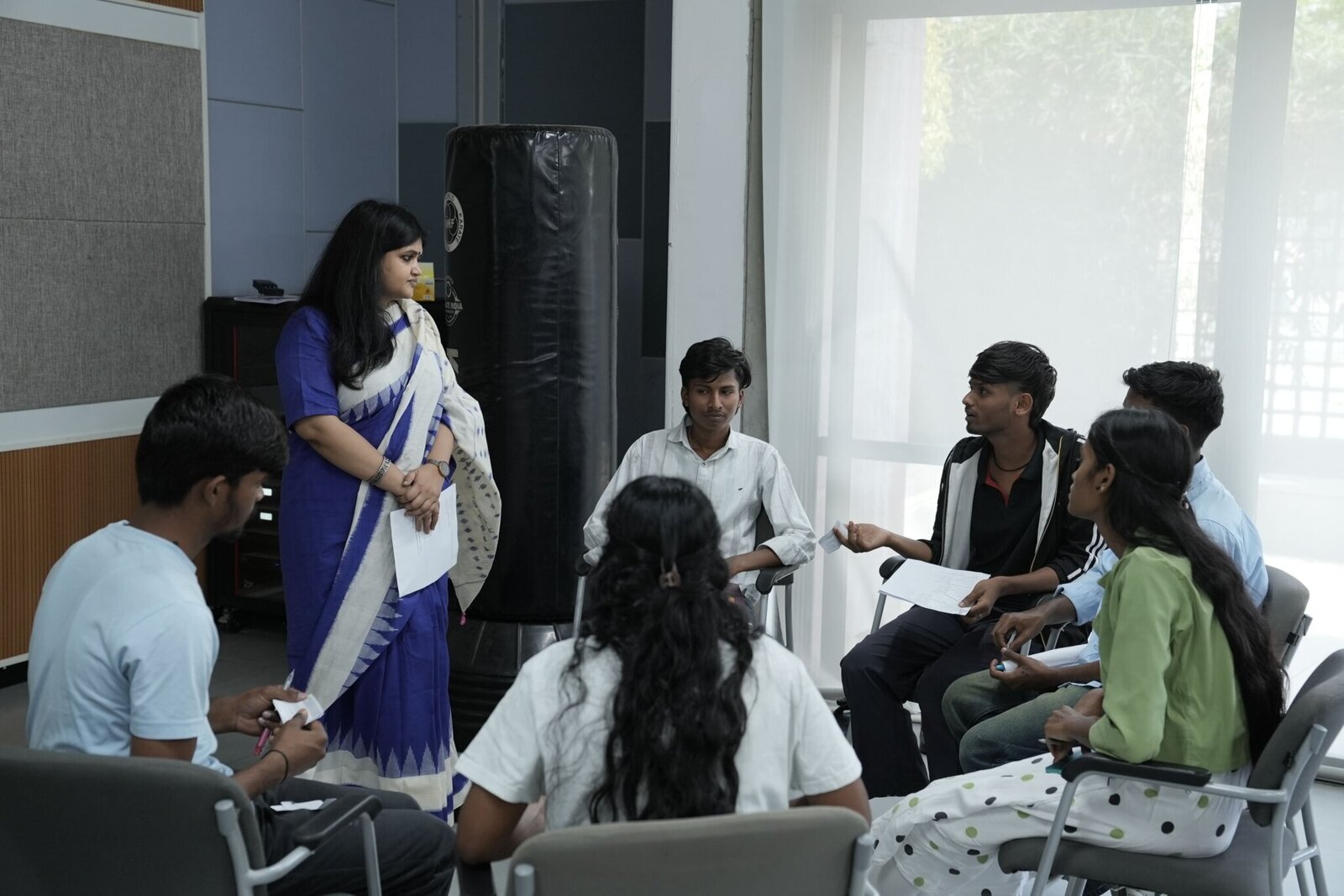
The next session was to sensitise students to the options open to them and ways to choose carefully between those. The path of dialogue, in particular, was focused upon, and students learned some concepts and skills related to it. The emotions and values attached to dialogue were discussed.
Students took up case studies and practised listening to the other side. These gradually moved to highly charged examples, and students listened to the other side’s emotions, arguments, and body language. Students also learned about putting one’s own position forward in a non-confrontational manner. They practised talking about contentious, difficult issues calmly. After the session, some students involved in recent political arguments had a long chat with one of the facilitators about changing people’s thoughts and perspectives through friendly discussions. They struggled with the idea and yet, wanted to see if it was possible.
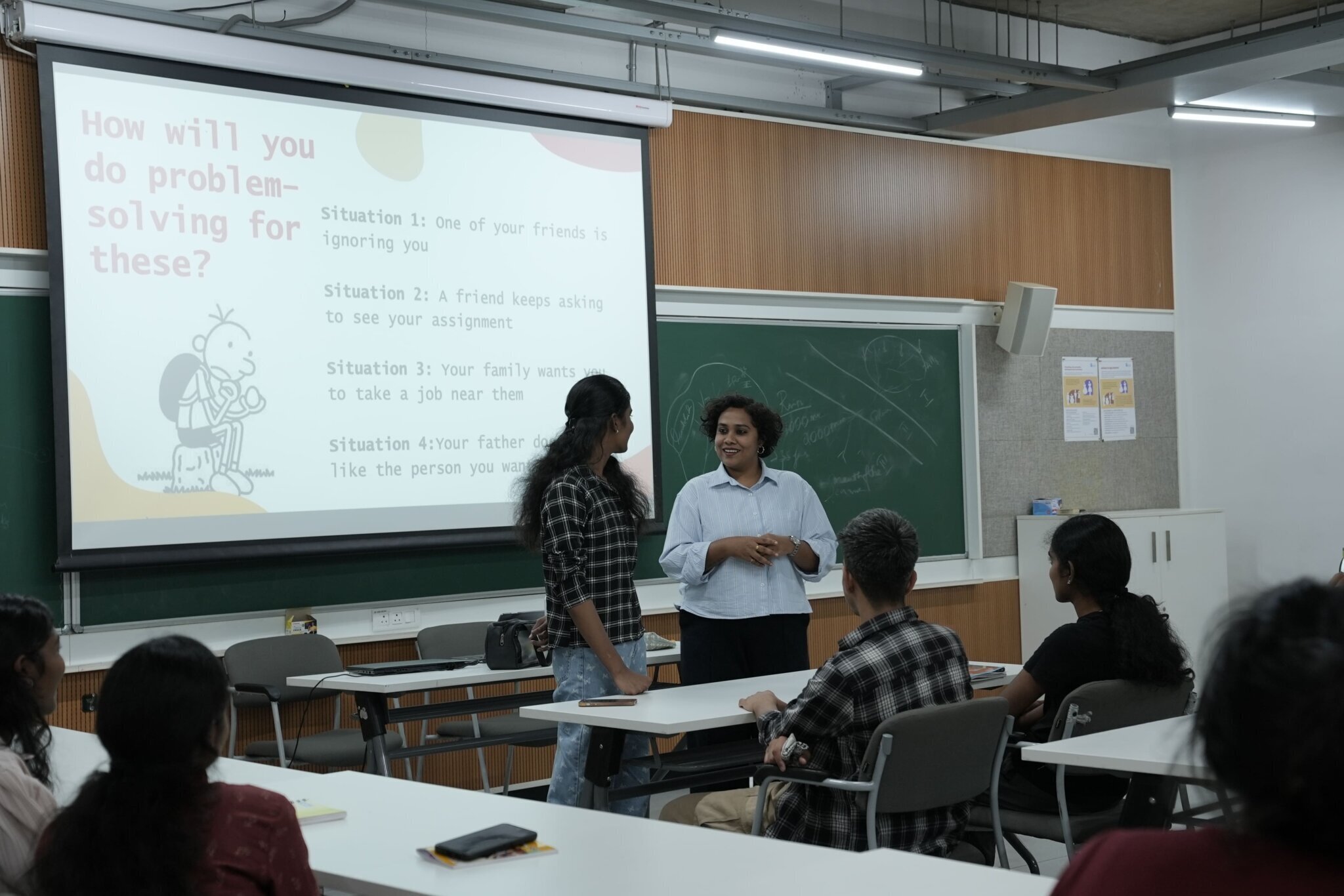
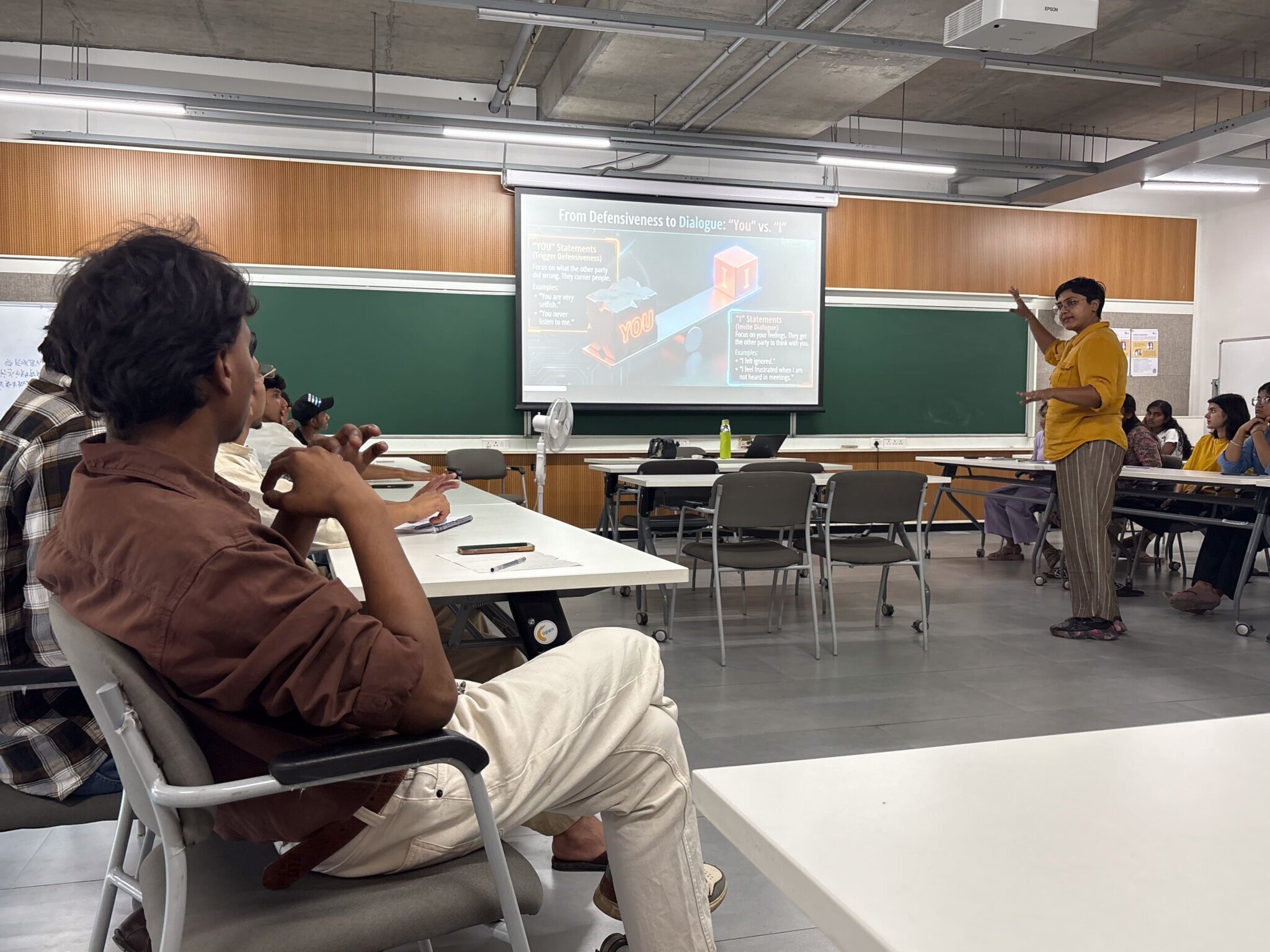
“The activity that I liked most was the one where I had to listen carefully and repeat what my peer said, before voicing my opinion. It made me realise the importance of understanding different perspectives. The importance of constructive dialogues for a strong democracy became clearer.”
Problem solving and the spirit of democracy
How to move beyond frustration to constructive engagement?
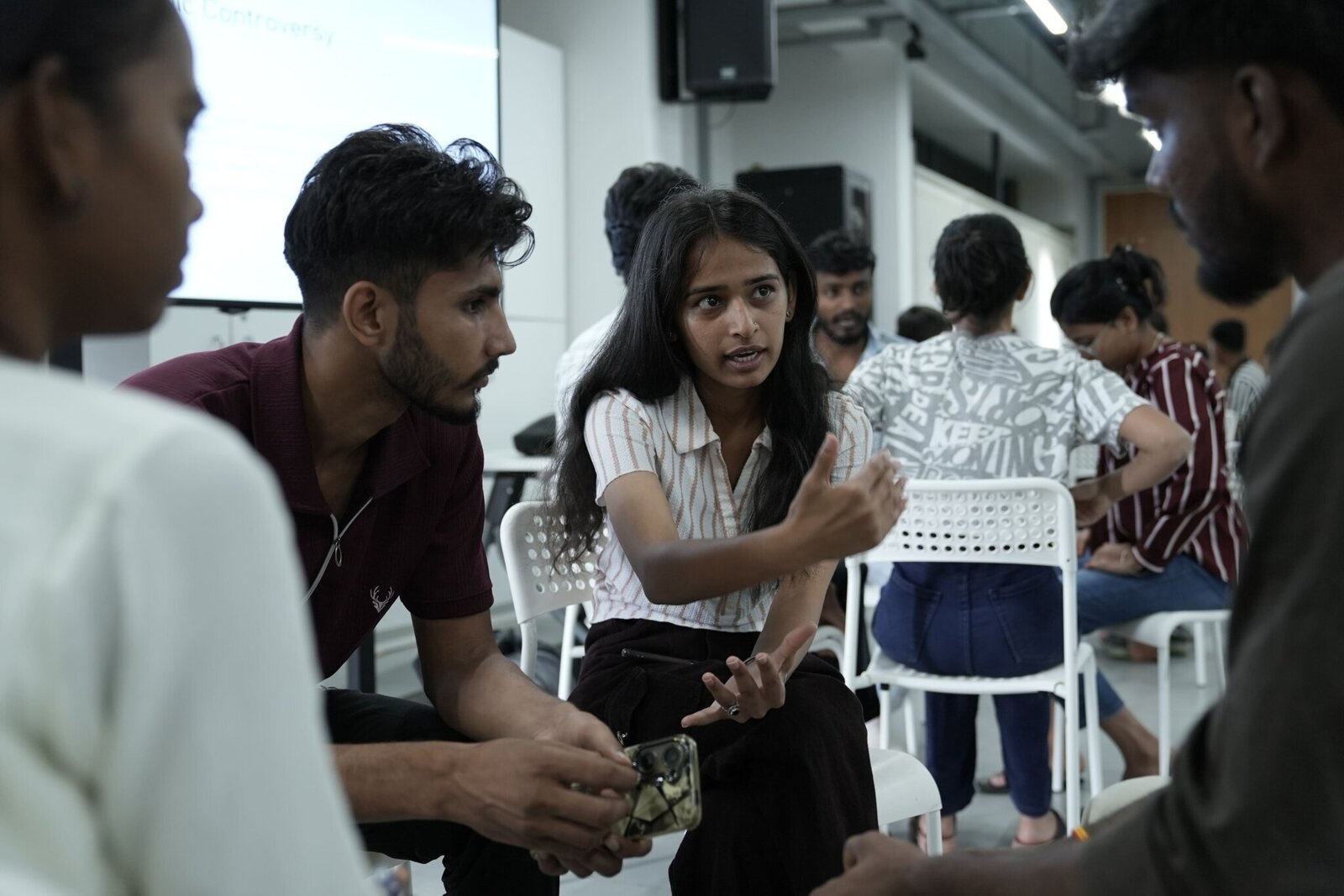
The last session encouraged a problem-solving approach. Students identified “hot” topics that strongly divided their opinions. They discussed these through the method of “structured academic controversy.” Some of these topics were as follows:
- Should public displays of affection be permissible on campus?
- Is it okay for males to stay at the off-campus residential facility while females stay on campus?
The students examined these issues carefully in groups. They were told to explore the other side of their positions too. This act of taking others’ point of view proved to be the transformative point.
Cueing by the facilitators helped the students to apply the lessons they had learned in previous sessions — managing emotions, active listening and neutral talking.
At the end of the discussion, the students felt they had arrived at much wiser positions than they had started with! For instance, to the surprise of the male students themselves, most agreed it was better that women stayed inside a safe campus. Later, one of the students came up with an amazed expression and said that he had never seen this issue from the other side and now that he had done so, he had changed his mind.
Shifting them from defending positions to seeking understanding and showing how everyday dialogue builds the foundation for a stronger democracy became a useful exercise for a better campus.
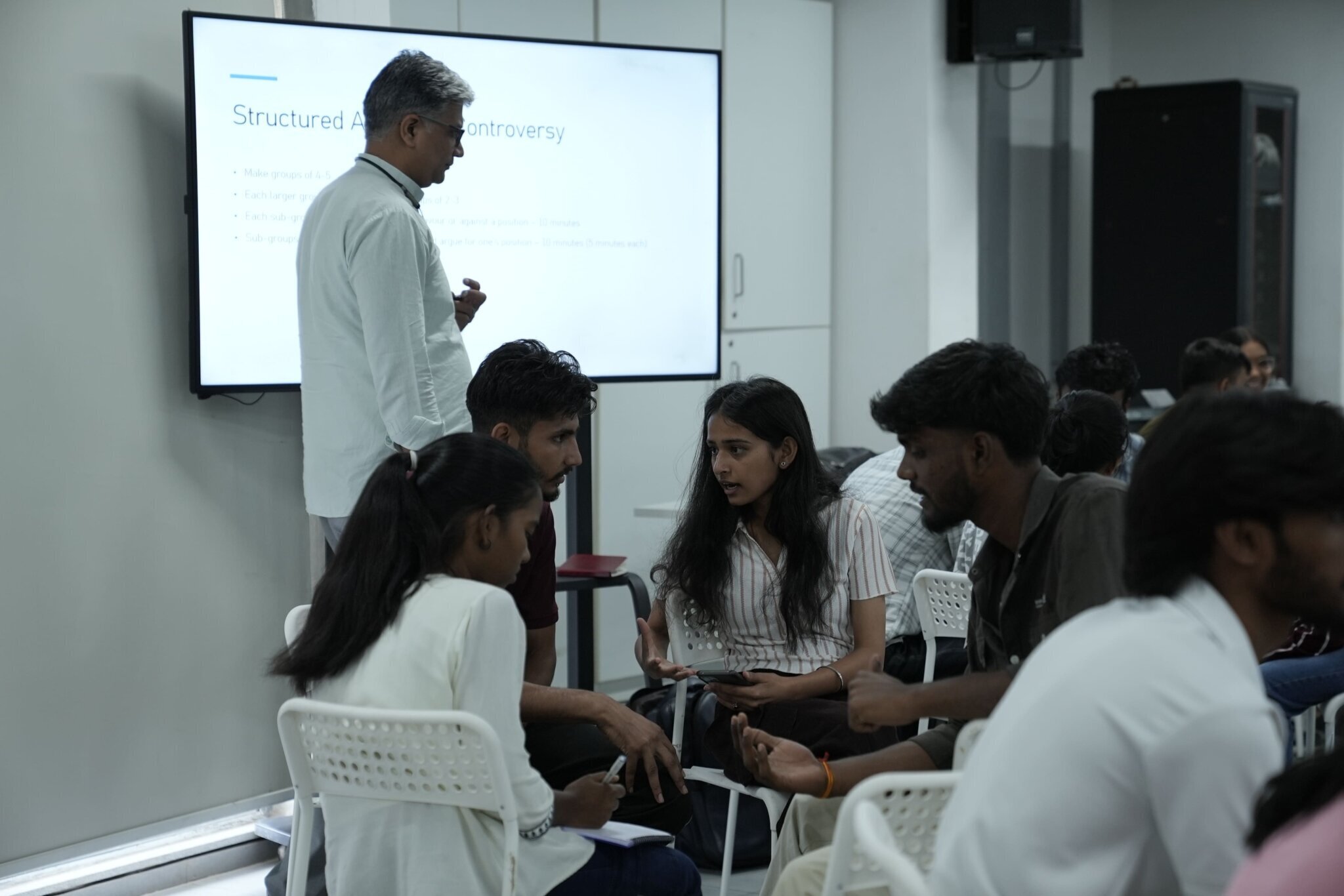
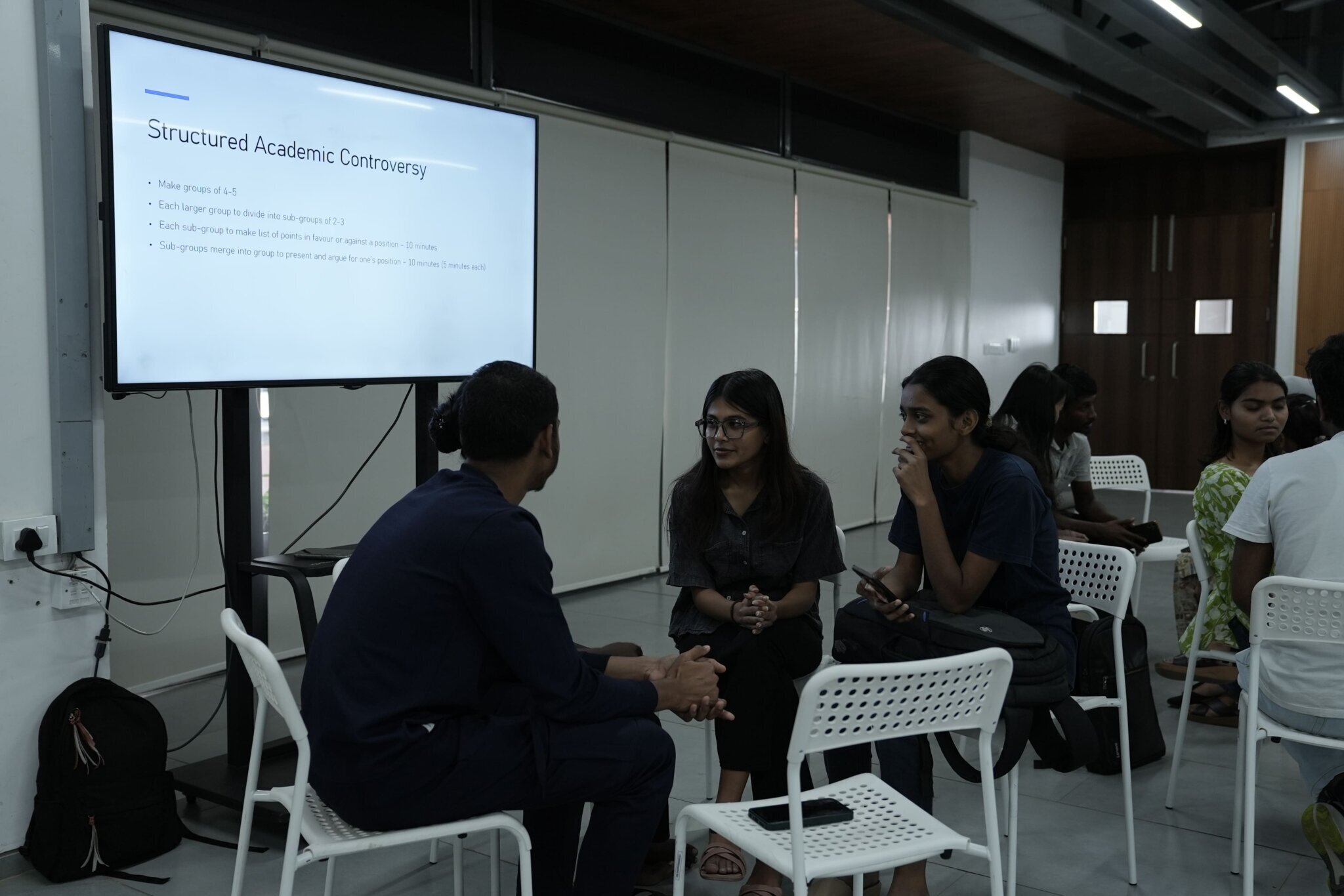
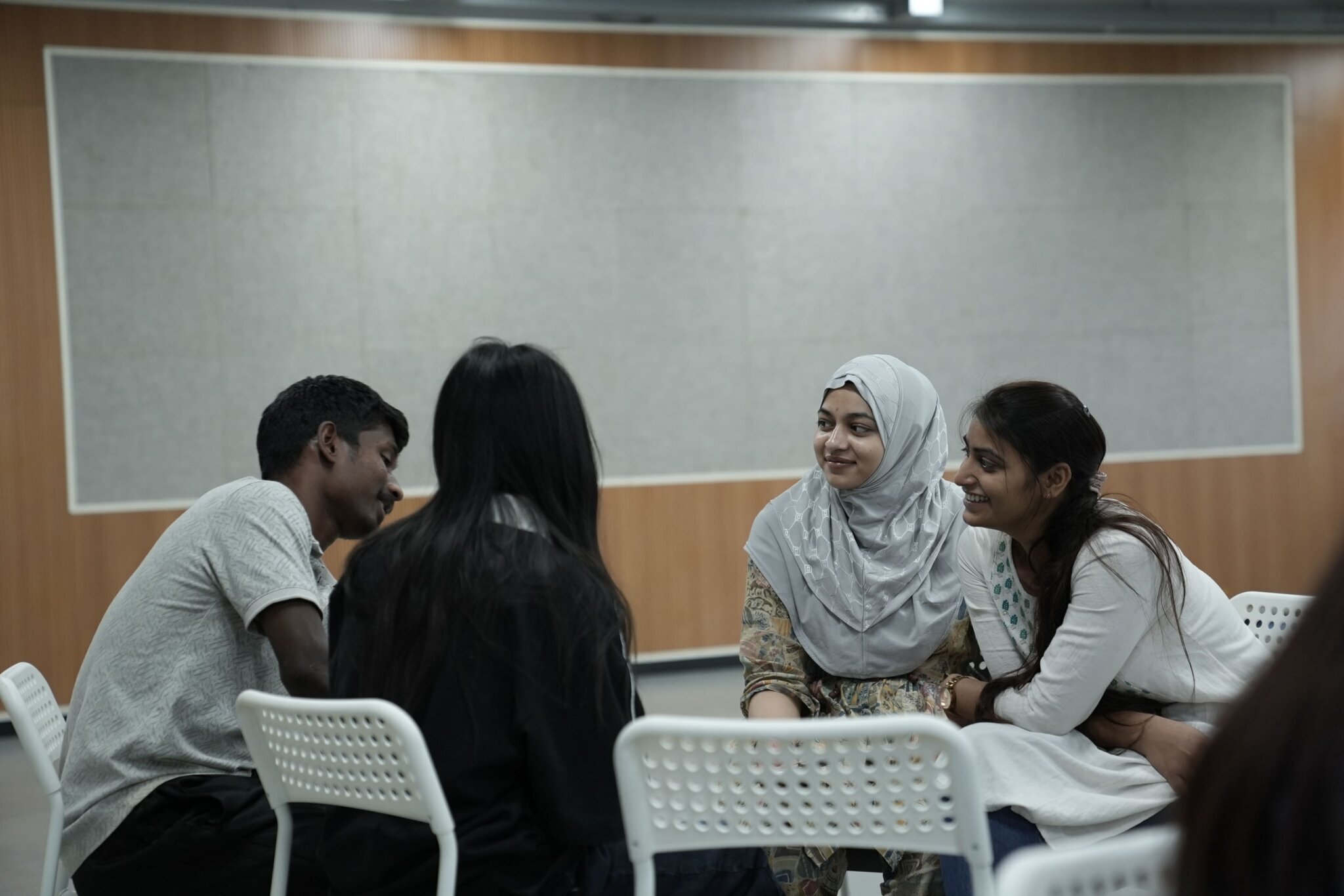
“The Dialogues in Democracy workshop was designed to help students move beyond debate to genuine understanding, and help build their listening skills, guide them to navigate disagreement, and strengthen the democratic culture on campus. Students found these sessions to be deeply meaningful. The activity of listening and repeating before responding became a turning point for many.”
Towards a culture of thoughtful engagement
What initially felt like a herculean effort proved to be the gateway to understanding the needs on campus. Refreshing these concepts and giving it more prominence in curricula could strengthen campus spaces and provide students an improved platform for their voices.
Images by Arshdeep Kaur and Jayesh Nandane
About the authors
Amman Madan is a faculty member at Azim Premji University.
Arshdeep Kaur is part of the communications function of Azim Premji Foundation.