
Publications & Resources
Our faculty, students and researchers work together everyday to contribute to a better world by grappling with urgent problems we are facing in India. We conduct rigorous work to produce high quality learning resources and publications to contribute to public discourse and social change. Here, we feature a sample from our work for everyone to access. You can explore featured resources, policies, and the latest publications from the University.
To explore all the work of our University, please visit our publications repository.

- Published
- Authors
Abstract
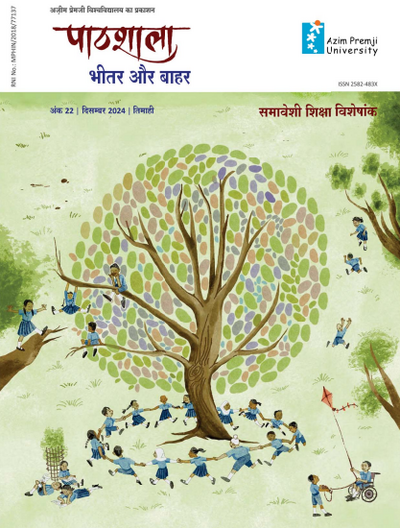
पाठशाला भीतर और बाहर का 22वाँ अंक ‘समावेशी शिक्षा विशेषांक’ है। समावेशन शब्द एकबारगी विशेष दक्षता वाले बच्चों के बारे में ध्वनित होता मालूम होता है। लेकिन इसकी परतों को खोलने पर समझ में आता है कि इसमें विशेष दक्षता वाले बच्चों की बात तो निश्चित तौर पर है ही, साथ ही बात है अलग-अलग सामाजिक‑आर्थिक और सांस्कृतिक परिवेश के विविध मनोभावों वाले वंचित समुदाय के बच्चों की शिक्षा और संसाधनों के बारे में भी। संवैधानिक मूल्यों में रचे बसे स्नेह और सम्मान जैसे मानवीय मूल्य हर बच्चे के लिए ज़रूरी हैं।
इस अंक में आप पढ़ेंगे कि शिक्षक शिक्षा में समावेशन को लेकर किस तरह की योजनाएँ हैं; किस तरह एक विशेष विद्यालय को समावेशी विद्यालय बनाया जा सका; और कलाओं, खेलों, संगीत, आदि के ज़रिए किस तरह समावेशन को दस्तावेज़ों से निकालकर हक़ीक़त में उतारा गया।
आप इस अंक में कुछ स्थाई स्तम्भ भी पढ़ेंगे जिनमें ‘उम्मीद जगाते शिक्षक’ की कहानी है, ‘किताबों से दोस्ती’ में जानेंगे 3 सुन्दर किताबों के बारे में, और ‘आइए, करके देखें’ में समावेशन पर आधारित ऐसी गतिविधियाँ जिन्हें आसानी से कराया जा सकता है। इनके साथ ‘शिक्षकों की डायरी’ स्तम्भ में आप पढ़ेंगे शिक्षकों के काम, उनकी बातें, उनके अनुभव।

- Published
- Authors
Abstract
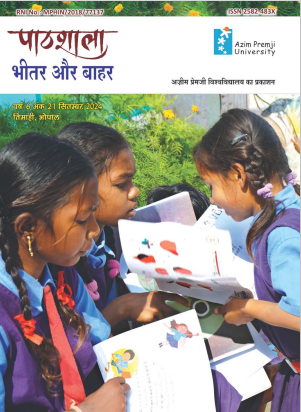
हमारे समाज में स्त्री-पुरुष, लड़के-लड़कियों के बीच ग़ैर‑बराबरी की सामाजिक‑सांस्कृतिक जड़ें आज भी बहुत गहरी हैं। इनपर कक्षा में बात करना बहुत ज़रूरी है। पाठशाला के इक्कीसवें अंक के एक लेख में इस विषय पर बच्चों से की गई चर्चा के अनुभव प्रस्तुत किए गए हैं। एक अन्य लेख इस बात की पैरवी करता है कि बच्चे डर के माहौल से नहीं, बल्कि भावनात्मक जुड़ाव से बेहतर सीखते हैं। इसके लिए शिक्षकों में बच्चों के प्रति सहानुभूति व समानुभूति का बोध होना चाहिए। सुबह की सभा, यानी मॉर्निंग असेंबली का शिक्षकों और बच्चों के लिए क्या महत्त्व है; और इसे ज़्यादा रचनात्मक, शैक्षिक और भागीदारीपूर्ण कैसे बनाया जा सकता है? एक लेख में इस बारे में चर्चा की गई है। इबारती सवालों पर काम के अनुभव पर आधारित एक लेख में बताया गया है कि जब तक गणित में भाषा का ज़्यादा-से-ज़्यादा इस्तेमाल न किया जाए, बच्चों को गणित समझने में दिक़्क़त आती है। गणित के दूसरे लेख में मापन की अवधारणा, उसकी इकाइयों एवं पैमाने से लम्बाई मापने के अनुभव साझा किए गए हैं।
Links
Magazine
Learning Curve Issue 19 | Practices for a Sustainable School Culture
in Azim Premji University

- Published
- Authors
Abstract
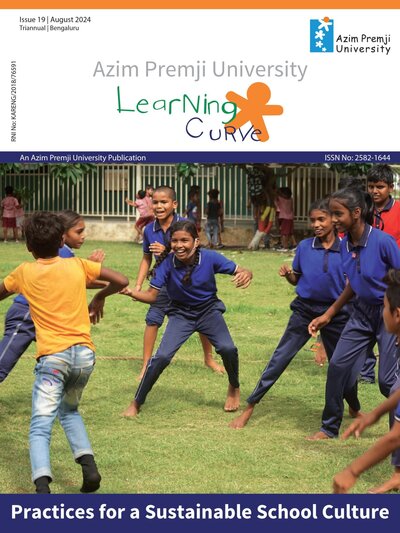
This issue focuses on practices that build a school culture – practices that become so ingrained in the school’s ethos that they come naturally to everyone and do not change if those who helped develop these move out of the school. It includes several aspects of the school culture, such as creating an environment where all students feel safe, valued, and seen; where there is no fear of any subject, where there is a high level of collaboration among teachers and continuous engagement with parents.
Links
Article
Reasonable Accommodation and Interdependence: Revisiting the Dynamics of Disability Inclusion in Higher Education in India
in Journal of Gender Studies

- Published
- Authors
- Meghana Rao
- Shilpaa Anand
Abstract
The principle of reasonable accommodation according to Article 2 of the United Nations Convention on the Rights of Persons with Disabilities (UNCRPD) is defined as ‘necessary and appropriate modification and adjustments not imposing a disproportionate or undue burden, where needed in a particular case, to ensure to persons with disabilities the enjoyment or exercise on an equal basis with others of all human rights and fundamental freedoms’. Exploring the relationship between inclusive policies enacted in institutions of higher education in India, and their impact on those who claim accommodation, we discuss the nature of care that informs and animates such interactions. Drawing on feminist disability studies scholarship on care, particularly, Akemi Nishida’s recommendation that care is inherently collective we analyse two sets of transactions selected for study as enabling care in patronising and charitable manners, while simultaneously ignoring the politics of responding to and providing accommodations. We find that institutional responses to accommodation claims are less reflective of the socio-political and affective aspects integral to the RA principle. Instead, the focus seems to be on providing either technocratic solutions or interpreting RA claims as causing undue burden. By reading the RA principle through the lens of scholarship on interdependence, we aim to broaden the scope of adopting and interpreting the RA principle.
Links

- Published
- Authors
Abstract
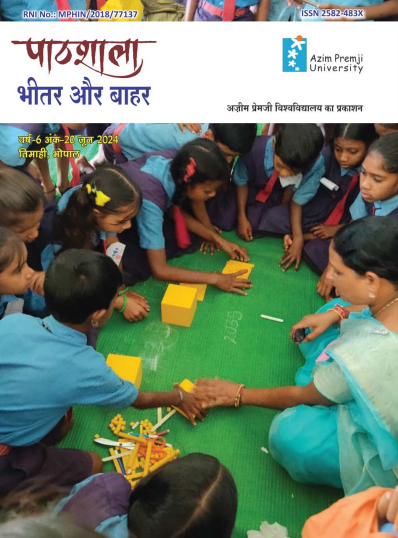
हमारे आज के विविधतापूर्ण और बहुरंगी समाज के लिए हिंसा और शोषण की संस्कृति ठीक नहीं है। आज के दौर के लिए संवाद की संस्कृति ही ज़्यादा ठीक है। इस विचार पर पाठशाला भीतर और बाहर के बीसवें अंक के एक लेख का मुख्य विषय के रूप में विस्तार से बात की गई है। इस अंक के कुछ लेखों में पाठ्यपुस्तक और पाठ्येतर कहानी-कविताओं के शिक्षण की सुविचारित योजना बनाकर भाषाई कौशलों के विकास और इनके आकलन पर किए गए कार्य के अनुभव प्रस्तुत किए गए हैं। जिसमें एक लेख डायरी लेखन और दूसरा लेख रीडिंग कॉर्नर के ज़रिए बच्चों को लेखन सिखाने के तरीकों के बारे में है। गणित का एक लेख बच्चों को शुरुआत से ही इबारती सवालों पर काम करने, खुद सवाल बनाने और जाँचने को गणितीयकरण की प्रक्रिया के तौर पर देखता है। दूसरा गणितीय सोच व तार्किक क्षमता के विकास के लिए तरीके सुझाता है। इस बार के संवाद का विषय विज्ञान, वैज्ञानिक सोच और पाठ्यपुस्तकें है।
Links
Article
Understanding Graphical Literacy Using School Students’ Comprehension Strategies
in Contemporary Education Dialogue
Article
- Published
- Authors
Abstract
Graphical literacy or graphicacy is a critical component of scientific literacy. Graphs are used to integrate and represent complex sets of information requiring abstraction from perceptual experience. They form essential parts of the Mathematics and Science curriculum across school curricular stages. A key to developing meaningful pedagogic practices to inculcate graphical literacy is in understanding how students perceive and comprehend features of graphs and interpret them. This study attempts to understand how children from the primary, middle and high school years, perceive and interpret information in bar and line graphs. Two hundred and twenty-nine children from four different school contexts in Grades V, VII and IX were administered questionnaires and interviewed based on tasks requiring comprehension of graphs. It was found that children’s understanding of graphs was tied to the curricular progression which was significant at Grades V and IX. Comprehension of bar graphs with nominal data was easier compared to line graphs requiring integration of information from two dimensions and interpreting them. Further, graphs requiring preliminary levels of statistical understanding were easier to comprehend. While prior experience and facility with graphical conventions played a role, interpretation from spatial to symbolic representations posed challenges. Students did not have a clear preferred strategy or a linear comprehension trajectory, but moved back and forth between conventions, clustering of graphical elements and written content in questions, to make meaning. Those who had performed well used various perceptual strategies simultaneously. Further, they were found to employ transformational reasoning based on a sense of ‘how things work’. It was observed that meaningful pedagogic practices at school and informal experiences outside the classroom aid graphical literacy.
Authors
Article
Schooling and Constructions of Citizenship: Some Reflections on Student Agency and Choice
in Contemporary Education Dialogue

- Published
- Authors
Abstract
A national system of education in modern nation-states is usually geared towards nation-building and schools play a significant role in grooming children as future citizens. While the dominant and powerful usually emerge as the ‘ideal citizen’ in the national imagination, the marginalised are constructed as the ‘other’, vilified, and stigmatised. The school, with its overt and hidden curriculum, operates as a major site for the reproduction of dominant ideology while at the same time creating opportunities for exercising human agency. This article, an ethnographic study conducted in a government co-educational school in Delhi, examines how it sought to mould the students into ‘ideal’ citizens and how this was received by them. Belonging to a relatively lower socio-economic background compared to the teaching community, did they give their acquiescence? Or were they able to exercise their agency to challenge the entrenched power structures in society? Were their responses shaped by their specific social locations and the unfolding of ‘cultural politics’? Moreover, when the nature of ‘official knowledge’ itself has undergone radical shifts and the idea of citizenship has been redefined with the introduction of the National Curriculum Framework 2005, were the students able to leverage the epistemological shifts embodied in the textbooks to reimagine and construct ideas of citizenship regarding marginalised communities? These are some questions that the present article seeks to address.
- Published
- Authors
Abstract
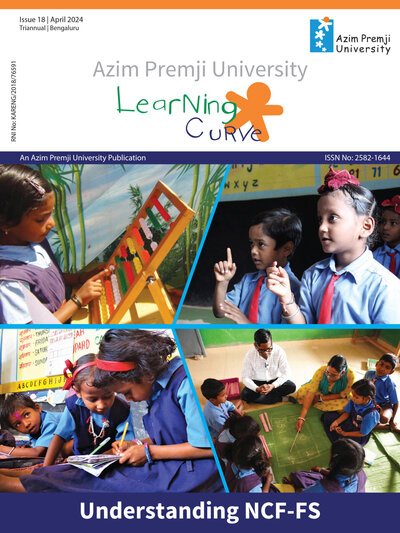
The National Curriculum Framework for Foundation Stage (NCF-FS) document has not reached all teachers and is yet to be translated into regional languages. But as we wait for this, we thought we could start to understand it and the experience of some teachers in Azim Premji Schools and those who we work with in government schools in several states who have been implementing parts of it in their classrooms.
Links

- Published
- Authors
Abstract
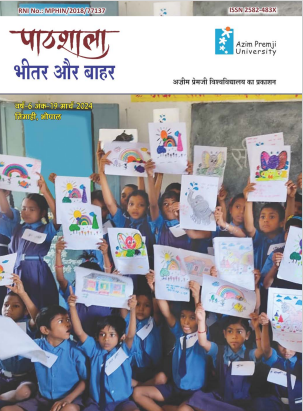
पाठशाला भीतर और बाहर के उन्नीसवें अंक के ज़्यादातर लेख पुस्तकालय और भाषा की पढ़ाई के विविध पहलुओं पर केन्द्रित हैं। इन लेखों में, अच्छी किताबों से ही अच्छे स्कूल पुस्तकालय की कल्पना साकार होती है व पुस्तकालय को जीवन्त और सक्रिय कैसे बनाया जाए, जैसे विषयों को उठाया गया है। एक लेख लोकतंत्र में संवाद की संस्कृति बनाने व इसके महत्त्व के बारे में है। साक्षात्कार में चिन्तनशील शिक्षक और इनकी रचनात्मकता के विकास की प्रक्रिया पर चर्चा की गई है। संवाद में, संवैधानिक मूल्य बन्धुता के भाव को विकसित करने के लिए स्कूली स्तर पर किए जाने वाले प्रयासों के बारे में अनुभवपरक विचार रखे गए हैं।
Links