
Antimicrobial Resistance (AMR): From Prediction to Prevention
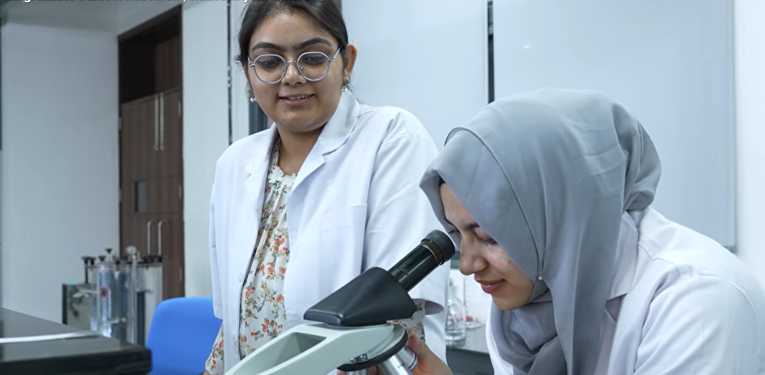
Neetu Kalra highlights how she worked with Kaneez Fatima and Saniya Khatun to make the science behind AMR prevention less intimidating and start conversations with the community.
Details
Every time we fall sick with an infection and develop a fever, our immune system is activated to fight the pathogens responsible. When the infection is bacterial, antibiotics can provide an important additional line of defence. Most of us are familiar with antibiotics and have probably taken them at some point in our lives. But what happens when the medicines we rely on to treat infections stop working?
We are also familiar with non-communicable diseases such as cancer and their well-known risk factors. Cigarette smoking, for example, is strongly associated with lung cancer, while tobacco chewing is an important risk factor for oral cancer. Many of us may also remember the stories of public figures such as cricketer Yuvraj Singh, who battled cancer at the peak of his career, or actor Angelina Jolie, who chose to undergo preventive surgery after learning about her increased genetic risk of breast and ovarian cancer.
But how many of us are equally familiar with AMR — a growing global health threat in which microorganisms develop the ability to survive medicines that were previously effective against them? More importantly, how many of us are aware of the enormous number of deaths, prolonged illnesses, increased healthcare costs, and treatment challenges associated with AMR?
Why be concerned about AMR?
Antimicrobial resistance is no longer a problem restricted to hospitals or laboratories. Resistant microorganisms can move between people, healthcare settings, animals, food systems, and the environment, making AMR a complex public health challenge.
Globally, bacterial antimicrobial resistance was estimated to be directly responsible for approximately 1.27 million deaths in 2019. India also faces a substantial burden of antimicrobial-resistant infections, with surveillance data showing resistance to several commonly used antibiotics.
The challenge is particularly serious because the development of resistance can make infections more difficult to treat. Patients may require longer hospital stays, alternative or more expensive medicines, and more intensive medical care. In some situations, infections that were once relatively easy to treat can become life-threatening.
This question of how resistance develops — and how we can identify it before it becomes a larger problem — was what first drew me towards AMR research.
From a student project to predicting resistance
My interest in AMR began about five years ago through an interdisciplinary collaboration with undergraduate students from computer science engineering and bioengineering. They approached me with an idea of using computational approaches to understand antimicrobial resistance.
We began by asking a simple but challenging question: Could we use information about microbial mutations to predict when a bacterial strain might become resistant to an antibiotic?
The students worked with publicly available datasets containing information about mutations associated with resistance to specific classes of antibiotics. Using these data, they developed an algorithm to predict the likelihood that a bacterial strain would show resistance and subsequently evaluated its performance.
For me, this was an important starting point because it demonstrated how biology and computational approaches can come together to address a real-world health problem. It also showed the value of giving students opportunities to work across disciplinary boundaries. But the computational work led us to another question: If resistant microorganisms can emerge, where do they go?
“The students demonstrated how biology and computational approaches can come together to address a real-world health problem. This also showed the value of giving students opportunities to work across disciplinary boundaries.”
Looking beyond the hospital: AMR in the environment
Resistance does not remain confined to a patient or a laboratory. Microorganisms can enter the environment through different routes, including wastewater. Hospitals, industries, households, and other urban activities can release microorganisms, antibiotics, chemicals, and other contaminants into wastewater systems.
With support from a research grant from the University, we explored another dimension of AMR: its environmental spread. Kaneez Fatima, Saniya Khatun, and later Khushi Thakur, BSc in Biology students, came onboard to add different dimensions to the project.
We investigated hospital and industrial effluents collected from different sites in Bhopal to understand how these waste streams might contribute to the dissemination of antimicrobial-resistant microorganisms in urban environments.
Our preliminary findings showed that these effluents contained opportunistic and clinically relevant microorganisms. Interestingly, nearby lentic water bodies showed greater microbial diversity, with a larger proportion of the detected microorganisms being non-pathogenic. In contrast, the effluent-associated environments showed lower diversity and a greater representation of opportunistic microorganisms.
One possible explanation is that hospital and industrial effluents impose selective pressure on microbial communities through the release of antibiotics, chemicals, and other contaminants. Such environmental pressures may favour microorganisms that are able to tolerate or survive these conditions, potentially altering the composition of microbial communities.
These findings are preliminary and remain unpublished, but they raise an important concern: wastewater may act not only as a reservoir of resistant microorganisms but also as a pathway through which they can spread into the wider environment.
This makes the management of wastewater an important part of the larger AMR conversation.
“I have come across people who take antibiotics casually, without prescriptions, which made me curious to understand what it can do to our bodies and how it looks at the gene level. This motivated me towards the project where I wanted to understand how resistance can show up in the environment and how it looks inside the bacteria.”
Awareness is important, but is it enough?
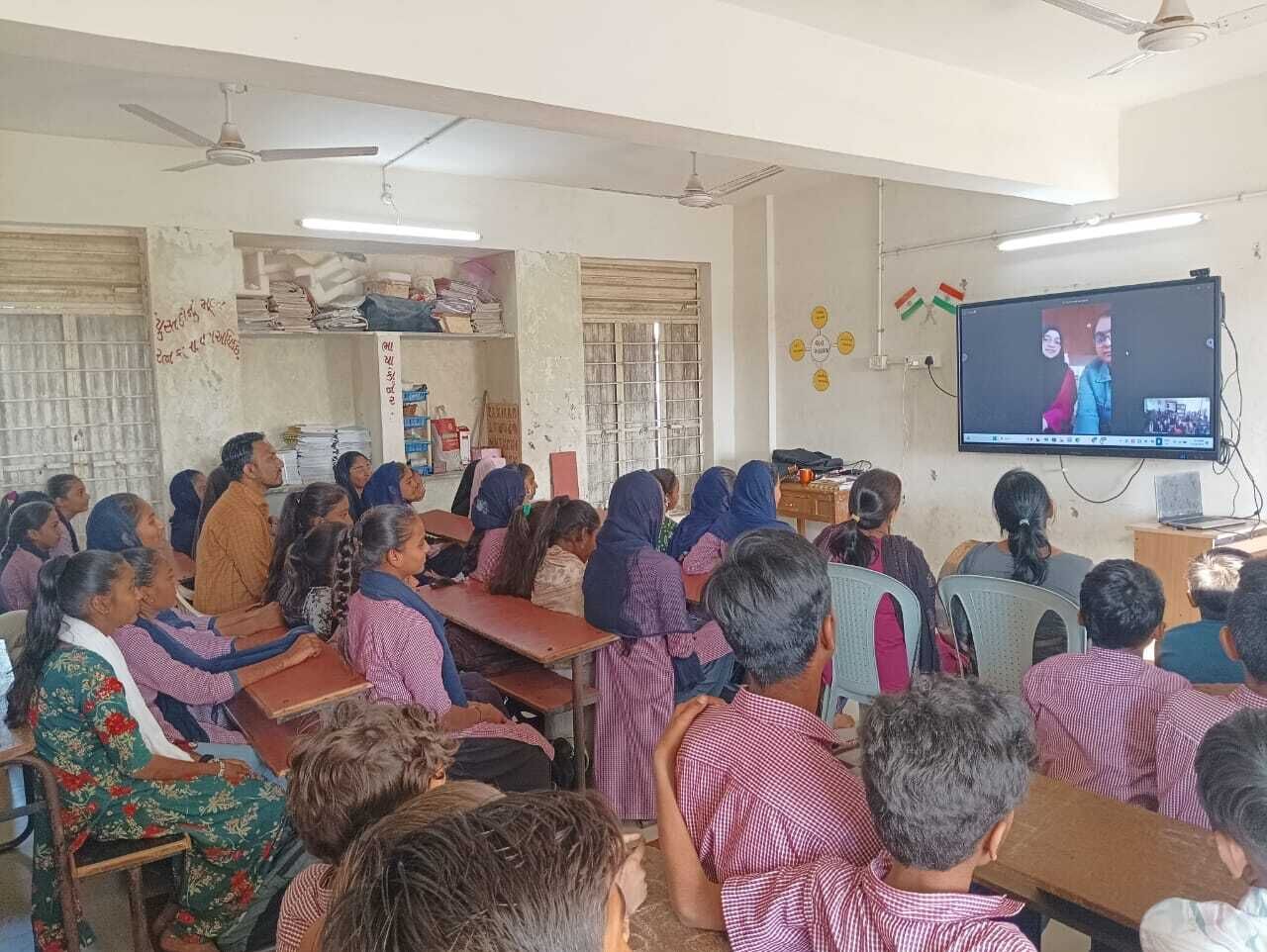
While studying the environmental dimension of AMR, we also wanted to understand another part of the problem: human behaviour. Antibiotic use is influenced not only by medical advice but also by how people obtain, store, and use medicines. We therefore assessed awareness and practices related to AMR among rural and urban populations.
“We knew that one awareness campaign could only scratch the surface of an issue as pressing as AMR. Even so, with rhyming slogans, illustrations, and a little storytelling, we tried to make the science behind AMR prevention less intimidating and start conversations with the community.”
Our survey revealed an interesting contrast. The awareness of AMR was higher among participants living in urban areas. However, participants from rural areas more frequently reported following prescriptions and completing the recommended dosage for the prescribed duration. One possible explanation is their greater dependence on instructions provided by healthcare providers and local healthcare workers. In contrast, some urban participants reported obtaining or using antibiotics without a prescription and discontinuing treatment once they began to feel better. At the same time, most participants reported that they generally checked the expiry date before using medicines.
These findings highlight an important lesson: awareness does not always translate into appropriate practice. Telling people that antimicrobial resistance is dangerous may not be enough. Effective AMR interventions also need to consider access to healthcare, prescribing practices, health-seeking behaviour, availability of medicines, and the everyday decisions people make about their use.
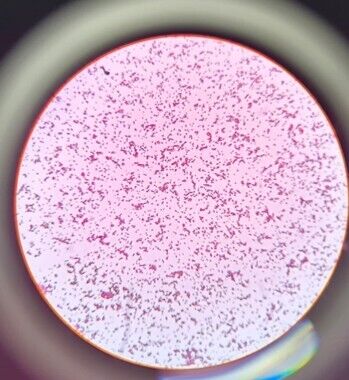
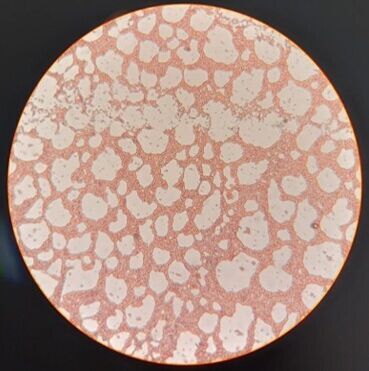
The bacteria can produce pigments and the colour appears on the plates (left: white-coloured colony, right: yellow-coloured colony). It’s visible to the naked eye once grown under laboratory conditions and provided with nutrients.
Where do we go from here?
The different strands of this work have gradually led us towards a broader research question: Can we bring together computational prediction, clinical information, and environmental surveillance to better understand and control AMR? Our future research will focus on these interconnected dimensions.
First, we would like to collaborate with clinicians and microbiologists in hospitals in Bhopal to investigate the relationship between prolonged hospitalisation and the acquisition of antimicrobial-resistant infections. This would be particularly relevant for patients with cancer and other comorbidities, who may have prolonged healthcare exposure and complex treatment requirements. We could also explore how previous infections, including COVID-19, and patterns of antibiotic use may influence the risk of antimicrobial resistance.
Second, I plan to further develop machine-learning approaches for predicting antimicrobial resistance. By combining microbiological, genomic, and clinical information, such models could help identify microorganisms that are more likely to show resistance to commonly used antibiotics. In the longer term, such predictive approaches could contribute to more targeted treatment and better antimicrobial stewardship.
The environmental component of this research could be expanded beyond Bhopal. Studying wastewater systems in nearby cities with different levels of urbanisation, industrial activity, healthcare infrastructure, and wastewater management could help us understand how environmental conditions influence microbial diversity and the distribution of antimicrobial resistance.
About the author
Neetu Kalra is a faculty member at Azim Premji University. Her areaof interest lies in identifying the transcriptomics-related biomarkers for early onset of cancer. She is also interested in exploring the role of the microbiome in health and diseases and focussing on the dissemination of antimicrobial resistance and developing machine learning models to predict the resistance.
At the University, she teaches core courses in the BSc in Biology honours programme: What is Biology, Biology of the Cell, Introduction to Genetics, Epigenetics and Health, Introduction to Immunology, and more. She has also taught common curriculum courses like Public Reasoning.
