The Invisible Inhabitants of Bhopal’s Lakes
Curious about the health of their city’s lakes, Ananya Mukherjee along with Hiya Chakma, Khushi Thakur, Rambhavi Singh, and Vedanshi Gupta set out to find out more about the microbes that live in them.
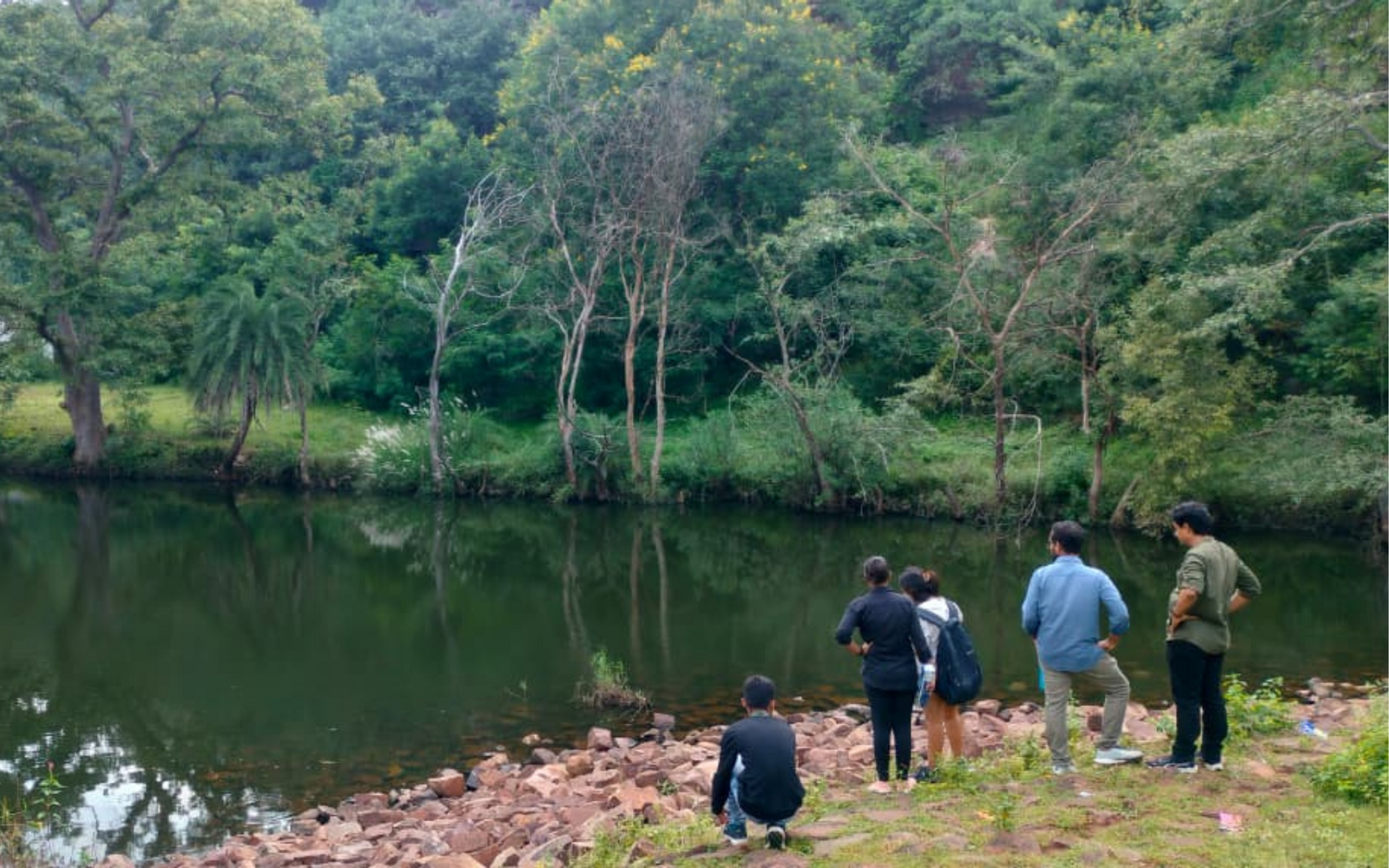
A team from the University conduct a recce at Lower Lake, Bhopal. Credit: Vedanshi Gupta
Details
If there is one thing that a first-timer to Bhopal cannot miss, it is the city’s numerous lakes. They certainly caught the eye of Ananya Mukherjee, a biology professor who moved to Azim Premji University’s Bhopal campus in 2023. Her first year in the so-called City of Lakes featured numerous visits to the largest among them — Bhojtal or Upper Lake, which is believed to have been built close to a thousand years ago by Raja Bhoj of the Malwa Kingdom. Soon enough, Ananya realised all was not well. “I started noticing something: in Bhopal, certain lakes are more equal than other lakes.”
Upper Lake is a crucial tourist draw and a casual visitor would probably be impressed by how clean it seems — not to mention the Insta-worthy background possibilities it offers. On the other hand, Ananya flagged that Chhota Talaab or Lower Lake (built in 1794) was not maintained as well. It also happens to lie in an area where marginalised communities live. The condition of the Hathai Kheda reservoir appeared even worse.
“Some lakes are extremely dirty, you can even find animal carcasses in the water. They are genuinely not cleaned well,” she observed. As a microbiologist, her instinct was to wonder what microbes live in these supposedly fresh waters, what this implies for the local population, and how the quality of Bhopal’s lakes compares with the situation worldwide.
Rise and fall
Spread across an area of 31 km², Upper Lake is responsible for nearly 40 percent of the drinking needs of Bhopal’s population. According to a report from CSE, the lake’s water quality was so good till 1947 that its water could be consumed directly without any treatment! Together with the smaller Lower Lake, the pair form Bhoj Wetland, an ecosystem that supports hundreds of species of birds and aquatic animals.
Since 2002, the Bhoj Wetland has been part of the Ramsar List, the world’s largest network of protected wetland areas. However, in the past decade, there have been increasing concerns about the deteriorating condition of the lakes.
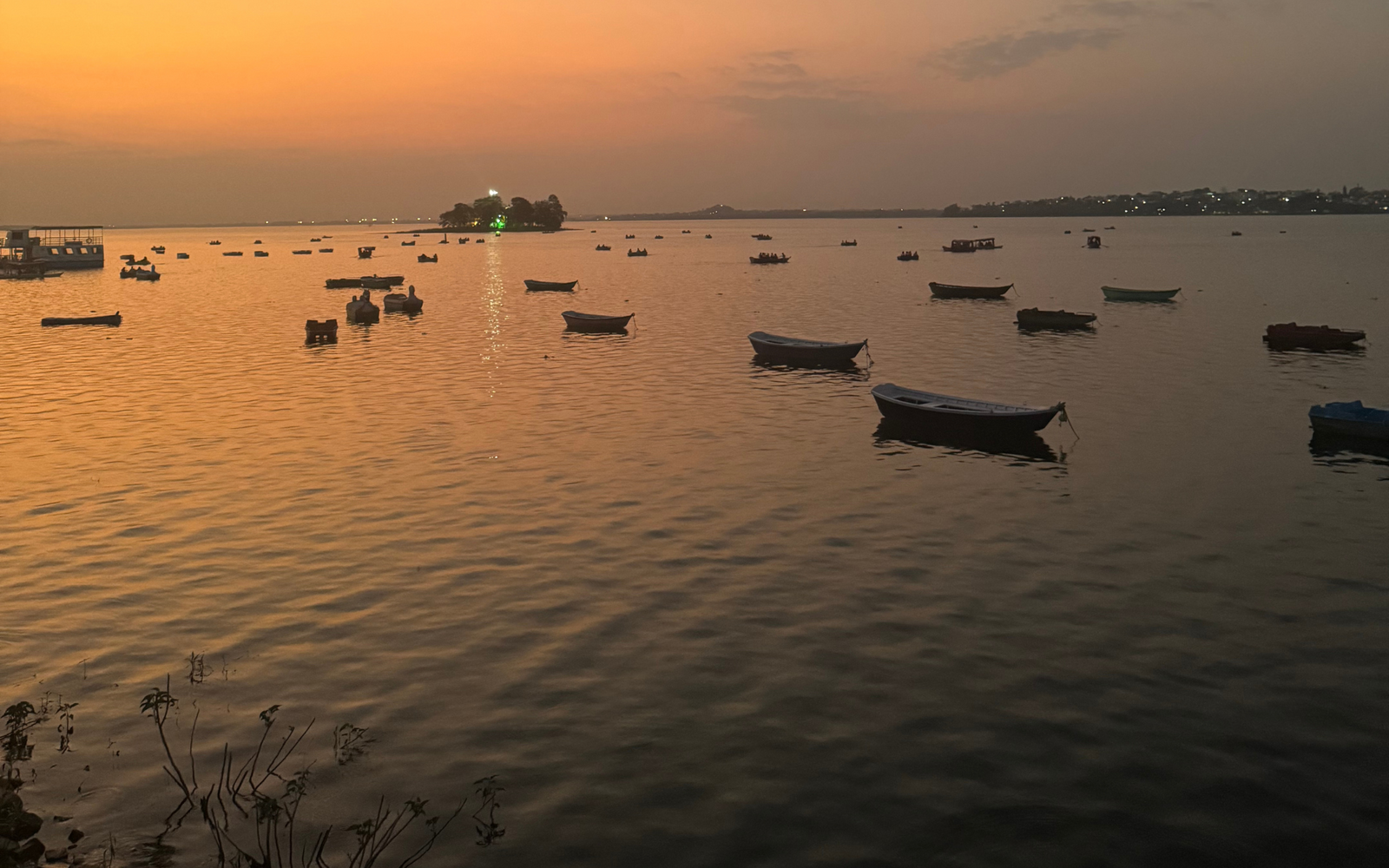
Recently, scientists reported considerable microplastic contamination in the surface water of the Bhoj wetland, both in Upper and Lower Lake. An article on Mongabay India helped put the numbers in perspective: “Bhoj wetland’s microplastic levels are comparable to or higher than the most polluted stretches of the Ganga river, where concentrations have ranged from about 100 to over 1,000 particles per cubic metre or per 1,000 litres in some areas. By contrast, European freshwater lakes such as Balaton lake typically show much lower concentrations, often below 10 particles per cubic metre or 1,000 litres…”
Another story on Mooknayak reported that Bhopal’s smaller lakes are disappearing due to encroachment, sewage waste and illegal activities. “The Madhya Pradesh Pollution Control Board categorises most Bhopal lakes as B and C class waterbodies. This means they are not fit for direct consumption, with the Lower Lake and Shahpura lake among the most polluted. Even the Upper Lake, once the pride of the city, is no longer fit for drinking purposes without treatment,” it warned.
In 2024, it was suggested by some media reports that the Bhojtal Wetlands may be delisted from the Ramsar List “due to possible damage to its ecological character,” though this was later denied by the government.
Fishing for microbes
As a science teacher of undergraduates, Ananya saw these imperilled lakes as living laboratories where students could learn research methods by studying a problem that has real-world implications and the potential to generate novel findings. She won a seed grant from the University to pursue this work, and subsequently, three of her students, Hiya Chakma, Rambhavi Singh and Vedanshi Gupta, joined her.
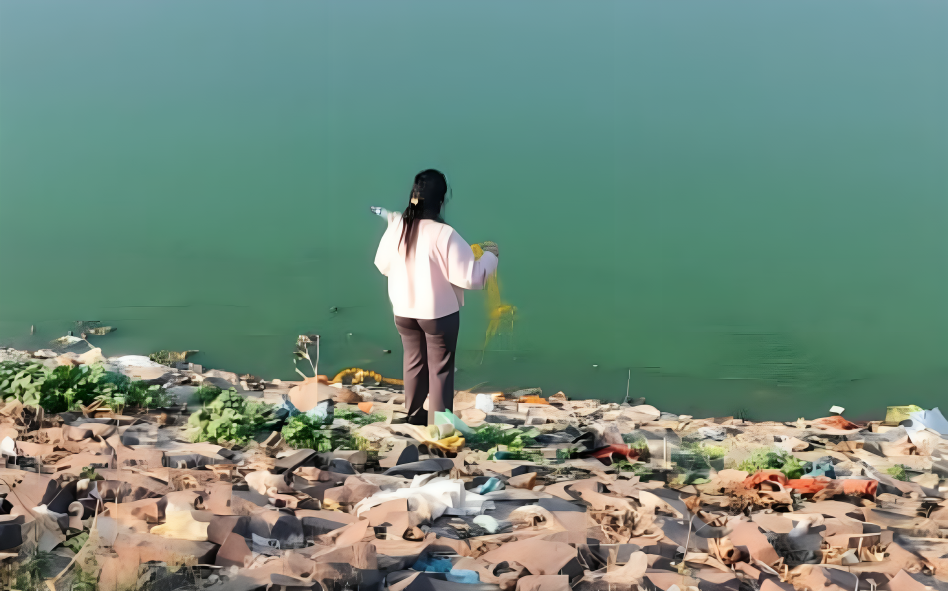
First, the team needed to collect samples from the three rivers they decided to focus on: Upper Lake, Lower Lake and the Hathai Kheda reservoir. They tied a rope around the necks of 250 ml bottles and tossed it into the water. A stone bound to the bottle would ensure that it sunk just enough to avoid the surface level trash. It was immediately apparent that the water was unclean, but only further tests could prove if it actually was. The collected water was then transferred to different containers and stored in ice chests to maintain their temperatures till they returned to the lab.
The sight of a group of young women on the lakeshore, lassoing bottles in and out, naturally made passersby curious. “People would ask us if we were fishing, what we wanted to do with the water, which college we came from…” remembered Rambhavi. Sometimes they offered to help, added Hiya, recalling a time when their collection attempts were getting hindered by clumps of water hyacinth flowing on the surface. “A little boy came to us and helped us collect the sample. He then asked us for a reward,” she laughed.
“You can only get an accurate picture of the health of a lake if you look at the microbes which inhabit them.”
Back in the lab, the team subjected the samples to a range of physicochemical tests to determine their pH as unusual pH levels indicate pollution and can affect aquatic life. They also tested the nutrient levels, especially nitrogen (leads to excessive growth of algae and aquatic plants), dissolved oxygen (low levels are a sign of organic pollution or decomposition of algae), chlorophyll‑a (a proxy for algal biomass) and their hardness (to investigate the amount of heavy metals present). The samples were also tested for antibiotic-resistant microbes using five commonly prescribed antibiotics, i.e., Ampicillin, Cefixime, Cefpodoxime, Levofloxacin, and Cefoblast.
What Ananya was particularly keen to examine was environmental DNA (eDNA). Environmental samples from rivers or lakes can contain thousands of genetic traces that other surveys may miss out on, such as living cells, the excretions and secretions of creatures that are found in the targeted site. Knowing about a lake’s microbiome (the entirety of organisms that inhabit it) can offer definitive clues about the state of the ecosystem and the kinds of pollution affecting it. eDNA analysis is now being increasingly used around the world to evaluate the condition of our water bodies. “I believe that you can only get an accurate picture of the health of a lake if you look at the microbes which inhabit them,” she affirmed.
To characterise the eDNA in their samples, the students had to isolate the DNA (this process has to be done within 12 hours of collection). They first passed the sample through a filter paper with pores tiny enough that the microorganisms and tiny particles carrying DNA get separated. DNA was then extracted using a commercially available kit. The extracted DNA was then sent for sequencing to National Institute of Biomedical Genomics in West Bengal. The output they receive is in the form of large text files containing millions of sequence reads. These were later analysed to identify which microbial communities were found in each lake.
The broader context
Before they embarked upon their experiments, Ananya and her team also scoured published literature to learn what they could from similar studies. That’s when another student, Khushi Thakur, kicked off a parallel project of systematically reviewing studies from around the world that looked at the effect urbanisation has on the microbiome of waterbodies — or as Khushi jokingly described it, “the not-so-fun part of the lake project.”
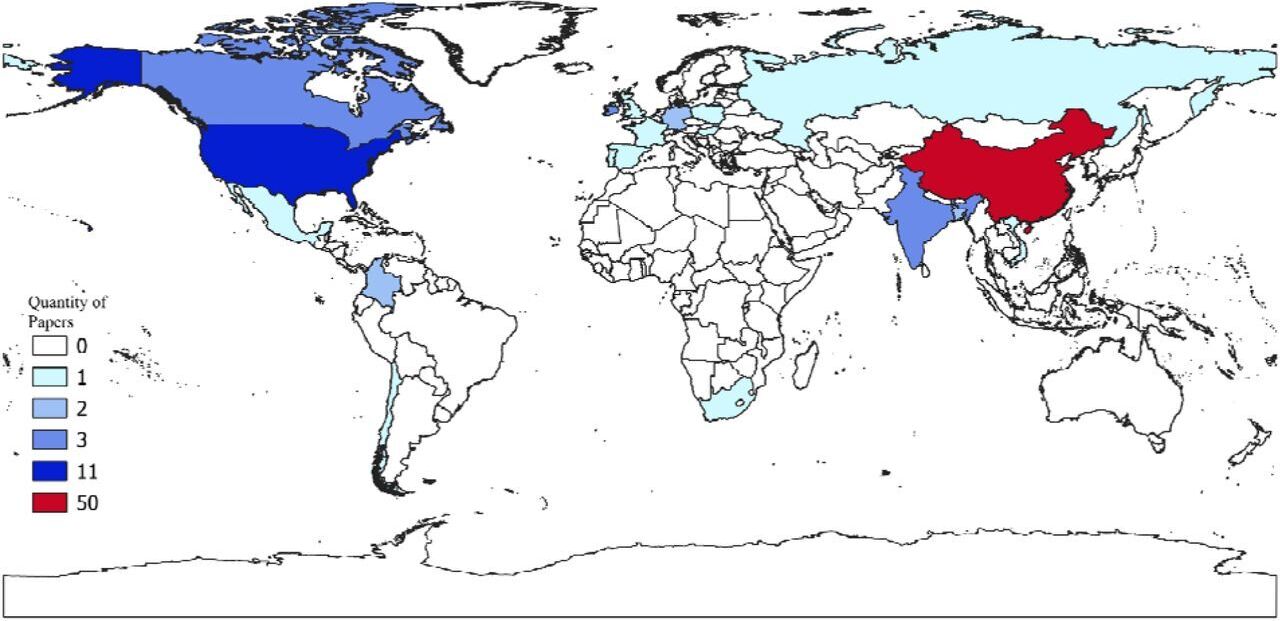
“We are here doing a study in Bhopal, in Central India, but we wanted to see what lake microbiomes look like around the globe — the patterns, the kind of work people are doing.” she explains. For this, Khushi first narrowed down all papers that used terms related to urban water bodies and microbiomes. She eliminated studies that looked at water bodies with high salinity or pH since they wanted to restrict themselves to similar contexts as Bhopal’s lakes.
Though computer searches helped streamline the initial filtering, what followed was a long slog of manual screening, with many promising leads ending in disappointment. Along with some others, Khushi had to read hundreds of abstracts. “Sometimes the title mentioned urban water bodies, but then the paper ended up being about a marine water body. Sometimes, it was an aquaculture paper, or the microbiomes were not mentioned. We had to eliminate papers like those which were not useful for us,” she said. The shortlisted papers were then read more deeply and eventually Khushi ended up with 90 eligible papers from the last 25 years.
None of the papers were from Bhopal. Studies conducted on Bhopal lakes, they found, focused mostly on physico-chemical information, water quality, the role of heavy metals, sediment interactions, and activities such as idol immersions in affecting water quality. While these can tell us a lot, they don’t capture the biological changes occurring within the system. That said, Khushi did find a few papers from India, and she also got to know that there are more studies underway. Nevertheless, India has far too little representation considering its population and water demands. Khushi drew a contrast with China, which had plenty of representation in her review.
Results of the analysis
Meanwhile, the wet lab team’s experiments started to yield interesting results. It appears that each of the three lakes have a different microbial community as they are affected by different kinds of human activity and pollution. They realised that it’s not only which bacteria are present (species richness) that matters but also about their relative proportions (species evenness). They were concerned to find that even Upper Lake, a major source of potable water for the residents of Bhopal, had undesirable microbes — signs of severe pollution. “From a public health perspective, all three sites do not meet microbial safety standards for recreational contact or untreated drinking use,” they write in their paper, which is currently under review. The team’s analysis has thrown up a number of other intriguing results, and Ananya looks forward to sharing these with the wider community when their paper is published.
The key message, according to Ananya, is that microbes are powerful indicators of the health of a lake and we must pay attention to them. “Usually, no one cares unless there is faecal bacteria in the water. But there are other microbes that should not be there — ones that cause disease not just when you drink it but even when you wash your hands or wipe your face with it,” she cautioned. While water treatment does remove some of the harmful substances contained in our freshwater, Ananya worries that this alone is not a sustainable solution. “Wetlands are sponges of a city [absorbing excess rainfall], make for cleaner urban spaces, and nothing can substitute taking better care of them,” she stated.
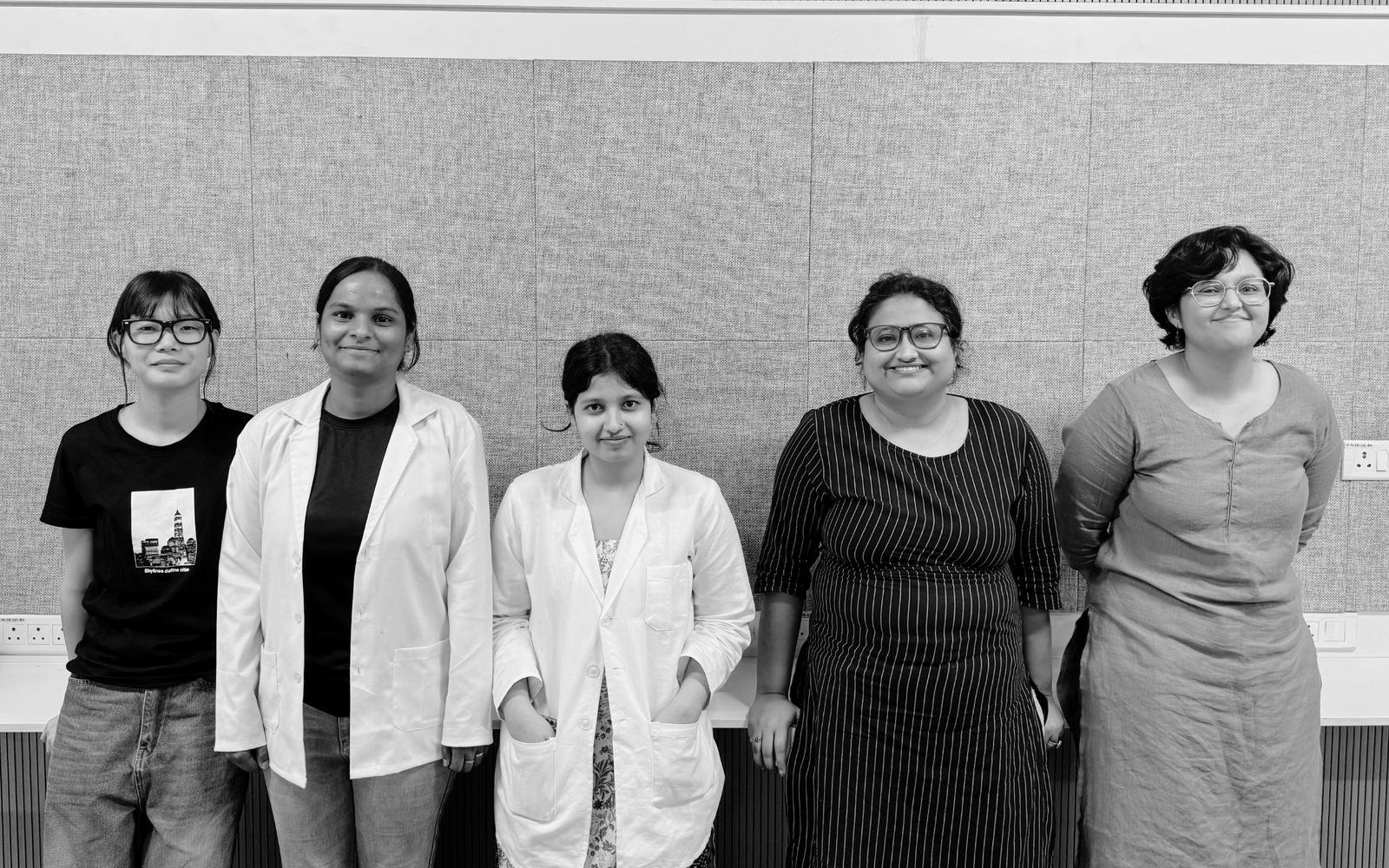
The team (L to R): Hiya, Rambhavi, Vedanshi, Ananya, and Khushi. Image credit: Nandita Jayaraj
Of all the alarming trends, Ananya is especially worried about the possibility of the lakes containing high levels of multidrug resistant microbes. Lake microbiomes are not typically considered when countries design their response to the antimicrobial resistance crisis, but she is convinced that this needs to change.
The systematic review backs her up on this. It revealed the repeated reporting of opportunistic pathogens, including multidrug-resistant E. coli strains in the waterbodies of many countries. “Many communities are dependent directly or indirectly on these waterbodies as their daily source of water. Knowing if resistant pathogens are present in community water sources can warn us about localised disease risk,” she said.
DNA sequencing and microbiome testing these days is not as unaffordable as it used to be. Ananya believes that with public funding, our government can definitely take it up. “After all, we managed to do it with — honestly — pretty low resources.”
It’s a bittersweet feeling for researchers to uncover bad news, and these young students of biology are experiencing this now. On one hand, they got very interesting and publishable results, but on the other hand, they now need to live with the knowledge that their water sources are probably terribly unsafe. “Low levels would have been boring for the paper, but this is scary for life,” concluded Ananya.
Cover image: A team from the University conduct a recce at Lower Lake, Bhopal. Image credit: Vedanshi Gupta
About the author
Nandita Jayaraj is a Science writer and Communications Consultant at Azim Premji University.