
Publications & Resources
Our faculty, students and researchers work together everyday to contribute to a better world by grappling with urgent problems we are facing in India. We conduct rigorous work to produce high quality learning resources and publications to contribute to public discourse and social change. Here, we feature a sample from our work for everyone to access. You can explore featured resources, policies, and the latest publications from the University.
To explore all the work of our University, please visit our publications repository.
List of Publications & Resources

- Published
- Authors
Abstract
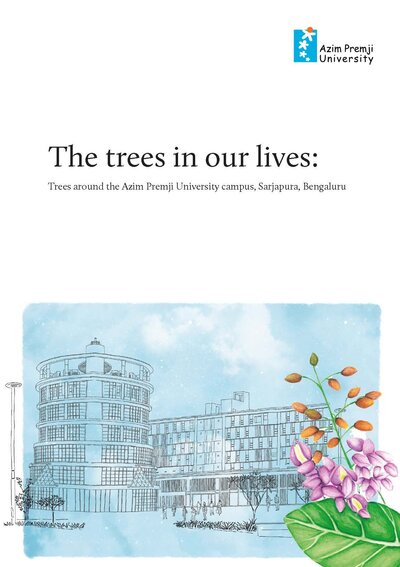
The carbon mapping exercise is a ritual done by the batches who take the course “Sustainability in Urban Social-Ecological Systems” (earlier “Urban Sustainability in India: A Social Ecological Perspective”). Our campus is in the rapidly expanding peri-urban interface of Bengaluru city at Sarjapura. Sarjapura’s peri-urban area can seem dystopian with tiled roof homes next to multi-story apartments, cows ambling on mud paths and cars zipping on tarred roads, and agricultural activities amidst businesses. Working in groups of two, each group selected three trees of different species. They were required to identify the species, giving the scientific, common and Kannada names. Using their phones, they collected the GPS points of the trees, marking the location where each of the trees stood. They calculated the height of the tree using a clinometer, measured the girth in the field, and this data was used to calculate the above ground and below ground biomass, as well as the carbon stored by these trees. They also measured the ambient temperature using a high accurate hygro thermometer and the road surface temperature using an infrared thermometer. They also gathered secondary data on the social and cultural significance of the species, recording the numerous daily benefits that trees provide. They photographed the different parts of the tree — bark, flower, fruit, seed pods, seed, leaves— and tried sketching different parts of the tree as well.
Links

- Published
- Authors
Abstract
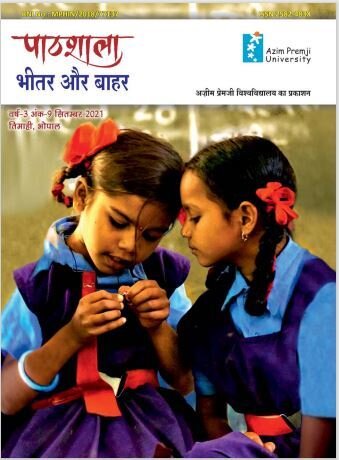
पाठशाला भीतर और बाहर के अंक 9 में बच्चों को पढ़ना-लिखना सिखाने की शुरुआत और आगे इसका विस्तार कैसे किया जा सकता है इस पर लेख हैं। कुछ अन्य लेख गणित शिक्षण से जुड़ी मान्यताओं, और ये मान्यताएँ शिक्षण और सीखने को कैसे प्रभावित करती हैं, पर केन्द्रित हैं। सामाजिक अध्ययन की कक्षा में परस्पर विरोधी मुद्दों पर की गई चर्चा कैसे बच्चों में आलोचनात्मक सोच विकसित करती है, से जुड़े लेख भी इस अंक में हैं। एक‑दो लेखों में लॉकडाउन के दौरान बच्चों व शिक्षकों के लिए आयोजित की कई कक्षाओं के अनुभव साझा किए गए हैं।
इस अंक में समावेशन और समानता से सम्बन्धित दो लेख हैं। पहले लेख में शिक्षक‑शिक्षा पाठ्यक्रम के अन्तर्गत ‘जेण्डर संवेदनशील शिक्षण क्यों व कैसे’ की पड़ताल की गई है। दूसरा लेख जनजातीय बच्चों को शिक्षा के दायरे में लाने और उनके लिए सीखना सम्भव बनाने के बारे में है। इस अंक का साक्षात्कार, अनुराग बेहार से राष्ट्रीय शिक्षा नीति 2020 के मूलभूत तत्त्वों पर टुलटुल बिस्वास द्वारा की गई बातचीत पर आधारित है। पुस्तक चर्चा में जिस किताब की चर्चा है, उसका नाम है- एक स्कूल मैनेजर की डायरी ।
Issue- 9 includes a range of articles on importance of and teaching of reading and writing to children. These explore how reading and writing maybe initiated and then furthered. Other articles touch upon beliefs about teaching of mathematics and how they impact teaching and learning and on how classroom discussion on conflicting issues in Social Science help develop critical thinking. Some other articles focus on the sharing experiences of organizing classes for children and for teachers during the lockdown.
There are two articles related to issue of inclusion and equity in education. One on of them explores why and how of Gender education in context of teacher education curriculum and the other is about education of Jan Jati children and making learning possible for them. The interview in this issue is with Anurag Behar and focuses on the foundational elements of the National education policy 2020. And the book discussed in the issue is ‘Ek School Manager kii dairy’.
Links


- Published
- Authors
Abstract
This working paper studied individual religiosity, trust, and trustworthiness to find that more religious people are more likely to exhibit greater trustworthiness even if religiosity does not predict trust.
Links