
Publications & Resources
Our faculty, students and researchers work together everyday to contribute to a better world by grappling with urgent problems we are facing in India. We conduct rigorous work to produce high quality learning resources and publications to contribute to public discourse and social change. Here, we feature a sample from our work for everyone to access. You can explore featured resources, policies, and the latest publications from the University.
To explore all the work of our University, please visit our publications repository.

- Published
- Authors
Abstract
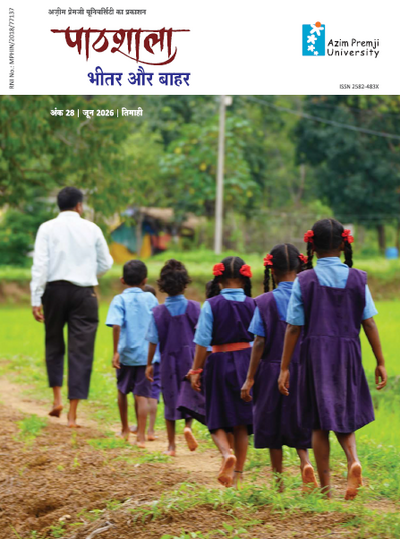
पाठशाला भीतर और बाहर का जून अंक विद्यालय संस्कृति, डर किस तरह सीखना बाधित करता है और साथ मिलकर सीखना कैसे सीखने के आनंद को बढ़ा देता है जैसे मुद्दों पर केन्द्रित है। इसके अलावा बाल साहित्य या पढ़ने की घण्टी को भाषा की गतिविधि तक सीमित न रखकर उसका जुड़ाव तमाम विषयों को समझने और विद्यार्थियों के व्यक्तित्व निर्माण में कैसे देखा जा सकता है, पहली और दूसरी भाषा सीखने से जुड़ी मुश्किलों और उनसे निकलने के लिए कौन सी प्रक्रिया अपनाई गई इस बारे में भी लेख इस अंक में शामिल है। इसके अतिरिक्त हमेशा की तरह सभी स्थाई स्तम्भ भी अंक का हिस्सा हैं, जिनमें विभिन्न राज्यों से आई शिक्षक डायरी, ‘किताबों से दोस्ती’ में कुछ ज़रूरी किताबों की बात, ‘उम्मीद जगाते शिक्षक’ के अन्तर्गत पढ़ेंगे ऐसे शिक्षक की कहानी जिन्होंने पढ़ने-लिखने की गतिविधियों को कुछ इस तरह विद्यालय में किया कि विद्यार्थियों का पढ़ना-लिखना बेहतर हुआ। साथ ही हैं कुछ रोचक और उपयोगी गतिविधियाँ।
Links

- Published
- Authors
Abstract
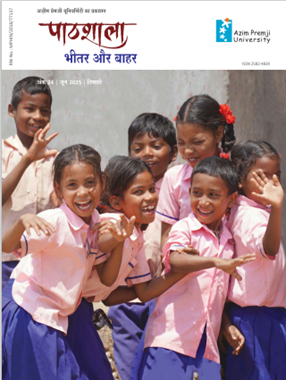
पाठशाला भीतर और बाहर के जून अंक (24वाँ) में एफ़एलएन की अवधारणा, कक्षा अनुभव, चुनौतियाँ, आदि को केन्द्र में रखकर लिखे गए कुछ लेख हैं। बातचीत के ज़रिए विद्यार्थियों से जुड़ना और उस बातचीत का शिक्षण प्रक्रिया में उपयोग कैसे हो, बच्चों को रचनात्मक लेखन से कैसे जोड़ें, पाठ योजना बनाकर पढ़ाना कैसे उपयोगी होता है, जैसे लेख भी शामिल हैं। एक ऐसे विद्यालय की कहानी को पढ़ना दिलचस्प होगा जिसका नामांकन एकदम कम हो गया था, लेकिन कुछ ख़ास प्रक्रियाएँ अपनाने से उस विद्यालय में न सिर्फ़ नामांकन बढ़ा, बल्कि विद्यार्थियों के सीखने का स्तर भी बेहतर हुआ।
हमेशा की तरह ईसीसीई पर आलेख है जिसमें आँगनवाड़ी केन्द्र के माहौल और गतिविधियों से जुड़े अनुभव शामिल हैं। नियमित स्तम्भ के अन्तर्गत इस बार ‘इनसे मिलिए’ में मध्य प्रदेश की शिक्षिका से जानेंगे उनके अनुभव, कि कैसे और कौन‑सी प्रक्रियाओं के चलते सीखना बेहतर हुआ। इसके अलावा, इस अंक में ‘शिक्षकों की डायरी से’, ‘किताबों से दोस्ती’, और ‘आइए, करके देखें’ स्तम्भ भी शामिल हैं।
Article
Reasonable Accommodation and Interdependence: Revisiting the Dynamics of Disability Inclusion in Higher Education in India
in Journal of Gender Studies

- Published
- Authors
- Meghana Rao
- Shilpaa Anand
Abstract
The principle of reasonable accommodation according to Article 2 of the United Nations Convention on the Rights of Persons with Disabilities (UNCRPD) is defined as ‘necessary and appropriate modification and adjustments not imposing a disproportionate or undue burden, where needed in a particular case, to ensure to persons with disabilities the enjoyment or exercise on an equal basis with others of all human rights and fundamental freedoms’. Exploring the relationship between inclusive policies enacted in institutions of higher education in India, and their impact on those who claim accommodation, we discuss the nature of care that informs and animates such interactions. Drawing on feminist disability studies scholarship on care, particularly, Akemi Nishida’s recommendation that care is inherently collective we analyse two sets of transactions selected for study as enabling care in patronising and charitable manners, while simultaneously ignoring the politics of responding to and providing accommodations. We find that institutional responses to accommodation claims are less reflective of the socio-political and affective aspects integral to the RA principle. Instead, the focus seems to be on providing either technocratic solutions or interpreting RA claims as causing undue burden. By reading the RA principle through the lens of scholarship on interdependence, we aim to broaden the scope of adopting and interpreting the RA principle.
Links

- Published
- Authors
Abstract
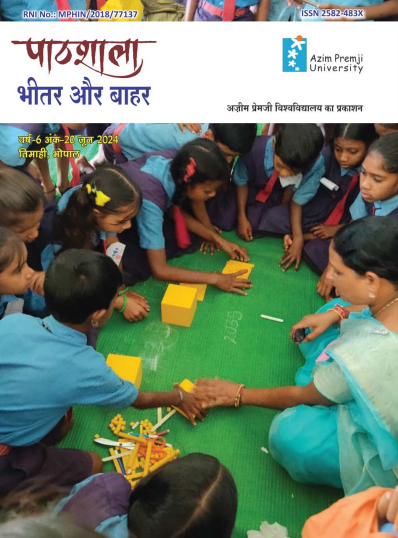
हमारे आज के विविधतापूर्ण और बहुरंगी समाज के लिए हिंसा और शोषण की संस्कृति ठीक नहीं है। आज के दौर के लिए संवाद की संस्कृति ही ज़्यादा ठीक है। इस विचार पर पाठशाला भीतर और बाहर के बीसवें अंक के एक लेख का मुख्य विषय के रूप में विस्तार से बात की गई है। इस अंक के कुछ लेखों में पाठ्यपुस्तक और पाठ्येतर कहानी-कविताओं के शिक्षण की सुविचारित योजना बनाकर भाषाई कौशलों के विकास और इनके आकलन पर किए गए कार्य के अनुभव प्रस्तुत किए गए हैं। जिसमें एक लेख डायरी लेखन और दूसरा लेख रीडिंग कॉर्नर के ज़रिए बच्चों को लेखन सिखाने के तरीकों के बारे में है। गणित का एक लेख बच्चों को शुरुआत से ही इबारती सवालों पर काम करने, खुद सवाल बनाने और जाँचने को गणितीयकरण की प्रक्रिया के तौर पर देखता है। दूसरा गणितीय सोच व तार्किक क्षमता के विकास के लिए तरीके सुझाता है। इस बार के संवाद का विषय विज्ञान, वैज्ञानिक सोच और पाठ्यपुस्तकें है।
Links
Article
Understanding Graphical Literacy Using School Students’ Comprehension Strategies
in Contemporary Education Dialogue
Article
- Published
- Authors
Abstract
Graphical literacy or graphicacy is a critical component of scientific literacy. Graphs are used to integrate and represent complex sets of information requiring abstraction from perceptual experience. They form essential parts of the Mathematics and Science curriculum across school curricular stages. A key to developing meaningful pedagogic practices to inculcate graphical literacy is in understanding how students perceive and comprehend features of graphs and interpret them. This study attempts to understand how children from the primary, middle and high school years, perceive and interpret information in bar and line graphs. Two hundred and twenty-nine children from four different school contexts in Grades V, VII and IX were administered questionnaires and interviewed based on tasks requiring comprehension of graphs. It was found that children’s understanding of graphs was tied to the curricular progression which was significant at Grades V and IX. Comprehension of bar graphs with nominal data was easier compared to line graphs requiring integration of information from two dimensions and interpreting them. Further, graphs requiring preliminary levels of statistical understanding were easier to comprehend. While prior experience and facility with graphical conventions played a role, interpretation from spatial to symbolic representations posed challenges. Students did not have a clear preferred strategy or a linear comprehension trajectory, but moved back and forth between conventions, clustering of graphical elements and written content in questions, to make meaning. Those who had performed well used various perceptual strategies simultaneously. Further, they were found to employ transformational reasoning based on a sense of ‘how things work’. It was observed that meaningful pedagogic practices at school and informal experiences outside the classroom aid graphical literacy.
Authors

- Published
- Authors
Abstract
पाठशाला भीतर और बाहर के सोलहवें अंक में शिक्षा के कुछ बुनियादी मसलों यथा शिक्षा में समावेशन, शुरुआती भाषा शिक्षण के पहलुओं, सामाजिक विज्ञान शिक्षण व नैतिक समझ के विकास आदि पर कक्षा के अनुभवों से उभरे व उन अनुभवों के विश्लेषण को समेटे हुए लेख हैं। चूँकि यह लेख कक्षा से अनुभवों से उभरे हैं, अतः यह उनके यथार्थ, संभावनाओं व चुनौतियों को सामने रखते हैं।
Links

- Published
- Authors
Abstract
पाठशाला भीतर और बाहर, जून 2022 के अंक में शिक्षणशास्त्र और कक्षा अनुभवों पर दिलचस्प लेख हैं। ये लेख शिक्षा की समसामयिक चुनौतियाँ और उनसे पार पाने के उपाय सामने लाते हैं। इस अंक का संवाद शिक्षा में कोरोना के बाद की चुनौतियों को सामने लाते हुए इनसे आगे बढ़ने की राह सुझाता है। इसमें जातिगत और भाषा की विविधता को सम्बोधित करते, समावेशन और सहभागिता के परिप्रेक्ष्य आधारित लेखों के अलावा एक शिक्षक का साक्षात्कार भी शामिल है। इस साक्षत्कार में शिक्षक ने अपने जीवन के समृद्ध अनुभवों को रखा है, जिनमें उसकी शैक्षिक यात्रा, खुशियों, चुनौतियों और सीखों की जानकारी मिलती है।
The June 22 Issue of Pathshala carries interesting articles on pedagogy and classroom experiences. They bring out contemporary challenges and ways to overcome them. The Samwad is also focused around the post corona challenges and way forward. Apart from perspective articles dealing with inclusion and participation involving caste and language diversity, the teacher interview brings out the rich life experience of a teacher who traces her journey, joys, challenges and learnings.
Links

- Published
- Authors
Abstract
इस अंक में 16 लेख हैं और इनमें अधिकांश लेख पढ़ना सीखने और उसमे रुचि पैदा करने पर आधारित हैं। शिक्षकों और शिक्षक‑प्रशिक्षकों द्वारा लिखे गए कक्षा अनुभवों और शिक्षणशास्त्र पर आधारित लेख, शिक्षण में बच्चों की भागीदारी बढ़ाने के तरीकों के विभिन्न पहलुओं को सामने लाते हैं। बच्चों को पढ़ना सीखने और उनकी लिखित अभिव्यक्ति विकसित करने में मदद के लिए, स्कूल व कक्षा में क्या किया जा सकता है, इसके बारे में विचार देते हैं। किताबों और पुस्तकालय से, डायरी लेखन व दीवार पत्रिका से, पढ़ने-लिखने की सामग्री से और बातचीत व कहानी कहने से सीखने में मिलने वाली मदद के विवरण भी इन लेखों में मिलते हैं। इस अंक का संवाद भी शुरूआती पढ़ना, लिखना, साक्षरता, संख्यात्मक और गणितीय ज्ञान पर केन्द्रित है। लेख यह भी दर्शाते हैं कि जब बच्चे पाठ्यपुस्तकों के अध्यायों पर काम कर रहे हों तो उन्हें बात करने और अपने विचार व्यक्त करने की पूरी आज़ादी होना चाहिए।
शिक्षक के साथ साक्षात्कार महामारी के दौरान बच्चों के साथ जुड़े रहने के प्रयासों का विश्लेष्ण प्रस्तुत करता है। एक अन्य लेख महामारी के दौरान बच्चों के अपने स्कूल के साथ सम्बन्धों की जटिलता को सामने लाता है।
This eighth issue of Pathshala carries 16 articles. Learning to read and write is the foundation of all further learning. Most of the articles in this issue are focussed on learning to read and building of interest in it. The Samvaad is also focussed on ‘ Early reading, writing, literacy, numeracy and other mathematical knowledge’. Based on classroom experience and pedagogy the articles written by teachers and teacher educators bring out various aspects of the manner of engaging children and give ideas about what can be done in the school and in the classroom for helping children to learn read and develop their written expression. The articles bring out the changing role of the reader at different stages of the reading process, how working with the library and books, diary writing, Deewar Patrika (Wall magazine), availability of material to read and write, conversation and storytelling etc. help in learning and how peer learning, conversations with and among children help in this process. They point out that children should also be given freedom to talk and express when they are working with chapters from textbooks. The interview with the teacher presents an analysis of the efforts to continue to engage with children during the pandemic. One article of a different genre brings out the complexity of the relationship of children to their school as exposed by the pandemic.
Links