
Publications & Resources
Our faculty, students and researchers work together everyday to contribute to a better world by grappling with urgent problems we are facing in India. We conduct rigorous work to produce high quality learning resources and publications to contribute to public discourse and social change. Here, we feature a sample from our work for everyone to access. You can explore featured resources, policies, and the latest publications from the University.
To explore all the work of our University, please visit our publications repository.
List of Publications & Resources
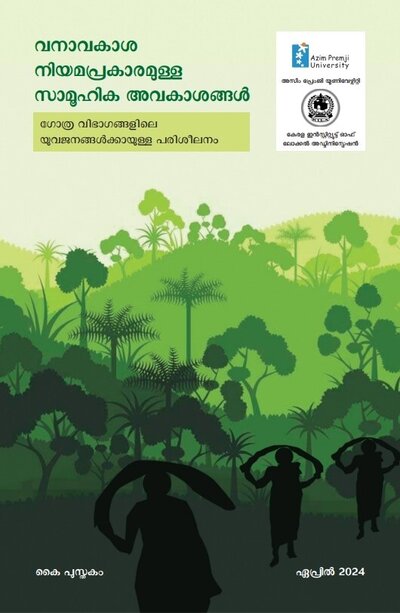
വനാവകാശ നിയമപ്രകാരമുള്ള സാമൂഹികഅവകാശങ്ങൾ: ഗോത്ര വിഭാഗങ്ങളിലെ യുവജനങ്ങൾക്കായുള്ള പരിശീലനം
in Azim Premji University

- Published
- Authors
- School of Development
Abstract
Hand book for a course on Community Forest Rights for the tribal youth in Kerala Azim Premji University’s FRA initiative, in collaboration with the Kerala Institute of Local Administration (KILA), launched a two-months long course on Forest Rights Act (2006), focusing on the Community Forest Rights (CFR). The course was tailor made for the tribal youth in the state of Kerala, following case studies[1][2][3] and orientation workshops conducted between 2020 and 2022. This handbook is the basic resource for this training. Students are expected to be informed and equipped for initiating the vesting of CFR working with their gram sabhas. Course Content and Delivery: The pedagogical approach is a blend of class room and hands-on learning, including field visits and computer lab sessions. There are three weeks of classroom interactions and five weeks of hands-on learning. The course has four units: the first unit, ‘Tribals and forests – a historical perspective,’ examines the historical context of tribal issues both globally and within the regional landscape. Second unit, ‘Understanding FRA,’ covers the history of FRA and comprehensively unpacks the Act, Rules, and the implementation challenges. Unit 3,‘Skills & competencies for Community Forest Resource Management (CFRM)’ imparts specific skills including accountancy, communication and mobilization skills as well as biodiversity management, necessary for effective implementation of CFR. The fourth unit ‘Individual field project’ is to be carried out by each student in two phases: (a)identification of the challenges and opportunities for implementation of FRA — for 2 weeks (b) finding responses to address the specific challenges identified during the first phase of 2 weeks. [1]https://practiceconnect.azimpremjiuniversity.edu.in/implementation-of-forest-rights-act-observations-from-keralas-attappadi-block/ [2]https://practiceconnect.azimpremjiuniversity.edu.in/implementation-of-forest-rights-act-lessons-from-vazhachal-division-of-kerala/ [3]https://practiceconnect.azimpremjiuniversity.edu.in/implementation-of-forest-rights-act-observations-from-wayanad-district-of-kerala/
Links

- Published
- Authors
Abstract
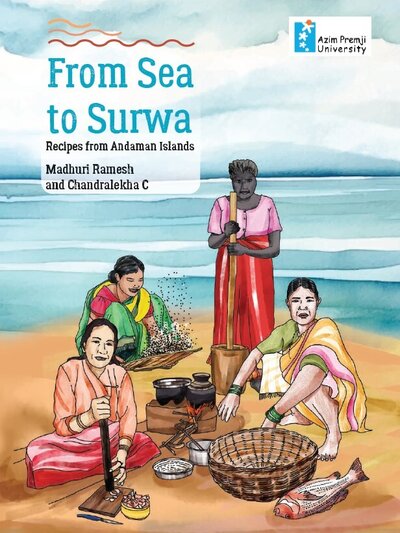
Food is the product of a community’s culture and environment. Hence a study of ‘foodways’ can tell us about what food resources are available as well as how customs, beliefs and practices shape the use of these resources. In this report, we share some of the stories and recipes we collected from women in different settler communities between June to November 2023. Our report showcases how these women use marine resources in creative and careful ways to improve the nutritional security of their families. In the process, the report offers a glimpse of the cultural, historical and ecological connections of settler communities of the Andaman Islands.
Authors:
Madhuri Ramesh
Chandralekha C

- Published
- Authors
Abstract
The Azim Premji University has been encouraging the expression of diverse and disparate views on a variety of subjects in the past too. Over the last two decades of its existence, the Azim Premji Foundation under which the University operates has been consistently focusing on its vision of contributing towards a more just, equitable, humane, and sustainable society through extensive on-the-groundwork across the country as well as through its partners. In this context we may venture to say that the present collection of essays is an expression of that focus, while encouraging views and counterviews on various perspectives on the national endeavour, with the goal of working towards the Foundation’s vision.
Amidst the Corona crisis of 2020 to 2022, another compendium of essays entitled Understanding Post-Covid-19 Challenges in India had been published in March 2022. The essays in that collection too had looked at certain key domains such as Health, School Education, Impact of Covid on vulnerable groups, urban development, the systems of recording deaths etc. While that collection tried to document how the nation navigated through a short period of the toughest challenge, this collection tries to offer a snapshot of more than 75 years of history
since Independence.It is hoped that this collection of essays will encourage its readers to think about the myriad activities that India as a nation has undertaken in its unending search for building a better society, the complexities that it has to encounter and the challenges that it has had to overcome, in trying to achieve that objective. The essays here are collected over a year’s time following the 75th year of Independence, and as such some of the essays might not have captured the latest developments in the themes that they focus on. The readers’ responses are welcome.
Editors:
Links