
Goal attainment and youth aspirations are not aligned
Keeping track of youth aspirations against the system’s ability to match them is critical if India is serious about creating a productive labour force, writes Garima Agarwal in The Hindu.
Details
Garima Agarwal is a faculty member at Azim Premji University.
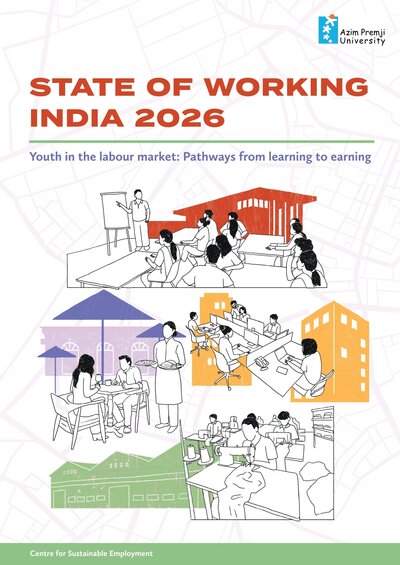
State of Working India 2026 : Youth in the Labour Market | Pathways from Learning to Earning
in Azim Premji University

- Published
- Authors
Abstract
India is nearing the peak of its demographic dividend, with the share of the working-age population expected to begin declining after 2030. On the one hand, higher education in the country has become increasingly democratised with a rapid increase in the number of institutions. Graduate salaried earnings exceed non-graduates both at the time of entry into employment and over their lifetime. On the other hand, financial barriers continue to restrict access, particularly in professional fields such as engineering and medicine. The transition from education to employment remains a major challenge. The rise in the number of graduates has not been matched by commensurate growth in graduate employment. This year’s State of Working India report traces the arc of a young worker’s transition from school or college into employment, and how this has changed in the last forty years.
Report Files
Full Report — download PDF file
Executive Summary (PDF)
Tables (spreadsheet)
Results Appendix (PDF)
All Figures (Figures 1.1−4.7, Figures 4.8−7.10 )
Figures Data(spreadsheet)
Press Release (English | Hindi | Kannada)
Media Coverage (spreadsheet)
Links