
B. V. Krishnamurti
Early socially-minded economist
By Vinod Vyasulu
Details
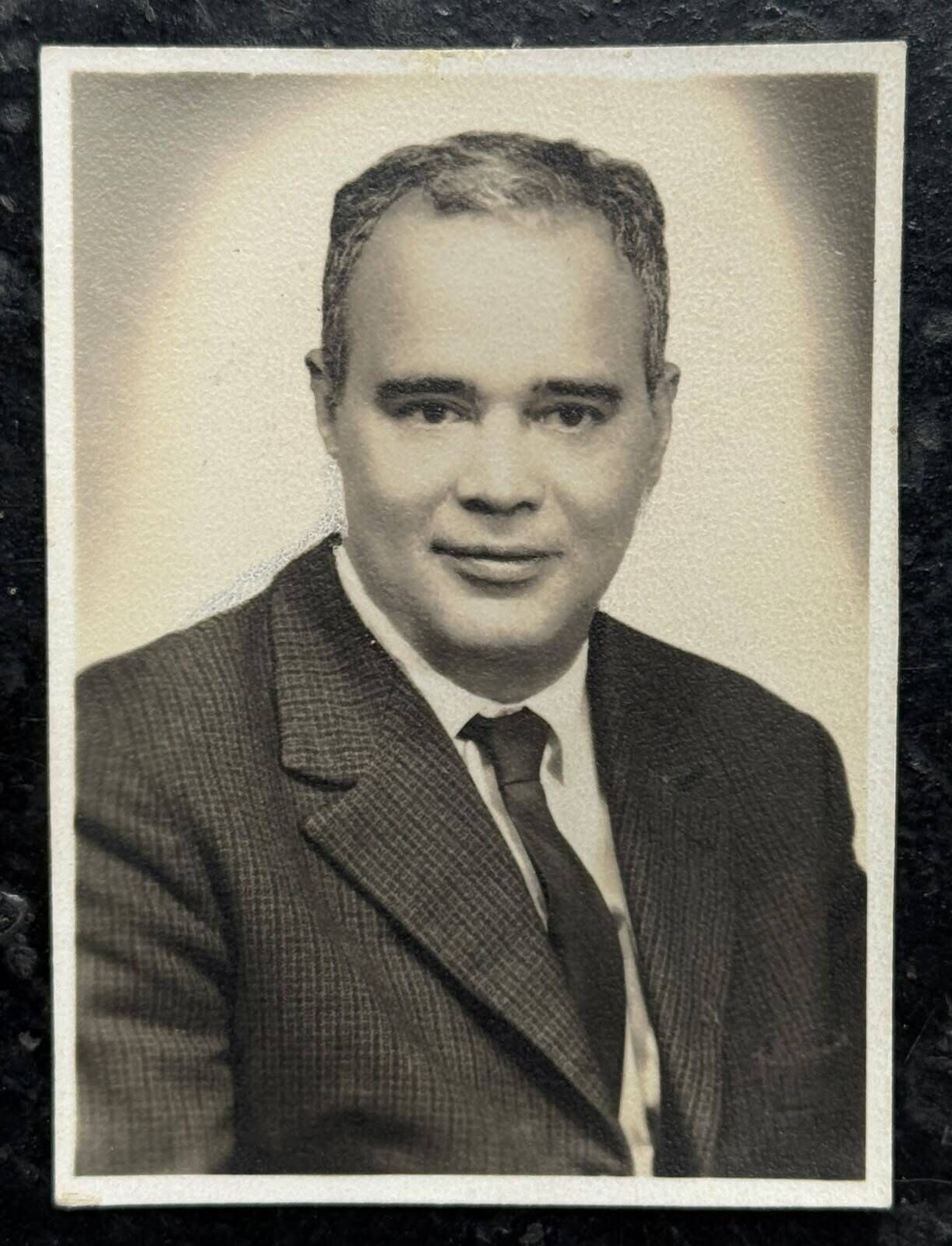
Dr B. V. Krishnamurti (BVK, 5 Sept 1921-10 Sept 1990) ranks among the most erudite and respected economists of his time. Initially a theorist, he moved on to become an agricultural economist and what today is called an ecological economist. His work influenced leading figures such as V. K. R. V. Rao, K. S. Krishnaswamy, I. G. Patel and Manmohan Singh. With V. K. R. V. Rao, he was involved in establishing both the Delhi School of Economics and the Institute for Social and Economic Change in Bangalore.
Upon his passing, the distinguished economist P. R. Brahmananda paid tribute in The Indian Express, describing him as “the first theoretical economist of Independent India.” In 1951, he opened a debate on the prevalent black market and how prices were determined in it. Posting that a commodity had multiple markets, with the controlled price at one end and several others extending from it based on circumstances. The black marketeer looked at his cost of production, equating marginal cost to marginal revenue. That decided his output. He then put aside a portion for the regulated market and the rest into the black market. He ensures that the marginal revenue in each market is also equal to the marginal revenue of aggregate output to maximise his profit. BVK’s solution to this situation was a combination of tax and subsidy. The subsidy would enable the consumer to offer a higher price, so the amount in the black market would reduce. The progressive tax would reduce excess income and thus compress demand for the black market.
Another far-reaching contribution was his conceptualisation of the U sector, which consisted of what today we call the formal sector. As plans were implemented, as industries and institutions grew, the people employed in them would have incomes that would translate into demand for housing, consumer goods, etc. This would divert resources from essentials to the demand of the U sector. As the U sector grew with increasing investment in the public sector, it would become entrenched, and there would be increasing disparities in consumption between the U sector and the rest of the economy.
The recent work by Thomas Piketty and others has shown how deep the roots of inequality are. Remarkably, we see glimpses of this in BVK’s U sector. Today, this is called “premiumisation”. Economists also refer to this as the “middle income” trap that countries like India, Mexico and Brazil find themselves in. The U sector becomes a prosperous island within the economy. And the unregulated market responds to it. And it leads to inequality with all its consequences.
BVK was ahead of his time in several respects. In Economic Growth in India, Pulapre Balakrishnan notes:
“Rare were interventions in the 1950s by Indian economists on the relevance of primary education, but there was a particularly insightful one by Dr B. V. Krishnamurti, an economist then with the Bombay school. In 1955, within months of the publication of the ‘Recommendation for the Second Five-Year Plan’, by the Planning Commission, Krishnamurti had written how absurdly low are the sums allocated to education in the Mahalanobis plan, speaking of it as being lopsided, with little importance given to education and other social services and calling for a reallocation to expenditure on this account from the outlay on heavy industries. More important are Krishnamurti’s arguments for greater expenditure on education and his explanation for why it was so low in the plan. A concerted effort to educate the masses of the population, especially in the rural areas, would undoubtedly have far-reaching benefits of a cumulative expansionist character. This would greatly lighten the task of the government in bringing about rapid economic development. Pointing to the Government’s lack of even-handedness in dealing with education in comparison with ‘heavy industries or river valley projects’ for which it was willing to adopt deficit financing, Dr Krishnamurti speculates whether this has to do with the fact that being brought up in the traditions of mid-Victorian finance, the Government continues to apply the calculus of the private grocery merchant to a matter like education.”
In this, BVK was a precursor to Amartya Sen’s later work on human capabilities.
After his stint at the Delhi School of Economics in the 1950s, BVK joined the Food and Agriculture Organisation (FAO) and served in many countries, from Tunisia to Cambodia. In all his work, the focus was on agriculture, and his concern was with the welfare of ordinary people. The issue of decentralised economic systems mattered deeply to him. During the period when he matured, the world was going through the challenge of communism and socialism versus unbridled capitalism, which profoundly influenced the thinkers of that time with the promise of socialism. He was deeply rooted, and his later environmental activism, which had huge personal, financial and other consequences, was driven by a strong affiliation with the aspirations of local communities. He had a Gandhian simplicity to his life (commuted by local bus systems). In the 1980s, Ramakrishna Hegde became the Chief Minister of Karnataka, and he set up the Economic and Social Council as a forum for reasoned debate.
BVK took active part in two debates. One had to do with the deepening federalism brought in by Hegde and Nasir Sab where local, democratically elected panchayats were given executive responsibility for development works. BVK strongly supported this effort. The second was his involvement with the impact on environment of the encouragement of causinarina plantations. He pointed out that economic analysis did not take into account effects that could not be measured in money. He made a plea for including such effects by taking into account the experience of farmers with soil degradation, water scarcity etc rather than relying solely on cost benefit numbers that excluded negative effects that could not be measured. He wrote and spoke widely on these topics.
He was referring to externalities. BVK was deeply engaged with social and environmental causes. In Karnataka, he led a significant movement against monoculture in social forestry; his Deccan Herald op-ed, “The Pernicious Effects of Social Forestry,” sparked widespread debate. He also played a key role in preserving the playground in front of his home in Sadashivanagar from commercial development. In his later years, his interest in ecology deepened further. He organised a seminar in his hometown of Nanjangud that brought together voices such as Claude Alvares and Vandana Shiva—figures who continue to shape environmental thought and activism today.
A man of immense scholarship, BVK was also remarkably self-effacing. On an occasion in Nanjangud, when, during a casual walk, a friend asked him what he did for a living. He simply replied, “I am a farmer.” At the time, he was serving as a Director on the Board of the State Bank of Mysore! He was witty, enjoyed good food, and embraced life’s simple pleasures. Contrary to what some may have assumed, he was also deeply spiritual. Like many of his brothers, he meditated daily and often said that he found his answers in the Bhagavad Gita.
His circle of acquaintances spanned a remarkable range of eminent individuals. We recall seeing at his home Homi Nusserwanji Sethna, Khadri Shamanna, Dr Manmohan Singh, and many others. Political leaders such as H. D. Deve Gowda and Ramakrishna Hegde would often seek his counsel. He neither sought nor coveted awards, though he richly deserved many. He valued his independence, spoke his mind without hesitation, and remained unmindful of consequences. To some, he may have appeared a contrarian — even a rebel!
Major works
- Chandrashekhar, D. M., Krishnamurti, B. V., & Ramaswamy, S. R. (1987). Social forestry in Karnataka: an impact analysis. Economic and Political Weekly, 22(24): 935 – 941.
- Krishnamurti, B. V. (1983). Eco-development in southern Mysore: A historical perspective. World Wildlife Fund India.
- Krishnamurti, B. V. (1986). Supplanting Peasant Agriculture with Plantation Economy. Economic and Political Weekly, 21(13): 525 – 527.
- Krishnamurti, B. V. (1969). Investment Pattern for Fourth Plan. Economic and Political Weekly, 4(9): 431 – 441.
- Krishnamurti, B. V. (1967). Power elite planning for people’s welfare. Economic and Political Weekly, 2(21): 959 – 976.
- Krishnamurti, B. V. (1960). The Plan and the U‑Sector. Economic and Political Weekly, 12(39), 1439 – 1440.
About the author
Vinod Vyasulu served as Professor and Vice Dean of Jindal School of Government and Policy. He was at the Indian Institute of Management Bangalore from 1974 to 1988. He is also ex-Director and founder of the Centre for Budget and Policy Studies, Bengaluru.