
V M Dandekar
Preeminent scholar of rural development and poverty
By Nilakantha Rath
Details
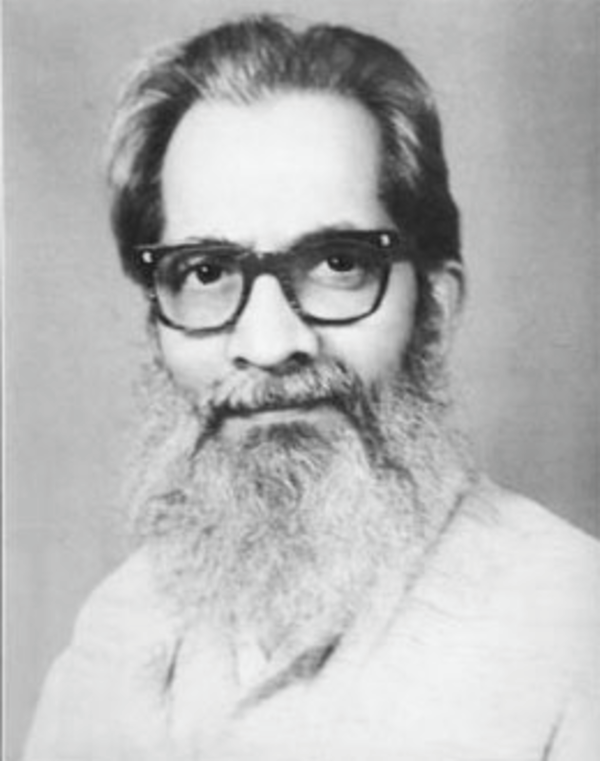
Vinayak Mahadeo Dandekar (1920 – 1995) was probably the only Indian economist of great distinction who had no formal training in economics beyond the undergraduate level. Through self-study he attained sufficient proficiency in the subject to master and apply abstract theoretical models to the Indian context, critique economists of renown, including the Nobel laureate Theodore Schultz, make seminal research contributions, serve with distinction as a member of many official committees, and edit a scholarly journal which he founded. A degree from a leading institution would have been no more than the icing on the cake.
Dandekar studied statistics at P. C. Mahalanobis’s Indian Statistical Institute in Kolkata during its formative years, obtaining his Master’s degree, with a gold medal, from the University of Calcutta. He was selected for the London University’s PhD programme in statistics. However, his journey to England was cut short when he, along with a number of other Indian passengers, walked out of the steamer in protest against the disrespectful attitude of the staff. He decided to forego any further formal education.
In 1945 Dandekar joined the Pune-based Gokhale Institute of Politics and Economics (GIPE) in its newly established Dorabjee Tata Section of Agricultural Economics and was with the Institute till his retirement thirty-five years later. An academic at heart till the very end, he nevertheless did not shy away from administrative responsibilities and served as Director of GIPE for several years.
Today, students of economics in India associate Dandekar almost wholly with poverty measurement, overlooking even his policy suggestions to mitigate poverty! However, over his long career he engaged with a broad array of subjects. His early research work was on measuring activities which are outside market transactions (and therefore left out of national income despite their importance to economic life), identifying the factors which reverse progress in primary education, and (in collaboration with Kumudini Dandekar) a survey of fertility and mortality in Poona district in Maharashtra.
Nevertheless, from the very beginning rural development was Dandekar’s primary area of interest and early in his career at GIPE he obtained deep understanding of rural life through village surveys. When D R Gadgil, the then director of GIPE and member of the National Income Committee, questioned the adequacy of the schedule adopted by Mahalanobis for the first (1950) National Sample Survey (NSS), GIPE was entrusted with a survey of 644 villages using an alternate schedule. This schedule, called the Poona Schedule, was designed by Dandekar who also authored the report based on it. Thanks to his familiarity with rural life through first-hand observation, the Poona Schedule captured certain important dimensions of rural life, such as the extent of rural employment, which were left out in Mahalanobis’s “Calcutta Schedule”. Some components of the Poona schedule were incorporated in the later NSS rounds.
Dandekar adhered to the dictum that what matters is not the good intentions underlying policies but how the policies work in practice. An example is his report on the Bombay Tenancy Act of 1948. The Act was intended to protect tenants in villages by fixing a ceiling on how much rent the landlords can collect and by preventing landlords from easily evicting them. Dandekar pointed out that in practice most of the tenants were too poor and powerless to stand up to the landlords when the Act was violated. Dandekar inferred that the only way to protect tenants from being exploited is to confer ownership of the land on them and the Bombay Tenancy Act of 1956, a landmark legislation, did just that.
While advocating land to the tiller legislation, Dandekar was critical of implementing it uniformly without distinguishing between small and large landowning lessors. He found that while small and large landowners leased land, it was the big landlords, though fewer in number, who owned the bulk of the land leased, with much of it leased to small tenants. He inferred that initially applying land to the tiller laws only to the large landlords would transfer most of the leased land to the tenants and in half the time it would take if the laws were implemented to all the lessors. His recommendation was ignored and, as he anticipated, the implementation took twice the time it would have taken had he been heeded.
Dandekar found that applying the legislation to all landowners produced unintended consequences which adversely affected the small landlords. Since leasing was disallowed, the small landowners were compelled to cultivate their own lands even if they did not have the resources to do so productively. This reduced their incomes which were already at a low level. Nor could they migrate to places where they could have earned more since they could not lease their lands while they were away, trapping them in a low income situation. Moreover, ownership was transferred to the tenants even if they were owners of large and medium-sized lands and the lessors were small landlords, an inequitable outcome overlooked by those who designed the legislation.
Further, Dandekar noted that in places which were not covered by land to the tiller laws, there were strong apprehensions among landlords that they would be implemented in the near future. This incentivised the big landlords to cultivate their lands, made feasible thanks to new technology. The small farmers who could not afford this technology leased out their lands despite the possibility of them losing ownership to tenants, most of whom were large and medium-sized farmers, a phenomenon which came to be called reverse tenancy.
Dandekar may have endorsed Hayek’s observation that, “The curious task of economics is to demonstrate to men how little they really know about what they imagine they can design”, such as in designing a legislation which was meant to protect the vulnerable groups in rural areas but which had the consequence of harming them.
Dandekar’s 1957 paper in Economic Weekly (the forerunner of Economic and Political Weekly) on utilizing food aid offered by the United States anticipates in significant aspects his landmark work (in collaboration with Rath) on poverty and, although India does not require food aid, the issues raised in the publication are relevant to some contemporary concerns.
Noting that financial aid provides the recipient country the freedom to purchase the resources deemed necessary, aid in kind like food aid constrains the country receiving it to use it in the form in which it is received, requiring “specific efforts to make sure that the [food] surpluses ultimately serve a developmental purpose and are not simply dissipated”.
Selling it on the internal market, while administratively convenient and raises revenue which can be used for development programmes, will harm the farmers and agricultural labour because the increased supply without increased demand will depress food prices. For the same reason, Dandekar disapproves of utilising it to stabilise food prices. In good years, when the domestically produced food supply is adequate, the additional supply from imported food will depress prices to the detriment of the farmers. He suggests building food reserves by procuring from domestically produced supplies in good years so that cultivators do not lose when prices fall, while the interest of the consumers is protected in bad years by using these reserves to control excessive rise in food prices.
Dandekar makes another interesting criticism of selling foreign food supplies in the market: once the supplies are converted to money, the purpose for which food aid was provided may be forgotten. It is therefore preferable to utilise the foreign supplies directly for “improving the conditions of those who today, for want of income, are underfed.” This is the only way to increase demand for food without reducing prices for the cultivators.
Noting that “a very considerable proportion of our population, probably as much as 20 percent, is today underfed by any nutritional standards”, Dandekar says that “the reason for this is that these families have no land or other capital equipment to employ themselves adequately with”. This calls for “a development plan” with projects, both in villages and outside them, to employ whoever is willing to work for the wage offered, irrespective of whether or not they are “theoretically” unemployed.
The wages paid should be adequate for a worker to be “able to feed himself and a reasonable-sized family of dependents, howsoever the family might be defined by the population experts, on a diet adequate at least in its quantities of staple foodgrains.” Dandekar suggests that foreign food supplies can be used for part payment of the wages.
Dandekar addresses the need for providing education for the children of the people who work on the employment projects. He suggests that all the schools these children are enrolled in should have hostel facilities where free food is provided, with foreign supplies used for this purpose. This will increase demand for food without reducing prices for the farmers. Dandekar concludes that the “twin programmes” of employing the unemployed and provision of free food to the needy students should be an integral part of a development programme and should not be looked upon merely as a means to use food aid.
More often than not in contemporary public discourse food prices are discussed from the perspective of the urban consumers. So while a rise in food prices raises the hackles of the media, one hardly hears voices raised against the fall in food prices since the class harmed is largely out of sight and voiceless. Regarding use of resources, academic discourse prioritises either efficiency through market allocation, overlooking concerns of equity, or prioritises equity, overlooking the need for efficiency. At its core Dandekar’s 1957 paper is about the need to balance the interests of producers, in this case farmers, and consumers, and integrate efficiency and equity. The paper also indicates his deep concern about poverty almost a decade and a half before his co-authored publication for which he is most famous.
As was noted earlier, Dandekar’s fame today among students of economics rests almost exclusively on his paper “Poverty In India”, coauthored with Nilakanta Rath. Published in 1971 in the Economic and Political Weekly (EPW), it is truly a seminal work and is arguably the most widely cited publication on poverty in India since any study on the topic must either endorse it, build on it, or repudiate it. Ignoring it is not an option.
The poverty line, the income required to meet the minimum nutritional requirements specified as 2,250 calories, was computed as INR 170 per annum in rural areas, later revised to INR 180 per annum, and INR 270 per annum in urban areas. However, contrary to the popular view, the focus of the paper was not on measurement of poverty but on equitable distribution, as is evident in the introductory paragraph: “This study is concerned with the problem of poverty in India. It is a problem of low national income and its unequal distribution; of the slow pace of development and inequitable distribution of the small gains of development” (emphasis supplied). Most of the productive assets, land and capital, are concentrated in the hands of the affluent groups and, as Dandekar noted in the 1957 paper cited above, the poorer sections are deprived of the required quantities of these assets to employ themselves. Unemployment causes poverty and so employment generation is required for poverty mitigation.
The paper argues that while increasing the growth rate is necessary for providing the resources for increasing employment, the lower income groups will not benefit from growth unless there are policies to distribute its benefits equitably. This cannot be achieved by equal distribution of the means of production, namely land and capital, for certain reasons. First there is not enough land and capital to distribute to all people. Equal distribution of the means of production would require splitting them into smaller units which will make them unproductive. Further, redistribution of privately owned assets is not politically feasible in India since it is not a communist country.
The poverty mitigation programme advocated by Dandekar is ensuring a minimum wage for those who are able to work by employing them in rural projects for building community assets like roads and irrigation facilities. Such a programme will provide the poor with the income which will keep them above the poverty line and also create infrastructure which in the course of time will contribute to economic development. Since the rich too will share the benefits of such programmes, they should accept a reduction in some of their consumption expenditures to fund them. He suggested direct social assistance to those who are unable to work.
Dandekar cannot be pigeonholed in any particular ideological framework. While he held that the market cannot be depended upon for addressing the problem of poverty, he was for using the market rather than government intervention for marketing foodgrains. He reasoned that since large and small farmers are sensitive to prices, they will respond rationally to rise and fall in foodgrain prices by increasing or decreasing the marketed surplus, i.e. the quantity of food grains the farmers sell in the market. The level of the marketed surplus from market-determined prices will be more efficient than the level determined through discretion by government officials.
Dandekar contributed to areas outside poverty studies. When his expertise was sought by the government of Maharashtra for redressing regional imbalances in the state, Dandekar recommended provision of those facilities which was the duty of the government to provide to all the talukas in the state. This policy, relevant to all states, would eliminate the discretion of politicians for favouring one region over another.
He was for increasing participation of women in the labour force. To overcome the social constraints they face, he suggested that initially women be employed in local administrative services. This will enhance their status in their households and in the community at large, reducing opposition to women working outside the home. This will give them the experience and confidence to eventually take up more lucrative jobs. Dandekar’s paper anticipated the discussion on female labour force participation by some two decades though it is not cited in the literature.
Dandekar was in favour of the state providing free school education for needy children. However, when it came to higher education, he advocated teaching only the subjects students are willing to pay for. He admired Adam Smith’s view that the salary of teachers should not be paid by the universities and colleges but directly by students. In such a scheme, students can compel teachers to deliver value for money and those who don’t deliver will be rooted out. The sole exception he made, that too reluctantly, was for teachers of regional languages.
After retiring from GIPE, Dandekar continued to publish and edit with his exacting standards the Journal of the Indian School of Political Economy which he founded. A perfectionist with a sharp tongue, his candid comments made him more feared than loved, though he mellowed as he aged. Dandekar passed away on 30 July 1995 leaving behind a rich legacy.
Major works
- Dandekar, V. M. (1952). Report on Poona Schedules of National Sample Survey. Gokhale Institute of Politics and Economics.
- Dandekar, V. M. (1957). Utilisation of Foreign Aid in Agricultural Surpluses. The Economic Weekly, January 19.
- Dandekar, V. M. (1962a). Utilization of Rural Manpower. The Economic Weekly, February.
- Dandekar, V. M. (1962b). Economic Theory and Agrarian Reforms. Oxford Economic Papers, February.
- Dandekar, V. M. (1962c). A Review of the Land Reform Studies sponsored by the Research Programmes Committee of the Planning Commission. Artha Vijnana, December.
- Dandekar, V. M. (1964). Prices, Production and Marketed Surplus of Foodgrains. Indian Journal of Agricultural Economics, 19, 186 – 195.
- Dandekar, V. M. (1965). Minimum Support Prices for Foodgrains: Guidelines for a Policy and a Programme. Artha Vijnana, December.
- Dandekar, V. M. (1966). Transforming Traditional Agriculture. Economic & Political Weekly, August 20.
- Dandekar, V. M., & Rath, N. (1971a). Poverty in India: Dimensions and Trends. Economic and Political Weekly, 6(1), 25 – 48.
- Dandekar, V. M., & Rath, N. (1971b) Poverty in India: Policies and Programmes. Economic and Political Weekly, 6(2), 106 – 146.
- Dandekar, V. M. (1976). Crop Insurance in India. Economic & Political Weekly, 11(26), A61 – 80.
- Dandekar, V. M. (1982). Integration of Women in Economic Development. Economic and Political Weekly, October 30
- Dandekar, V. M. (1991). Making the Right to Work Fundamental. Economic & Political Weekly, 26(11÷12), 697 – 708.
References
- Vaidyanathan, A. ( 1995). V. M. Dandekar. Economic & Political Weekly, 30(33), 2044 – 2045.
- Deshpande, R. S. (2020). Professor V. M. Dandekar: A Virtuoso Agricultural Economist
- Rath, N. (2021). V. M. Dandekar: Social Scientist With a Difference. Journal of Indian School of Political Economy, October-December.
This entry is based on an article originally written by Nilakantha Rath in the Journal of Indian School of Political Economy and edited by N. Ramagopal with his permission.
About the author
Nilakantha Rath is an agricultural economist. He is former Professor and Director of Gokhale Institute of Politics and Economics. A collection of his writings are available in this issue of the Journal of Indian School of Political Economy.