
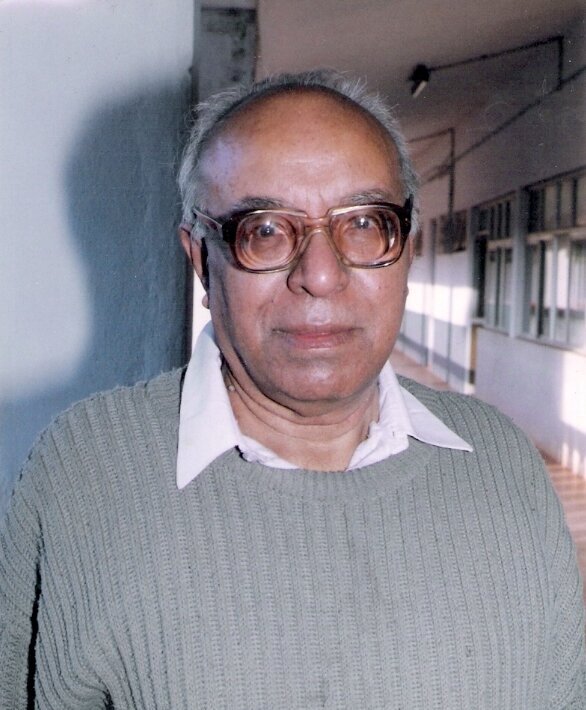
P.R. Brahmananda
Eclectic Monetary Economist
By D.M. Nachane
Details
There are at least four broad strands to P.R. Brahmananda’s (1926−2003) work. First and foremost, he was deeply concerned with propounding a macroeconomic theory for the Indian economy. Much of his work on development and monetary economics falls in this category. Secondly he fully believed (in the Friedmanian tradition) that theory has to be congruent to facts and therefore part of his research was directed at econometric verification of several interesting theories (including some of his own). Thirdly, his deep interest in the history of classical Indian economic thought led him to focus on Indian economic history with a view to understanding the socio-economic context in which the nineteenth century thinkers like Dadabhai Naoroji and Mahadev Govind Ranade evolved their ideas. Finally, appearances to the contrary, Brahmananda was no ivory tower economist. Time and again, when he saw an issue of immense practical significance looming on the national consciousness (IMF loan of 1981, the runaway inflation of 1977, the 1992 financial scam etc.) he did not hesitate to bring forth his views to the public, however unpopular they might prove to be.
To appreciate the general approach of Prof. Brahmananda (his full name was Palahalli Ramaiya Brahmananda, but was known as PRB to all), it is essential to have some understanding of his ideological inclination. One of the reasons why Brahmananda’s works often went unrecognised lies in the fact that his ideological position was never clarified. In the three decades since Independence, when ideological debates were the height of intellectual fashion, this ambivalence always isolated Brahmananda from any definite affiliation, either to the right or to the left, rendering him something of an intellectual loner. On a superficial reading of his works, one was inclined to attribute a market-friendly orientation to his thinking. Yet, he deplored consumerism and in thought and deed espoused a doctrine of austerity, and subscribed to the “limitation of wants” thesis. Without being a Gandhian, he shared several visions of the Father of the Nation but had too complex a mind to be carried away by some of the more simplistic postulates of Gandhism especially the extreme versions of Swadeshi and village self-sufficiency. Like many contemporary scholars he also had a deep regard for Marx as an economics scholar1.
In 1956, Brahmananda wrote the book that will possibly rate as his lasting contribution to Indian economics (Planning for an Expanding Economy (jointly with C.N. Vakil)). The book does not make for easy reading. The wage-goods thesis that he propounded therein was an amalgam of three distinct strands of thought.
Firstly, there were the Physiocratic influences, which led him to emphasise the crucial role of agriculture. One of his ambitions (never fully realised) was to integrate agriculture into a full-fledged macroeconomic structure. He had in mind a balanced growth approach to Indian development in which agriculture and investment grew in tandem as envisaged in the writings of Nurkse and Rosenstein-Rodan. This view went against the grain of economic thinking in India at that time. As is well known, the Second Five-Year Plan (1956−61) drew its intellectual basis from the Mahalanobis model which, based on the Strumilin two-sector model of economic growth, was an implicit endorsement of Preobrazhensky’s “primitive socialist accumulation” thesis. What is less well-known is that minus the elements of state ownership and state coercion, Preobrazhensky’s theory is not very different from the Unbalanced Growth doctrine of Hirschman and Rostow.
Secondly, Brahmandanda’s methodological allegiance was to the classical political economy of Ricardo rather than to the neo-classical approach of Solow and Swan. Thus Brahmananda’s work was more concerned with the investment shares of broad sectoral groups like agriculture and industry, and the aggregate income shares of national factors of production.
Thirdly, he was strongly drawn to the Latin American structuralist model. The Latin American structuralist approach was developed over the fifties and sixties. In this approach, the basic causes of inflation are two-fold viz. (i) inelasticity of food supply because of low productivity in agriculture and (ii) the inadequacy and instability of the purchasing power of exports.
In Planning for an Expanding Economy, Brahmananda offered a strong criticism of the Second Five-Year Plan along the following lines. The heavy industrialisation and Big Push strategy espoused by the Plan would entail a massive shift of resources from the agricultural (traditional) sector to the industrial (modern) sector. This shift would result in a massive increase of demand for wage goods (by which Brahmananda meant items figuring in the labourer’s consumption basket mainly agricultural products, textiles, cheap housing and farm implements) but this demand would not be matched by an increase in wage goods supply because of the inelasticities in the agricultural and primary goods sector. The gap would not be bridged by agricultural imports since the undeveloped exports sector would not be able to match the demand for sophisticated goods coming from the First World. The result would be a balance of payments crisis, which would have to be resolved by a currency devaluation and a structural inflation.
The development strategy that he favoured was one in which there would be in the early stages of development, a planned public investment programme for the wage-goods sector with an emphasis on small-scale village-based enterprises (the Gandhian influence is visible here). As the wage-goods bottlenecks were gradually resolved, public investment would be dovetailed to the industrial sector and various incentives extended to the private industrial sector. Cities would develop to accommodate the migration from rural to urban areas and infrastructure investment would follow2. Thus private enterprise would be encouraged in both the wage goods and industrial sectors. Brahmananda was a strong believer in Swadeshi and hence his emphasis throughout was on domestic resources mobilisation, domestic self-sufficiency in production and restriction of imports of foreign luxury goods.
As is typically characteristic of Brahmananda’s early works, the book has a great deal of valuable insights but these insights were loosely strung together, and a systematic synthesis (or a coherent model) is missing. It also went against the prevailing views of the establishment, the Nehruvian vision of modern India, in fact against the entire zeitgeist of the nation at the time. In retrospect Brahmananda’s fears about the Second Plan blueprint proved to be largely unfounded. India did muddle along in the Second and Third Plans and their successors, but remained firmly on the democratic path, avoiding any calamitous veering to extremes. There is a deeper sense in which the book is something of an intellectual triumph, for it addressed itself to the task of building an indigenous theory of Indian economic development, and is thus very close in spirit to the works of the founding fathers of Indian political economy in the late nineteenth century like Dadabhai Naoroji, Mahadev Govind Ranade, R.C. Dutt and Mahatma Gandhi. The search for a paradigm of Indian development always remained Brahmananda’s first love, to which he kept on returning time and again.
The neo-classical growth theory of Marshall, Solow, Swan and Samuelson did not appeal to Brahmananda. Nor was he much enamoured of the neo-Keynesian theories of growth such as those of Harrod, Hansen and Joan Robinson with their knife-edge equilibria, golden ages and secular stagnation. Instead, he favoured the classical approach of Ricardo and Malthus. In Sraffa (1960), he saw a logical descendant of Ricardo and hence hailed the “Sraffian revolution”. He was convinced that the standard commodity analysis of Sraffa had laid to rest the measurement of capital controversy.
From the mid-1960s onwards, Brahmananda began to be increasingly drawn into monetary economics. The most important influences on him here seem to be that of Hawtrey and Friedman. He felt that in the Indian context, a modified version of Friedman’s monetarism which also allowed for Hawtrey’s instability of credit and credit deadlock effects was most appropriate. This led him to embrace a strong anti-inflation agenda including balanced fiscal budgets. In the early 1970’s when India was facing monetary instability on both the domestic and external fronts Brahmananda wrote three major works (Gold-Money Rift (1969), Optimum Monetary & Banking System (1971) and Explorations in New Classical Theory (1974)). The Gold-Money Rift, which seems to be advocating some form of modified gold standard, seemed retrograde to several economists apart from being strongly deflationary. Brahmananda was right in prognosticating that inflation would be a major problem in the 1970’s. The Optimum Monetary & Banking System is largely a Friedmanian agenda for inflation control. The third book in the trilogy, Explorations in New Classical Theory, shows Brahmananda at his theoretical best. It is an outstanding piece of work, with its emphasis on monetary policy neutrality and policy ineffectiveness. While Brahmananda devoted a great deal of attention to these topics, he did not offer a satisfactory theoretical explanation of these policy results, relying implicitly on an adaptive system of expectations. This remained a major loophole.
Brahmananda’s interest in economic history as well as economic thought were an essential part of his psyche. His life sketch of Pigou must surely rank as a classic, as also his centennial addresses on Marx’s Capital and Jevons’ Theory of Political Economy. He had time and again expressed a desire to write a history of economic thought from the classical perspective but we had to wait a long time for the promised work to appear in the shape of his Nobel Economics: A Historical Commentary from the Classical Angle. By any reckoning, this is a formidable work of the highest erudition. It also reflects a more direct style than many of his early works. The book delineates several unsolved problems which all researchers should find useful.
Another long-standing ambition of Brahmananda was to launch a monetary history of India in the pioneering spirit of Friedman & Schwartz’s Monetary History of the United States of America. The magnum opus finally came out in 2001. It is a remarkable piece of work and involved enormous labour that he undertook in his advanced years, sifting through endless records in various archives. He generated a continuous time series of major Indian macroeconomic magnitudes from 1835 to 1894 – 95. But the book stands out for two other important reasons: first, it suggests various theories that may explain these figures and second, it brings to light five leading British thinkers on Indian economic problems of the 19th century (Hollingbery, Barbour, Atkinson, Harrison, and Findley Shirras) who have slipped from the profession’s collective memory in the course of history.
One of the criticisms leveled against Brahmananda in his early years was that his work was mainly theoretical and lacked empirical content. To overcome this criticism he wrote two books of an applied empirical nature viz. Determinants of Real National Income and Price Level and Productivity in the Indian Economy. However, these books found Brahmananda batting on an unfamiliar and treacherous pitch. If Brahmananda had gone into the econometric niceties, he could have, with ease, acquired some fluency therein. But his restless nature never tied him to a particular work for too long.
The final aspect of Brahmananda’s contribution pertains to his public stand on various issues of topical significance. Among the most important of these are his critiques of the 1966 rupee devaluation, his famous anti-inflation agenda with the acronym SEMIBOMBLA (1974) and its sequel FULLMANGAL (1975), his critique of the IMF loan (1982) and what may be regarded as his finale on public policy viz. his concerns with the future course of liberalisation (1998). It was only towards the end of his life that the overdue international recognition came in the form of his being made Honorary President of the International Economic Association in 2002. Brahmananda’s was a truly versatile spirit, which ranged over virtually all areas of economics with equal expertise. If I have focused on his work in the areas of monetary economics and development economics, it is because these most demanded his attention and where his lasting contributions lay (in the opinion of most of his admirers). But he wrote frequently and incisively on other topics in the areas of agriculture, public finance, industry, labour and trade.
There is one additional permanent contribution of Brahmananda to the economics profession viz. his nurturing the Indian Economic Association from the 1960s onwards and his editorship of the Indian Economic Journal. If the journal has managed to stay afloat for the last 70 years and maintained its own place in the face of the rapid advancements in the subject, it is largely owing to Brahmananda’s organisational skills and unerring editorial acumen.
I cannot end this article more fittingly than with a reflective quotation from Meghnad Desai, one of Brahmananda’s most illustrious students, (in his preface to the Festschrift volume in Brahmananda’s honour (Vasudevan et al., 1999):
Hegel has famously said that the owl of Minerva flies at dusk. Thus it is that we have to wait all these years to appreciate the truth of what PRB was about all those years ago. But the modest and caring man that he is, he did not get bitter. He went on teaching and writing and innovating. I shared a platform with him in the summer of 1997 when we found much in common in our approaches to globalisation and economic reform. But that is hardly surprising because after all I had learned my economics at his feet in those glory days of the late 1950s. Many were before me and many have since followed and been rewarded by the experience.
Brahmananda, P.R. (1956). Planning for an Expanding Economy: Accumulation, Employment and Technical Progress in Underdeveloped Countries (with C.N.Vakil). Vora & Co..
Brahmananda, P.R. (1963a). Economics — The Sraffa Revolution (I). Indian Economic Journal, 10(3).
Brahmananda, P.R. (1963b). Economics — The Sraffa Revolution (II) — A Critique of the Marginal Method as applied to Distribution, Theory of Firm and Theory of Capital. Indian Economic Journal, 10(4).
Brahmananda, P.R. (1963c). Economics — The Sraffa Revolution (III) — Switches, Money, Income and Trade. Indian Economic Journal, 10(4).
Brahmananda, P.R. (1966a). The Indian Rupee — Has There been a Real Devaluation, Financial Express, 19-06-1966.
Brahmananda, P.R. (1966b). Devaluation and the Price Level, Financial Express, 07-08-1966.
Brahmananda, P.R. (1966c). The Mechanism of Post-Devaluation Adjustment — In Challenge of Devaluation. Indian Merchants Chamber.
Brahmananda, P.R. (1968). Marxian Economics as New Classical Economics. Arthavijnana, 3 – 4.
Brahmananda, P.R. (1969). The Gold Money Rift. Himalaya Publishing House.
Brahmananda, P.R. (1972). Jevons’ Theory of Political Economy: A Centennial Appraisal. Indian Economic Journal, 19(2).
Brahmananda, P.R. (1973a). Explorations in the New Classical Theory of Political Economy and A Connected Critique of Economic Theory. Allied Publishers.
Brahmananda, P.R. (1973b). A.C.Pigou (1877−1959). In H. Rektenwald (ed.) Political Economy, A Historical Perspective. Macmillan.
Brahmananda, P.R. (1974). Memorandum on a Policy to Contain Inflation SEMIBOMBLA (with C.N.Vakil & Others) — submitted to the Prime Minister, Feb 1974.
Brahmananda, P.R. (1975). Memorandum on a Policy for Inflation Reversal and Guaranteed Price Stability with FULLMANGAL — submitted to the Prime Minister, April 1975.
Brahmananda, P.R. (1977). Determinants of Real National Income and Price Level. Bombay University Press.
Brahmananda, P.R. (1980). Growthless Inflation by means of Stockless Money: A New Classical Treatise on Rising Prices. Himalaya Publishing House.
Brahmananda, P.R. (1982). Productivity in the Indian Economy: Rising Inputs for Falling Outputs. Himalaya Publishing House.
Brahmananda, P.R. (1998). Liberalisation in the Indian Economy: Ecstasy so far and the agony ahead. Lecture at the Symposium at the International Conference organised by the Indian Institute of Science, Bangalore, August 10.
Brahmananda, P.R. (1999). Nobel Economics: A Historical Commentary from the Classical Angle. Himalaya Publishing House.
Brahmananda, P.R. (2001). Money, Income, Prices in 19th Century India. Himalaya Publishing House.
Barro, R. (1974). Are government bonds net wealth ?. Journal of Political Economy, 82, 1095 – 1117.
Boinovsky, M. (2012). Celso Furtado and the Structuralist-Monetarist debate on economic stabilization in Latin America. History of Political Economy, 44(2), 277 – 330.
Boinovsky, M. & Solis, R. (2014). The origins and development of the Latin American structuralist approach to the balance of payments problem (1944−64). Review of Political Economy, 26(1), 23 – 59.
Friedman, M., & Schwartz, A. (1963). A Monetary History of the United States, 1867 – 1975. Princeton: Princeton University Press.
Hawtrey, R.G. (1950). Currency and Credit. London: Longmans, Green & Co.
Hendry, D. (1980). Econometrics: Alchemy or Science?. Economica, 47, 387 – 406.
Hirschman, A. O. (1958). The Strategy of Economic Development. New Haven: Yale University Press.
Keynes, J. M. (1971)[1923]. A Tract on Monetary Reform. In D.E. Moggridge (ed.) The Collected Writings of John Maynard Keynes, vol.4.
Keynes, J. M. (1971)[1930]. A Treatise on Money (in 2 volumes). In D.E. Moggridge (ed.) The Collected Writings of John Maynard Keynes, vol. 5 & 6.
Keynes, J. M. (1970)[1936]. The General Theory of Employment, Interest, and Money. London: Macmillan and St. Martin’s Press.
Lucas, R. E. (1975). An equilibrium model of the business cycle. Journal of Political Economy, 83, 1113 – 1144.
Nurkse, R. (1961). Problems of Capital Formation in Underdeveloped Countries. New York: Oxford University Press.
Robertson, D.H. (1913). Banking Policy and the Price Level. London: P.S. King.
Rosenstein-Rodan, P.N. (1943). Problems of industrialization of Eastern and South-Eastern Europe. The Economic Journal, 53(210−211), 202 – 211
Rostow, W.W. (1960). The Stages of Economic Growth : A Non-Communist Manifesto. Cambridge: Cambridge University Press.
Sargent, T. J., & Wallace, N. (1976). Rational expectations and the theory of economic policy. Journal of Monetary Economics, 2, 169 – 183.
Sraffa, P. (1960). Production of Commodities by Means of Commodities: Prelude to a Critique of Economic Theory. Cambridge: Cambridge University Press.
Solow, R. (1956). A contribution to the theory of economic growth. Quarterly Journal of Economics, 70, 65 – 94.
Swan, T. (1956). Economic growth and capital accumulation. Economic Record, 32, 334 – 361
Vasudevan, A., Nachane, D.M., & Karnik, A.V. (1999). 50 years of Development Economics: Essays in Honour of Professor P.R.Brahmananda. Mumbai: Himalaya Publishing House.
Wicksell, K. (1936)[1898]. Interest and Prices (translated by R. F. Kahn). London: Macmillan.
About the author
Dilip Madhukar Nachane is Chairman, Centre for Economic & Social Studies, Hyderabad, India, Chancellor of University of Manipur, Imphal, India, and Editor-in-Chief, Journal of Quantitative Economics. [Full profile]
See his article in Arthavijnana (1968); but he had a pronounced aversion to Marxian politics and sociology, particularly as they were interpreted and subsequently implemented under Lenin and Stalin.↩︎
See his article in Arthavijnana (1968); but he had a pronounced aversion to Marxian politics and sociology, particularly as they were interpreted and subsequently implemented under Lenin and Stalin.
Note that unlike the US strategy where infrastructure investment was to lead to industrial investment, Brahmananda’s strategy was closer to the Soviet strategy of the 1940s and 1950s in which infrastructure investment responded with a lag to the demands of the industrial sector. ↩︎
Note that unlike the US strategy where infrastructure investment was to lead to industrial investment, Brahmananda’s strategy was closer to the Soviet strategy of the 1940s and 1950s in which infrastructure investment responded with a lag to the demands of the industrial sector.