
Career Pathways for History Undergraduates
A degree in History opens doors to a diverse range of careers in academia, education, heritage management, and beyond.
Details
A degree in History opens doors to a diverse range of careers in academia, education, heritage management, and beyond. Rigorous engagement with the discipline of History provides our students with valuable skills in critical thinking, communication, and understanding of cultures and societies. This, in turn, has given our alumni a solid foundation and the confidence to choose and pursue an exciting range of careers.
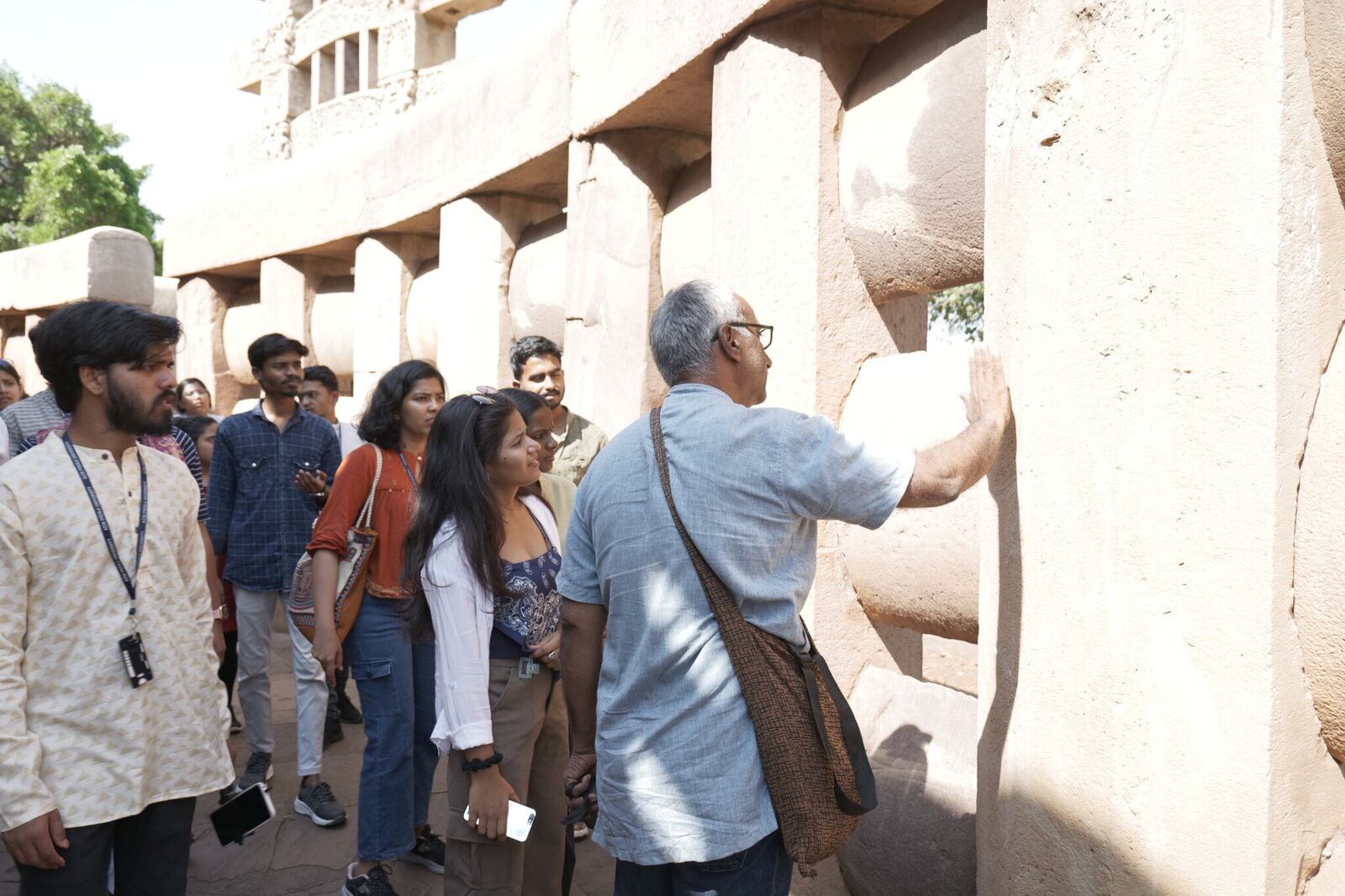
The undergraduate History programme at Azim Premji University offers a rigorous, interdisciplinary curriculum that integrates diverse approaches to historical inquiry while fostering a strong foundation in historical methods, critical analysis, and interpretation of primary sources. Students are encouraged to build on their classroom knowledge by engaging with the on-campus opportunities provided — the library, archives, field trips, research assistantships, and peer mentoring sessions, and the student-led History society.
In addition to the comprehensive curriculum of the BA in History programme at Azim Premji University, these opportunities enable students to gain hands-on skills that are relevant to both academia and industry.
The following is an overview of careers pursued by our Alumni:
Many of our alumni have chosen to pursue advanced degrees in Law, Literature, Public Policy, Human Resource Management, and Business Administration.
The interdisciplinary curriculum provides students with fundamental skills in critical thinking, analytical reasoning, and academic writing which enable our students to pursue graduate studies in varied fields.
I studied Literature, Philosophy, and History; pursued an Honours; took up an occupational minor in Media; and completed a field immersion course. Beyond this, I was fortunate to be taught by exceptional teachers. While we pursued our chosen disciplines, we shared a common curriculum in the first year which encouraged us to step outside our respective disciplines, exchange perspectives, and develop a broader understanding of the world.
Several of our graduates have chosen a career as teachers and educators.
In addition to developing knowledge and skills in the discipline of History, the programme provides students to develop career ready skills through an Occupational Minor in Education.
The interdisciplinary approach of the curriculum promotes active engagement with archives and critical analysis of primary sources. Students also have the option of completing an Occupational Minor in Heritage Studies. In addition, the campus provides opportunities to gain hands-on skills by interning or volunteering at the library and archives at the University.
Bridging the gap between field-level realities and strategic solutions has been the common thread of my career, while contributing to social change. My undergraduate degree was foundational in instilling values of critical inquiry, research integrity, and systemic analysis. My takeaway from the pedagogy was the courage it gave me to always choose an interdisciplinary perspective.
The programme equips graduates with a deep understanding of social, cultural, and historical context which prepares them for roles in community development, advocacy, project coordination, policy research, and welfare organisations.
Looking back, the University’s interdisciplinary curriculum, the sheer emphasis on reading closely, writing carefully, and engaging with real communities, gave me a real grounding. It taught me that good policy starts with listening and that’s something I am going to take with me as I go on to design public systems that are inclusive and responsive to context.
Applications are closed for this programme