
Collaborations
Investigate, develop, and test solutions for specific instructional challenges
Details
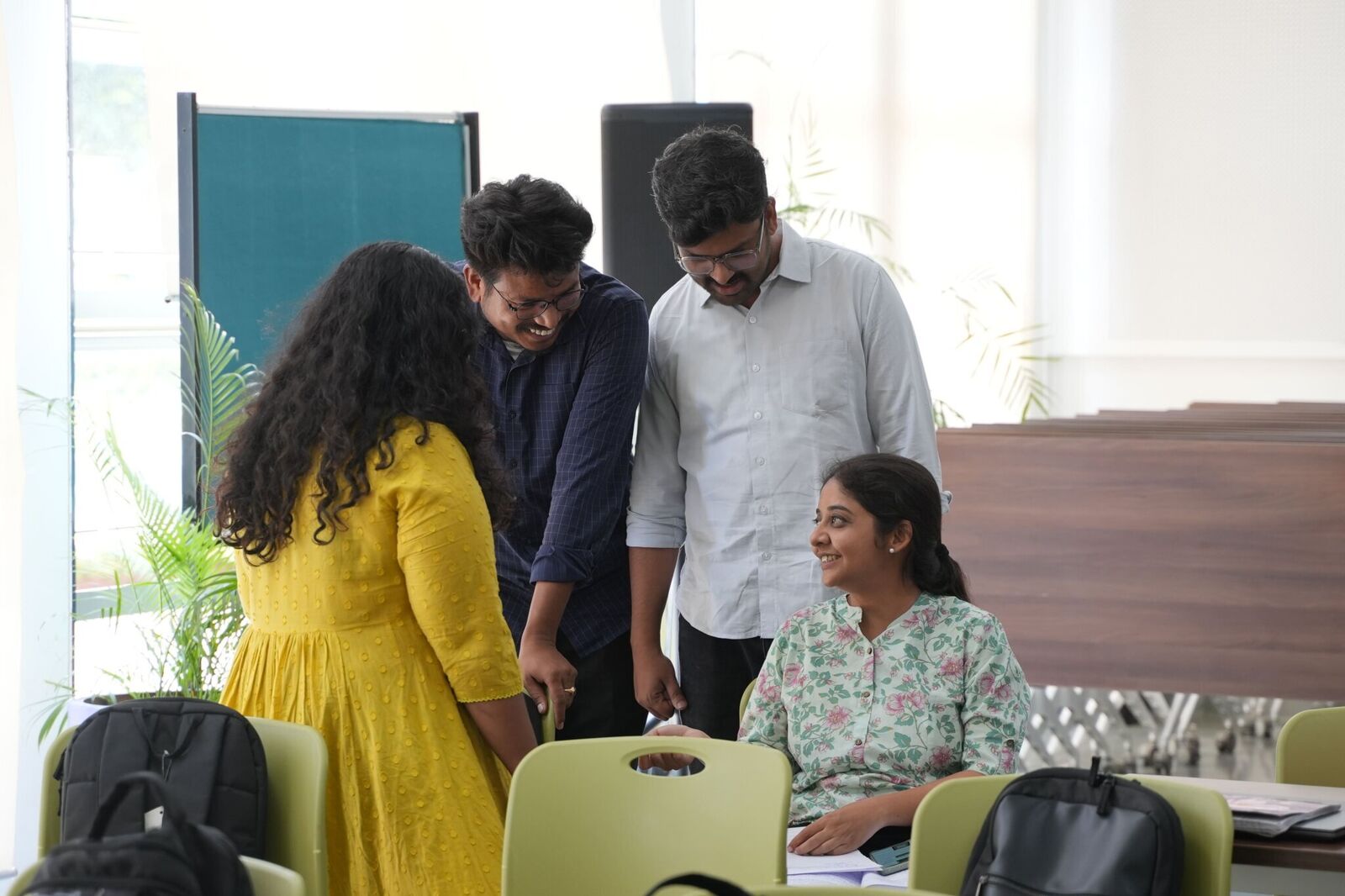
Teaching challenges vary widely depending on discipline, institutional context, and student preparation. Broad educational discussions, while useful, often need to give way to targeted, focused problem-solving. The USE Network addresses this through two complementary peer-working models: Thematic clusters for collaborative focus on shared pedagogical domains, and paired collaboration programmes for sustained, one-on-one professional partnerships.
Thematic clusters are small, self-governing sub-groups of network members who meet regularly to investigate, develop, and test solutions for specific instructional challenges. Each cluster operates as an active working group, producing practical frameworks, teaching guides, or shared resource collections.
Current and emerging thematic clusters include:
- Student ownership and active learning: Empowering students to take charge of their learning journey through active participation, collaborative peer discussions, and self-directed inquiry.
- Context-dependent learning: Grounding abstract scientific and mathematical concepts in real-world applications, everyday phenomena, and local Indian scenarios.
- Low-cost experiments and do-it-yourself (DIY) instrumentation: Utilising locally sourced materials and improvised engineering solutions to build practical, accessible laboratory and demonstration tools on modest budgets without sacrificing scientific rigor.
- Formative assessment and concept-oriented grading: Moving beyond rote-memorization exams toward diagnostic, continuous assessment methods that measure conceptual understanding and scientific reasoning.
- Differentiated instruction and inclusive classrooms: Developing strategies to support diverse cohorts with varying baseline academic backgrounds, multi-lingual requirements, or varied prior preparation in foundational mathematics and science.
- Technology and AI integration: Evaluating the constructive use of digital simulations, open-source computational tools, and generative AI models in student assignments and laboratory data analysis.
For instructors seeking individualised feedback, peer discussion, and substantive collaboration, the paired collaboration programme pairs educators across different institutions based on complementary teaching interests, disciplines, or career stages.
The programme provides a supportive environment structured around mutual growth with some of the following components:
- Syllabus and assignment review: Partners exchange course outlines, problem sets, and lab handouts to offer constructive feedback on clarity, alignment, and cognitive challenge.
- Cross-observation and feedback: Instructors observe each other’s live or recorded class sessions and give constructive feedback, discussing classroom management, questioning techniques, and student engagement.
- Long-term network building: Early-career instructors gain a reliable external sounding board, helping reduce the isolation often felt during the first few years of college teaching.
Contact us
Instructors can join an active thematic cluster or request matching for the paired collaboration programme by contacting us at usenetwork@apu.edu.in