
Research and Publications
Research rooted in open and reproducible practices and effects on community
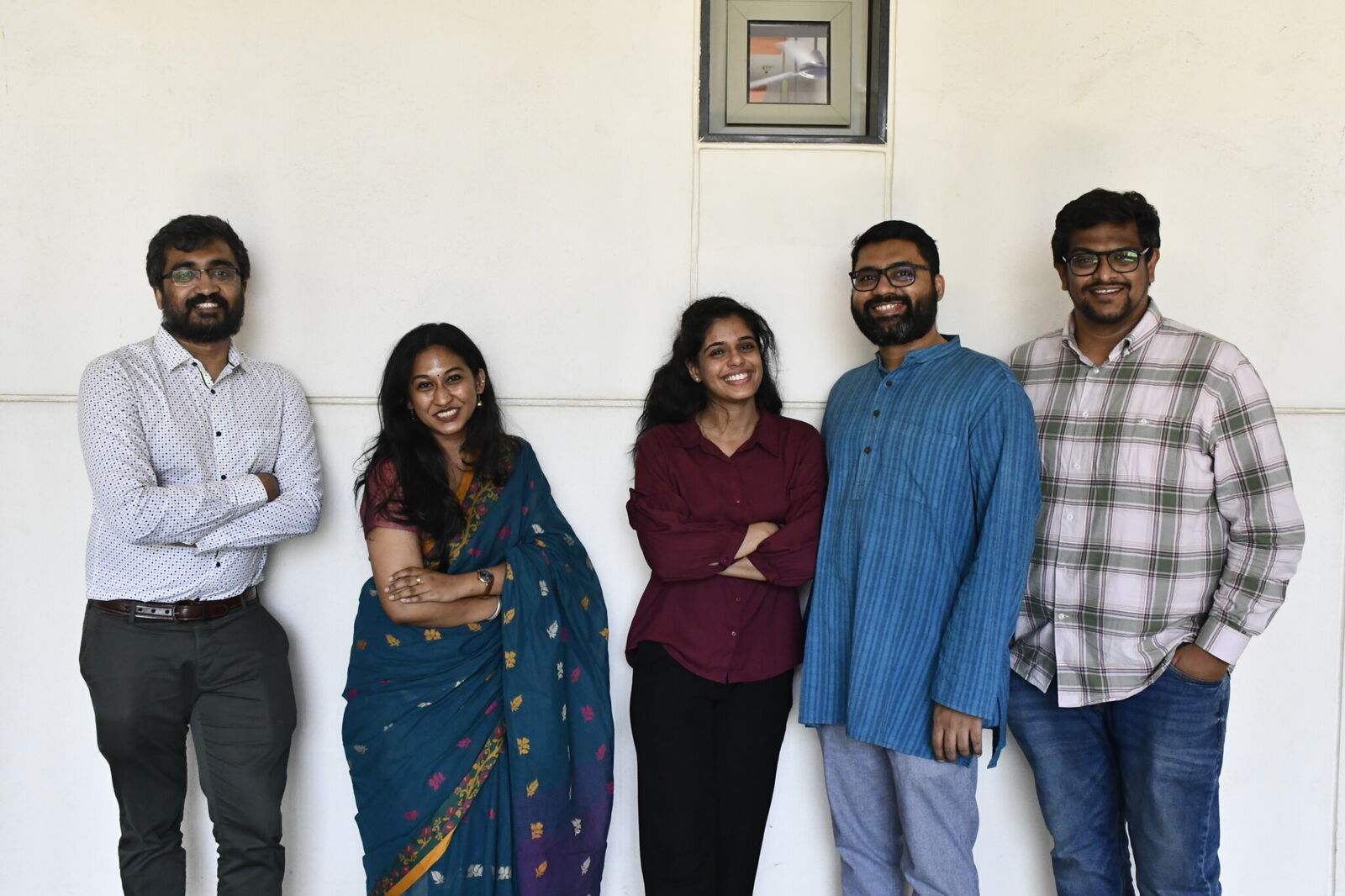
Our faculty members have expertise and work on areas ranging from clinical and developmental psychopathology to computational and systems neuroscience, and machine-learning models. The ongoing methodological shift in Psychology towards replicable experiments, computational models, neuroimaging, and AI-driven concepts necessitates adopting a holistic lens that unifies psychiatry, biology, computer science, and philosophy to understand behaviour and cognition in the Indian context.
This stance is translated into our undergraduate programme by rethinking how psychology is taught today.
“We emphasise open-science practices, quantitative reasoning, lab and field methods, and interdisciplinary dialogues while considering the role of sociocultural context and community practices.”
Our group’s research foregrounds this stance. Our culture is rooted in open and reproducible practices, mentorship, and effects on the community.
Would you like to collaborate or with us in our research work? We can connect. Details here.
- Affective and clinical psychopathology: Ryan, Trusha
- Neurodevelopmental and neurodegenerative disorders: Vignayanandam, Sandhya
- Child and adolescent mental health: Trusha, Sandhya, Chetan
- Attention, working memory and cognitive control: Ryan, Vignayanandam, Sandhya
- Computational and systems neuroscience: Ryan, Vignayanandam
- Neuroimaging and machine learning modelling: Ryan, Vignayanandam , Sandhya
- Quantitative methods, AI, and psychometrics:
Ryan, Vignayanandam, Trusha, Sandhya - Qualitative methods, neurodiversity, disability studies and critical psychology: Chetan, Trusha
- Pedagogy of psychology: Chetan, Trusha, Sandhya
- Shanbhag, T., Rai, S., & Praharaj, S. K. (2026). The longitudinal link: A systematic review of childhood ADHD and early onset of substance use in adulthood. Substance Use & Misuse. https://doi.org/10.1080/10826084.2026.2670635
- Basu, S. (2026). Researching with children diagnosed with neurodevelopmental disorders in India: A reflective account. In B. Banerjee & A. Deb (Eds.), Mental health research in India: Challenges and practical considerations (pp. 189 – 199). Springer Nature. https://doi.org/10.1007/978 – 981-95 – 9374‑3
- Singh, A., Paul, F. A., Shanbhag, T., & Khanra, S. (2026). Quantum mindfulness: Leveraging Bhagavad Gita’s ancient wisdom in the next generation of addiction treatment. Journal of Social Work Practice in the Addictions, 1 – 12. https://doi.org/10.1080/1533256X.2025.2589090
- Singh, A., & Shanbhag, T. (2026). Digital detox revolution: A guide for parents and educators. Indian Journal of Social Psychiatry, 42(1), 44 – 48. 10.4103/ijsp.ijsp_5_25
- Ranganathan, S., Mishra, J., Chetan, S.V. & Pattadath, B. (2025). Making things work, practically: Care relations in parent-led autism advocacy in urban India. Feminist Anthropology, 6, 130 – 145. https://doi.org/10.1002/fea2.70005
- Williams-Gant, A. J., Weisman, K., Amin, T. G., Ghossainy, M. E., Soueidan, G., Nissel, J., Kenderla, P., et al. (2025). Working across religions, cultures, settings, and development: Protocol for Wave 2 data collection with children and parents by the Developing Belief Network. PLoS ONE. https://doi.org/10.1371/journal.pone.0330727
- Dimitriadis, S. I., Muddapu, V. R., & Guidotti, R. (2024). Editorial: Reproducible analysis in neuroscience. Frontiers in Neuroinformatics, 18, 1520012. https://doi.org/10.3389/fninf.2024.1520012
- Gorka, A. X., Philips, R. T., Torrisi, S., Manbeck, A., Goodwin, M., Ernst, M., & Grillon, C. (2023). Periaqueductal gray matter and medial prefrontal cortex reflect negative prediction errors during differential conditioning. Social Cognitive and Affective Neuroscience, 18(1). https://doi.org/10.1093/scan/nsad025
Four Year BSc Honours
BSc in Psychology
“The world changes according to the way people see it, and if you can alter, even by a millimetre, the way people look at reality, then you can change the world.”- James Baldwin